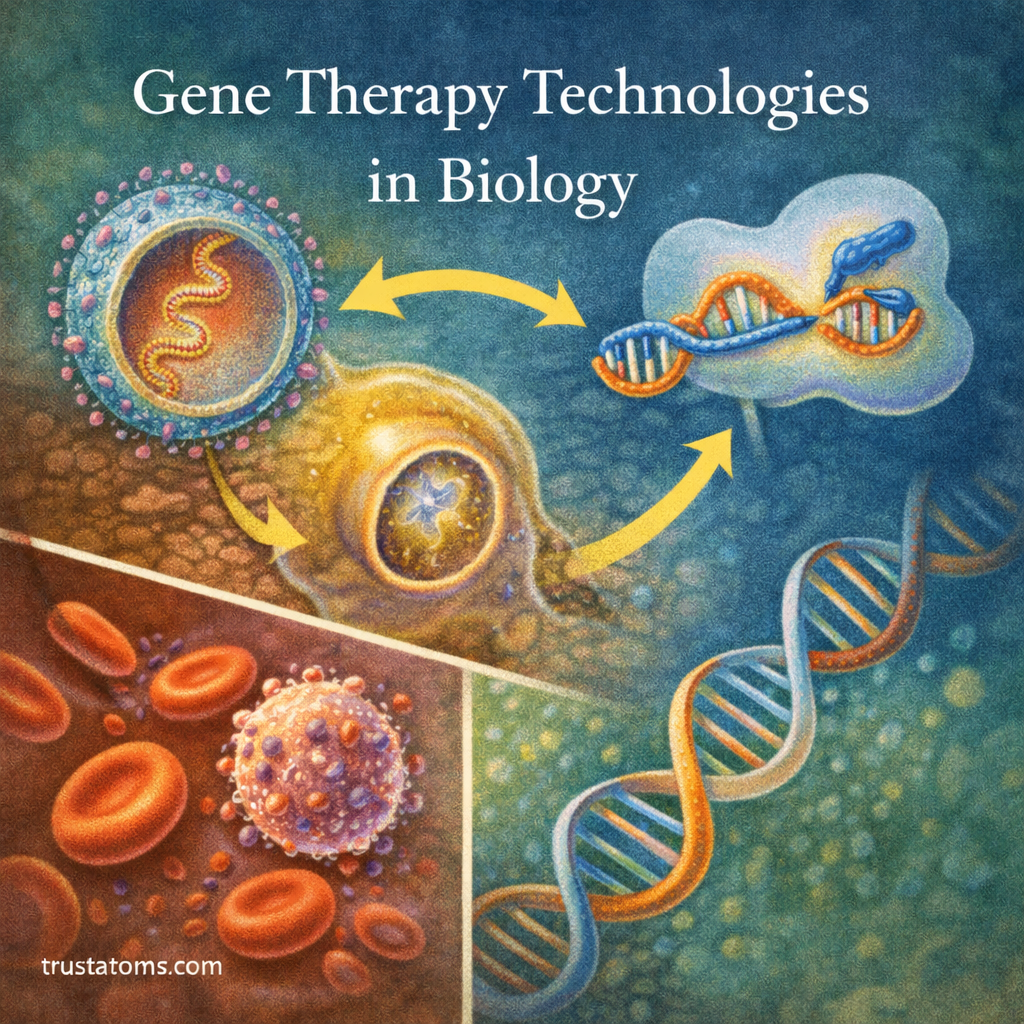
Gene therapy is one of the most transformative developments in modern biology and medicine. It involves modifying or replacing genetic material inside cells to treat or prevent diseases. Instead of managing symptoms with drugs or surgery, gene therapy targets the underlying genetic causes of certain conditions.
Advances in molecular biology, genetic engineering, and biotechnology have made gene therapy technologies increasingly precise and effective. Scientists are now developing tools that allow genes to be inserted, edited, or regulated directly within living cells.
These technologies hold promise for treating genetic disorders, certain cancers, and other diseases that arise from faulty or missing genes.
What Is Gene Therapy?
Gene therapy is a biological technique that alters genetic material within a person’s cells to improve health. The goal is to correct or compensate for defective genes responsible for disease.
Gene therapy approaches typically involve one of the following strategies:
- Replacing a faulty gene with a healthy version
- Inactivating or “silencing” a harmful gene
- Introducing a new gene to help fight disease
- Editing DNA sequences to correct genetic mutations
These changes occur at the molecular level within the cell’s genetic material.
Because genes control the production of proteins that regulate biological functions, correcting faulty genes can restore normal cellular activity.
How Gene Therapy Works
Gene therapy technologies rely on delivering genetic material into target cells. This process involves several key steps.
- Identifying the gene responsible for a disease
- Designing a healthy or modified gene sequence
- Delivering the genetic material into patient cells
- Ensuring the gene functions correctly within the cell
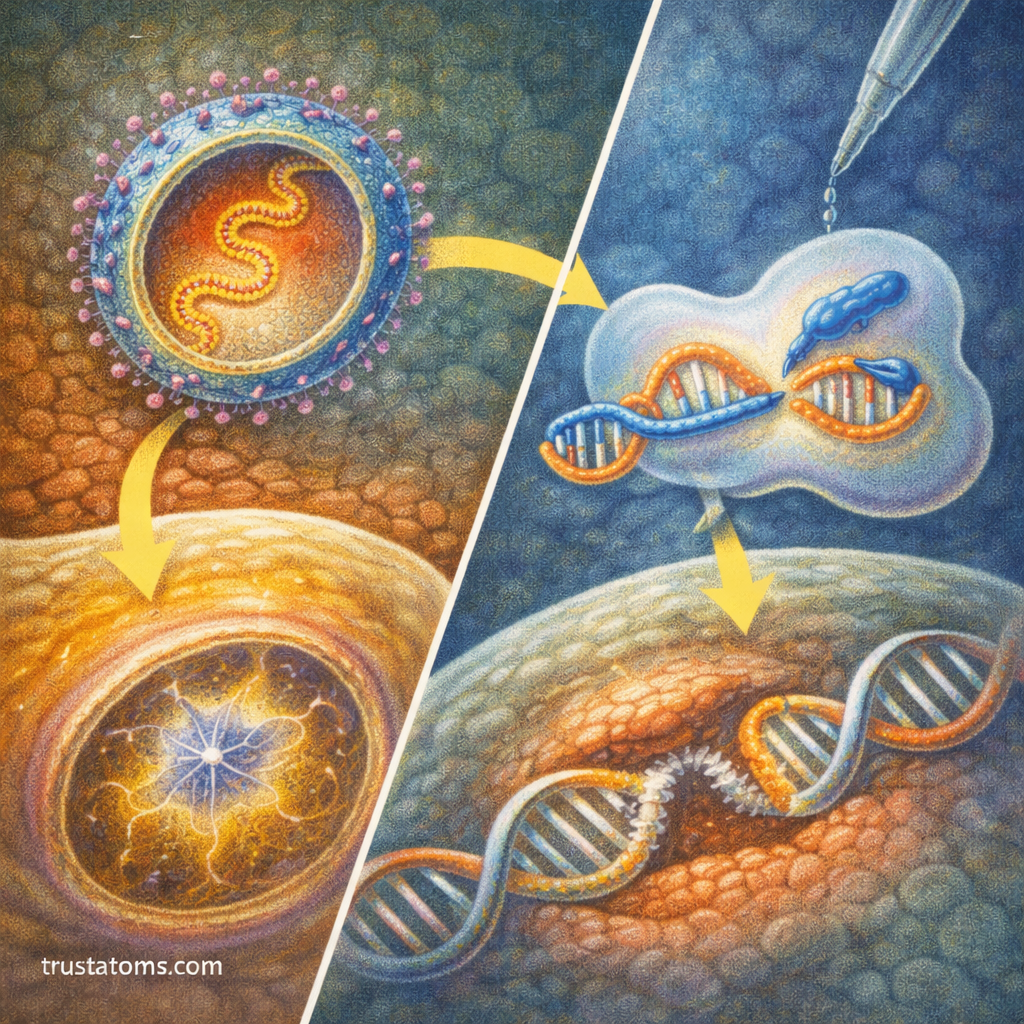
To accomplish this, scientists use specialized delivery systems known as vectors, which transport therapeutic genes into cells.
Gene Delivery Systems
One of the most important challenges in gene therapy is delivering genes safely and efficiently into cells.
Two major categories of delivery systems are commonly used.
Viral Vectors
Viruses naturally evolved to insert genetic material into host cells. Scientists can modify viruses so they carry therapeutic genes instead of causing disease.
Common viral vectors include:
- Adenoviruses
- Adeno-associated viruses (AAV)
- Retroviruses
- Lentiviruses
These engineered viruses act as biological carriers that deliver therapeutic DNA into target cells.
Viral vectors are highly effective but must be carefully designed to avoid unwanted immune responses.
Non-Viral Delivery Methods
Non-viral gene delivery methods use physical or chemical approaches to transfer genetic material into cells.
Examples include:
- Lipid nanoparticles that encapsulate DNA or RNA
- Electroporation, which uses electrical pulses to open cell membranes
- Gene guns that deliver DNA-coated particles
- Synthetic polymers that bind to genetic material
Although generally safer than viral methods, non-viral approaches sometimes have lower delivery efficiency.
Gene Editing Technologies
Recent advances in gene editing have dramatically improved the precision of gene therapy.
Gene editing tools allow scientists to modify DNA sequences directly within cells.
CRISPR-Cas Systems
CRISPR-Cas technology is one of the most widely used gene editing tools today.
CRISPR works by:
- Using a guide RNA to locate a specific DNA sequence
- Employing a protein enzyme (Cas) to cut the DNA
- Allowing the cell to repair the DNA with corrected genetic information
This system allows researchers to target and modify genes with high precision.
CRISPR technology has become a powerful tool for studying genetic diseases and developing therapeutic treatments.
Zinc Finger Nucleases (ZFNs)
Zinc finger nucleases are engineered proteins designed to cut DNA at specific locations.
They consist of two main components:
- A DNA-binding region that recognizes a specific genetic sequence
- A nuclease enzyme that cuts the DNA
Once the DNA is cut, the cell’s natural repair mechanisms can modify or correct the sequence.
Although effective, ZFNs are more complex to design than newer editing technologies.
TALENs (Transcription Activator-Like Effector Nucleases)
TALENs are another gene editing system used to modify DNA.
Like ZFNs, TALENs combine DNA-recognition proteins with cutting enzymes that break DNA strands.
TALEN technology allows researchers to target specific genetic sequences and introduce precise modifications.
While powerful, TALENs have largely been complemented by the easier-to-use CRISPR systems.
Applications of Gene Therapy
Gene therapy technologies are being explored for a wide range of biological and medical applications.
Some of the most important uses include:
Treatment of Genetic Disorders
Many inherited diseases result from mutations in single genes.
Gene therapy aims to correct these genetic errors.
Examples of conditions under investigation include:
- Cystic fibrosis
- Sickle cell disease
- Hemophilia
- Muscular dystrophy
Correcting the faulty gene may restore normal cellular function.
Cancer Therapy
Gene therapy is also being used to help the immune system recognize and attack cancer cells.
One example is CAR-T cell therapy, where immune cells are genetically modified to target cancer cells more effectively.
This approach has shown promising results for certain blood cancers.
Regenerative Medicine
Gene therapy technologies may support tissue repair and regeneration.
Researchers are exploring gene-based approaches to treat conditions such as:
- Heart disease
- Neurodegenerative disorders
- Spinal cord injuries
By modifying gene expression, scientists may encourage cells to repair damaged tissues.
Challenges in Gene Therapy
Although gene therapy technologies are advancing rapidly, several challenges remain.
Key issues include:
- Ensuring precise targeting of genetic modifications
- Avoiding unintended genetic changes
- Preventing immune reactions to delivery vectors
- Achieving long-lasting therapeutic effects
- Ensuring treatments remain safe and accessible
Researchers continue working to improve delivery systems and editing technologies to address these challenges.
Ethical Considerations
Gene therapy raises important ethical questions about how genetic technologies should be used.
Topics often discussed include:
- The difference between treating disease and enhancing human traits
- The potential risks of modifying human germline cells
- Accessibility and cost of gene therapies
- Long-term safety considerations
International guidelines and scientific oversight help ensure that gene therapy research is conducted responsibly.
The Future of Gene Therapy Technologies
Gene therapy is advancing rapidly due to improvements in molecular biology, genome sequencing, and biotechnology.
Future developments may include:
- More precise gene editing tools
- Safer and more efficient gene delivery methods
- Personalized gene therapies tailored to individual genetic profiles
- Expanded treatment options for previously untreatable diseases
As research continues, gene therapy technologies may transform the way scientists and physicians treat genetic disorders.
Final Thoughts
Gene therapy technologies represent a major breakthrough in modern biology. By targeting the genetic roots of disease, these approaches offer new possibilities for treating conditions that were once considered incurable.
From viral delivery systems to advanced gene editing tools such as CRISPR, scientists are developing powerful technologies that can modify DNA with increasing precision. While challenges and ethical considerations remain, gene therapy continues to expand the boundaries of what is possible in medicine and biological research.
As these technologies evolve, they may play a central role in shaping the future of healthcare and personalized medicine.