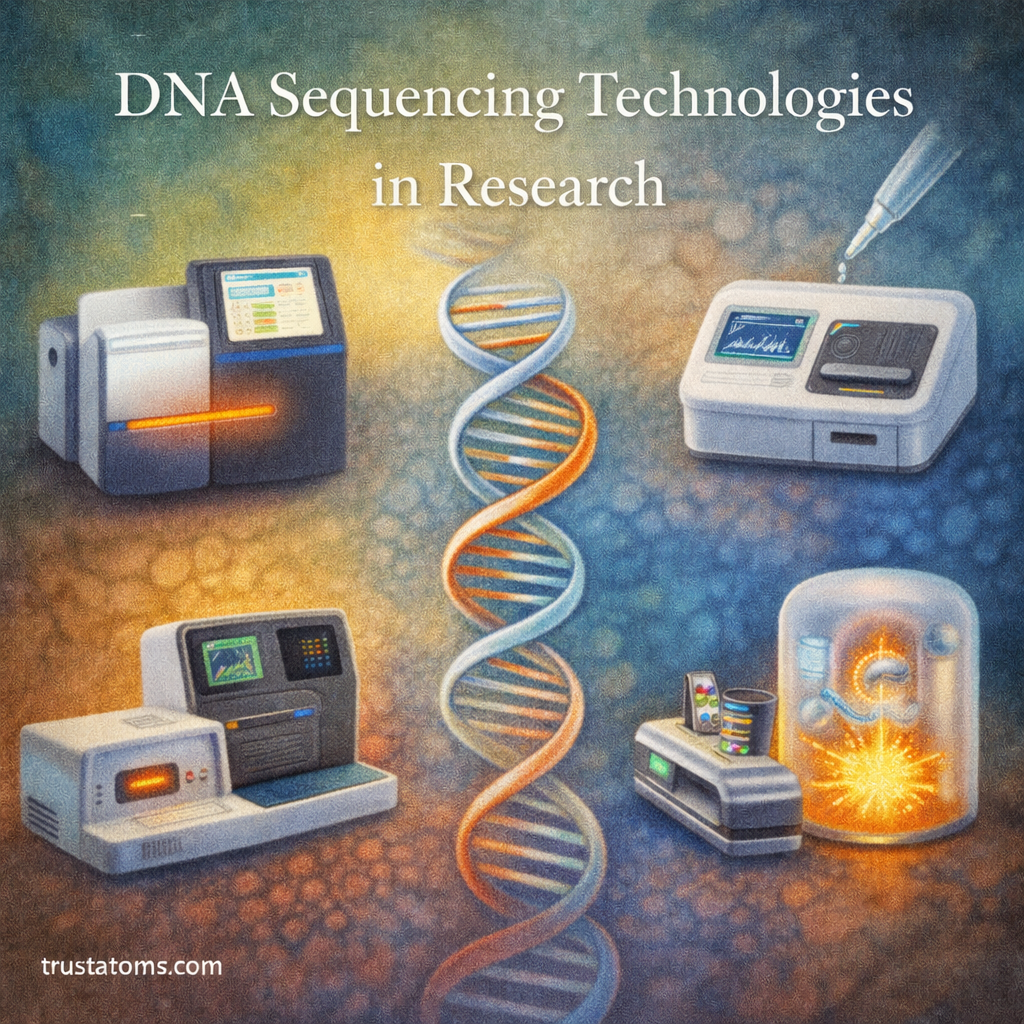
DNA sequencing technologies have transformed modern biological research. By determining the exact order of nucleotides in DNA, scientists can study genes, understand biological functions, and explore the genetic foundations of life.
Advances in sequencing technology have dramatically increased the speed, accuracy, and affordability of DNA analysis. Today, researchers use sequencing tools in fields ranging from medicine and biotechnology to environmental science and evolutionary biology.
Understanding how DNA sequencing technologies work helps explain how scientists investigate genomes and uncover genetic information that shapes living organisms.
What Is DNA Sequencing?
DNA sequencing is the process of determining the precise order of nucleotides within a DNA molecule.
DNA consists of four chemical bases:
- Adenine (A)
- Thymine (T)
- Cytosine (C)
- Guanine (G)
The sequence of these bases forms genetic instructions that control cellular processes and biological traits.
By identifying the order of these nucleotides, researchers can analyze genes, detect mutations, and compare genetic information across organisms.
Why DNA Sequencing Is Important in Research
DNA sequencing has become one of the most powerful tools in biological science.
Researchers use sequencing technologies to:
- Identify genetic causes of diseases
- Study gene expression and regulation
- Track the evolution of species
- Investigate microbial communities
- Develop targeted medical treatments
Large-scale projects such as the Human Genome Project demonstrated the immense value of sequencing technologies for understanding complex genomes.
Early DNA Sequencing Methods
The earliest DNA sequencing technologies were developed in the 1970s and laid the foundation for modern genomic research.
Sanger Sequencing
Sanger sequencing, also known as the chain-termination method, was one of the first reliable sequencing techniques.
This method works by:
- Copying DNA strands using specialized enzymes
- Incorporating modified nucleotides that stop DNA replication
- Separating fragments of different lengths
- Determining the sequence based on fragment sizes
Sanger sequencing was widely used for decades and played a central role in sequencing the human genome.
Although still used for certain applications, it is slower and less efficient than newer technologies.
Next-Generation Sequencing (NGS)
Next-generation sequencing technologies revolutionized genomics by allowing scientists to sequence millions of DNA fragments simultaneously.
NGS platforms dramatically increased sequencing speed and reduced costs.
Key characteristics of next-generation sequencing include:
- High-throughput DNA analysis
- Parallel sequencing of many fragments
- Large-scale genomic data generation
- Faster turnaround times compared to earlier methods
These improvements allow researchers to study entire genomes quickly and efficiently.
Major Next-Generation Sequencing Platforms
Several sequencing platforms are commonly used in research laboratories.
Illumina Sequencing
Illumina technology is one of the most widely used sequencing platforms.
It works by:
- Fragmenting DNA into smaller segments
- Attaching fragments to a solid surface
- Amplifying the fragments
- Sequencing them through repeated cycles of nucleotide detection
Illumina sequencing is known for high accuracy and large-scale genomic output.
Ion Torrent Sequencing
Ion Torrent technology detects DNA sequencing by measuring changes in pH when nucleotides are incorporated into DNA strands.
This system offers:
- Rapid sequencing times
- Reduced reliance on fluorescent detection
- Smaller sequencing instruments suitable for laboratory use
Ion Torrent is often used in clinical and diagnostic research.
Third-Generation Sequencing Technologies
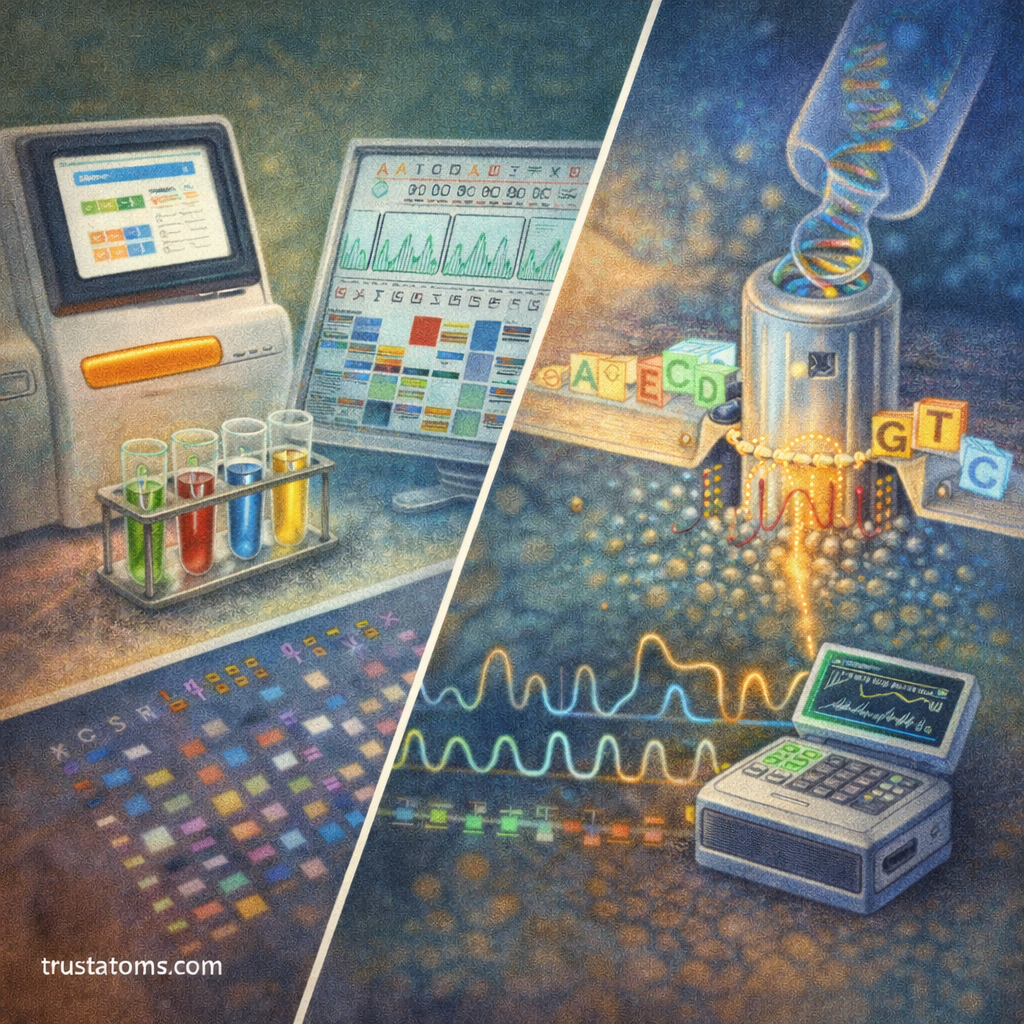
More recent advances have introduced third-generation sequencing technologies capable of reading long DNA molecules directly.
These technologies offer new possibilities for genome analysis.
PacBio Single-Molecule Sequencing
Pacific Biosciences (PacBio) sequencing reads long DNA strands in real time.
Advantages include:
- Long DNA read lengths
- Improved analysis of complex genomic regions
- Enhanced detection of structural variations
Long-read sequencing helps scientists study difficult-to-sequence areas of the genome.
Nanopore Sequencing
Nanopore sequencing is an emerging technology that reads DNA molecules as they pass through tiny protein pores.
As DNA moves through the pore, changes in electrical signals reveal the nucleotide sequence.
Key advantages include:
- Portable sequencing devices
- Real-time DNA analysis
- Long read lengths
- Minimal sample preparation
Nanopore sequencing is particularly useful for field research and rapid diagnostics.
Applications of DNA Sequencing in Biology
DNA sequencing technologies support a wide range of scientific investigations.
Medical Research
In medicine, sequencing technologies help researchers identify genetic mutations associated with disease.
Applications include:
- Cancer genomics
- Rare disease diagnosis
- Personalized medicine development
- Pharmacogenomics
These insights help physicians tailor treatments to individual genetic profiles.
Microbial and Environmental Studies
Sequencing technologies allow scientists to study microorganisms that cannot be easily grown in laboratories.
Researchers can analyze:
- Soil microbial communities
- Ocean ecosystems
- Human microbiomes
- Environmental biodiversity
Metagenomics, the study of genetic material from environmental samples, relies heavily on sequencing technologies.
Evolutionary Biology
DNA sequencing provides valuable information about how species evolve over time.
By comparing genetic sequences across organisms, scientists can:
- Trace evolutionary relationships
- Study genetic diversity within populations
- Investigate ancient DNA from fossils
- Reconstruct evolutionary histories
These analyses help researchers understand how life on Earth has changed over millions of years.
Challenges in DNA Sequencing Research
Despite major advances, DNA sequencing technologies still face certain challenges.
These include:
- Managing extremely large genomic datasets
- Interpreting complex genetic variations
- Maintaining sequencing accuracy in repetitive regions
- Reducing costs for large-scale studies
Bioinformatics tools and computational analysis are essential for managing and interpreting sequencing data.
The Future of DNA Sequencing
DNA sequencing technologies continue to evolve rapidly.
Future developments may include:
- Faster and more affordable sequencing platforms
- Improved long-read sequencing accuracy
- Integration with artificial intelligence for data analysis
- Expanded use in personalized medicine
- Real-time monitoring of pathogens and environmental changes
As sequencing technologies improve, scientists will gain deeper insights into the genetic mechanisms that govern life.
Final Thoughts
DNA sequencing technologies have revolutionized biological research by enabling scientists to decode genetic information with unprecedented speed and precision. From early Sanger sequencing to modern next-generation and nanopore technologies, these tools allow researchers to study genomes, identify genetic mutations, and explore the diversity of life.
As technology continues to advance, DNA sequencing will remain central to discoveries in medicine, environmental science, and evolutionary biology, helping researchers unlock new knowledge about the genetic foundations of life.