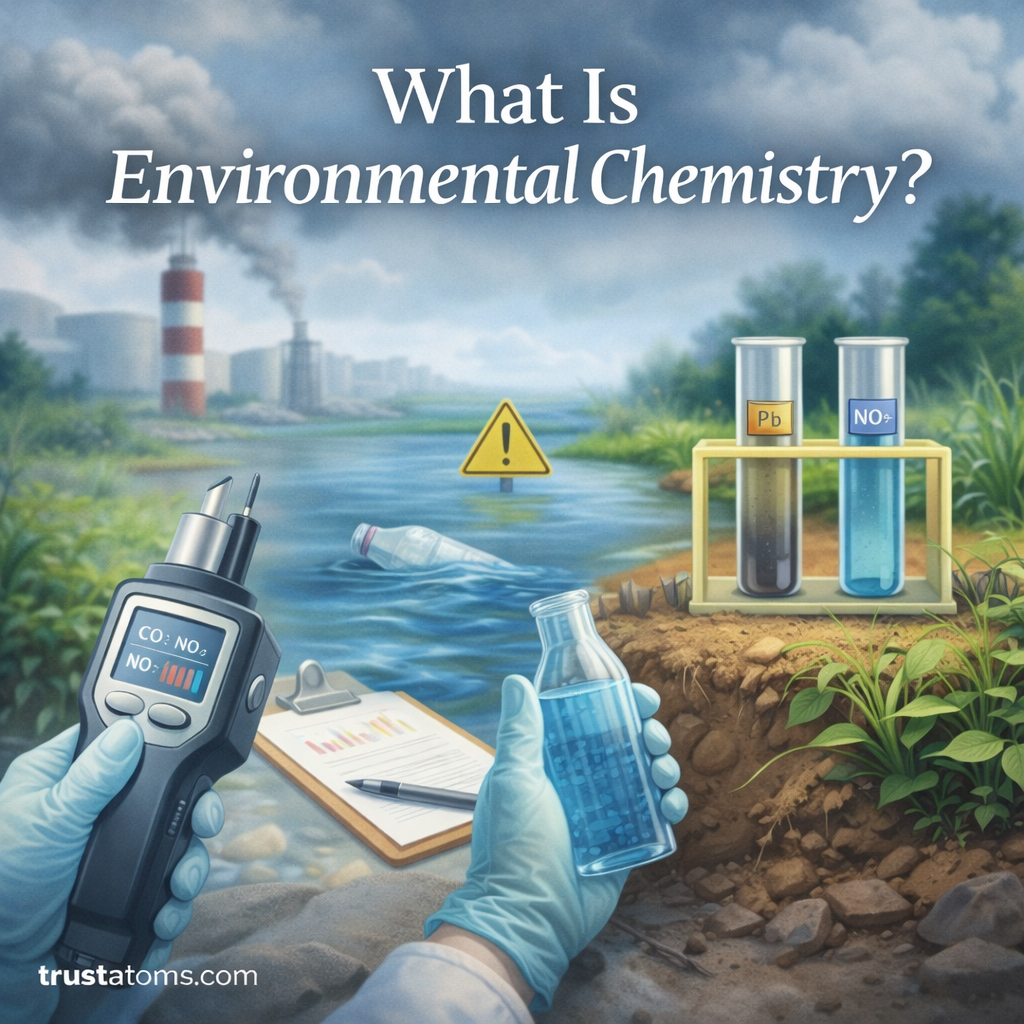
Environmental chemistry is the branch of chemistry that studies the chemical processes occurring in the natural environment. It focuses on how chemicals move through air, water, soil, and living organisms, as well as how human activities influence these systems.
Scientists in this field investigate pollution, chemical cycles in nature, and the environmental impact of industrial and agricultural chemicals. Environmental chemistry helps researchers understand how substances interact within ecosystems and how those interactions affect environmental health.
From monitoring air pollution to studying ocean chemistry, environmental chemistry plays a key role in protecting natural resources and improving environmental sustainability.
Understanding Environmental Chemistry
Environmental chemistry examines how chemical substances behave in the environment. This includes both naturally occurring chemicals and human-made pollutants.
Environmental chemists study:
- How chemicals enter the environment
- How they move through ecosystems
- How they transform through chemical reactions
- How they affect plants, animals, and humans
The field combines principles from several scientific disciplines, including:
- Chemistry
- Biology
- Geology
- Atmospheric science
- Ecology
By understanding these interactions, scientists can predict environmental changes and develop strategies to reduce pollution.
Major Components of Environmental Chemistry
Environmental chemistry focuses on several key areas of the natural world.
Atmospheric Chemistry
Atmospheric chemistry studies the chemical composition of Earth’s atmosphere and the reactions that occur within it.
Scientists examine topics such as:
- Air pollution
- Greenhouse gases
- Ozone layer depletion
- Chemical reactions involving sunlight
For example, environmental chemists study how emissions from vehicles and factories contribute to smog formation and climate change.
Aquatic Chemistry
Aquatic chemistry focuses on the chemical processes occurring in oceans, rivers, lakes, and groundwater.
Key research topics include:
- Water pollution
- Ocean acidification
- Nutrient cycles
- Dissolved oxygen levels
Aquatic chemistry helps scientists understand how pollutants move through water systems and how they affect aquatic life.
Soil and Geochemical Chemistry
Soil chemistry studies how chemicals interact with minerals, organic matter, and microorganisms in the ground.
Important topics include:
- Nutrient cycling in soil
- Chemical weathering of rocks
- Heavy metal contamination
- Agricultural fertilizers and pesticides
Soil chemistry influences crop productivity, ecosystem health, and groundwater quality.
Sources of Environmental Chemicals
Chemicals in the environment originate from both natural sources and human activities.
Natural Sources
Many chemicals naturally occur in the environment through geological and biological processes.
Examples include:
- Volcanic gases released into the atmosphere
- Minerals dissolved in water from rock weathering
- Organic compounds produced by plants
- Methane released from wetlands
These natural processes have shaped Earth’s chemical environment for millions of years.
Human-Caused Sources
Human activities have introduced many additional chemicals into the environment.
Common sources include:
- Industrial emissions
- Vehicle exhaust
- Agricultural fertilizers and pesticides
- Plastic waste
- Chemical manufacturing
- Oil spills
Environmental chemists study how these substances spread through ecosystems and how they affect environmental balance.
Chemical Cycles in the Environment
One of the most important topics in environmental chemistry is the study of biogeochemical cycles. These cycles describe how elements move through Earth’s systems.
Major cycles include:
- Carbon cycle
- Nitrogen cycle
- Phosphorus cycle
- Sulfur cycle
- Oxygen cycle
For example, the carbon cycle involves the movement of carbon between the atmosphere, oceans, soil, plants, and animals.
Environmental chemists study how human activities, such as fossil fuel combustion and deforestation, disrupt these natural cycles.
Common Environmental Pollutants
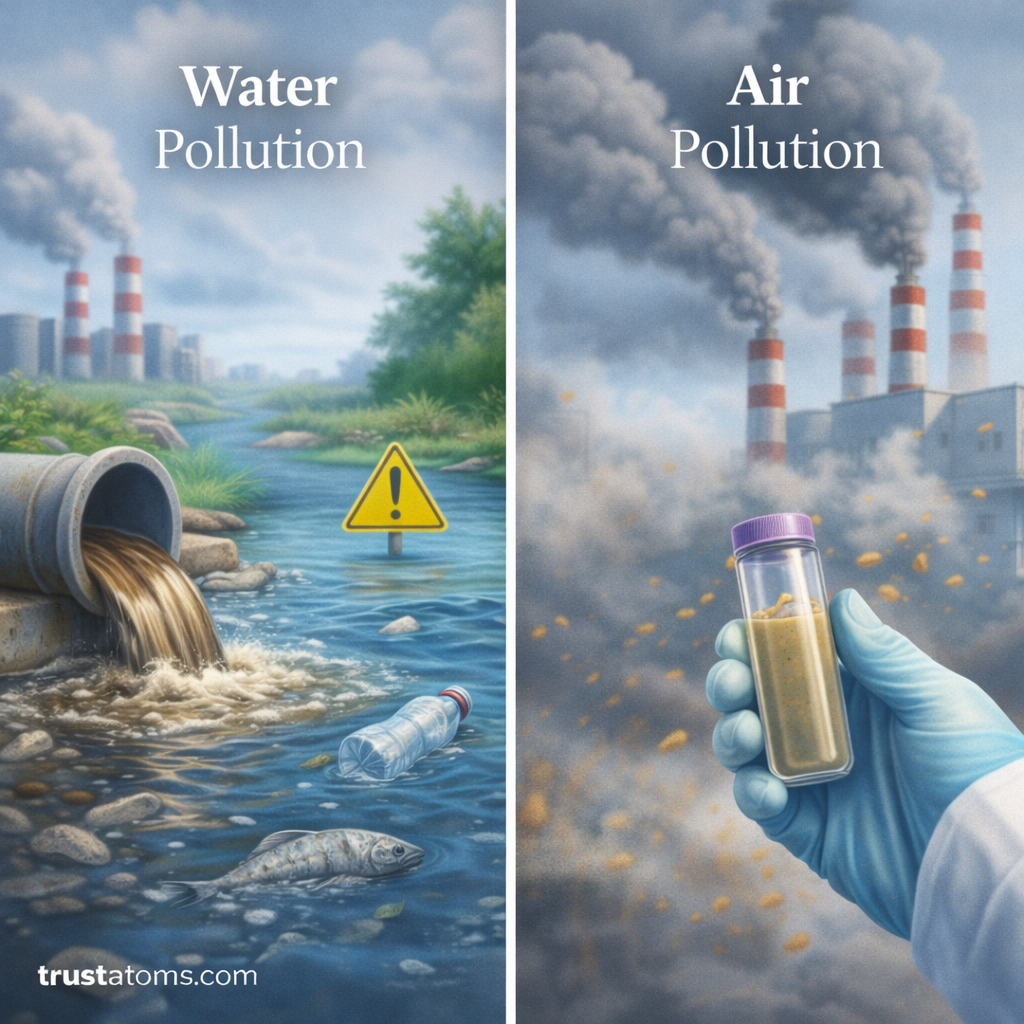
Environmental chemistry often focuses on identifying and studying pollutants that can harm ecosystems or human health.
Some common environmental pollutants include:
Air Pollutants
- Carbon monoxide
- Nitrogen oxides
- Sulfur dioxide
- Particulate matter
- Volatile organic compounds (VOCs)
These pollutants can contribute to respiratory illness, smog, and climate change.
Water Pollutants
- Heavy metals such as lead and mercury
- Industrial chemicals
- Agricultural runoff
- Microplastics
- Oil contamination
Water pollution can affect drinking water supplies and aquatic ecosystems.
Soil Contaminants
- Pesticides
- Industrial waste
- Petroleum residues
- Toxic metals
Soil contamination can reduce agricultural productivity and enter the food chain.
Tools and Methods Used in Environmental Chemistry
Environmental chemists rely on a wide range of analytical techniques to study environmental samples.
Common tools include:
- Mass spectrometry
- Chromatography
- Spectroscopy
- Chemical sensors
- Environmental monitoring equipment
These tools allow scientists to detect extremely small concentrations of chemicals in air, water, and soil.
Researchers also use computer models to predict how pollutants will spread through ecosystems.
Why Environmental Chemistry Is Important
Environmental chemistry helps scientists understand how human activity influences the planet.
This knowledge supports efforts to:
- Reduce pollution
- Protect ecosystems
- Improve public health
- Develop sustainable technologies
- Manage natural resources responsibly
Government agencies and environmental organizations rely on environmental chemistry research to establish regulations that limit harmful emissions and protect water and air quality.
Environmental Chemistry and Climate Change
Environmental chemistry is closely connected to climate science.
Chemists study how greenhouse gases interact in the atmosphere, including:
- Carbon dioxide (CO₂)
- Methane (CH₄)
- Nitrous oxide (N₂O)
These gases trap heat in the atmosphere and contribute to global warming.
Environmental chemists analyze atmospheric samples, monitor emissions, and develop strategies to reduce greenhouse gas concentrations.
Real-World Applications of Environmental Chemistry
Environmental chemistry has practical applications in many industries and scientific fields.
Examples include:
Pollution Monitoring
Scientists regularly test air, water, and soil samples to track pollution levels and identify contamination sources.
Water Treatment
Chemical processes are used to remove contaminants from drinking water and wastewater.
Renewable Energy
Environmental chemists study cleaner energy sources and materials that reduce environmental impact.
Environmental Cleanup
Chemists develop methods for removing pollutants from contaminated sites through processes such as:
- Bioremediation
- Chemical neutralization
- Soil washing
- Water filtration
The Future of Environmental Chemistry
As environmental challenges continue to grow, environmental chemistry will become increasingly important.
Emerging research areas include:
- Microplastic pollution
- Green chemistry and sustainable materials
- Carbon capture technologies
- Advanced environmental sensors
- Climate modeling
By understanding the chemistry of Earth’s systems, scientists can develop solutions that protect ecosystems while supporting human development.
Final Thoughts
Environmental chemistry studies the chemical interactions that shape Earth’s environment. By examining how chemicals move through air, water, soil, and living organisms, environmental chemists help explain how natural systems function and how human activities affect them.
The insights gained from environmental chemistry guide policies, technologies, and environmental protection strategies that support a healthier and more sustainable planet.