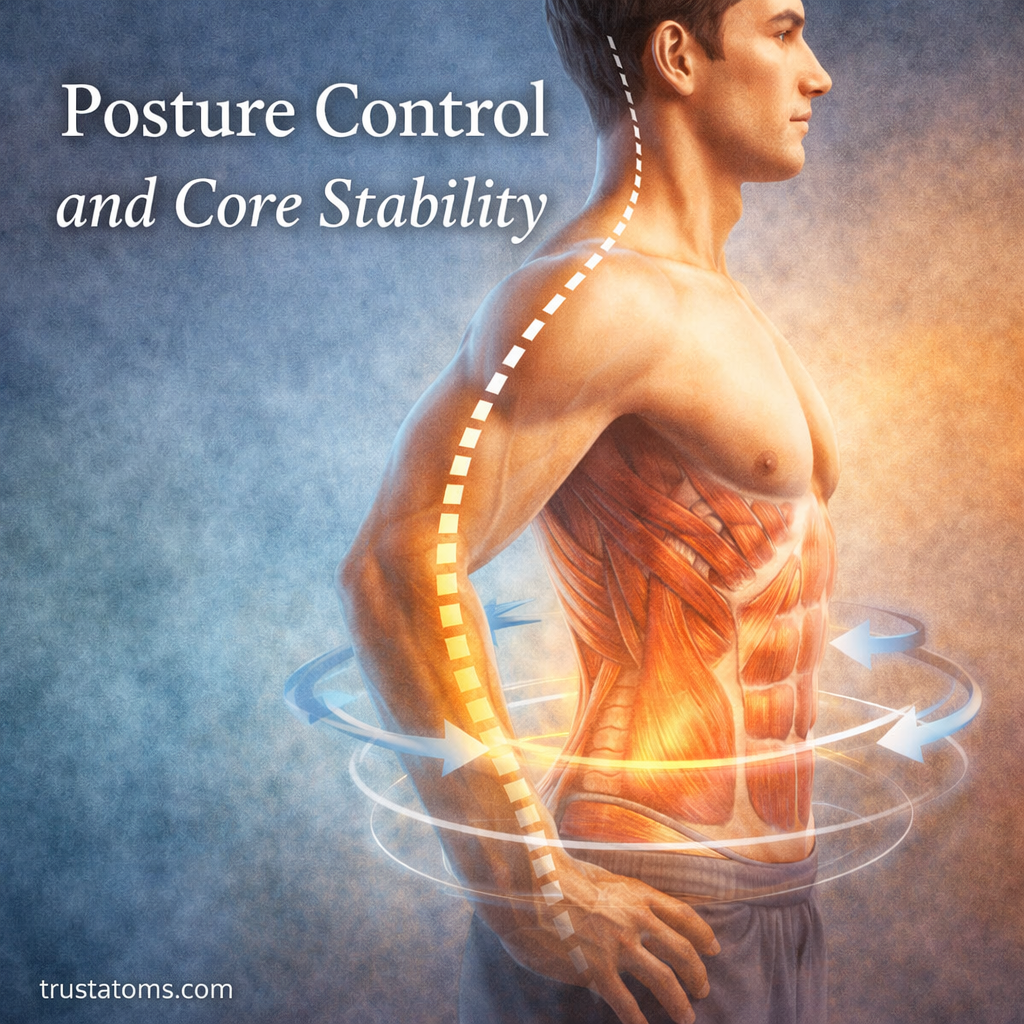
Posture control and core stability are essential for maintaining balance, preventing injury, and supporting efficient movement. Whether sitting, standing, or exercising, the body relies on a coordinated system of muscles and joints to keep the spine aligned and stable.
Understanding how posture and core stability work together can help improve everyday comfort and long-term musculoskeletal health.
What Is Posture Control?
Posture control refers to the body’s ability to maintain proper alignment of the head, spine, and limbs during both movement and rest.
Key Elements of Good Posture
- Neutral spine (natural curves maintained)
- Head aligned over shoulders
- Shoulders relaxed, not rounded
- Even weight distribution
Types of Posture
- Static posture – maintaining position while sitting or standing
- Dynamic posture – maintaining alignment during movement
Why Posture Matters
- Reduces strain on muscles and joints
- Improves breathing and circulation
- Enhances balance and coordination
- Prevents long-term discomfort and injury
What Is Core Stability?
Core stability refers to the strength and coordination of muscles that support and stabilize the spine and pelvis.
Core Muscle Groups
The “core” includes more than just abdominal muscles:
- Deep abdominal muscles (transverse abdominis)
- Rectus abdominis (front of abdomen)
- Obliques (side muscles)
- Lower back muscles (erector spinae)
- Pelvic floor muscles
- Diaphragm
Primary Functions
- Stabilize the spine during movement
- Transfer force between upper and lower body
- Maintain balance and posture
- Protect the spine from excessive strain
How Posture and Core Stability Work Together
Posture and core stability are closely connected and depend on each other for proper function.
The Relationship
- Core muscles support spinal alignment
- Proper posture reduces unnecessary muscle strain
- A stable core allows controlled and efficient movement
What Happens Without Stability
- Increased pressure on spinal discs
- Muscle imbalances and fatigue
- Poor movement patterns
- Higher risk of injury
The Role of the Core in Everyday Movement
Core stability is active in almost every movement, even if it’s not noticeable.
Everyday Activities That Use Core Stability
- Sitting upright at a desk
- Standing for long periods
- Walking and running
- Lifting and carrying objects
- Reaching, bending, and twisting
Example: Lifting an Object
- Core muscles engage to stabilize the spine
- Legs generate the lifting force
- Spine remains aligned to distribute load safely
Without proper core engagement, the lower back absorbs excessive stress.
Common Posture Problems
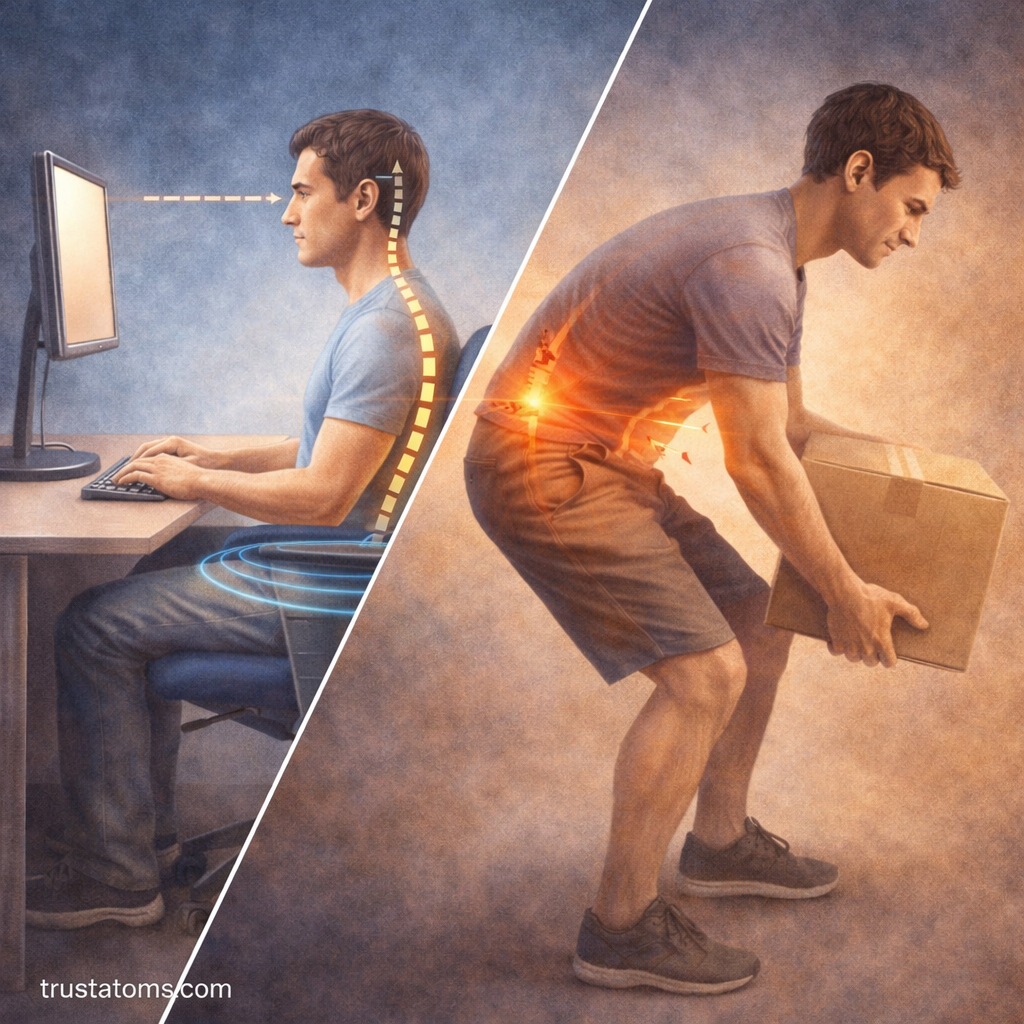
Modern lifestyles often contribute to poor posture and reduced core stability.
Common Issues
- Forward head posture
- Rounded shoulders
- Excessive lower back arch (lordosis)
- Slouched sitting posture
Causes
- Prolonged sitting
- Weak core muscles
- Poor ergonomics
- Lack of movement
Effects on the Body
- Neck and back pain
- Reduced mobility
- Increased fatigue
- Higher injury risk
Benefits of Strong Core Stability
Improving core stability has wide-ranging benefits beyond posture.
Key Benefits
- Better spinal support and alignment
- Improved balance and coordination
- Enhanced athletic performance
- Reduced risk of injury
- Increased efficiency in movement
How the Body Maintains Balance and Stability
Posture control involves coordination between multiple systems.
Key Systems Involved
- Muscular system – provides strength and control
- Nervous system – coordinates movement and balance
- Sensory input – includes vision and inner ear balance
How It Works
- The brain receives sensory information
- It processes body position and movement
- Muscles adjust to maintain balance and posture
This process happens continuously and automatically.
Tips for Improving Posture and Core Stability
Small daily habits can significantly improve posture and core strength.
Practical Tips
- Sit with feet flat and back supported
- Keep screens at eye level
- Take breaks from prolonged sitting
- Engage core muscles during daily activities
- Practice proper lifting techniques
Simple Core Exercises
- Planks
- Bridges
- Bird-dog exercise
- Dead bugs
Consistency is more important than intensity for long-term improvement.
Why Posture Control and Core Stability Are Essential
Posture and core stability form the foundation for healthy movement and spinal support.
Key Takeaways
- Posture control maintains proper body alignment
- Core stability supports and protects the spine
- Both systems work together to enable efficient movement
- Poor posture and weak core muscles increase injury risk
- Strengthening the core improves overall function and balance
Final Thoughts
Posture control and core stability are essential for both everyday activities and long-term health. From sitting at a desk to performing physical tasks, the body relies on a stable core and proper alignment to function efficiently.
By improving awareness, strengthening key muscles, and maintaining good habits, you can support better posture, reduce discomfort, and enhance overall movement quality.