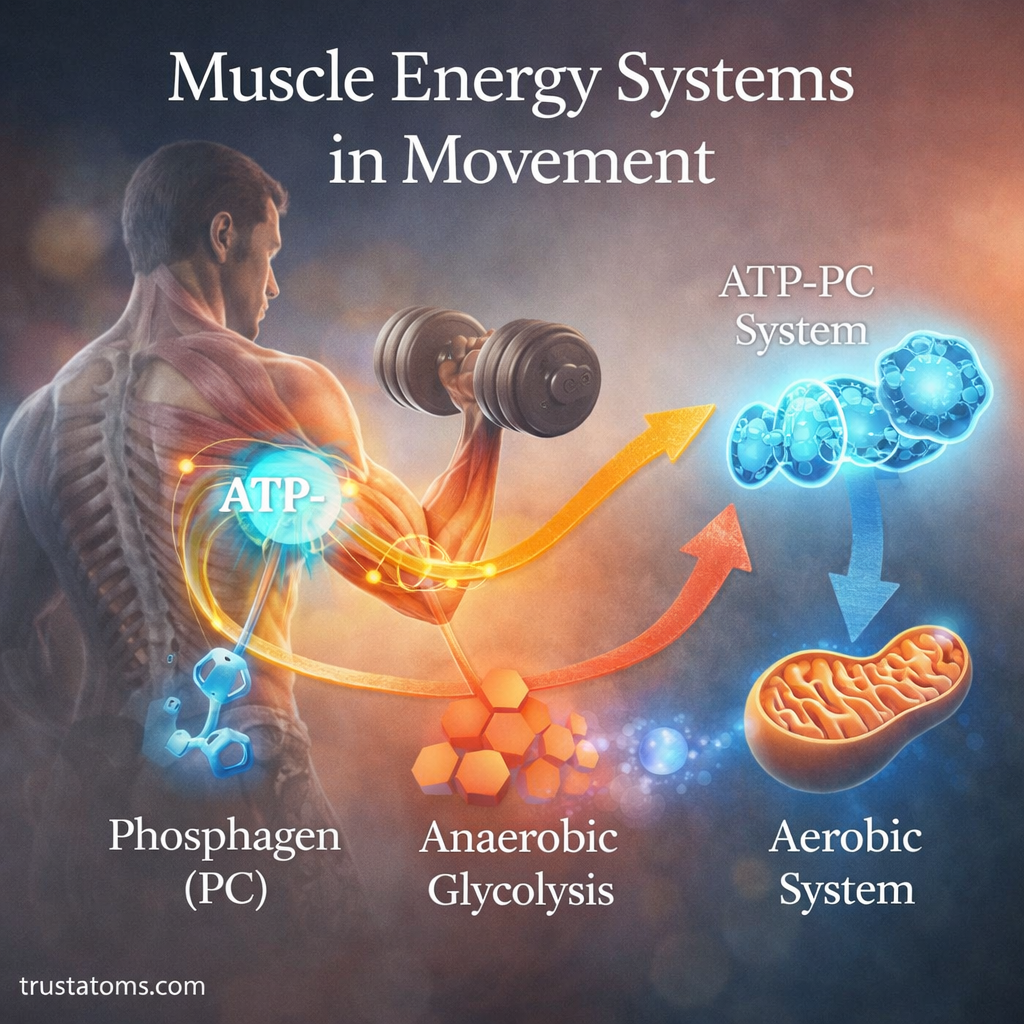
Muscle energy systems regenerate adenosine triphosphate (ATP), the molecule that supplies usable energy for muscle contraction and movement. The three main systems are the ATP-PC system, anaerobic glycolysis, and aerobic metabolism, which work simultaneously but contribute differently depending on exercise intensity and duration.
Whether you stand up, climb stairs, sprint, or walk for an hour, your muscles must continually replace the ATP they consume. Understanding these pathways connects exercise physiology with human anatomy and explains why some activities can be sustained for hours while others cause exhaustion within seconds.
What Are Muscle Energy Systems?
Muscle energy systems are metabolic pathways that replenish ATP as muscle cells use it. ATP releases energy when it is broken down into adenosine diphosphate (ADP) and inorganic phosphate, supporting muscle contraction, calcium handling, and other cellular activities.
Muscles contain only a small supply of immediately available ATP, so regeneration must continue throughout activity. The relationship between ATP and contraction is explained in ATP Use in Muscle Contraction.
Different muscle fibers have different metabolic characteristics, as discussed in Muscle Fiber Types and Performance. Exercise also increases oxygen demand and breathing, which is explored in Exercise and Increased Ventilation.
Carbohydrates and fats absorbed from food provide fuel for ATP production. Metabolic Processing After Absorption explains how the body handles these nutrients after digestion.
The Three Main Muscle Energy Systems
The ATP-PC, glycolytic, and aerobic systems differ in how quickly they regenerate ATP, which fuels they use, and how long they can support a given workload. Their contributions overlap rather than switching on and off at fixed times.
1. ATP-PC System: Immediate Energy for Powerful Movements
The ATP-PC system, also called the phosphagen system, provides an extremely rapid way to replenish ATP. It uses phosphocreatine stored inside muscle cells to transfer a phosphate group to ADP, producing ATP through the enzyme creatine kinase.
This process does not directly require oxygen and can support very high power output. However, phosphocreatine stores are limited, so its greatest contribution occurs during the opening seconds of intense activity.
- Typical emphasis: The first several seconds of maximal effort, often illustrated by activities lasting approximately 10 seconds or less.
- Examples: A short sprint, a vertical jump, or a heavy single-repetition lift.
- Main limitation: Available phosphocreatine decreases rapidly during sustained maximal exertion.
During recovery, ATP generated largely through aerobic metabolism helps restore phosphocreatine. This is one reason rest between repeated explosive efforts affects performance.
2. Anaerobic Glycolysis: Rapid ATP From Glucose
Glycolysis breaks down glucose into smaller molecules while producing ATP. It can generate ATP without directly using oxygen, making it especially useful when muscle energy demand rises faster than aerobic ATP production can meet it.
Glucose may come from the bloodstream or from glycogen stored in muscles. During high-intensity exercise, glycolysis can operate rapidly, with much of the resulting pyruvate converted into lactate.
Lactate formation helps regenerate a molecule called NAD+, allowing glycolysis to continue. Lactate is not simply waste: muscles and other tissues can use it as fuel, and the liver can help recycle it into glucose.
- Typical emphasis: High-intensity efforts lasting tens of seconds to a few minutes.
- Examples: A demanding 400-meter run, repeated sprints, or sustained high-intensity intervals.
- Main limitation: High ATP demand and associated metabolic disturbances make maximal efforts difficult to sustain.
Intense glycolytic activity often accompanies a burning sensation and declining performance, but lactate itself is not the direct cause of that burning. Changes in acidity, ion balance, and excitation-contraction processes contribute to muscle fatigue.
3. Aerobic Metabolism: Sustained ATP Production
Aerobic metabolism uses oxygen-dependent processes in mitochondria to produce ATP from carbohydrates, fats, and, to a lesser extent under ordinary conditions, amino acids.
Compared with the phosphagen system, aerobic ATP production generally has a lower maximum rate but a much greater capacity for sustained energy supply. It contributes even at rest and during short exercise bouts, becoming especially prominent during prolonged activity.
- Typical emphasis: Sustained activities lasting several minutes or longer.
- Examples: Walking, distance running, cycling, and swimming at sustainable intensities.
- Main requirements: Adequate oxygen delivery, functioning mitochondria, and available metabolic fuels.
Aerobic metabolism can support movement for hours, although performance remains limited by exercise intensity, fuel availability, hydration, temperature, and other physiological factors.
How the Three Energy Systems Work Together
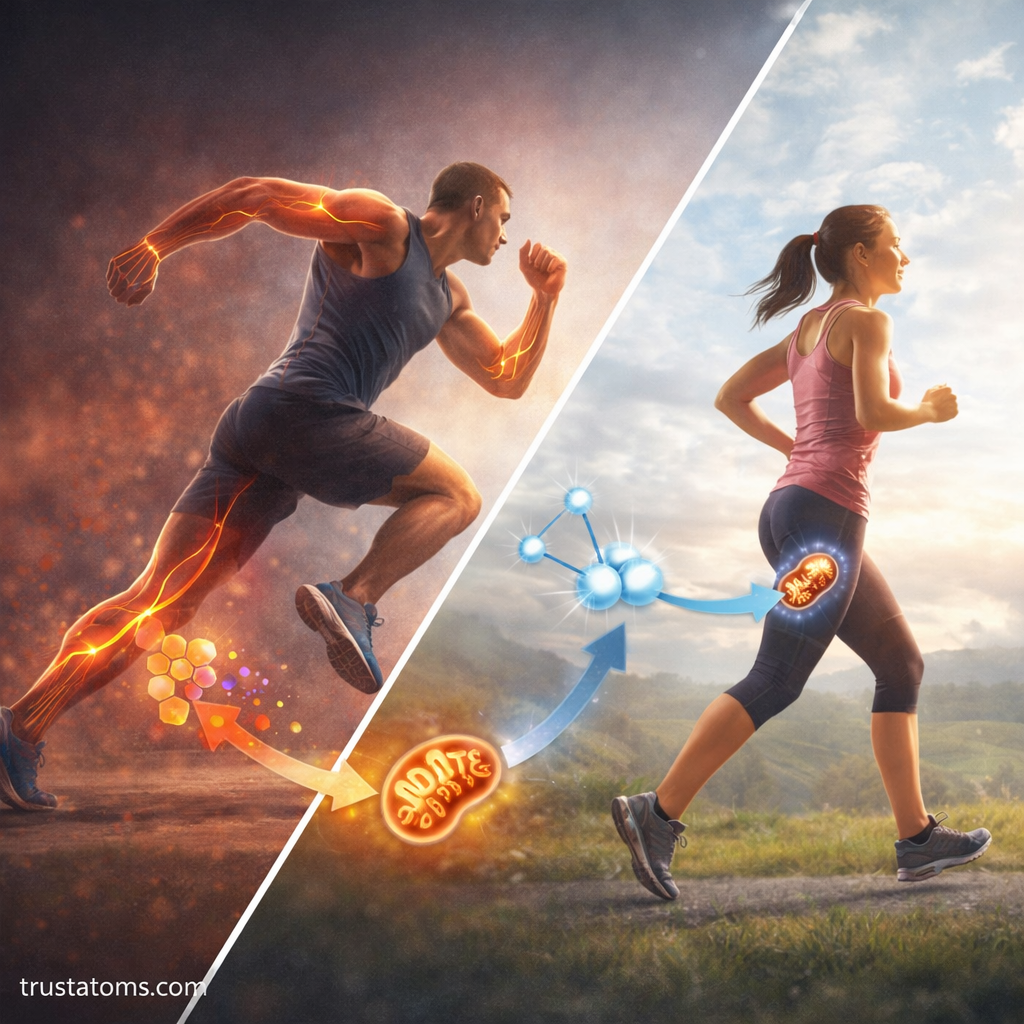
All three systems contribute to ATP regeneration during movement. What changes is their relative contribution as the intensity and duration of exercise change.
| Energy System | Main ATP Source | Typical Activity |
|---|---|---|
| ATP-PC | Stored phosphocreatine | Explosive efforts lasting seconds |
| Anaerobic glycolysis | Glucose or muscle glycogen | Short, demanding sustained efforts |
| Aerobic metabolism | Carbohydrates, fats, and some amino acids | Longer-duration exercise |
These categories describe tendencies, not strict time boundaries. A hard sprint uses aerobic metabolism alongside anaerobic pathways, and an endurance run may require substantial glycolytic ATP production during a steep climb or finishing sprint.
Example: Running From a Standing Start
Imagine beginning a run from a complete stop. During the first few strides, the ATP-PC system makes a substantial contribution because your muscles need energy immediately for acceleration.
If you continue sprinting hard for 30 seconds, glycolytic ATP production becomes increasingly important as phosphocreatine availability falls. Aerobic metabolism also contributes throughout the effort.
Now imagine slowing to a comfortable jog for 20 minutes. Aerobic metabolism supplies most of the ATP needed to maintain the pace. If you accelerate up a hill, the relative contribution from faster ATP-producing pathways rises again.
This example shows how muscles adjust energy supply continuously rather than selecting one exclusive system for an entire activity.
What Determines Which Energy System Contributes Most?
Several factors influence the balance between ATP-producing pathways:
- Intensity: Higher power demands increase reliance on rapid ATP regeneration.
- Duration: Longer exercise requires pathways capable of sustained energy production.
- Training status: Endurance training can improve mitochondrial function and aerobic capacity.
- Fuel availability: Muscle glycogen supports demanding exercise, while fat stores contribute substantially during many lower-intensity activities.
- Recovery: Rest between efforts allows partial restoration of phosphocreatine and other physiological conditions.
How Energy Availability Relates to Muscle Fatigue
Fatigue is a reduction in the ability to produce or maintain the required force or power. It cannot be explained by one energy system running out completely.
During short maximal efforts, phosphocreatine depletion and changes in muscle metabolites can reduce performance. During prolonged exercise, low glycogen availability, dehydration, heat stress, and central nervous system factors may contribute.
ATP levels are normally defended by multiple metabolic pathways, even when force output declines. This distinction helps explain why muscles can become fatigued without completely exhausting their ATP supply.
How Training Develops Different Energy Pathways
Exercise training produces adaptations related to the demands placed on muscles. Short, explosive efforts emphasize high rates of ATP turnover, while endurance exercise challenges sustained aerobic energy production.
- Strength and power training: Develops force production and adaptations relevant to brief, high-intensity efforts.
- High-intensity interval training: Challenges rapid ATP production and can also improve aerobic fitness.
- Endurance training: Can increase mitochondrial content, oxidative enzyme activity, and the ability to sustain aerobic exercise.
Training adaptations overlap because every exercise session uses multiple energy pathways. The specific response depends on intensity, duration, recovery, and an individual’s starting fitness.
Frequently Asked Questions
Which energy system is used first during exercise?
All three systems are active from the beginning, but stored ATP and phosphocreatine provide especially rapid support when intense movement starts suddenly.
Does anaerobic exercise mean muscles receive no oxygen?
No. Anaerobic pathways can produce ATP without directly requiring oxygen, but oxygen delivery and aerobic metabolism continue during most high-intensity exercise.
Is lactate responsible for muscle soreness after exercise?
No. Lactate is produced and cleared during normal metabolism. Delayed-onset muscle soreness is associated with exercise-induced tissue stress and subsequent inflammatory and repair processes, not lactate remaining in muscles.
The ATP-PC system supports immediate high-power demands, glycolysis supplies ATP rapidly during intense activity, and aerobic metabolism sustains longer efforts. Because these pathways operate together, a change in speed, resistance, or duration shifts their contributions rather than switching one system completely off. Understanding that overlap explains how muscles transition from explosive movements to endurance activity and why fatigue develops differently across tasks.
This article is for general education and is not medical advice. Talk to a qualified health professional about any medical concern.
Sources: OpenStax, Anatomy and Physiology 2e; McArdle, Katch, and Katch, Exercise Physiology: Nutrition, Energy, and Human Performance; American College of Sports Medicine (ACSM).