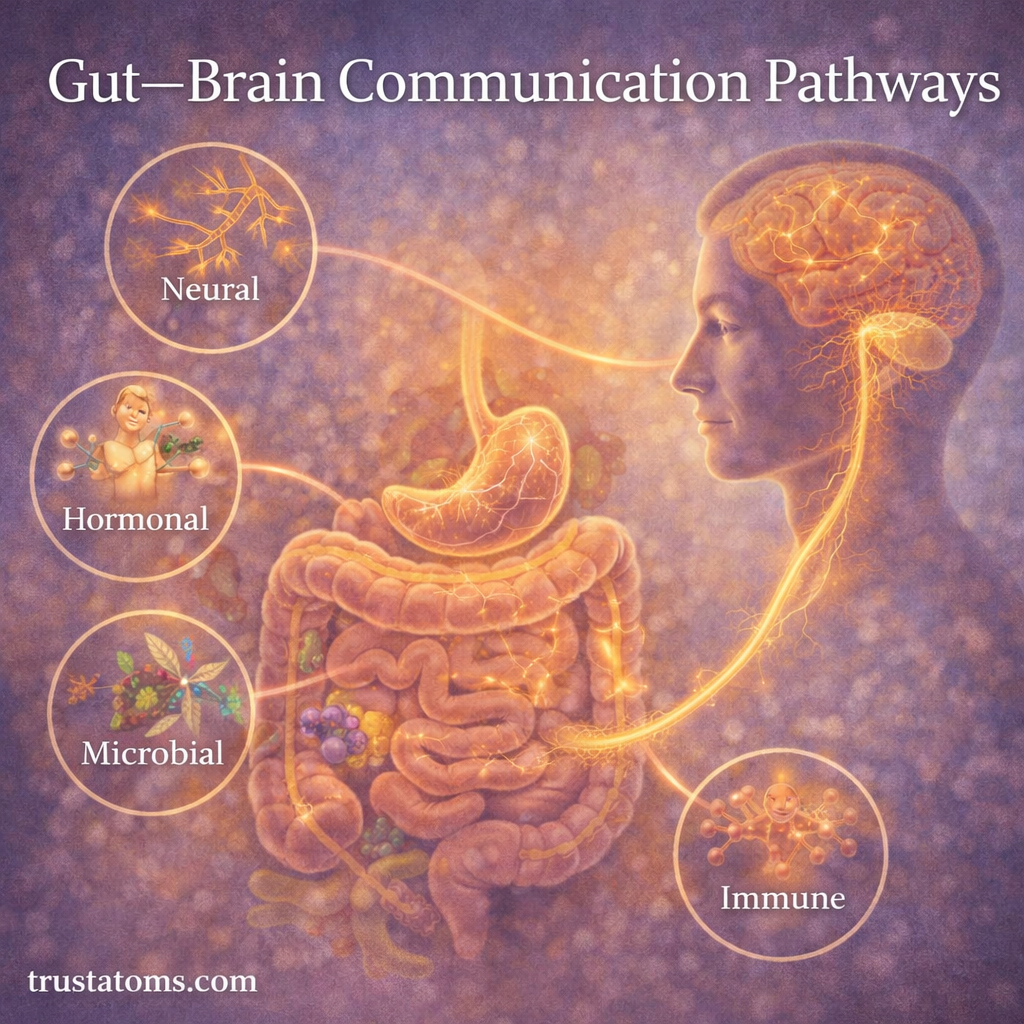
Gut–brain communication is the two-way exchange of information between the digestive system and the brain through nerves, hormones, immune signals, and microbial activity. These pathways help regulate digestion, appetite, intestinal movement, and responses to stress while allowing the brain to respond to conditions inside the gut.
This connection, called the gut–brain axis, explains why nervousness can cause stomach discomfort and why digestive sensations can influence how a person feels. Understanding these interactions connects human anatomy with the nervous, endocrine, and digestive systems.
What Is the Gut–Brain Axis?
The gut–brain axis is a communication network linking the gastrointestinal tract with the central nervous system. Information travels in both directions, allowing the brain to influence digestion while the gut reports information about nutrients, stretching, inflammation, and other internal conditions.
The enteric nervous system contains interconnected neurons within the digestive tract that coordinate local digestive activity. The Enteric Nervous System Overview explains how this network controls many intestinal functions independently while remaining connected to the brain.
Other components include gut hormones, immune cells, and microorganisms. Microbiome Basics in Digestive Function describes the microorganisms involved, while Digestive Hormones in Appetite Signaling explains how chemical messages influence hunger and fullness.
Diet also affects this environment. Dietary Fiber and Colon Function explores how fiber supports intestinal activity and microbial fermentation. Meanwhile, Neurotransmitter Systems in Signal Modulation explains how chemical messengers influence communication between nerve cells.
Four Main Gut–Brain Communication Pathways
The gut and brain exchange information through several overlapping routes. Each carries different signals, and many digestive responses involve more than one pathway.
1. Neural Signaling Through the Vagus and Other Nerves
The vagus nerve connects the brainstem with many digestive organs. Sensory fibers carry information about intestinal stretching, nutrients, and chemical conditions toward the brain, while motor pathways help regulate digestive activity.
The vagus nerve is not the only connection. Spinal sensory nerves also transmit information from the digestive tract, including signals associated with discomfort and pain.
2. Hormonal Messages About Hunger and Fullness
Digestive organs release hormones that influence appetite and food processing. Some act through the bloodstream, while others also affect nearby nerves.
- Ghrelin: Produced mainly in the stomach and associated with increased hunger.
- Cholecystokinin (CCK): Released from the small intestine and contributes to fullness and digestive secretion.
- GLP-1: Helps regulate insulin secretion, appetite, and stomach emptying.
- Peptide YY: Released by intestinal cells and contributes to appetite regulation after eating.
Leptin, produced primarily by fat tissue rather than the gut, also communicates information about longer-term energy stores to the brain.
3. Immune and Inflammatory Signaling
The intestinal lining contains immune cells that monitor microorganisms and potentially harmful substances. When activated, these cells can release signaling molecules called cytokines.
Immune signals may influence nerve activity, hormone responses, and brain function. However, inflammation does not always produce noticeable changes in mood or thinking, and the effects depend on the condition and severity.
4. Signals Associated With the Gut Microbiome
Intestinal microorganisms process substances that human digestive enzymes cannot fully break down. Their metabolic products can interact with intestinal cells, immune pathways, and nerve signaling.
For example, microbial fermentation of certain dietary fibers produces short-chain fatty acids, including acetate, propionate, and butyrate. These compounds influence intestinal physiology and may participate in broader gut–brain signaling.
Animal studies provide evidence that gut microorganisms can affect stress-related behavior. Human research is still determining which microbial changes reliably influence mental health and whether particular interventions produce consistent benefits.
How Neurotransmitters Connect Gut Activity With Nerve Signals
Neurotransmitters are chemical messengers used by neurons to communicate. Several also function within the digestive system, where they influence movement, secretion, and sensory responses.
| Messenger | Role in Gut–Brain Communication |
|---|---|
| Serotonin | Helps regulate intestinal movement and sensory signaling |
| Acetylcholine | Supports communication controlling digestive muscle contractions and secretion |
| Norepinephrine | Participates in sympathetic responses that influence digestive activity |
| GABA | Acts as an inhibitory signaling molecule in neural circuits and is also involved in intestinal signaling |
Most of the body’s serotonin is produced in the gastrointestinal tract, primarily by enterochromaffin cells. However, serotonin produced in the gut does not readily cross the blood–brain barrier, so it should not be confused with serotonin acting directly within the brain.
How Stress Changes Digestive Function
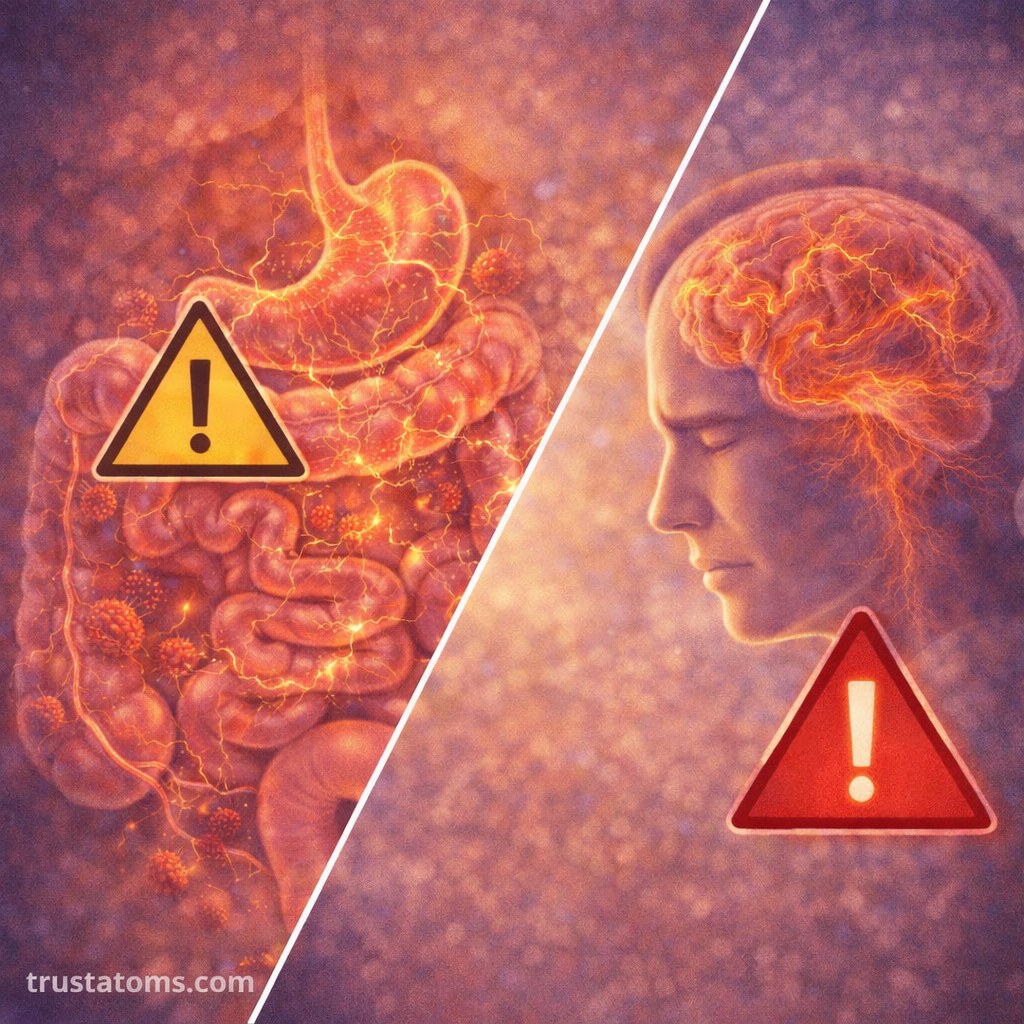
Stress activates neural and hormonal responses that prepare the body to handle a perceived challenge. These responses can change intestinal contractions, digestive secretion, and sensitivity to sensations inside the gut.
Some people experience faster bowel movements during stress, while others notice constipation, nausea, or reduced appetite. The effects vary because stress responses interact with existing digestive conditions and individual physiology.
An Everyday Example: Stomach Discomfort Before an Exam
Imagine a student waiting to take an important exam. As anxiety increases, the brain activates stress-related pathways, changing autonomic nervous system activity and releasing stress hormones.
The student may notice stomach fluttering, nausea, or an urgent need to use the bathroom. These sensations can occur even without an infection or a problem with the food they ate.
Signals from the digestive tract can then increase awareness of discomfort, potentially reinforcing the student’s anxiety. This illustrates two-way communication: the brain changes gut activity, and the resulting sensations influence the person’s experience.
Conditions Associated With Altered Gut–Brain Communication
Disruptions in gut–brain signaling are especially relevant to disorders of gut–brain interaction, a recognized group of gastrointestinal conditions.
- Irritable bowel syndrome (IBS): Involves recurring abdominal pain associated with changes in bowel habits and may include altered gut sensitivity and motility.
- Functional dyspepsia: Can cause persistent upper abdominal discomfort, early fullness, or bothersome fullness after meals without an explanatory structural disease.
- Functional constipation: May involve changes in intestinal movement and coordination, alongside other contributing factors.
Anxiety and depression can occur alongside digestive disorders, but this does not mean gut bacteria directly cause these mental health conditions. Their relationships involve multiple biological, psychological, and environmental factors.
Daily Habits That Support Digestive and Nervous System Health
Several habits can support normal digestive function and general well-being, although none guarantees a particular change in gut–brain signaling.
- Eat varied, fiber-containing foods: Vegetables, fruits, legumes, and whole grains provide nutrients and substrates for microbial fermentation.
- Maintain regular sleep: Consistent sleep supports normal nervous system and hormonal regulation.
- Stay physically active: Exercise supports overall health and can help maintain bowel regularity.
- Practice stress management: Relaxation techniques and psychological therapies may help some people with stress-sensitive digestive symptoms.
Fermented foods and probiotics may be useful in particular circumstances, but their effects depend on the product, microbial strains, and individual condition. They should not be treated as proven solutions for every digestive or mental health concern.
Frequently Asked Questions
Is the gut really a second brain?
The phrase refers to the enteric nervous system, which contains extensive neural networks that coordinate digestion. It can manage many local digestive activities independently, but it does not perform the same functions as the brain.
Can gut bacteria directly control mood?
Research suggests gut microorganisms may influence pathways associated with stress and behavior, but direct control of human mood has not been established. Mental health depends on many interacting factors beyond the microbiome.
Why does anxiety sometimes cause diarrhea?
Anxiety can change autonomic nerve activity, intestinal movement, and sensitivity to gut sensations. In some people, these changes increase bowel urgency or contribute to loose stools.
Gut–brain communication combines rapid neural signals with slower hormonal, immune, and microbial pathways to coordinate digestion and responses to internal conditions. Stress-related changes in bowel activity demonstrate how strongly these systems interact, while microbiome research continues to clarify which effects are meaningful in humans. Understanding the distinct pathways helps explain digestive symptoms without assuming that every gut problem originates in the brain or microbiome.
This article is for general education and is not medical advice. Talk to a qualified health professional about any medical concern.
Sources: Guyton and Hall Textbook of Medical Physiology; Boron and Boulpaep Medical Physiology; National Institute of Diabetes and Digestive and Kidney Diseases (NIDDK).