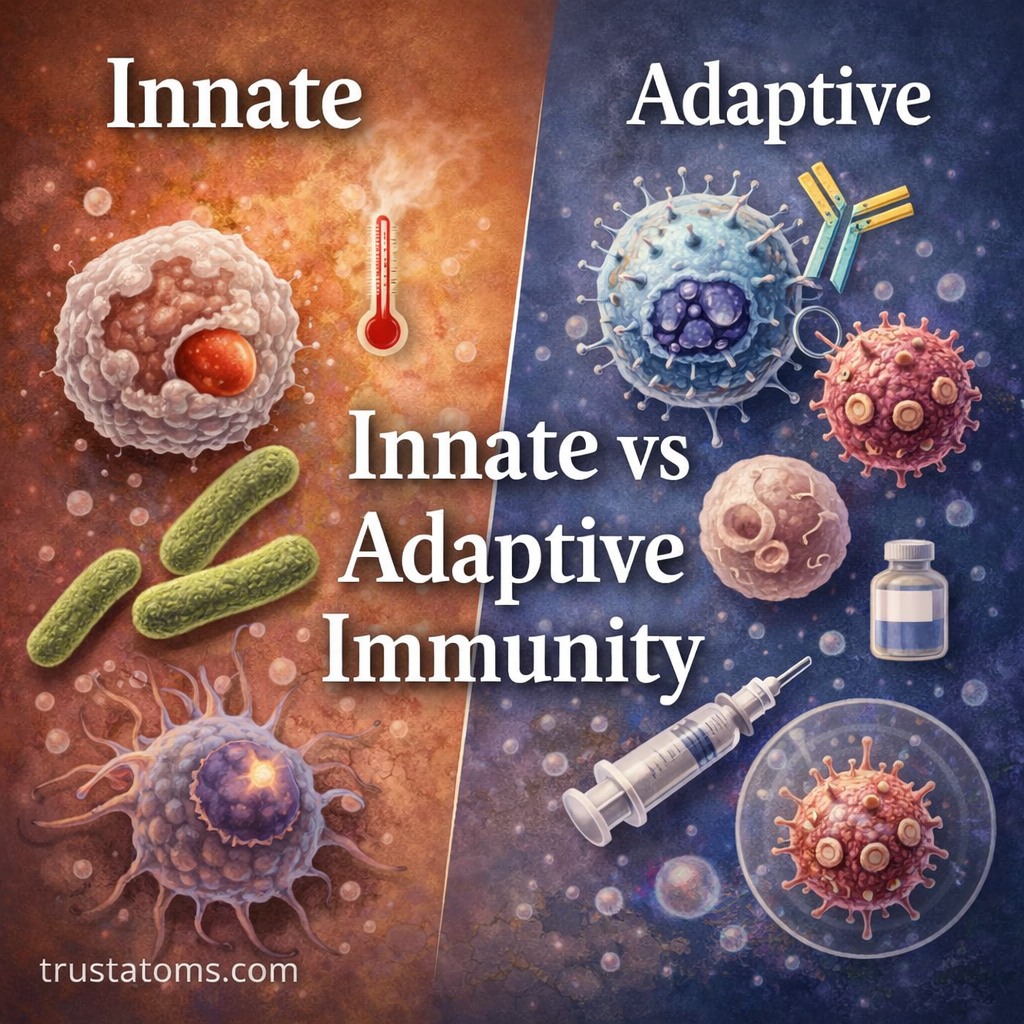
The human immune system protects the body using two powerful and complementary defense strategies: innate immunity and adaptive immunity. While both work toward the same goal—defending against harmful invaders—they operate in very different ways.
Understanding how these two systems differ (and work together) helps explain how your body fights infections, responds to vaccines, and builds long-term protection.
What Is Innate Immunity?
Innate immunity is your body’s first line of defense. It is fast, non-specific, and always ready to respond.
This system is something you are born with, and it reacts immediately when a pathogen enters your body.
Key Characteristics of Innate Immunity
- Immediate response (minutes to hours)
- Non-specific (targets a wide range of pathogens)
- No memory (does not improve with repeated exposure)
Main Components of Innate Immunity
Innate immunity includes both physical barriers and internal defenses:
Physical and Chemical Barriers
- Skin (blocks entry of pathogens)
- Mucous membranes (trap microbes)
- Stomach acid (destroys ingested pathogens)
Immune Cells
- Phagocytes (engulf and digest invaders)
- Natural killer (NK) cells (destroy infected or abnormal cells)
Inflammatory Response
When tissue is damaged or infected, inflammation helps:
- Increase blood flow
- Recruit immune cells
- Contain and eliminate threats
Common signs include redness, swelling, heat, and pain.
What Is Adaptive Immunity?
Adaptive immunity is a specialized and targeted defense system that develops over time. It learns from past infections and improves with each exposure.
Unlike innate immunity, adaptive immunity is highly specific and capable of remembering pathogens.
Key Characteristics of Adaptive Immunity
- Slower initial response (days to activate)
- Highly specific to particular pathogens
- Creates memory for faster future responses
Main Components of Adaptive Immunity
Lymphocytes
- B cells – produce antibodies that target specific pathogens
- T cells – attack infected cells or coordinate immune responses
Antibodies
Antibodies are proteins that:
- Bind to specific antigens
- Neutralize pathogens
- Mark invaders for destruction
Memory Cells
After an infection, memory B and T cells remain in the body, allowing for a faster and stronger response if the same pathogen returns.
Key Differences Between Innate and Adaptive Immunity
Understanding the contrast between these systems makes their roles clearer:
Speed of Response
- Innate immunity: Immediate
- Adaptive immunity: Delayed (initially)
Specificity
- Innate immunity: General defense
- Adaptive immunity: Targeted response
Memory
- Innate immunity: No memory
- Adaptive immunity: Long-term memory
Response to Repeat Infections
- Innate immunity: Same response every time
- Adaptive immunity: Faster and stronger with each exposure
How Innate and Adaptive Immunity Work Together
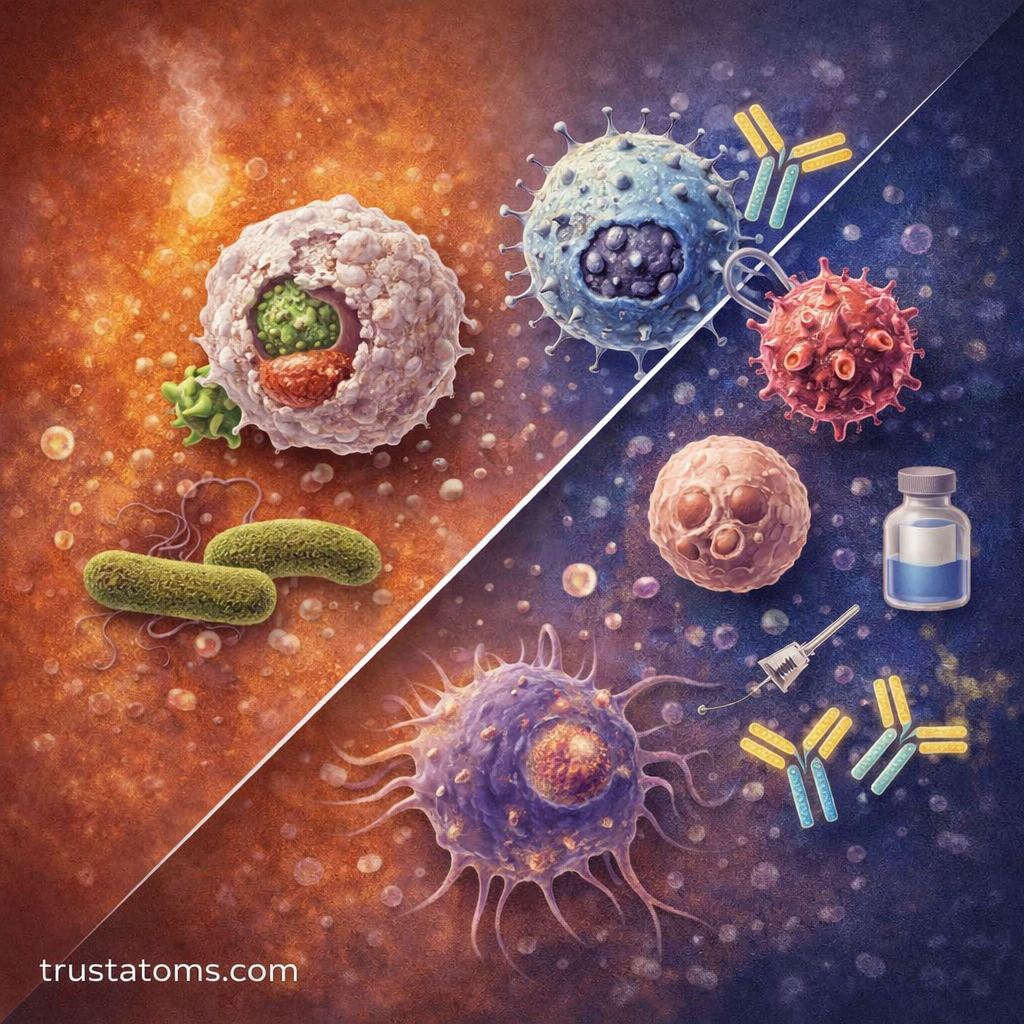
These two systems are not separate—they are deeply connected and rely on each other.
Here’s how they collaborate:
- Innate response activates first
- Detects and slows down the infection
- Signals are sent to adaptive system
- Antigens are presented to lymphocytes
- Adaptive response takes over
- Targets the specific pathogen more effectively
- Memory is formed
- Future infections are handled faster
Without innate immunity, the body wouldn’t have time to activate adaptive defenses. Without adaptive immunity, the body wouldn’t learn from past infections.
Why This Difference Matters
The distinction between innate and adaptive immunity explains many real-world health concepts:
Vaccination
Vaccines stimulate adaptive immunity by exposing the body to a harmless version of a pathogen, allowing memory cells to develop without causing illness.
Infection Recovery
The reason you often recover faster from a disease the second time is due to adaptive immune memory.
Immune Disorders
Problems in either system can lead to:
- Frequent infections (weak immunity)
- Autoimmune diseases (misdirected responses)
- Allergies (overactive responses)
Simple Example to Understand the Difference
Think of the immune system like a security system:
- Innate immunity = Security guards
- Always present, respond immediately, but treat all threats similarly
- Adaptive immunity = Intelligence team
- Learns, identifies specific threats, and improves over time
Both are essential for complete protection.
Final Thoughts
Innate and adaptive immunity are two essential parts of your body’s defense system. One acts quickly and broadly, while the other provides precision and long-term protection.
Together, they create a highly effective system that not only fights infections but also learns and adapts—keeping you healthier over time.