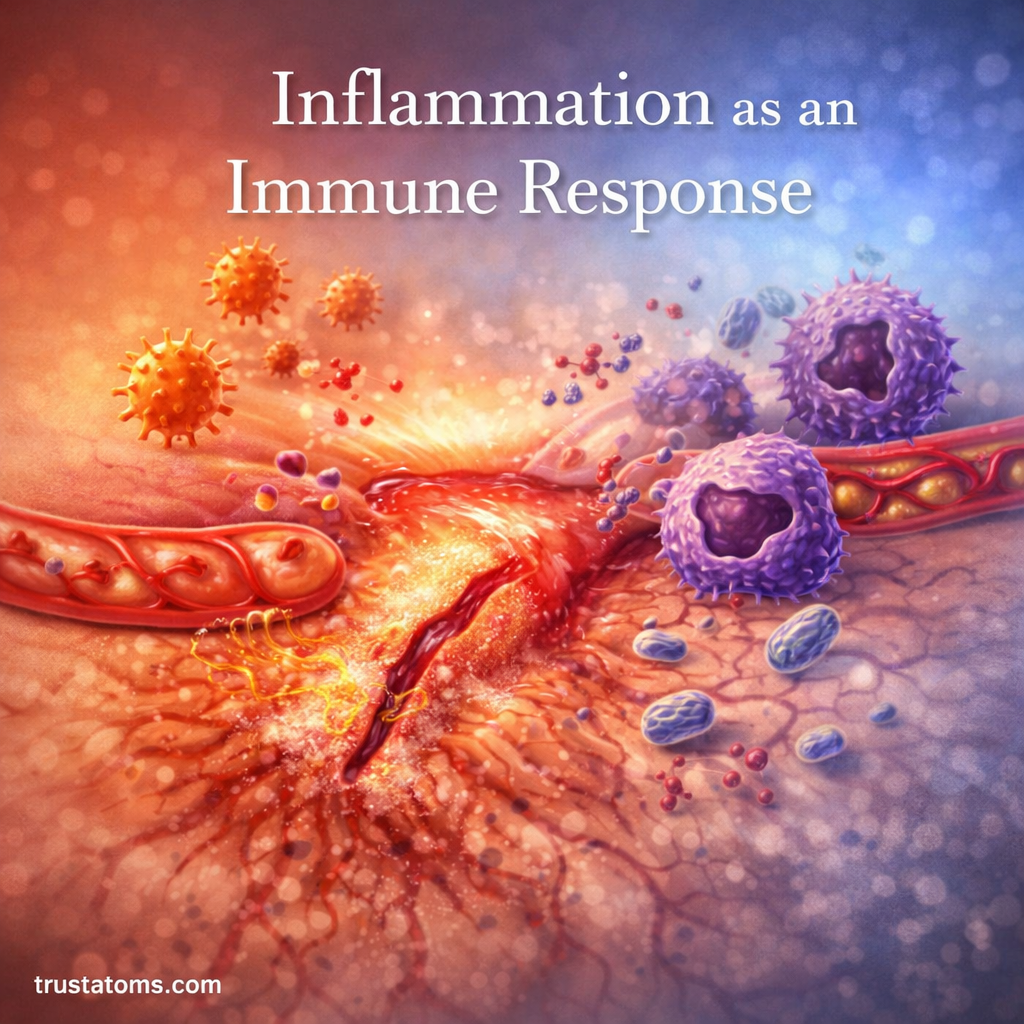
Inflammation is a protective immune response that occurs when the body detects infection, injury, or harmful substances. It increases blood flow, recruits immune cells, and activates repair processes, producing familiar signs such as redness, warmth, swelling, and pain.
Although inflammation can be uncomfortable, it helps the body contain threats and remove damaged tissue. Understanding this response connects human anatomy with the cellular defenses responsible for healing and explains why inflammation sometimes becomes harmful when it persists.
What Is Inflammation?
Inflammation is a coordinated response involving immune cells, blood vessels, and chemical signals. It begins when tissues detect pathogens, damaged cells, or irritating substances. Unlike an infection, which involves invading microorganisms, inflammation can occur without any microbes being present.
Common triggers include bacterial or viral infections, cuts, burns, sprains, and exposure to irritants. Inflammation is a major component of innate immunity, providing rapid protection before a more targeted adaptive response develops.
During bacterial infections, inflammation works alongside mechanisms that recognize and destroy microbes. Antibacterial Defense Mechanisms explains how these protective responses help contain bacterial threats.
The Five Classic Signs of Inflammation
Inflammation produces five traditionally recognized signs. Not every sign is present or visible in every affected tissue.
- Redness: Blood vessels widen, increasing blood flow near the affected area.
- Heat: Increased local circulation makes the tissue feel warmer.
- Swelling: Fluid moves from small blood vessels into surrounding tissues.
- Pain: Inflammatory chemicals sensitize nerve endings, while swelling can increase pressure.
- Loss of function: Pain, swelling, or tissue damage can temporarily restrict normal movement or activity.
These changes help deliver defensive cells and proteins to the affected area. However, excessive swelling or prolonged inflammation can interfere with normal tissue function.
How the Inflammatory Response Develops
Inflammation begins through a sequence of overlapping events. Some changes start within minutes, while immune cell recruitment and tissue repair continue over hours or days.
- Detection of injury or pathogens: Resident immune cells recognize microbial molecules or signals released by damaged tissues.
- Release of chemical signals: Cells release substances like cytokines and histamines to signal an immune response.
- Changes in blood vessels: Small vessels widen, and increased permeability allows fluid and selected proteins to enter tissues.
- Recruitment of white blood cells: Neutrophils and other immune cells attach to vessel walls, cross into tissues, and move toward inflammatory signals.
- Resolution and repair: As the trigger is controlled, inflammatory signaling decreases and cells remove debris while tissue repair progresses.
The response is regulated rather than being a simple increase in immune activity. When the original threat disappears, mechanisms that limit further inflammation help restore normal tissue conditions.
Acute vs. Chronic Inflammation
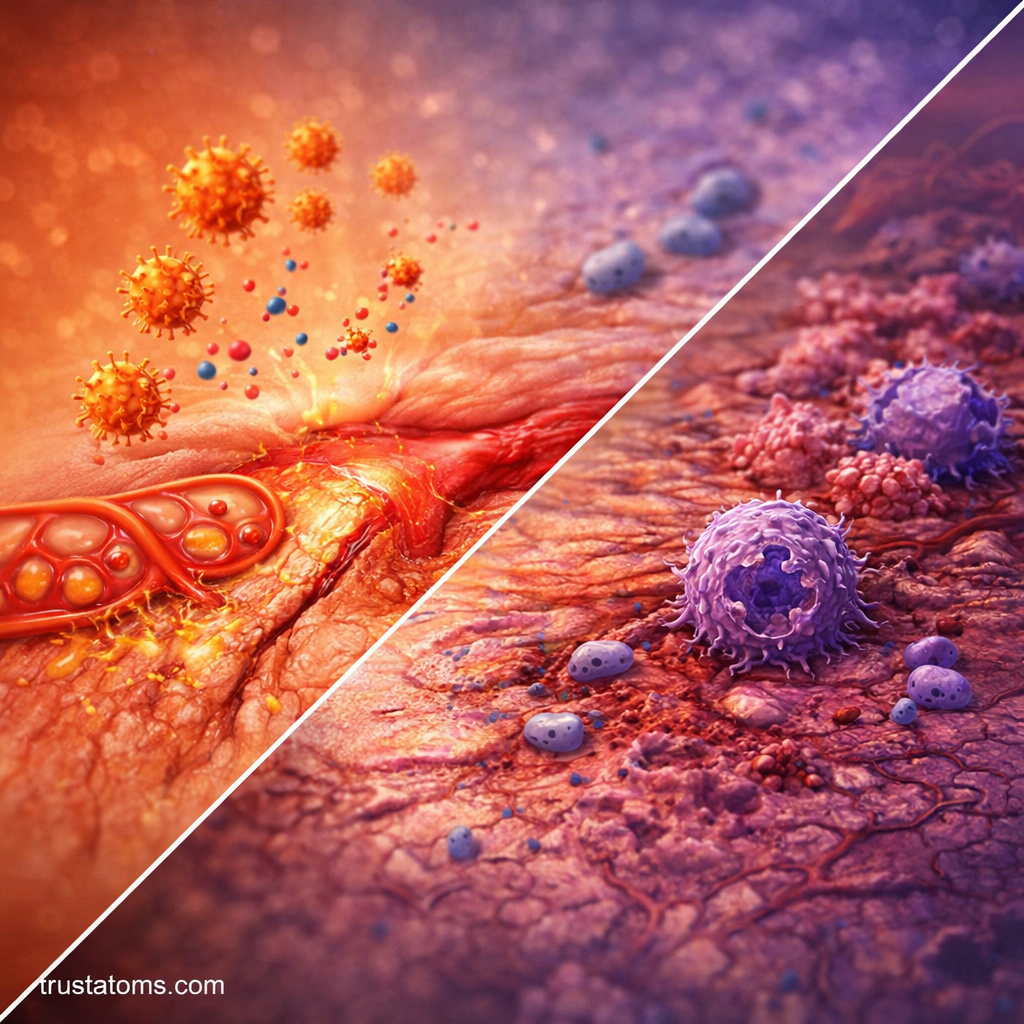
Inflammation is commonly classified as acute or chronic according to its duration, cellular activity, and underlying cause.
| Feature | Acute inflammation | Chronic inflammation |
|---|---|---|
| Duration | Usually hours to days | May persist for weeks, months, or years |
| Typical triggers | Recent injury or infection | Persistent infection, autoimmune activity, or prolonged irritation |
| Immune cells | Neutrophils often predominate early | Macrophages and lymphocytes are commonly involved |
| Outcome | Often resolves with healing | May cause ongoing tissue injury and scarring |
Acute inflammation is usually protective and temporary. Chronic inflammation can arise when a trigger remains present or immune regulation fails, potentially contributing to conditions such as rheumatoid arthritis and inflammatory bowel disease.
An Everyday Example: A Small Cut on Your Finger
Imagine accidentally cutting your finger while preparing vegetables. Within minutes, nearby blood vessels respond to injury signals, and the area may become red, tender, and slightly swollen. Platelets help form a clot, while immune cells begin protecting the damaged tissue.
During the following hours, neutrophils can enter the tissue to help remove bacteria. Macrophages clear damaged cells and support the transition toward repair. Over the next several days, an uncomplicated superficial cut usually becomes less inflamed as the skin heals.
This example illustrates why some inflammation is useful. Increasing redness, spreading warmth, worsening pain, pus, or fever may instead suggest infection or another complication that requires medical assessment.
Cells and Chemical Mediators Involved in Inflammation
Neutrophils and Macrophages
Neutrophils are often among the earliest white blood cells recruited during acute inflammation. They engulf microbes and release substances that help destroy pathogens. Macrophages remove microorganisms and dead cells while producing signals that influence both inflammation and healing.
Histamine, Prostaglandins, and Cytokines
Histamine contributes to blood vessel dilation and increased permeability. Prostaglandins can promote pain, fever, and other inflammatory changes. Cytokines coordinate communication among immune cells, determining which defenses become active and how strongly they respond.
When inflammatory signals affect the whole body, they may contribute to fever and changes in immune activity beyond the original injury. Fever and Systemic Immune Response explains these broader effects.
How Inflammation Connects Innate and Adaptive Immunity
Inflammation begins largely through innate defenses, but it also helps activate adaptive immunity. Dendritic cells can collect microbial antigens, travel to lymph nodes, and present those antigens to T lymphocytes, helping initiate targeted responses.
Circulating complement proteins can help mark pathogens for removal and amplify inflammation. The Complement System Overview describes how these proteins support immune defense.
Blood vessels deliver immune cells and defensive molecules to affected tissues, while lymphatic vessels transport fluid and antigens toward lymph nodes. Immune System Integration with Circulation explains how these transport networks coordinate local and systemic defenses.
When Inflammation Causes Harm
Inflammation becomes damaging when it is excessive, directed against healthy tissues, or sustained after the original trigger should have resolved. Persistent immune activity can injure cells, disrupt organ function, and contribute to tissue remodeling or scarring.
Chronic inflammatory processes are involved in several diseases, including rheumatoid arthritis, asthma, and atherosclerosis. However, inflammation is not the sole cause of these conditions, and treatment depends on the underlying diagnosis.
Supporting Normal Inflammatory Regulation
Regular physical activity, adequate sleep, avoiding smoking, and eating a varied diet containing fruits, vegetables, and sources of unsaturated fats can support general health and normal immune function. These habits do not eliminate inflammation, nor should they replace treatment for inflammatory diseases.
Persistent swelling, unexplained pain, recurrent fever, or symptoms that worsen rather than improve deserve medical evaluation. The goal is not to suppress every inflammatory response but to address harmful or poorly controlled inflammation.
Frequently Asked Questions
Is inflammation always caused by an infection?
No. Inflammation can result from injuries, burns, autoimmune conditions, and irritants without an infection. Infection is one possible trigger, not a requirement.
What is the difference between inflammation and swelling?
Inflammation is a broader immune and tissue response involving cells, blood vessels, and signaling molecules. Swelling is one possible sign, caused partly by fluid accumulating in tissues. Swelling can also occur for reasons unrelated to inflammation.
How long does acute inflammation last?
Acute inflammation often develops rapidly and lasts hours to several days, although recovery depends on the cause and severity. More serious injuries or infections may require longer treatment and healing.
Inflammation protects the body by increasing local blood flow, recruiting immune cells, and helping clear damaged material before repair begins. Acute inflammation usually decreases as tissues recover, while persistent or misdirected responses can cause additional damage. The difference depends on how effectively the body controls the trigger and resolves the immune response.
This article is for general education and is not medical advice. Talk to a qualified health professional about any medical concern.
Sources: Abbas, Lichtman, and Pillai, Cellular and Molecular Immunology; Kumar, Abbas, and Aster, Robbins and Cotran Pathologic Basis of Disease; National Institute of Allergy and Infectious Diseases (NIAID).