Understanding how estrogen and progesterone regulate the menstrual cycle is essential for grasping human reproductive health. These two hormones act in a coordinated rhythm, controlling everything from ovulation to uterine lining development. Whether you’re studying anatomy or simply want a clearer picture of how the body works, this guide breaks it down step by step.
Overview of the Menstrual Cycle
The menstrual cycle typically lasts about 28 days (though it can vary). It is divided into four main phases:
- Menstrual phase
- Follicular phase
- Ovulation
- Luteal phase
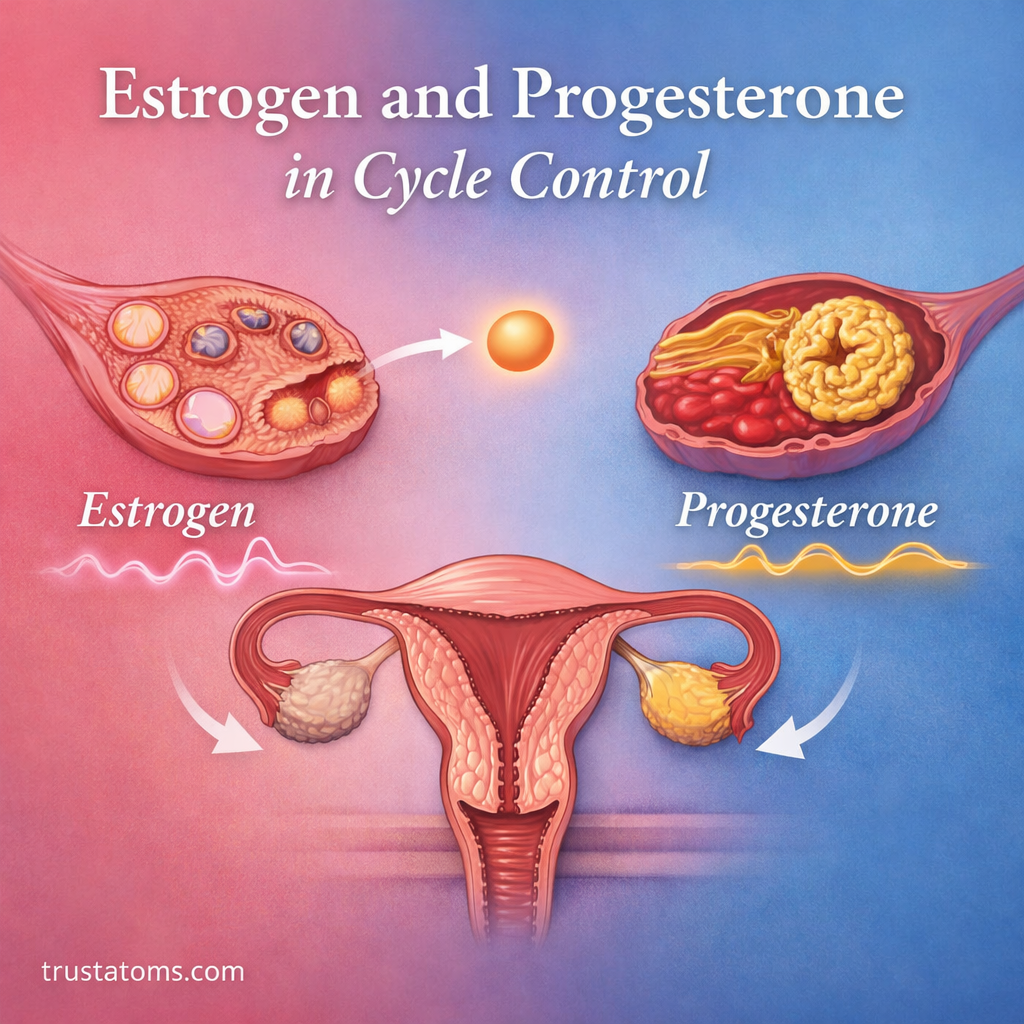
Two key hormones—estrogen and progesterone—drive these phases by signaling changes in the ovaries and uterus.
What Is Estrogen?
Estrogen is a group of hormones primarily produced by the ovaries. It plays a major role in:
- Development of female reproductive organs
- Regulation of the menstrual cycle
- Thickening of the uterine lining (endometrium)
- Supporting bone and cardiovascular health
Estrogen’s Role in the Cycle
During the follicular phase:
- Estrogen levels begin to rise
- It stimulates the growth of ovarian follicles
- It rebuilds the uterine lining after menstruation
As estrogen peaks, it triggers a surge in luteinizing hormone (LH), which leads to ovulation.
What Is Progesterone?
Progesterone is produced mainly by the corpus luteum (the structure that forms after ovulation).
Its primary functions include:
- Preparing the uterus for potential pregnancy
- Stabilizing the uterine lining
- Supporting early pregnancy if fertilization occurs
Progesterone’s Role in the Cycle
During the luteal phase:
- Progesterone levels increase after ovulation
- It maintains the thickened uterine lining
- It prevents further ovulation during that cycle
If pregnancy does not occur, progesterone levels drop, triggering menstruation.
How Estrogen and Progesterone Work Together
These hormones don’t act independently—they balance each other in a precise cycle.
Key Interactions
- Estrogen builds the uterine lining
- Progesterone stabilizes and maintains it
- Estrogen triggers ovulation
- Progesterone prevents additional ovulation
This balance ensures the reproductive system functions efficiently.
Hormonal Timeline Across the Cycle
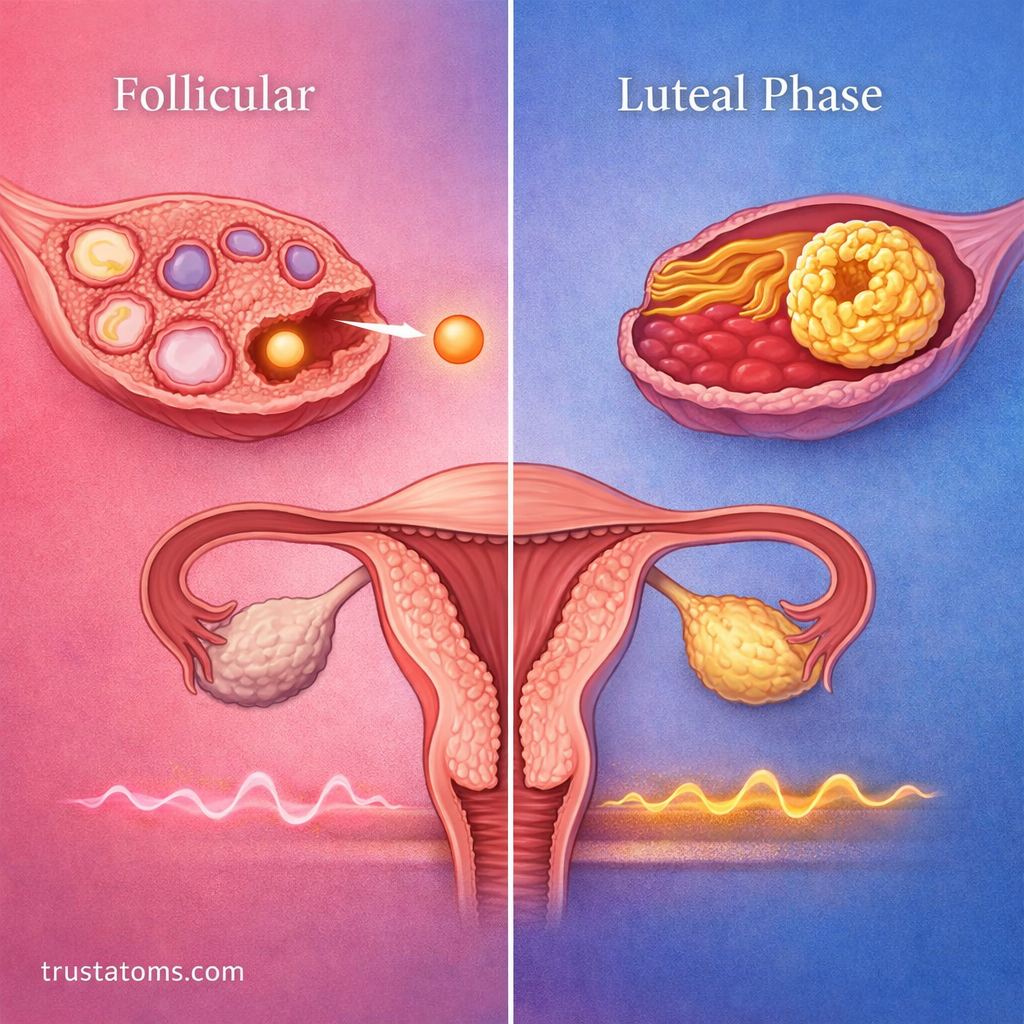
Follicular Phase (Days 1–13)
- Estrogen rises
- Progesterone remains low
- Uterine lining begins rebuilding
Ovulation (Around Day 14)
- Estrogen peaks
- LH surge occurs
- Egg is released from the ovary
Luteal Phase (Days 15–28)
- Progesterone rises significantly
- Estrogen has a secondary, smaller rise
- Uterine lining is maintained
Menstruation (If No Pregnancy)
- Estrogen and progesterone drop
- Uterine lining sheds
Why Hormonal Balance Matters
An imbalance between estrogen and progesterone can affect the cycle and overall health.
Common Effects of Imbalance
- Irregular periods
- Heavy or missed menstruation
- Premenstrual syndrome (PMS)
- Difficulty with ovulation
- Fertility challenges
Maintaining hormonal balance is essential for reproductive health and general well-being.
Factors That Influence These Hormones
Several internal and external factors can impact estrogen and progesterone levels:
- Stress
- Diet and nutrition
- Body fat levels
- Exercise habits
- Age and life stage (e.g., puberty, menopause)
- Medical conditions
Understanding these influences can help explain cycle changes.
Key Takeaways
- Estrogen and progesterone are the primary regulators of the menstrual cycle
- Estrogen dominates the first half of the cycle and triggers ovulation
- Progesterone dominates the second half and prepares the body for pregnancy
- Their rise and fall control menstruation
- A proper balance between the two is essential for cycle regularity and reproductive health
Final Thoughts
Estrogen and progesterone act like a coordinated system, guiding the body through each stage of the menstrual cycle. Their timing, balance, and interaction ensure that ovulation, uterine preparation, and menstruation occur smoothly. By understanding these hormones, you gain deeper insight into how the human body maintains reproductive function and overall hormonal harmony.