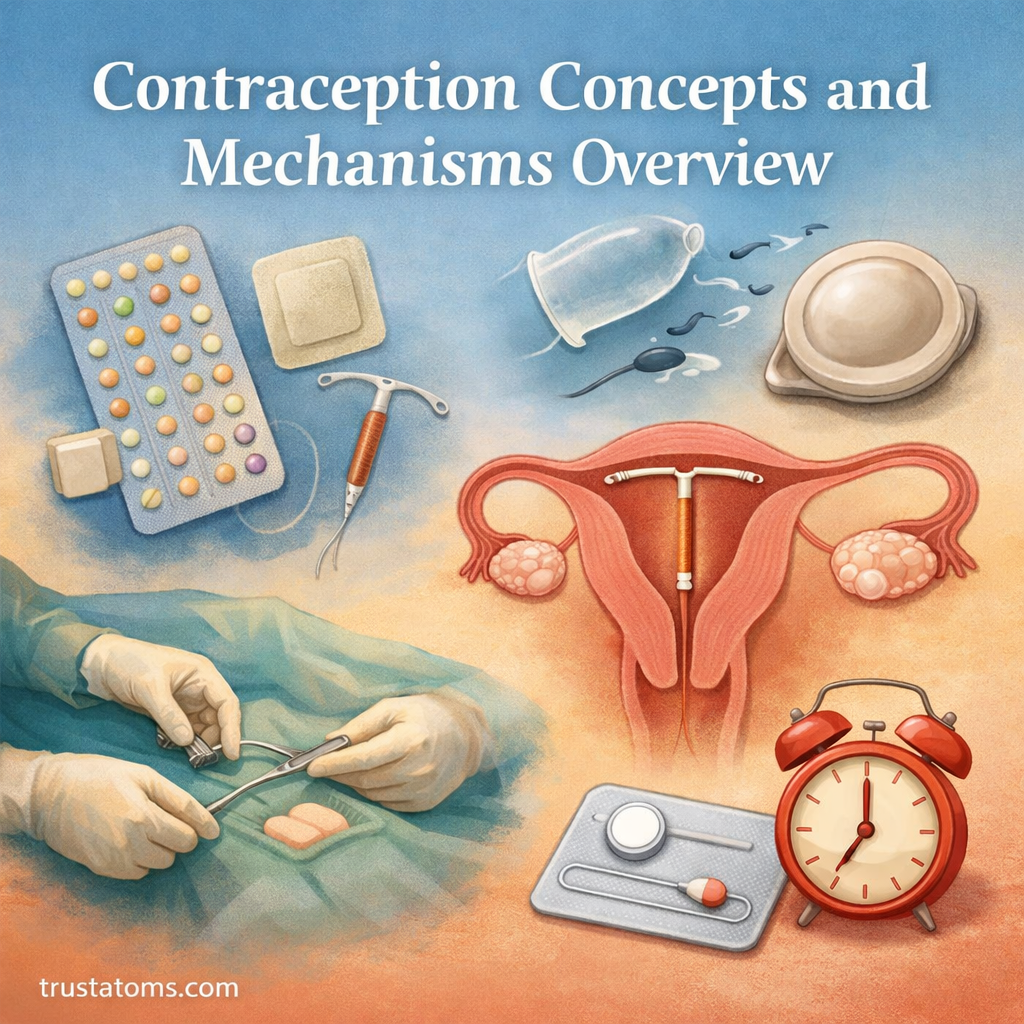
Contraception refers to methods used to prevent pregnancy by blocking sperm, preventing or delaying ovulation, or interfering with fertilization. Different methods use hormonal, physical, chemical, or surgical mechanisms, and their effectiveness depends on the method and how consistently it is used.
Understanding contraception begins with the reproductive structures studied in human anatomy, including the ovaries, uterus, cervix, fallopian tubes, and sperm-producing organs. Knowing how these structures function helps explain why some contraceptives work before sexual intercourse, while others can prevent pregnancy afterward.
What Is Contraception?
Contraception, also called birth control, is the deliberate prevention of pregnancy. Methods act at different points in reproduction, including egg release, sperm transport, and fertilization.
The female reproductive anatomy overview explains the structures involved in egg production and pregnancy. The timing of egg release is covered in menstrual cycle phases, while reproductive tract functions describes how reproductive cells move through the body.
Contraceptive methods differ in duration, reversibility, hormone exposure, user involvement, and protection against sexually transmitted infections (STIs). No single method is best for every person.
The Reproductive Processes Contraception Targets
Pregnancy requires several biological events to occur in sequence:
- Ovulation: An ovary releases an egg, usually into the region near a fallopian tube.
- Sperm transport: Sperm travel through the reproductive tract toward the fallopian tubes.
- Fertilization: A sperm joins with an egg, usually within a fallopian tube.
- Implantation: The developing embryo attaches to the uterine lining several days after fertilization.
Most contraceptives prevent pregnancy by stopping ovulation or preventing sperm from fertilizing an egg. Established contraceptive methods are not intended to terminate an existing pregnancy.
Main Categories of Contraception
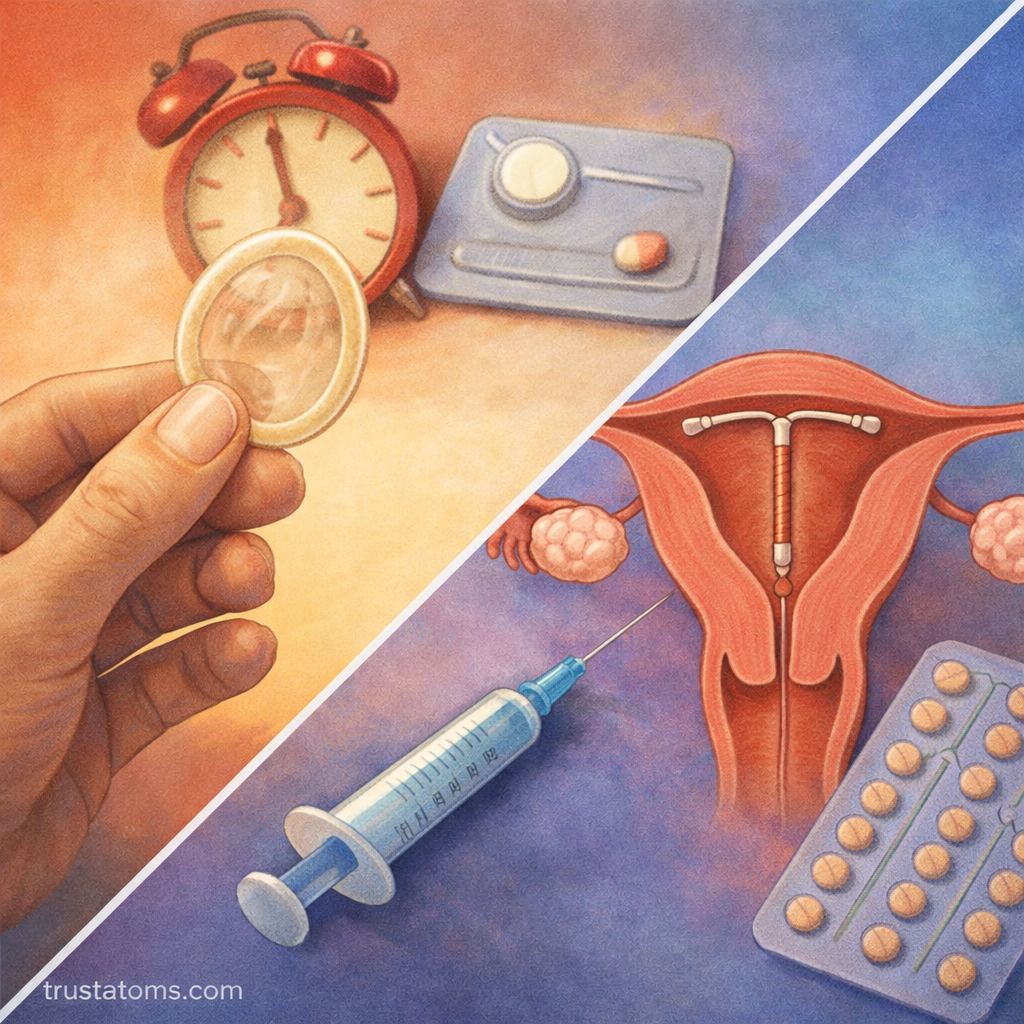
1. Hormonal Contraception
Hormonal contraceptives contain synthetic forms of estrogen, progestin, or progestin alone. Depending on the formulation, they suppress egg release, thicken cervical mucus, and change the uterine lining.
Hormonal methods primarily stop ovulation, making fertilization impossible when ovulation is fully suppressed. However, this description applies mainly to methods that reliably prevent egg release; some progestin-only methods primarily work by thickening cervical mucus.
Common hormonal methods include:
- Birth control pills: Taken on a regular schedule, usually daily.
- Skin patches: Release hormones through the skin and are replaced on a schedule.
- Vaginal rings: Release hormones locally for absorption into the bloodstream.
- Injections: Provide longer-lasting progestin exposure.
- Implants: Small rods placed beneath the skin that release progestin over several years.
Hormonal contraception can also affect menstrual bleeding patterns. Some methods produce lighter or less frequent bleeding, while others cause irregular bleeding, particularly during early use.
2. Barrier Methods
Barrier contraception physically prevents sperm from reaching an egg. These methods do not require suppression of the menstrual cycle.
Examples include external condoms, internal condoms, diaphragms, and cervical caps. Diaphragms and cervical caps are generally used with spermicide, according to product instructions.
External and internal condoms also reduce the risk of many STIs when used correctly, although they do not eliminate all transmission risk. Most other contraceptive methods do not provide STI protection.
3. Intrauterine Devices
Intrauterine devices (IUDs) are small contraceptive devices placed inside the uterus by a trained healthcare professional. They provide long-acting, reversible pregnancy prevention without requiring daily action.
Two main types are available:
- Hormonal IUDs: Release progestin, primarily thickening cervical mucus and interfering with sperm passage. Ovulation often continues.
- Copper IUDs: Release copper ions that impair sperm function and create conditions unfavorable for fertilization without using hormones.
Both types are highly effective. Their duration of use varies by device, and fertility generally returns after removal.
4. Emergency Contraception
Emergency contraception can reduce pregnancy risk after unprotected intercourse or contraceptive failure, such as a broken condom.
Levonorgestrel and ulipristal acetate emergency contraceptive pills primarily work by preventing or delaying ovulation. They do not interrupt an established pregnancy.
Emergency contraceptive pills should be taken as soon as possible. Depending on the product, they can be used within three to five days after intercourse, although effectiveness varies with timing and other factors.
A copper IUD inserted within five days after unprotected intercourse is a highly effective emergency contraceptive option and can provide ongoing contraception afterward. Certain hormonal IUDs may also be used for emergency contraception under appropriate clinical guidance.
5. Permanent Contraception
Sterilization procedures are intended to provide permanent pregnancy prevention by interrupting reproductive pathways.
- Vasectomy: Blocks the vas deferens so sperm no longer enter the semen. Another contraceptive method is needed until testing confirms success.
- Tubal surgery: Blocks, removes, or interrupts the fallopian tubes to prevent sperm and egg from meeting.
These procedures should be considered permanent because reversal is not always possible or successful.
How Effective Are Different Contraceptive Methods?
Contraceptive effectiveness is often described using typical use, which includes ordinary mistakes such as missed pills or incorrect condom use. Perfect use assumes the method is followed correctly every time.
| Method | Approximate Typical-Use Pregnancy Rate in One Year |
|---|---|
| Implant or IUD | Less than 1% |
| Birth control pill, patch, or ring | About 7% |
| Contraceptive injection | About 4% |
| External condom | About 13% |
| Permanent contraception | Generally less than 1% |
These are approximate population-level estimates, not guarantees for an individual. Rates vary by method, study, and usage patterns.
For example, among 100 people using external condoms as their only contraceptive method for one year, approximately 13 may experience pregnancy under typical-use conditions. This does not mean a 13% risk during each sexual encounter; it describes the estimated risk accumulated over a year.
Fertility Awareness and Withdrawal
Fertility awareness methods identify days when pregnancy is more likely by tracking menstrual cycle information, cervical mucus, basal body temperature, or combinations of these indicators.
Users avoid intercourse or use another contraceptive method during identified fertile days. Effectiveness varies considerably between specific methods and depends on accurate tracking and consistent use.
Withdrawal involves removing the penis from the vagina before ejaculation. It is less reliable than many other methods because timing errors can occur and sperm may sometimes be present before ejaculation.
Choosing a Contraceptive Method
Choosing contraception involves more than comparing pregnancy prevention rates. Individual circumstances can affect which methods are suitable.
- Health considerations: Certain conditions, such as migraine with aura or a history of blood clots, can make estrogen-containing contraception unsuitable.
- Convenience: Long-acting methods require less frequent attention than daily pills.
- Future pregnancy plans: Reversible methods may be preferable when pregnancy is desired later.
- STI protection: Condoms can be used alongside another contraceptive method for additional protection.
- Bleeding preferences: Hormonal and copper methods can affect menstrual bleeding differently.
A healthcare professional can help evaluate medical eligibility, possible side effects, and interactions with medications.
Common Misconceptions About Contraception
All hormonal methods stop ovulation: Not always. Some methods primarily prevent sperm from reaching an egg by thickening cervical mucus.
Emergency contraception ends an existing pregnancy: Emergency contraceptive pills work mainly by delaying or preventing ovulation and do not terminate an established pregnancy.
Highly effective contraception also prevents STIs: IUDs, implants, and hormonal pills prevent pregnancy but do not protect against sexually transmitted infections.
Frequently Asked Questions
Can pregnancy occur while using contraception?
Yes. No contraceptive method is completely effective, although IUDs, implants, and sterilization have very low failure rates. Correct and consistent use improves the effectiveness of methods that require regular action.
Do hormonal contraceptives permanently affect fertility?
Most reversible hormonal contraceptives do not permanently reduce fertility. Ovulation generally resumes after stopping them, although the contraceptive injection can delay the return of fertility for several months or longer.
Which contraceptive methods protect against STIs?
External and internal condoms reduce the risk of many STIs when used correctly. Other common contraceptive methods, including hormonal contraception and IUDs, do not provide STI protection.
Contraceptive methods prevent pregnancy through different biological mechanisms, including suppressing ovulation, blocking sperm transport, and impairing fertilization. Their effectiveness varies with both the method and how it is used, while considerations such as reversibility, medical eligibility, and STI protection influence individual choices. Understanding these differences makes it easier to evaluate contraception according to reproductive goals and health needs.
This article is for general education and is not medical advice. Talk to a qualified health professional about any medical concern.
Sources: Centers for Disease Control and Prevention, Contraception and Birth Control Guidance; World Health Organization, Family Planning: A Global Handbook for Providers; Hatcher et al., Contraceptive Technology.