Skin color is one of the most visible human traits, yet it is controlled by a complex biological process involving specialized cells and pigments. At the center of this process is melanin, a natural substance that determines the color of your skin, hair, and eyes while also protecting your body from environmental damage.
In this guide, we’ll explore how skin pigmentation works, the role of melanin, and why variations in skin color occur across individuals and populations.
What Is Skin Pigmentation?
Skin pigmentation refers to the coloring of the skin, primarily determined by the presence and distribution of melanin.
While all humans have a similar number of pigment-producing cells, differences in:
- Melanin type
- Melanin amount
- Distribution within the skin
are what create the wide range of human skin tones.
What Is Melanin?
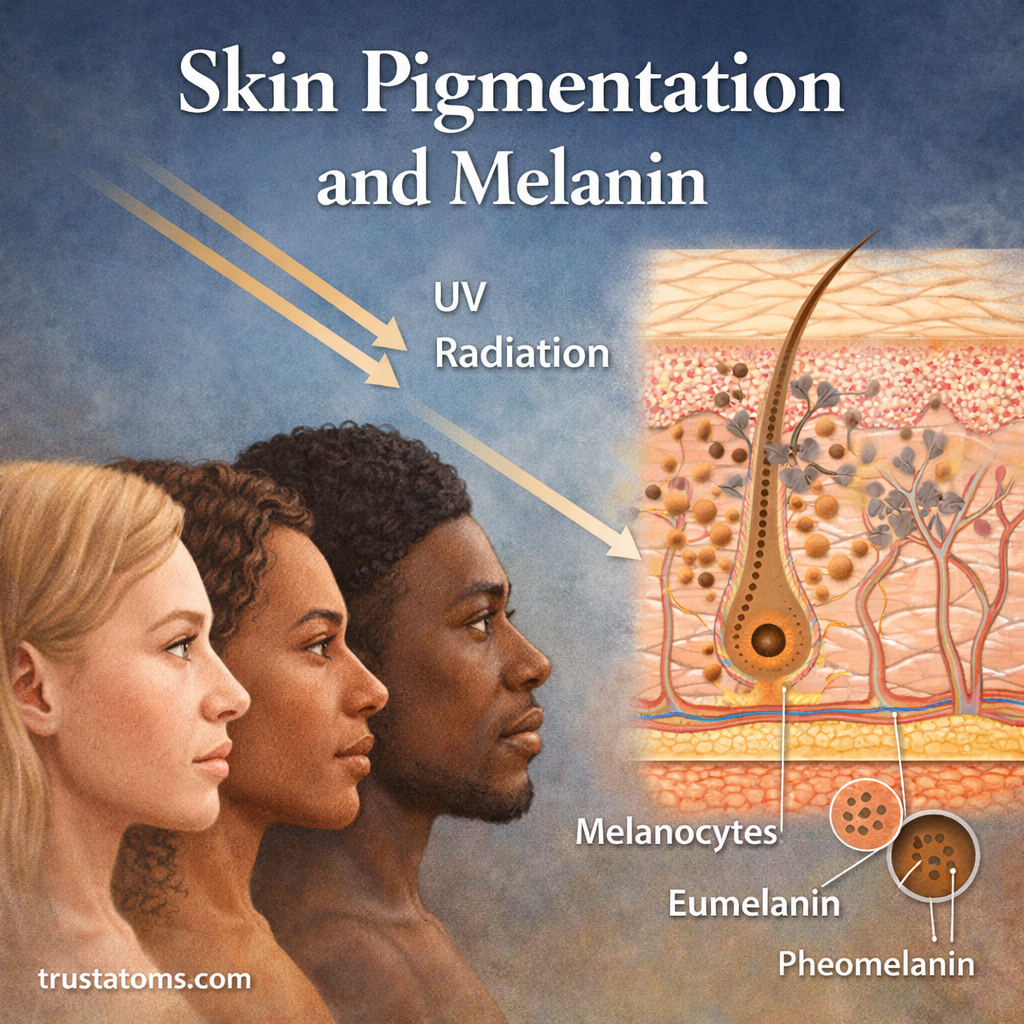
Melanin is a natural pigment produced by specialized cells called melanocytes.
It is responsible for:
- Skin color
- Hair color
- Eye color
More importantly, melanin plays a protective role by absorbing harmful ultraviolet (UV) radiation from the sun.
Types of Melanin
There are three main types of melanin, each contributing differently to pigmentation.
Eumelanin
- Produces brown to black color
- Most abundant type in human skin
- Provides strong protection against UV radiation
Pheomelanin
- Produces red to yellow tones
- Common in lighter skin and red hair
- Offers less UV protection
Neuromelanin
- Found in certain areas of the brain
- Not directly involved in skin color
- Plays a role in neurological processes
How Melanin Is Produced
Melanin production occurs in the epidermis, the outermost layer of the skin.
The Process (Melanogenesis)
- Melanocytes produce melanin inside structures called melanosomes
- Melanosomes are transported to nearby skin cells (keratinocytes)
- Melanin spreads throughout the skin, giving it color
This process is influenced by genetics and environmental factors.
Role of Melanin in Skin Protection
Melanin is not just about appearance—it serves as a natural defense system.
UV Protection
- Absorbs and disperses ultraviolet radiation
- Reduces DNA damage in skin cells
- Helps lower the risk of skin cancer
Prevention of Sunburn
- Higher melanin levels provide more natural protection
- Lower melanin levels increase susceptibility to sunburn
Why Skin Color Varies
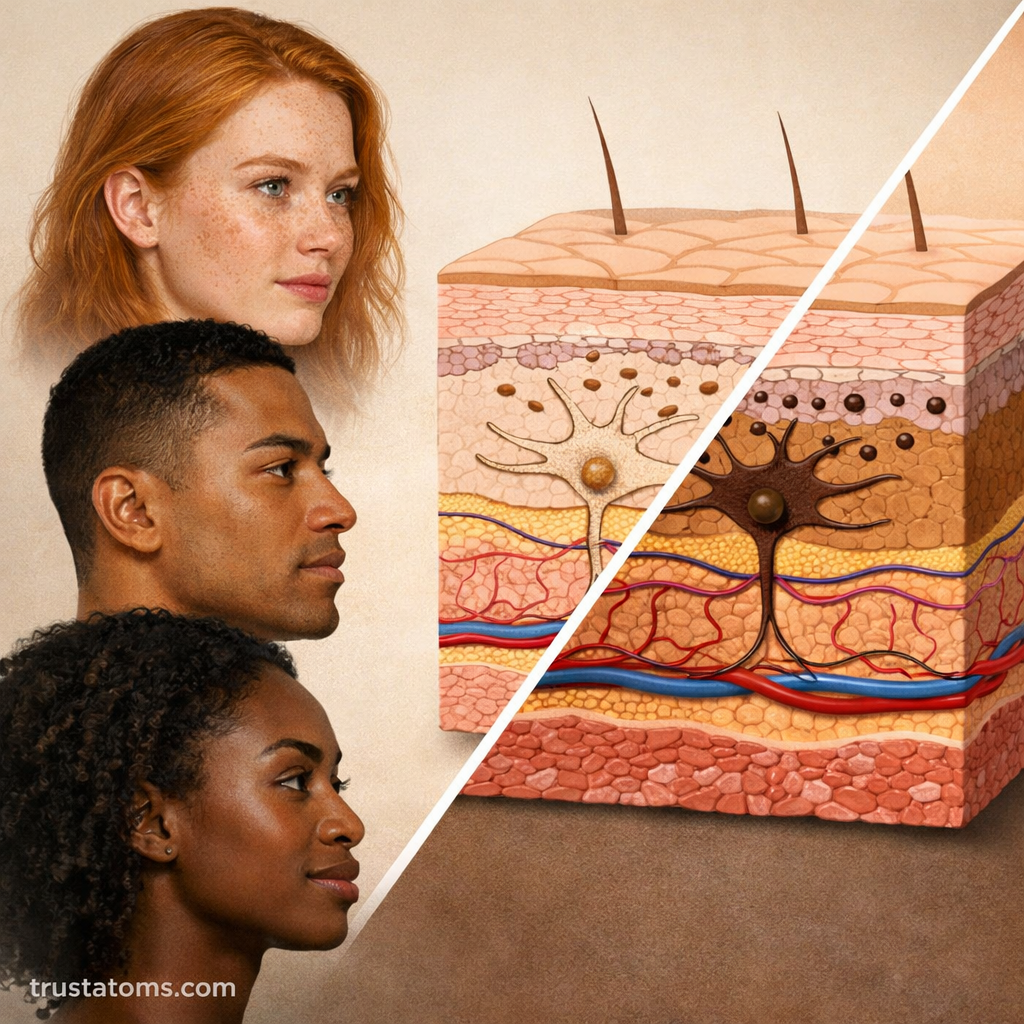
Skin color differences are primarily due to evolutionary adaptation and genetics.
Genetic Factors
- Genes control melanin production and type
- Inherited traits determine baseline skin tone
Environmental Influence
- Sun exposure increases melanin production (tanning)
- Geographic location influences long-term adaptation
Populations closer to the equator tend to have darker skin due to higher UV exposure, while those farther away often have lighter skin.
Tanning: A Protective Response
Tanning is the skin’s response to increased UV exposure.
How It Works
- UV radiation stimulates melanocytes
- More melanin is produced
- Skin darkens as a protective mechanism
However, tanning also indicates that the skin has experienced some level of damage.
Disorders of Pigmentation
Changes in pigmentation can result from various conditions affecting melanin production.
Hyperpigmentation
- Darkening of certain skin areas
- Caused by excess melanin production
- Examples: sunspots, melasma
Hypopigmentation
- Lightening of skin patches
- Caused by reduced melanin
- Examples: vitiligo, albinism
Albinism
- Genetic condition with little or no melanin production
- Affects skin, hair, and eyes
- Increases sensitivity to sunlight
Factors That Affect Pigmentation
Several internal and external factors influence skin color over time.
Internal Factors
- Genetics
- Hormones
- Age
External Factors
- Sun exposure
- Injury or inflammation
- Certain medications
Importance of Skin Pigmentation
Skin pigmentation is essential for both protection and biological function.
Key Benefits
- Shields against UV radiation
- Helps regulate vitamin D production
- Contributes to overall skin health
Final Thoughts
Skin pigmentation is a dynamic and complex process driven by melanin production and distribution. While it defines visible differences among individuals, its primary purpose is protective—helping the body adapt to environmental challenges like UV exposure.
Understanding how melanin works not only explains variations in skin color but also highlights the importance of protecting and maintaining healthy skin.