The rock cycle is the continuous process that forms, breaks down, and transforms rocks on Earth. It explains how different types of rocks—igneous, sedimentary, and metamorphic—are created and recycled over time.
This cycle is driven by natural forces such as heat, pressure, weathering, and erosion. Understanding the rock cycle helps explain how Earth’s surface changes and how materials move through different layers of the planet.
What Is the Rock Cycle?
The rock cycle describes how rocks change from one type to another through a series of processes.
Unlike a simple linear path, the rock cycle is ongoing and dynamic. A rock can follow many different paths depending on environmental conditions.
Key Processes in the Rock Cycle
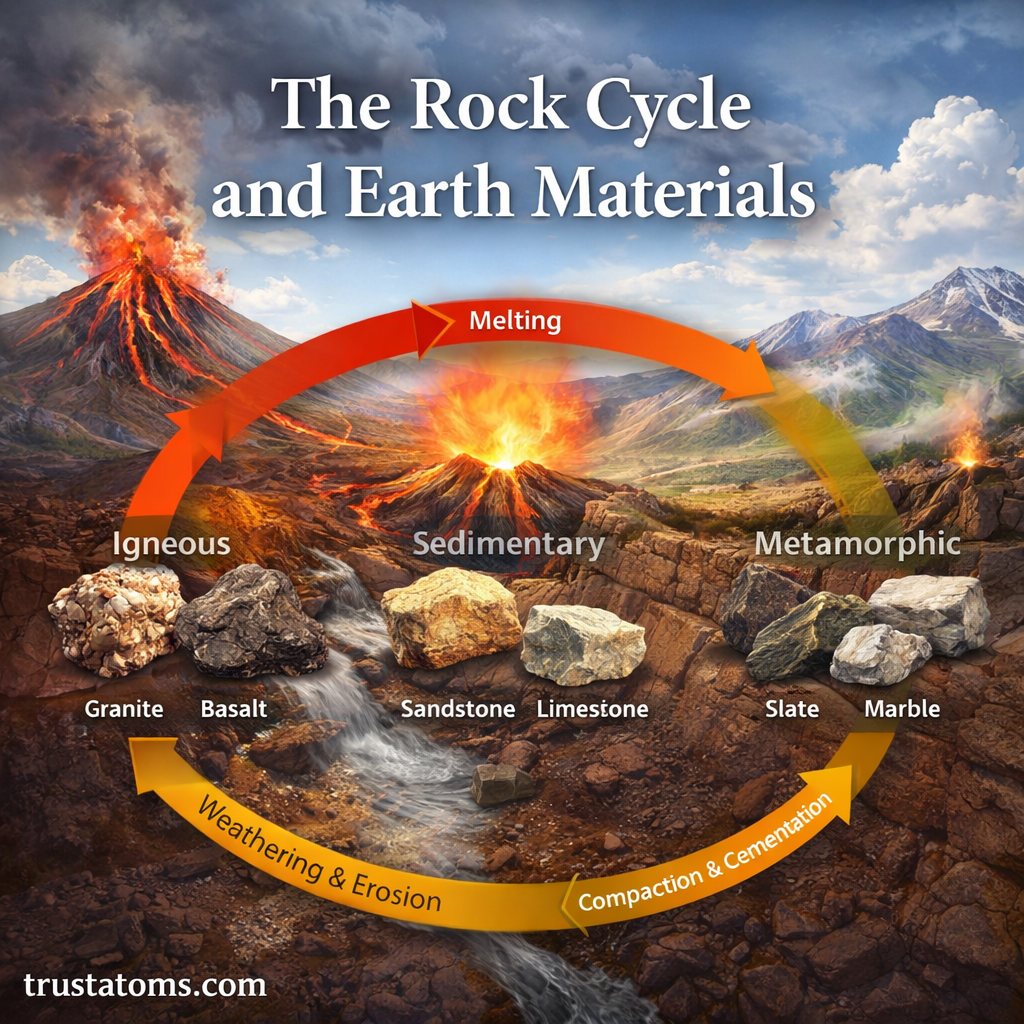
- Melting – rock turns into magma due to extreme heat
- Cooling and solidification – magma or lava hardens into igneous rock
- Weathering and erosion – rocks break down into smaller particles
- Compaction and cementation – sediments form sedimentary rock
- Heat and pressure – rocks transform into metamorphic rock
These processes can take thousands to millions of years.
The Three Main Types of Rocks
All rocks fall into one of three categories, each formed through different processes.
Igneous Rocks
Igneous rocks form from the cooling and solidification of molten material.
Characteristics
- Formed from magma (below ground) or lava (above ground)
- Often have a crystalline structure
- Can be smooth or contain visible mineral grains
Examples
- Granite (formed underground)
- Basalt (formed from lava at the surface)
Sedimentary Rocks
Sedimentary rocks form from the accumulation and compression of sediments.
Characteristics
- Often layered
- May contain fossils
- Formed from particles like sand, mud, or organic material
Examples
- Sandstone
- Limestone
- Shale
Metamorphic Rocks
Metamorphic rocks form when existing rocks are changed by heat and pressure without melting.
Characteristics
- Can be harder and denser than original rock
- Often show patterns or banding
- Form deep within Earth
Examples
- Marble (from limestone)
- Slate (from shale)
How the Rock Cycle Works
The rock cycle is not a fixed sequence—it’s a flexible system where rocks can change in multiple ways.
A Simple Rock Cycle Path
- Magma cools and forms igneous rock
- Weathering breaks igneous rock into sediments
- Sediments compact into sedimentary rock
- Heat and pressure transform sedimentary rock into metamorphic rock
- Metamorphic rock melts back into magma
This process repeats continuously over time.
Earth Materials Involved in the Rock Cycle
The rock cycle involves various Earth materials that move through different states and locations.
Common Earth Materials
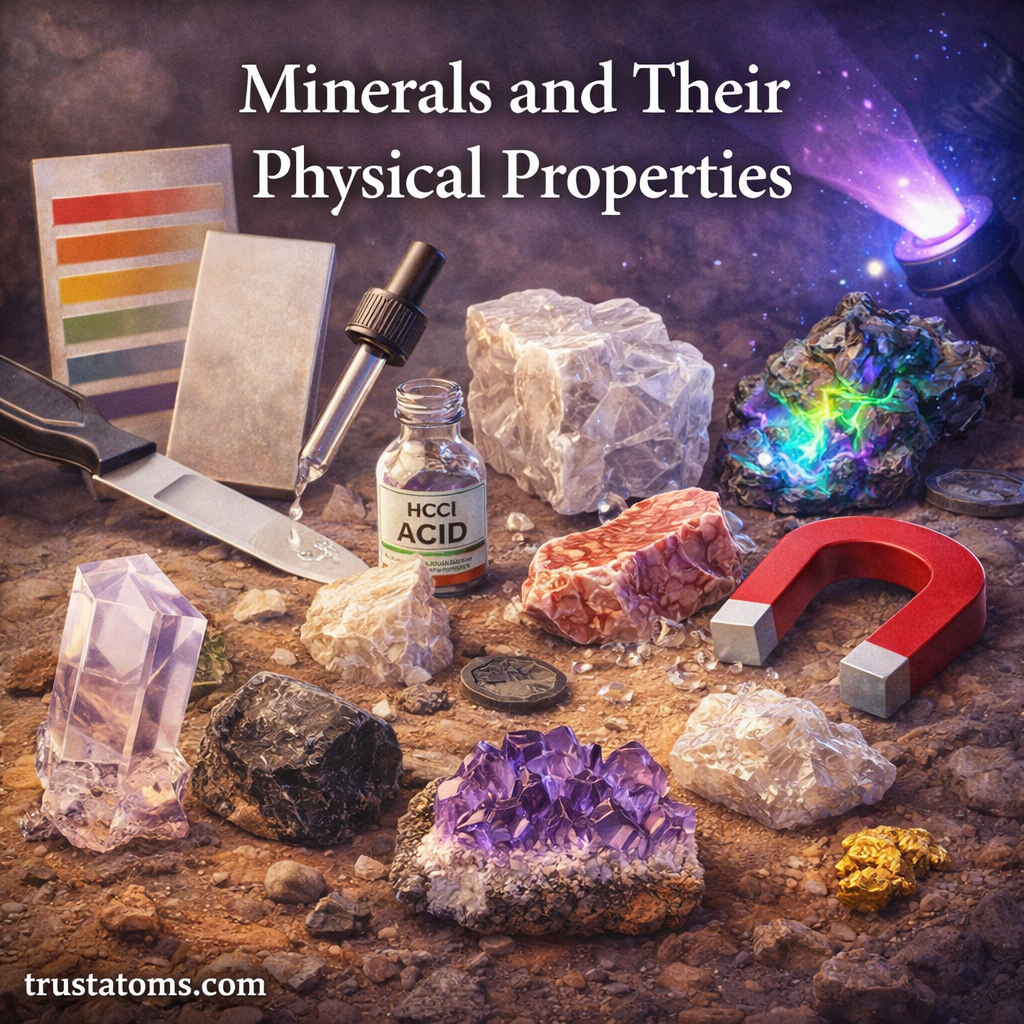
- Minerals – natural substances that make up rocks
- Magma and lava – molten rock beneath and above the surface
- Sediments – small rock fragments created by weathering
- Soil – a mixture of minerals, organic matter, and air
These materials are constantly being reused and transformed.
Forces That Drive the Rock Cycle
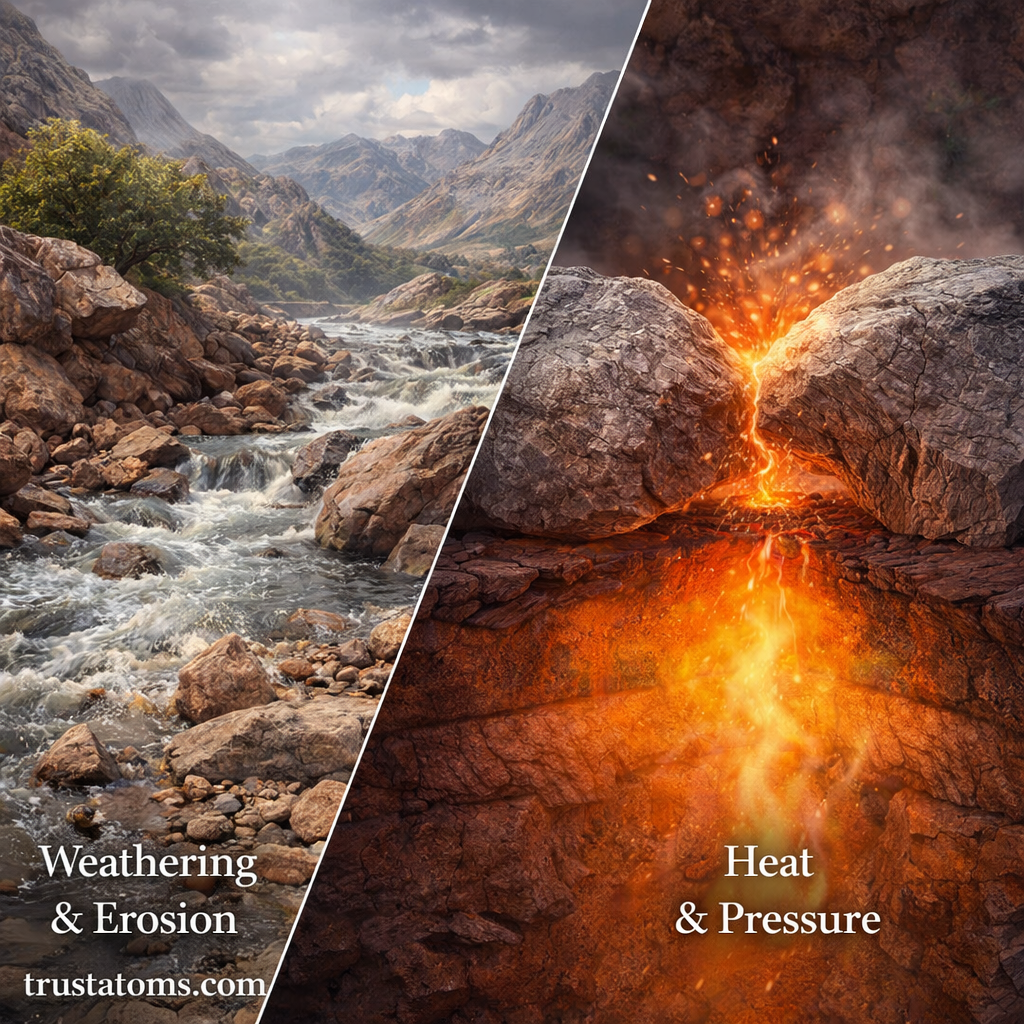
Several natural forces power the rock cycle and keep it ongoing.
Internal Forces
- Heat from Earth’s interior
- Pressure from overlying layers
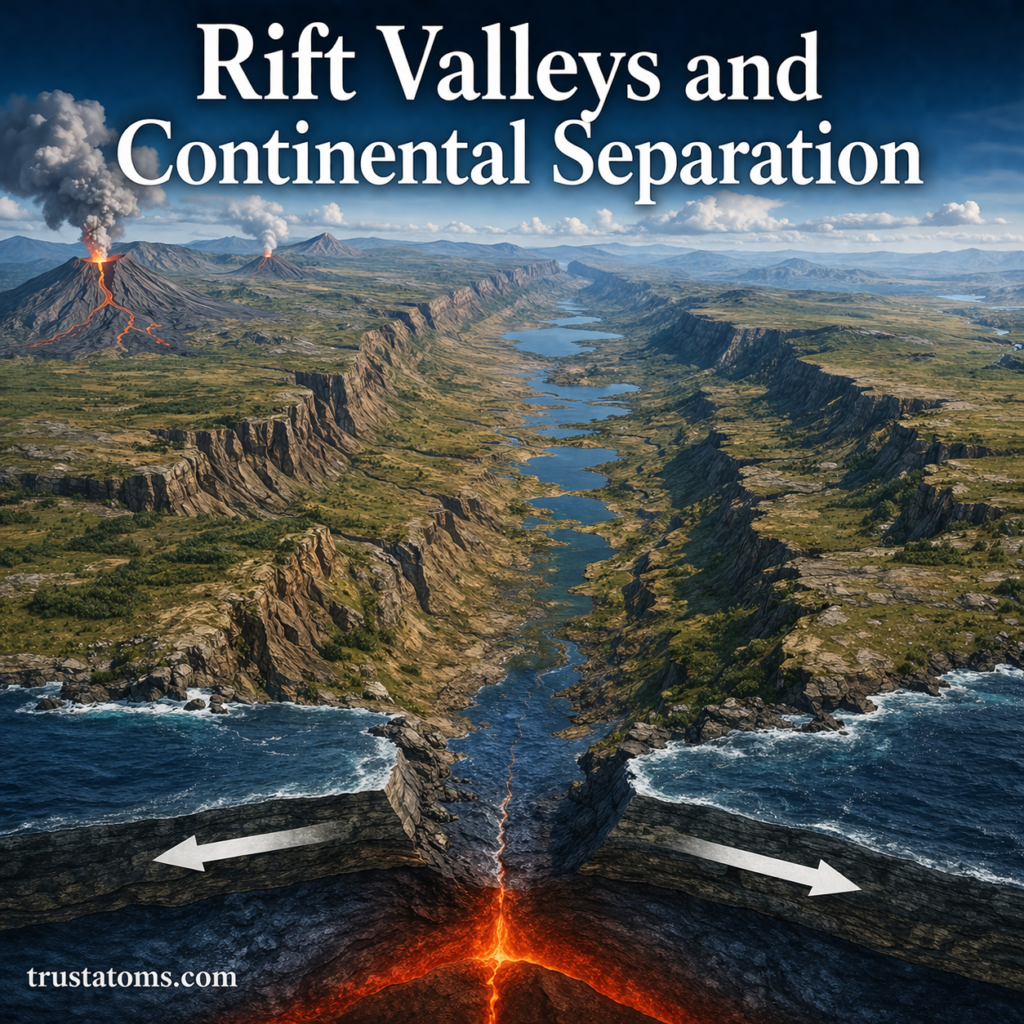
- Movement of tectonic plates
External Forces
- Wind and water erosion
- Temperature changes
- Ice and glaciers
Together, these forces reshape Earth’s surface and recycle materials.
Why the Rock Cycle Is Important
The rock cycle plays a key role in shaping the planet and supporting life.
Key Benefits
- Forms the land we live on
- Creates soil for agriculture
- Provides natural resources like minerals and building materials
- Preserves fossils that help us understand Earth’s history
Without the rock cycle, Earth would not have the diverse landscapes we see today.
Real-World Examples of the Rock Cycle
You can observe the rock cycle in action in many natural environments:
- Volcanic eruptions forming new igneous rock
- Rivers breaking down rocks into sediment
- Mountains forming through tectonic activity
- Deep burial transforming rocks into metamorphic forms
These examples show how active and continuous the rock cycle is.
Final Thoughts
The rock cycle is one of Earth’s most important natural processes. It explains how rocks are created, transformed, and recycled over time through a combination of internal and external forces.
By understanding the rock cycle and Earth materials, we gain a deeper appreciation of how our planet evolves—and how everything from mountains to soil is part of a continuous, interconnected system.