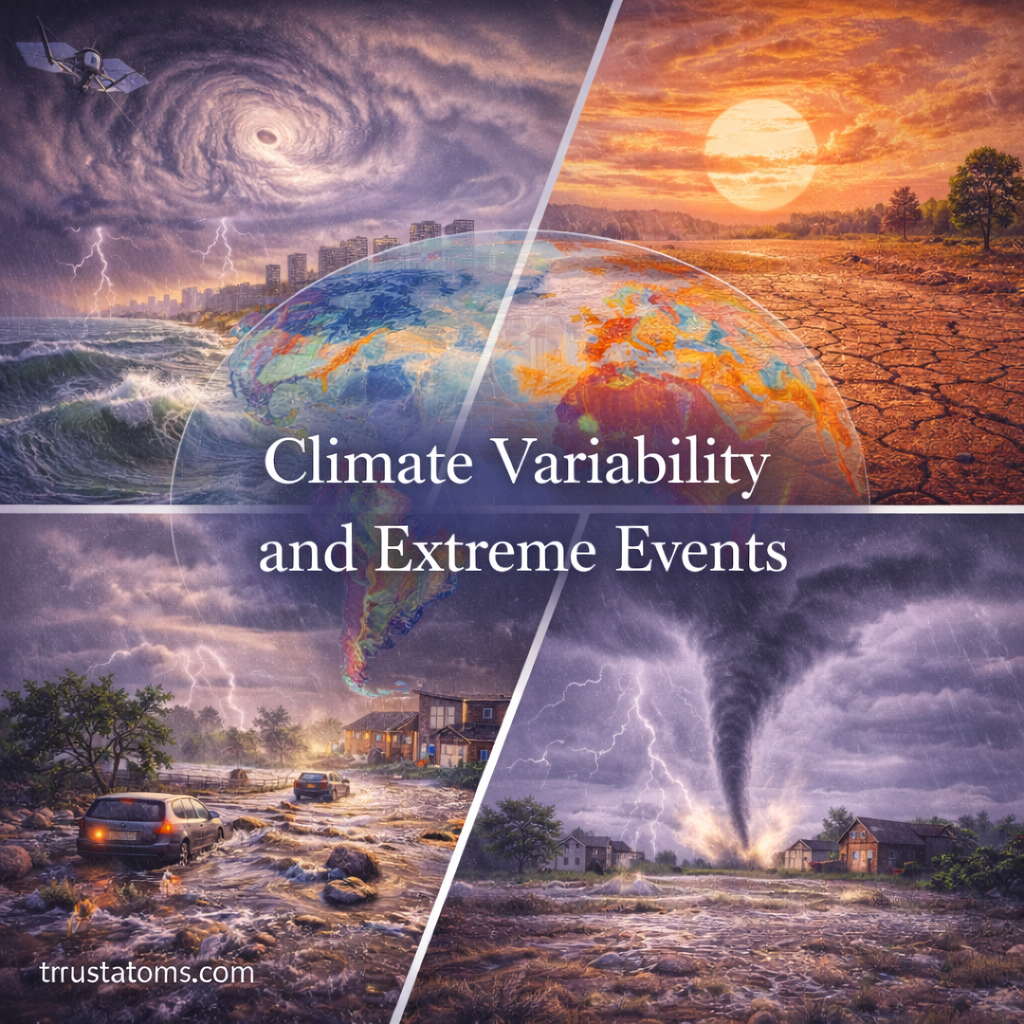
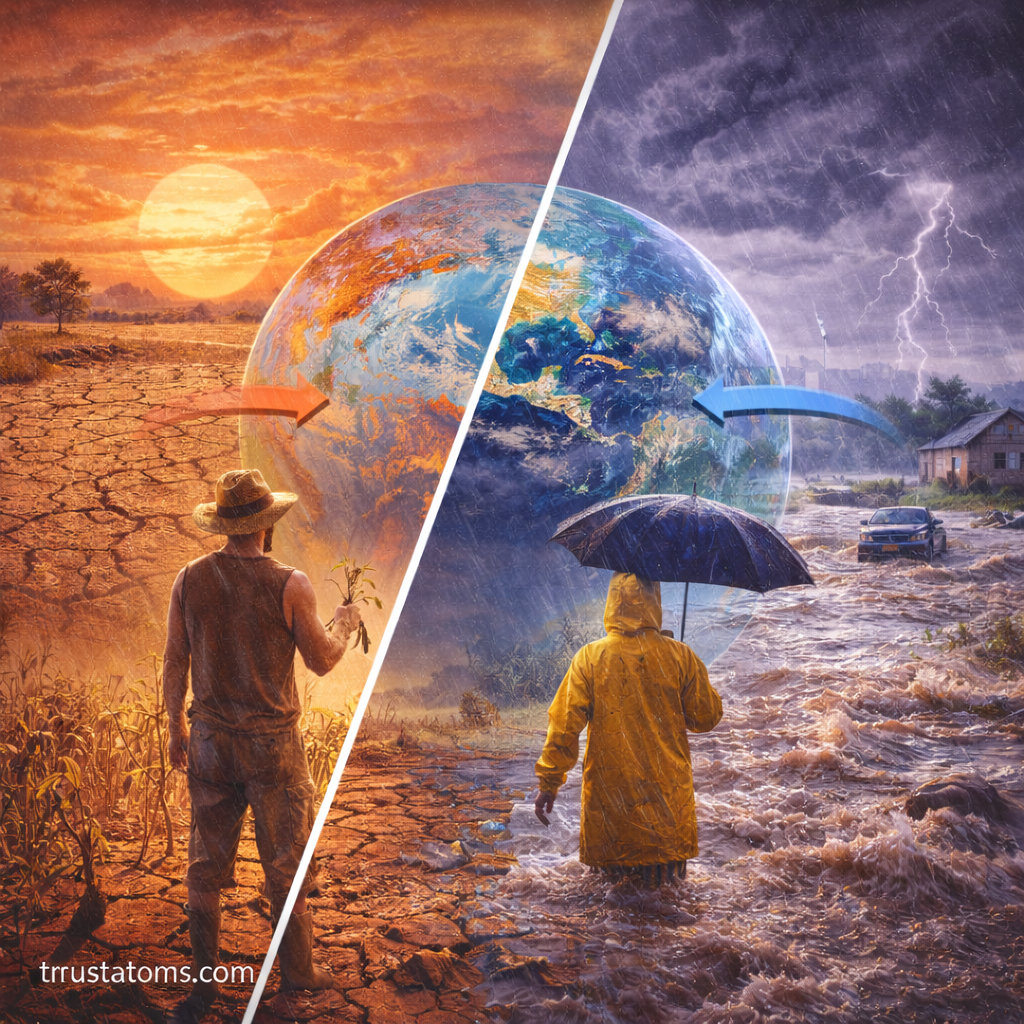
Climate variability plays a major role in shaping extreme weather events around the world. While daily weather can change rapidly, climate variability refers to longer-term fluctuations in temperature, precipitation, and atmospheric conditions that influence how often and how intensely extreme events occur.
Understanding these patterns is essential for predicting risks, preparing communities, and adapting to a changing environment.
What Is Climate Variability?
Climate variability refers to natural changes in climate patterns over months, years, or decades. Unlike climate change—which involves long-term shifts in global climate—variability focuses on shorter-term fluctuations within the climate system.
Examples include:
- Seasonal rainfall differences
- Multi-year droughts
- Variations in storm frequency
These changes are driven by complex interactions between the atmosphere, oceans, land, and ice.
Key Drivers of Climate Variability
Several natural processes influence climate variability and, in turn, extreme weather events.
Ocean-Atmosphere Interactions
- Changes in sea surface temperatures affect weather patterns
- Influence storm formation and rainfall distribution
Atmospheric Circulation Patterns
- Large-scale wind patterns shift over time
- Affect temperature and precipitation across regions
Solar Variability
- Small changes in solar energy can influence climate systems
Volcanic Activity
- Eruptions release particles that temporarily cool the atmosphere
These drivers interact in complex ways, creating variability in weather and climate.
Major Climate Variability Patterns
Certain well-known climate patterns have global impacts on extreme weather.
El Niño and La Niña
- El Niño: Warmer-than-average ocean temperatures in the Pacific
- La Niña: Cooler-than-average ocean temperatures
These patterns affect:
- Rainfall distribution
- Hurricane activity
- Drought and flooding risks
Monsoon Variability
- Changes in seasonal wind patterns
- Can lead to stronger or weaker rainfall seasons
North Atlantic Oscillation (NAO)
- Influences weather in Europe and North America
- Affects winter storms and temperature patterns
How Climate Variability Influences Extreme Events
Climate variability can increase or decrease the likelihood of extreme weather.
Increased Storm Activity
- Warmer ocean temperatures can fuel stronger storms
- Changes in wind patterns can alter storm tracks
Drought and Heatwaves
- Reduced rainfall leads to prolonged dry periods
- Higher temperatures intensify heatwaves
Flooding Events
- Increased rainfall in certain periods raises flood risk
- Saturated soil increases runoff
Cold Extremes
- Shifts in atmospheric circulation can bring cold air to unusual regions
These effects vary by region and time period.
Examples of Extreme Events Linked to Variability
Climate variability has been associated with many significant events.
- Severe droughts in parts of Africa during El Niño phases
- Increased hurricane activity in the Atlantic during certain climate cycles
- Heavy rainfall and flooding in South Asia during strong monsoon seasons
- Cold outbreaks in North America linked to atmospheric pattern shifts
These examples highlight how variability can shape real-world impacts.
Climate Variability vs Climate Change
Although related, these concepts are not the same.
Climate Variability
- Short- to medium-term fluctuations
- Natural cycles and patterns
- Temporary changes in weather conditions
Climate Change
- Long-term global trends
- Often driven by human activities
- Leads to lasting shifts in climate systems
Climate change can amplify the effects of natural variability, making extreme events more intense or frequent.
Impacts on Society and Environment
Climate variability affects multiple aspects of life.
Agriculture
- Crop yields depend on rainfall and temperature patterns
- Variability can cause food shortages or surpluses
Water Resources
- Droughts reduce water availability
- Floods can contaminate water supplies
Infrastructure
- Extreme events damage roads, buildings, and power systems
Ecosystems
- Wildlife and habitats are sensitive to climate fluctuations
- Changes can disrupt biodiversity
Predicting Climate Variability
Scientists use advanced tools to monitor and forecast variability.
Methods Used
- Ocean temperature monitoring
- Climate models and simulations
- Satellite observations
Seasonal Forecasting
- Predicts likely conditions months in advance
- Helps governments and industries prepare
While predictions are improving, uncertainty still exists due to the complexity of climate systems.
Adapting to Climate Variability
Communities can take steps to reduce risks associated with variability.
Planning and Preparedness
- Develop disaster response plans
- Improve early warning systems
Infrastructure Design
- Build flood-resistant structures
- Design systems for extreme heat or cold
Resource Management
- Store water during wet periods
- Manage crops based on seasonal forecasts
Policy and Education
- Promote awareness of climate risks
- Encourage sustainable practices
Adaptation helps reduce the negative impacts of extreme events.
Why Climate Variability Matters
Climate variability is important because it:
- Influences the frequency and intensity of extreme weather
- Affects food, water, and energy systems
- Shapes long-term planning and policy decisions
Understanding variability allows societies to better anticipate and respond to environmental challenges.
Final Thoughts
Climate variability and extreme events are closely connected, with natural climate patterns driving changes in weather conditions around the world. While these variations are part of Earth’s natural system, their impacts can be significant—especially when combined with long-term climate change.
By studying these patterns and improving forecasting methods, we can better prepare for extreme events and build more resilient communities.