Earth’s surface may look solid and unchanging, but it is actually broken into massive pieces called tectonic plates. These plates are constantly moving—albeit very slowly—shaping the continents, oceans, mountains, and even influencing earthquakes and volcanic activity.
Understanding Earth’s major tectonic plates helps explain why natural disasters occur, how continents drift over time, and how our planet continues to evolve.
What Are Tectonic Plates?
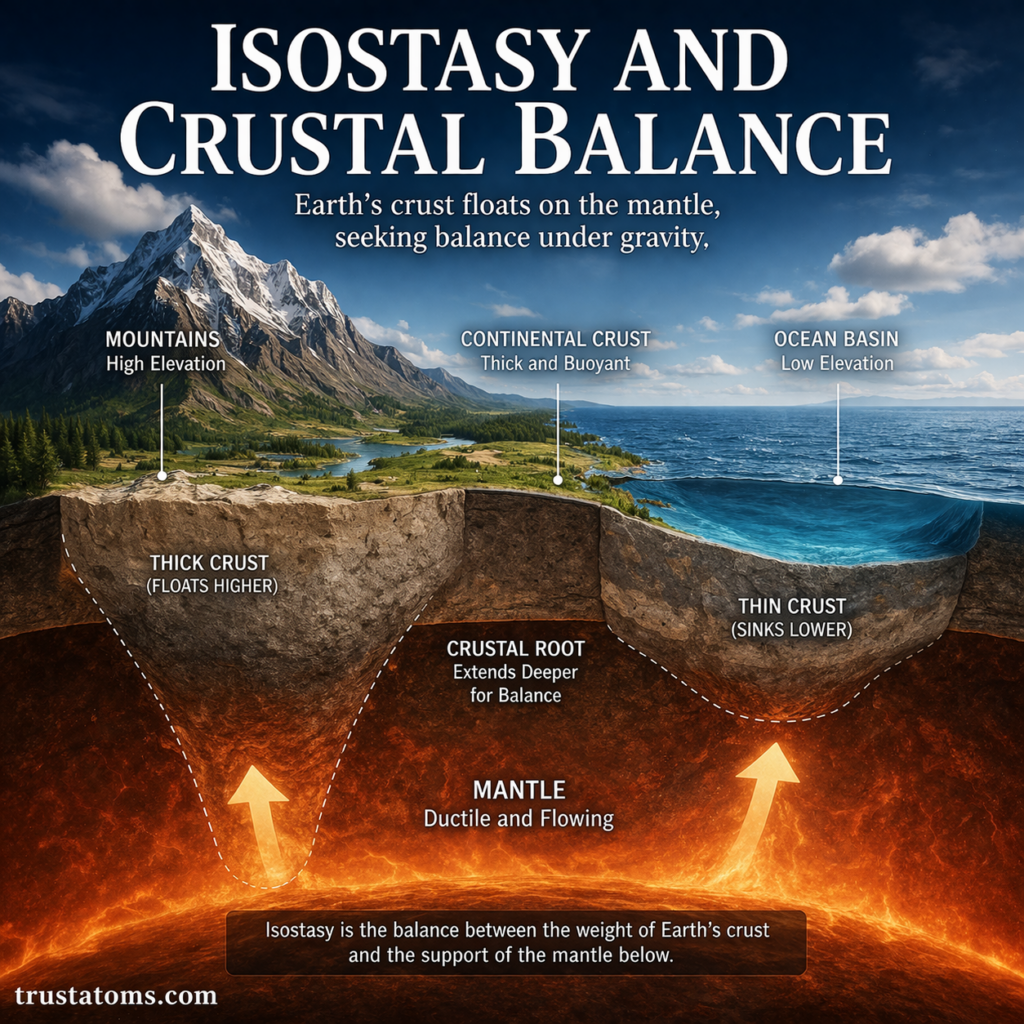
Tectonic plates are large sections of Earth’s lithosphere (the rigid outer layer) that float on the semi-fluid asthenosphere beneath them.
These plates move due to heat-driven convection currents in Earth’s mantle, causing them to:
- Diverge (move apart)
- Converge (collide)
- Slide past each other (transform boundaries)
Their movement is the foundation of the scientific concept known as plate tectonics.
Why Tectonic Plates Matter
Tectonic plates play a major role in shaping Earth’s physical features and processes:
- Formation of mountain ranges
- Creation of ocean basins
- Occurrence of earthquakes
- Volcanic activity
- Continental drift over millions of years
Without plate movement, Earth would look drastically different—and far less dynamic.
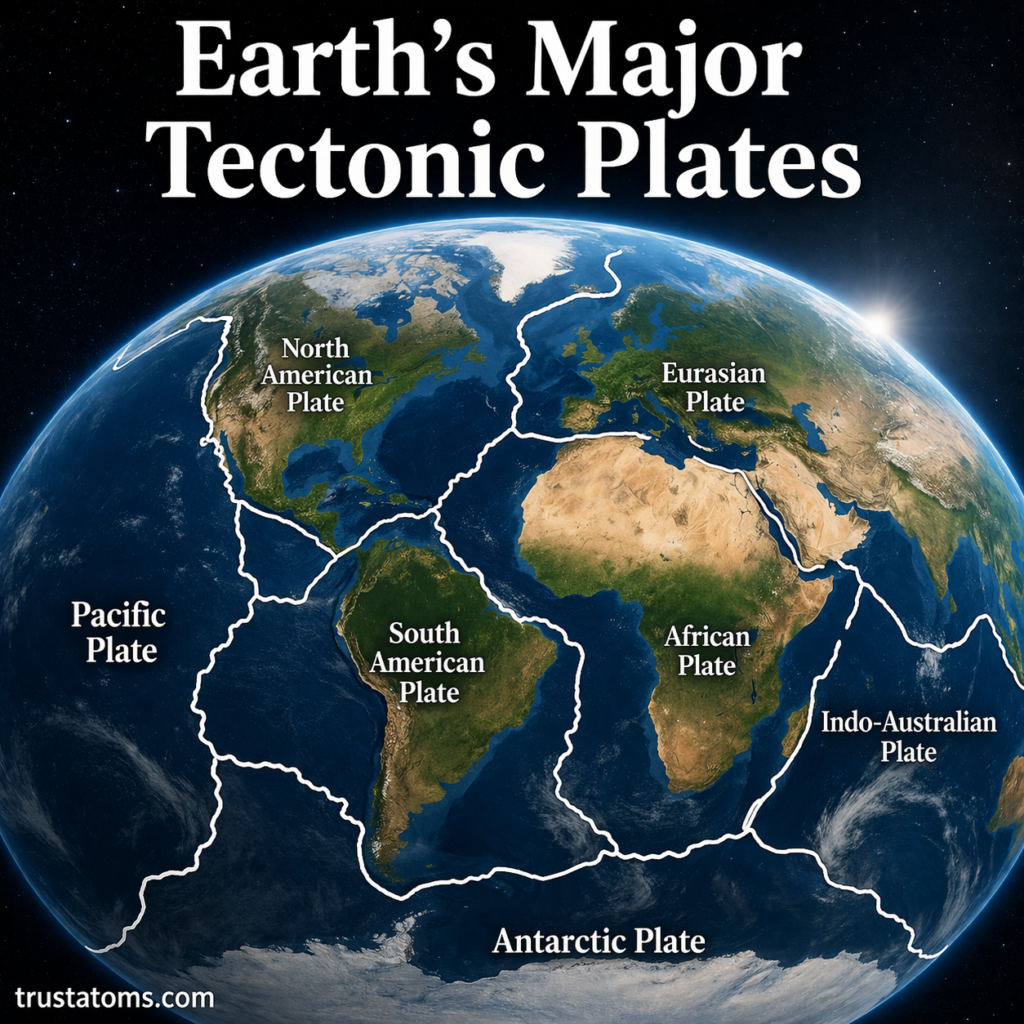
Earth’s Major Tectonic Plates
There are seven major tectonic plates that dominate Earth’s surface. Each covers a vast area and interacts with neighboring plates.
1. Pacific Plate
- The largest tectonic plate on Earth
- Mostly oceanic crust
- Located beneath the Pacific Ocean
- Known for intense seismic activity, especially along the “Ring of Fire”
2. North American Plate
- Covers North America, Greenland, and part of the Atlantic Ocean
- Includes both continental and oceanic crust
- Interacts with the Pacific Plate along the western boundary (e.g., California fault systems)
3. South American Plate
- Includes South America and part of the Atlantic Ocean
- Its western edge collides with the Nazca Plate
- Responsible for forming the Andes Mountains
4. Eurasian Plate
- Covers Europe and most of Asia
- One of the largest continental plates
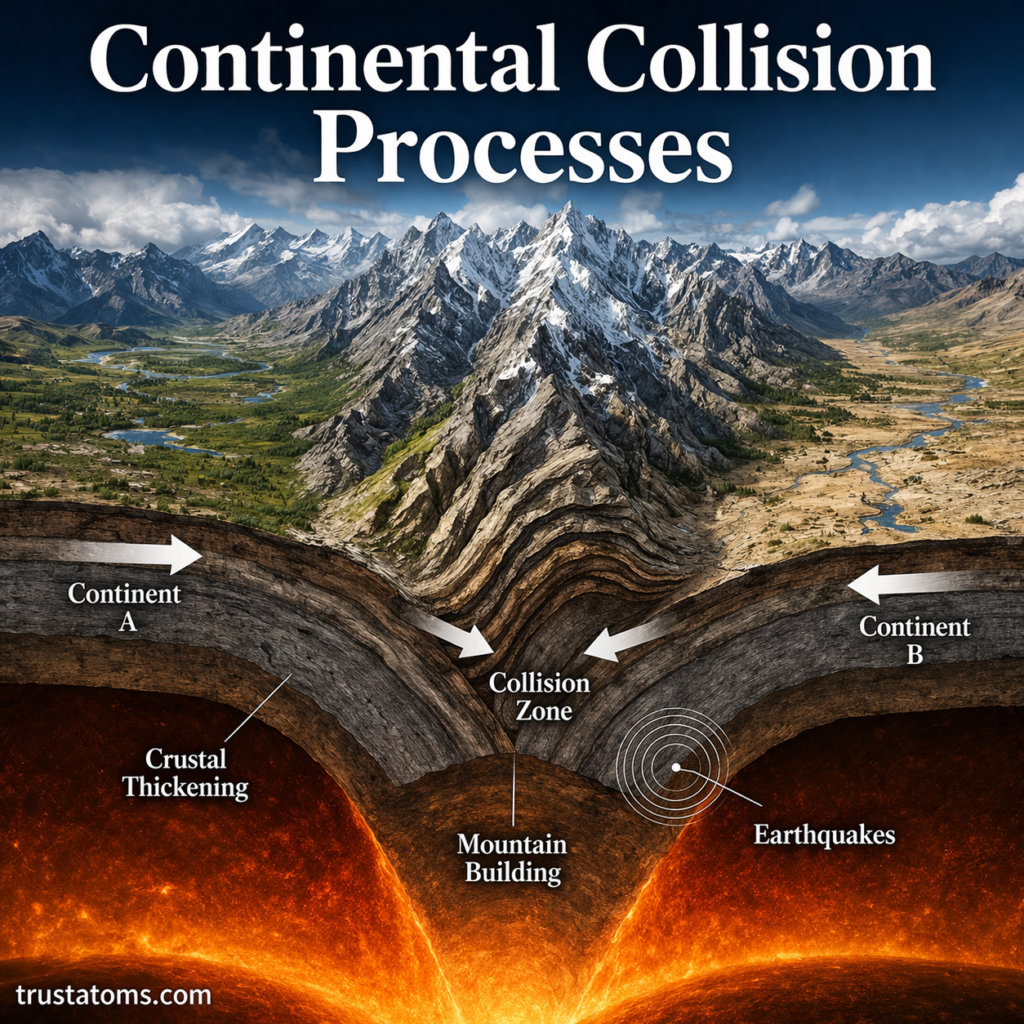
- Interacts with the Indian Plate, leading to the formation of the Himalayas
5. African Plate
- Encompasses Africa and surrounding oceanic crust
- Slowly splitting along the East African Rift
- Movement may eventually create a new ocean basin
6. Antarctic Plate
- Surrounds Antarctica
- Mostly stable compared to other plates
- Plays a role in deep ocean circulation patterns
7. Indo-Australian Plate
- Includes India, Australia, and surrounding ocean regions
- Often considered two separate plates (Indian and Australian) due to differing movement patterns
- Its collision with the Eurasian Plate formed the Himalayas
Types of Plate Boundaries
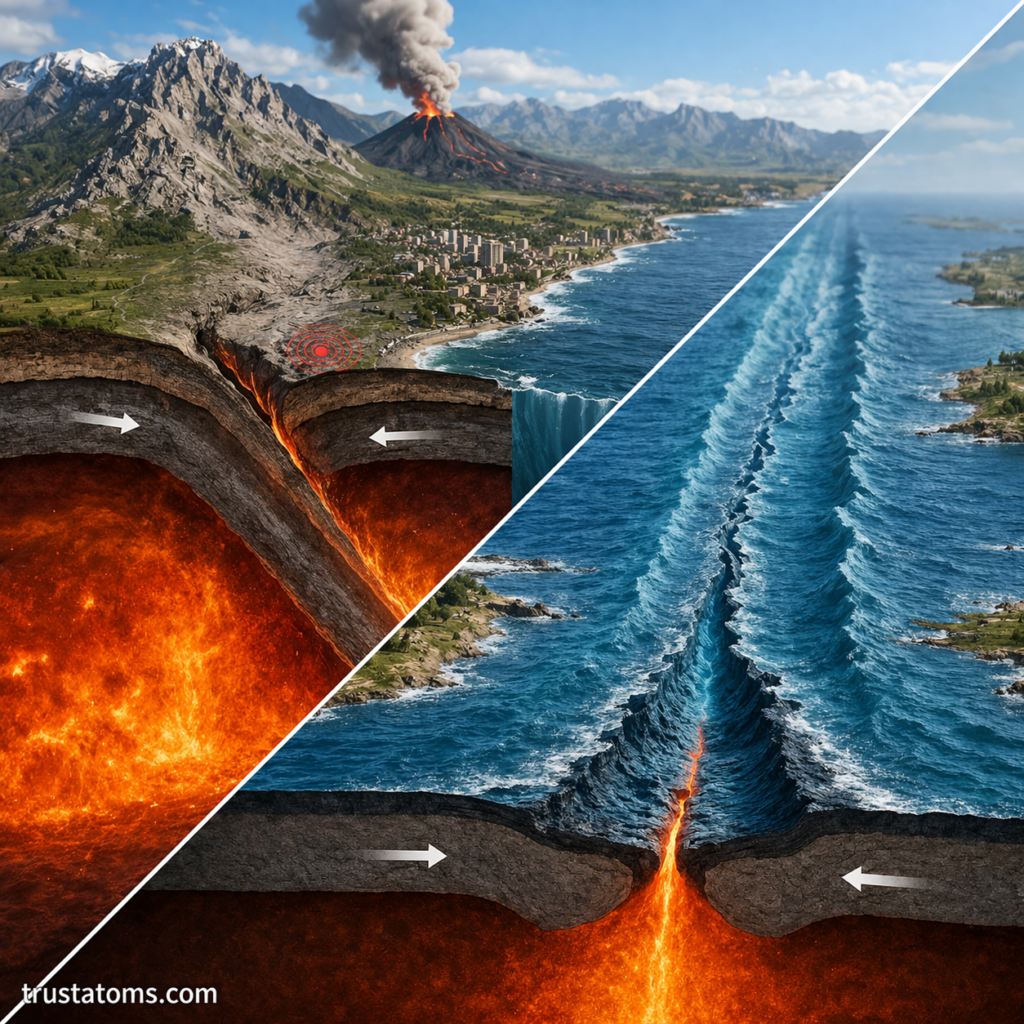
The edges where tectonic plates meet are called plate boundaries. These are the most geologically active areas on Earth.
Divergent Boundaries
- Plates move away from each other
- Magma rises to form new crust
- Example: Mid-ocean ridges
Convergent Boundaries
- Plates move toward each other
- One plate may be forced beneath another (subduction)
- Can form mountains or volcanic arcs
Transform Boundaries
- Plates slide past each other horizontally
- Common cause of earthquakes
- Example: Fault lines
How Fast Do Tectonic Plates Move?
Tectonic plates move very slowly—typically at rates of:
- 1 to 10 centimeters per year
That’s about as fast as fingernails grow. However, over millions of years, this movement significantly reshapes Earth’s surface.
Evidence of Plate Movement
Scientists have gathered multiple lines of evidence supporting plate tectonics:
- Matching coastlines (e.g., South America and Africa)
- Fossil similarities across continents
- Distribution of earthquakes and volcanoes
- Seafloor spreading and magnetic patterns
- GPS measurements tracking plate motion
Smaller Plates and Microplates
In addition to the seven major plates, Earth has several smaller plates, including:
- Nazca Plate
- Philippine Plate
- Arabian Plate
- Caribbean Plate
These smaller plates still play significant roles in regional geology and natural hazards.
How Tectonic Plates Shape the Future
Tectonic movement is ongoing and will continue to reshape Earth:
- Continents may merge into a future supercontinent
- Oceans may expand or shrink
- New mountain ranges may form
- Earthquake and volcanic patterns may shift
The planet we see today is just a snapshot in a constantly changing geological timeline.
Common Misconceptions
Plates Move Quickly
False. Plate movement is extremely slow and usually not noticeable in daily life.
Continents Float Freely
Not exactly. Continents are embedded within tectonic plates, which move as a whole.
Earthquakes Happen Randomly
Most earthquakes occur along plate boundaries where stress builds up and is released.
Final Thoughts
Earth’s major tectonic plates are the driving force behind the planet’s ever-changing surface. From towering mountain ranges to deep ocean trenches, nearly every large-scale geological feature is shaped by their movement.
By understanding these massive, slow-moving structures, we gain insight into Earth’s past, present, and future—along with a better understanding of natural events that impact life on our planet.