Lightning is one of nature’s most powerful and visually striking phenomena. It occurs during electrical storms when built-up energy in the atmosphere is suddenly released as a massive electrical discharge.
From dramatic lightning bolts to rumbling thunder, these storms are more than just impressive—they play a key role in Earth’s energy balance and weather systems.
What Is Lightning?
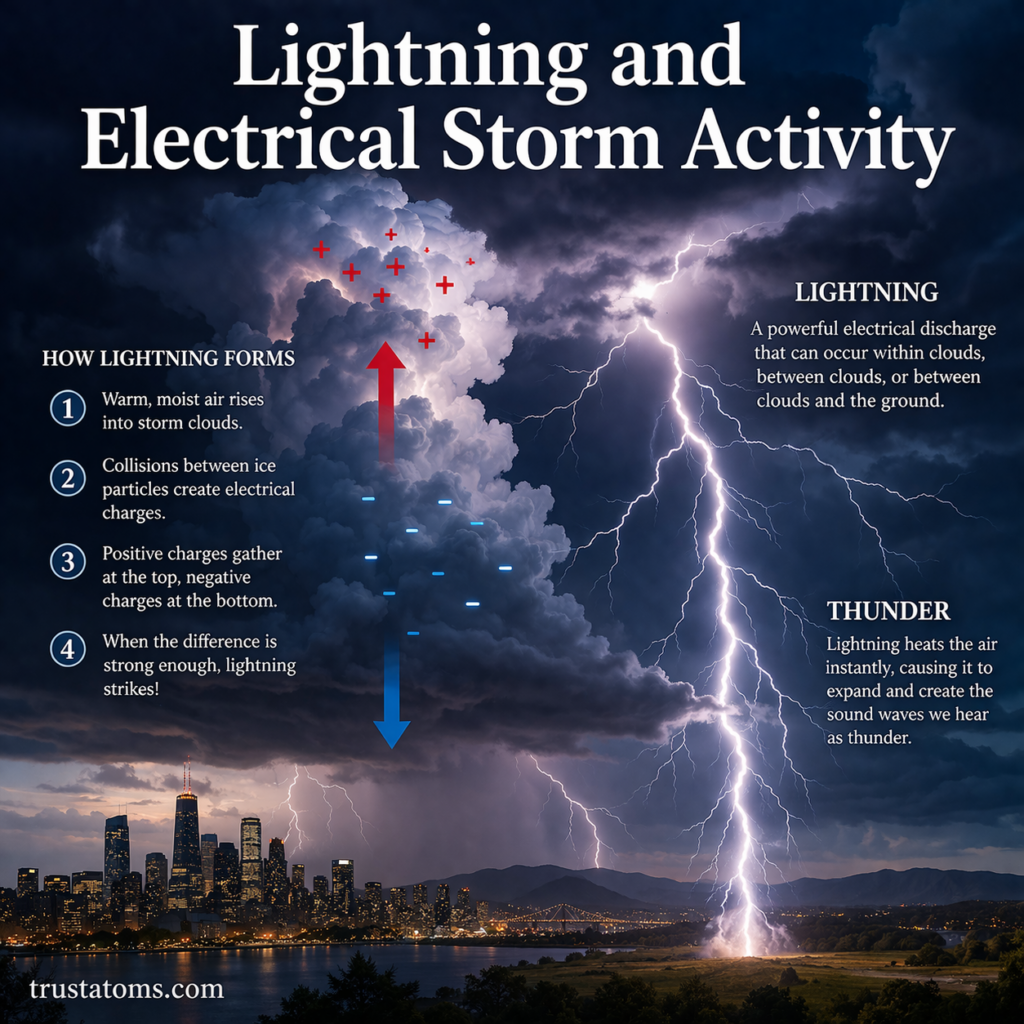
Lightning is a sudden electrical discharge that occurs within clouds, between clouds, or between a cloud and the ground.
It forms when electrical charges build up inside storm clouds and the difference becomes strong enough to overcome the resistance of air.
Types of Lightning
- Intra-cloud lightning
Occurs within a single cloud (most common) - Cloud-to-cloud lightning
Jumps between separate clouds - Cloud-to-ground lightning
Travels from cloud to Earth (most dangerous) - Ground-to-cloud lightning
Starts at the ground and moves upward (less common)
How Lightning Forms
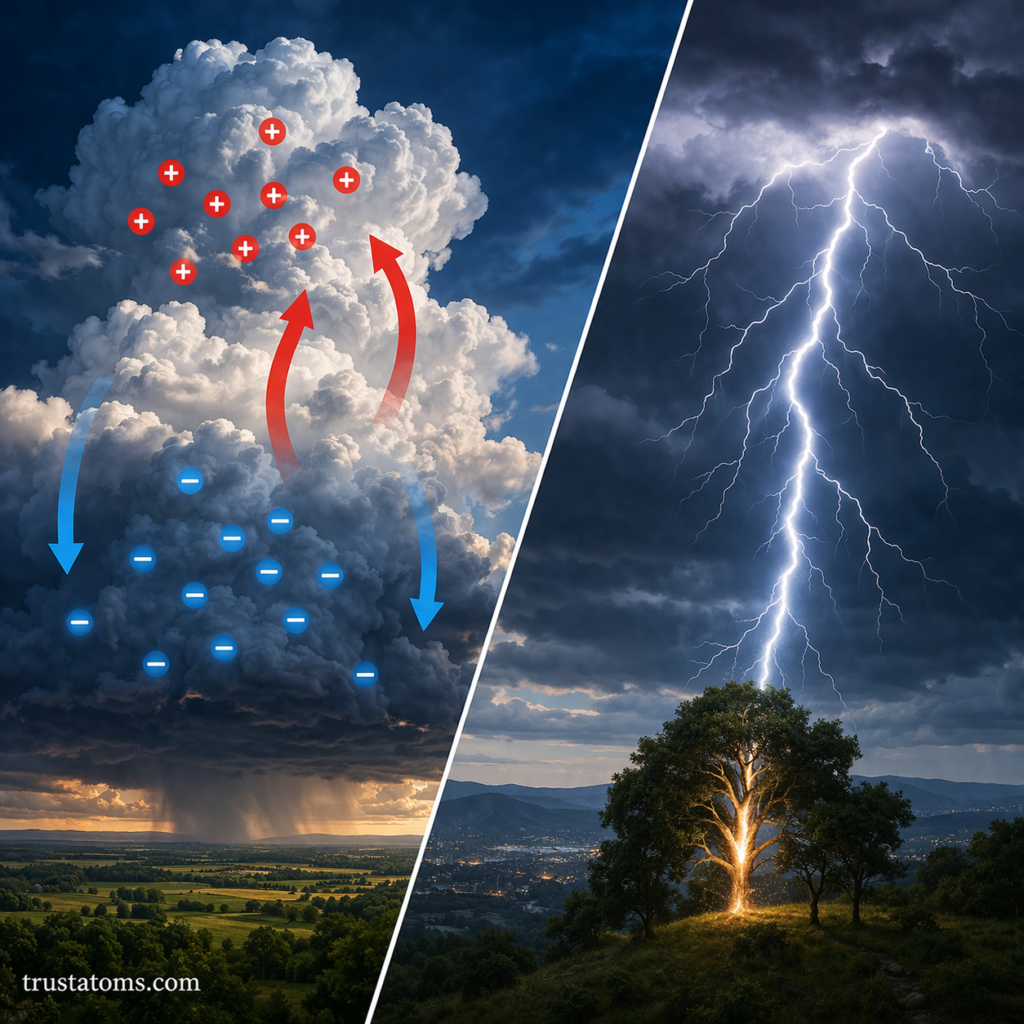
Lightning begins inside large storm clouds known as cumulonimbus clouds.
Step-by-Step Process
- Warm air rises rapidly, carrying moisture upward
- Water droplets and ice particles collide within the cloud
- These collisions create electrical charges:
- Positive charges gather near the top
- Negative charges collect near the bottom
- The ground beneath the cloud becomes positively charged
- When the electrical difference becomes too strong, a discharge occurs
This discharge is what we see as lightning.
What Causes Thunder?
Thunder is the sound produced by lightning.
When lightning strikes:
- The air around the bolt heats up rapidly (up to ~30,000°C / 54,000°F)
- This causes the air to expand explosively
- The rapid expansion creates a shockwave
- The shockwave travels as sound—thunder
Why Thunder Rumbles
- Sound waves reflect off clouds, terrain, and buildings
- This creates the rolling or rumbling effect
Electrical Storms Explained
An electrical storm, also called a thunderstorm, is a weather system that produces lightning and thunder.
Key Ingredients for Storm Formation
- Moisture – provides water vapor for clouds
- Instability – allows air to rise quickly
- Lift – triggers upward motion (e.g., warm air, fronts, terrain)
When these elements combine, strong updrafts form, leading to storm development.
Types of Thunderstorms
1. Single-Cell Storms
- Short-lived (30–60 minutes)
- Usually weak
- Produce light rain and occasional lightning
2. Multi-Cell Storms
- Groups of storms at different stages
- Can last several hours
- Produce heavier rain and stronger lightning
3. Supercells
- Highly organized and powerful
- Contain rotating updrafts (mesocyclones)
- Can produce severe lightning, hail, and tornadoes
Why Lightning Is Dangerous
Lightning is extremely powerful and can be deadly.
Key Risks
- Direct strikes causing severe injury or death
- Fires from lightning hitting trees or structures
- Power surges damaging electrical systems
- Ground currents that can travel through soil
Safety Tips
- Seek shelter indoors immediately
- Avoid open fields and high ground
- Stay away from water
- Do not use wired electronics during storms
Lightning Frequency Around the World
Lightning occurs more frequently in certain regions due to climate conditions.
High Lightning Activity Areas
- Tropical regions near the equator
- Areas with high humidity and heat
- Mountainous regions that promote rising air
Central Africa, parts of South America, and Southeast Asia experience some of the highest lightning activity on Earth.
The Role of Lightning in Nature
Lightning is not just destructive—it also benefits the environment.
Natural Impacts
- Helps fix nitrogen in the atmosphere, enriching soil
- Plays a role in atmospheric chemistry
- Can trigger wildfires that renew ecosystems
Despite its risks, lightning is part of Earth’s natural balance.
Interesting Lightning Facts
- A single lightning bolt can contain up to 1 billion volts
- Lightning can strike the same place multiple times
- Bolts can travel from cloud to ground in fractions of a second
- The flash is seen before thunder is heard because light travels faster than sound
Key Takeaways
- Lightning is a powerful electrical discharge caused by charge buildup in clouds
- Thunder is the sound created by rapidly heated and expanding air
- Electrical storms form when moisture, instability, and lift combine
- Lightning can be dangerous but also plays a role in Earth’s natural systems
- Understanding storms helps improve safety and weather prediction
Final Thoughts
Lightning and electrical storms highlight the dynamic and energetic nature of Earth’s atmosphere. These events remind us of the immense power contained within weather systems and the importance of understanding how they form.
By learning about lightning, we not only gain scientific insight but also improve our ability to stay safe during severe weather conditions.