Coastlines are constantly changing, even if those changes aren’t always visible day to day. The driving force behind much of this transformation is wave action—a powerful natural process that shapes beaches, cliffs, and coastal ecosystems over time.
Understanding waves and coastal dynamics helps explain erosion, sediment movement, and the ever-changing nature of shorelines.
What Are Ocean Waves?
Ocean waves are energy moving through water, usually generated by wind blowing across the ocean’s surface.
Key characteristics of waves include:
- Wavelength: the distance between wave crests
- Wave height: the vertical distance between crest and trough
- Frequency: how often waves pass a fixed point
- Speed: how fast the wave travels
Importantly, water itself doesn’t travel long distances with waves—energy does.
How Waves Form
Most waves are created by wind transferring energy to the water’s surface.
Wave formation depends on three main factors:
- Wind speed
- Wind duration (how long it blows)
- Fetch (the distance over which wind travels across water)
The stronger and longer the wind blows over a large area, the larger the waves become.
Wave Behavior Near the Coast
As waves approach shallow water, their behavior changes dramatically.
This process includes:
- Slowing down due to friction with the ocean floor
- Increasing in height (wave shoaling)
- Breaking when the wave becomes unstable
There are three main types of breaking waves:
- Spilling waves – gentle, rolling breaks (common on sandy beaches)
- Plunging waves – dramatic curling waves (ideal for surfing)
- Surging waves – waves that crash directly onto steep shores
Coastal Dynamics: The Movement of Sediment
Coastal dynamics refers to how water, sediment, and land interact along the shoreline.
Waves play a major role in moving sediment through:
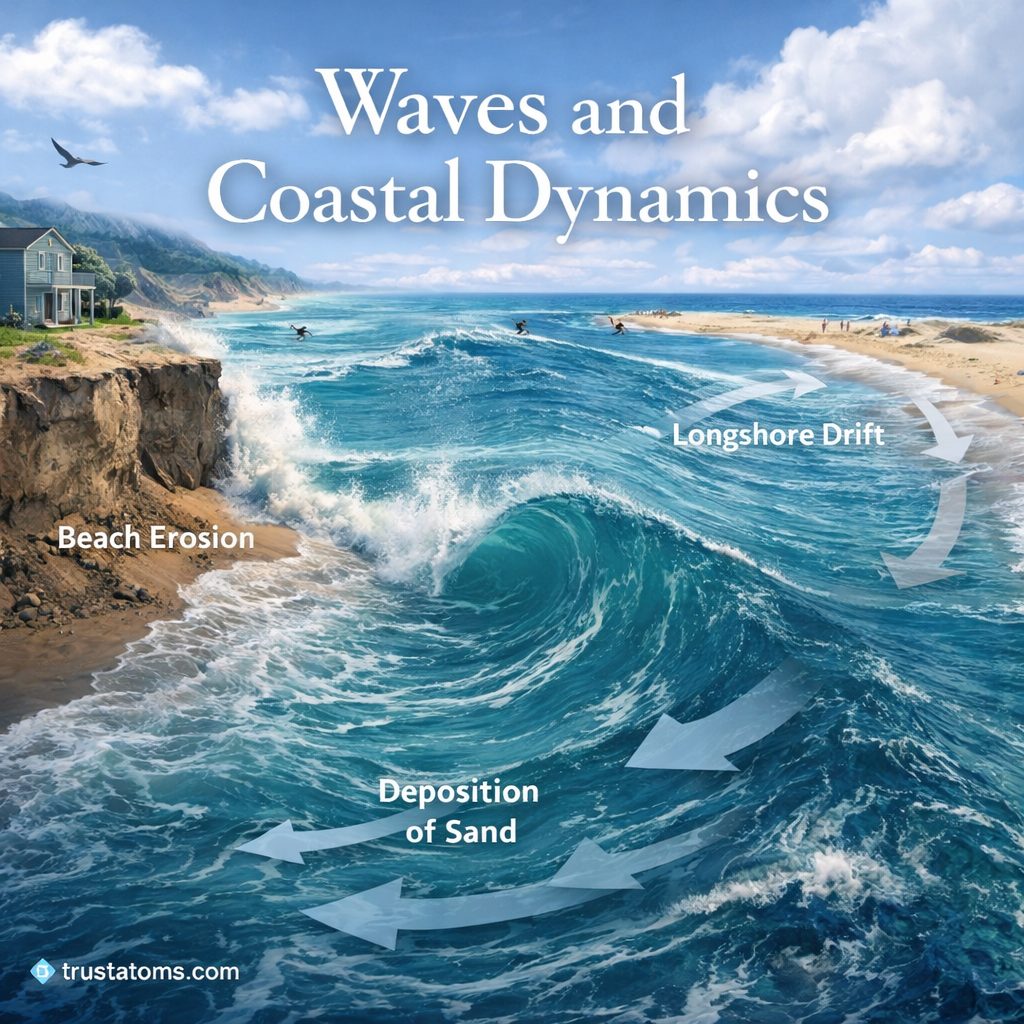
Longshore Drift
Longshore drift is the movement of sand and sediment along the coast.
It occurs when waves hit the shore at an angle, causing:
- Sediment to move up the beach at an angle
- Gravity pulling it straight back down
- A zigzag pattern of movement along the shoreline
This process gradually shifts sand from one area to another.
Beach Erosion
Erosion happens when waves remove sediment from the shoreline.
Factors that increase erosion include:
- Strong storms and high-energy waves
- Rising sea levels
- Reduced sediment supply
Erosion can lead to:
- Retreating shorelines
- Loss of beaches
- Damage to coastal infrastructure
Deposition
Deposition is the opposite of erosion—it occurs when waves lose energy and drop sediment.
This process forms features such as:
- Beaches
- Sandbars
- Spits and barrier islands
Deposition helps build and maintain coastal landforms.
Coastal Landforms Created by Waves
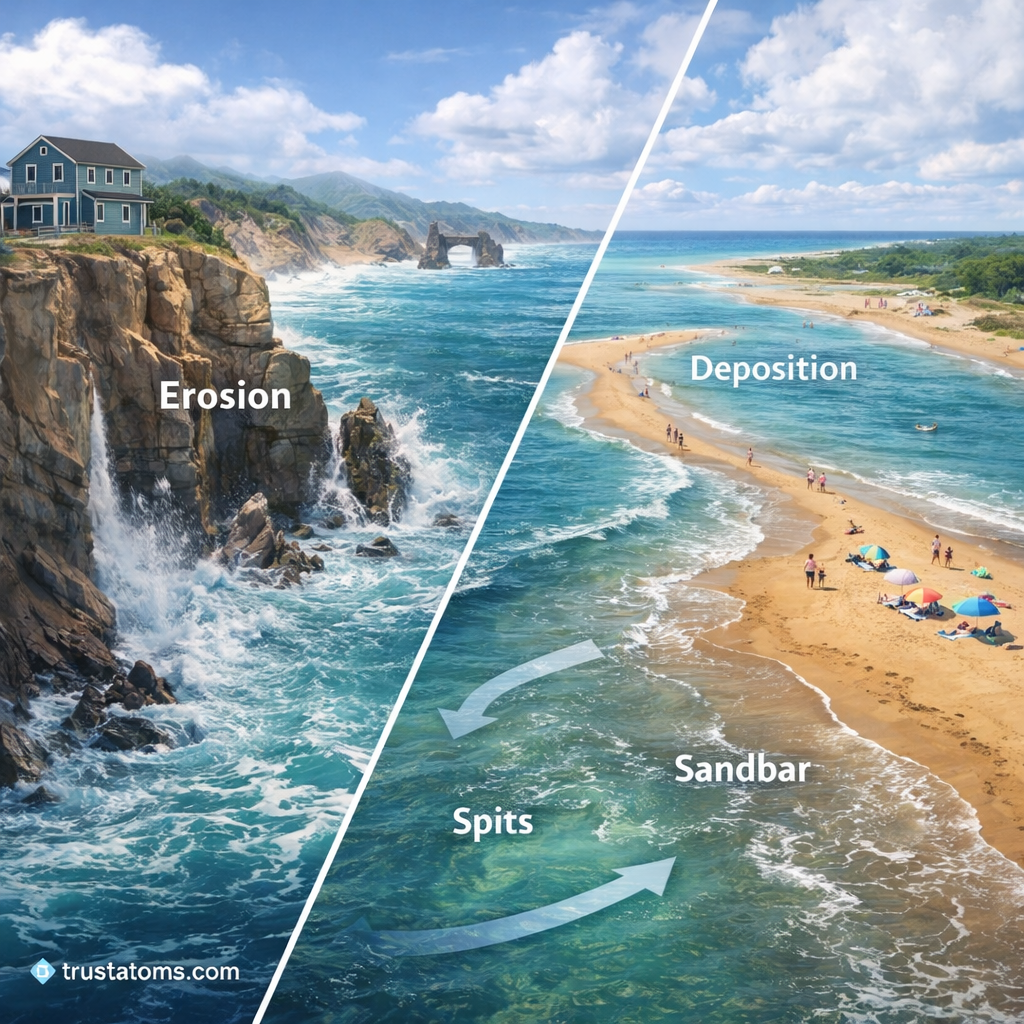
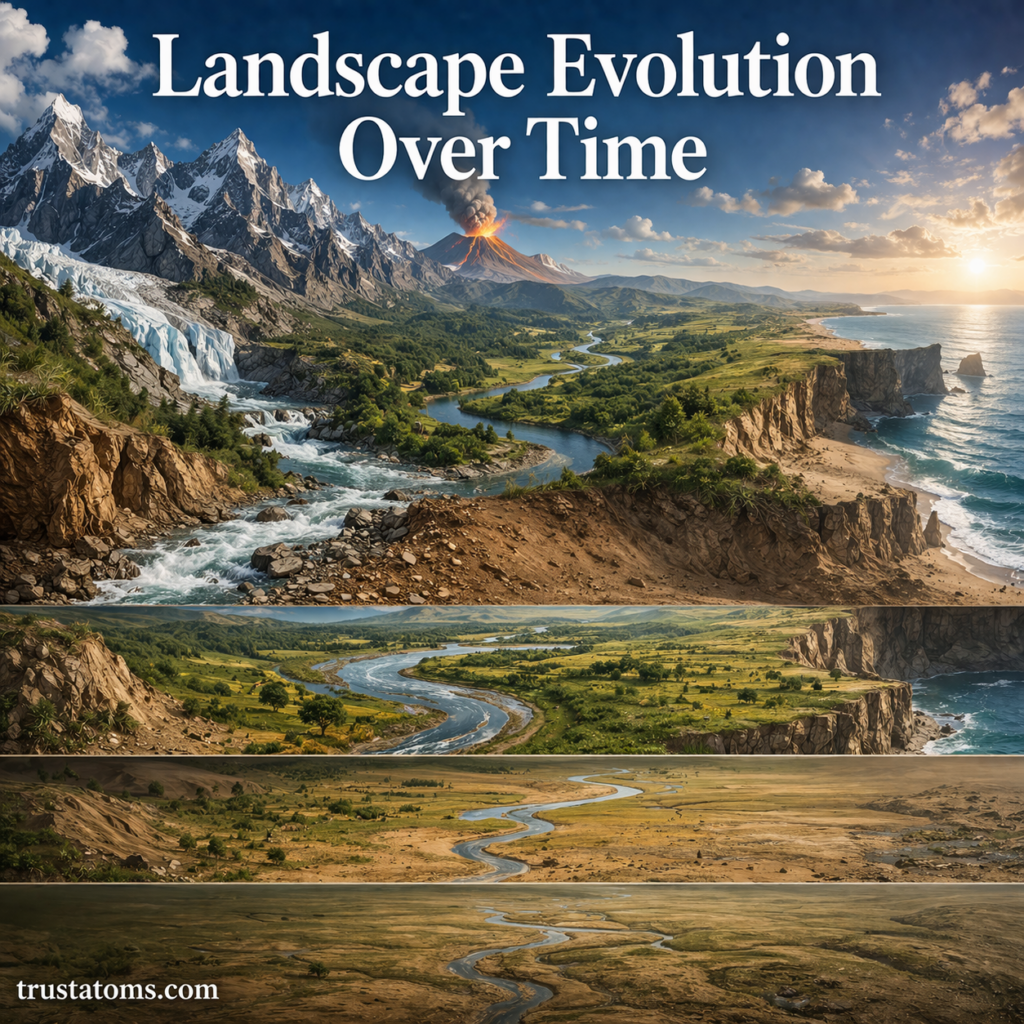
Wave action shapes a variety of coastal features over time.
Erosional Landforms
Created by the removal of rock and sediment:
- Sea cliffs
- Wave-cut platforms
- Sea caves
- Arches and stacks
Depositional Landforms
Formed by the accumulation of sediment:
- Sandy beaches
- Barrier islands
- Sand dunes
- Spits
These features are constantly changing due to ongoing wave activity.
The Role of Tides and Currents
Waves don’t act alone—tides and ocean currents also influence coastal dynamics.
- Tides change water levels, affecting where waves break
- Currents transport sediment over longer distances
- Together, they shape the overall coastal environment
Human Impact on Coastal Systems
Human activity can significantly alter natural coastal processes.
Common impacts include:
- Building seawalls and groynes that disrupt sediment flow
- Coastal development increasing erosion risk
- Beach nourishment projects that add artificial sand
- Climate change causing sea-level rise and stronger storms
While some efforts aim to protect coastlines, they can sometimes create unintended consequences elsewhere.
Why Coastal Dynamics Matter
Understanding waves and coastal dynamics is important for:
- Protecting coastal communities
- Managing erosion and flood risks
- Preserving ecosystems like wetlands and dunes
- Supporting tourism and recreation
Coastlines are valuable environments that require careful management.
Key Takeaways
- Waves are energy moving through water, primarily generated by wind
- As waves reach shallow water, they slow, grow, and break
- Longshore drift moves sediment along the coast
- Erosion removes material, while deposition builds landforms
- Coastal features are constantly shaped by waves, tides, and currents
- Human activity and climate change can disrupt natural coastal processes
Final Thoughts
Waves and coastal dynamics are powerful forces that continuously reshape Earth’s shorelines. From sandy beaches to rocky cliffs, these processes create and transform coastal landscapes over time.
By understanding how waves move energy and sediment, we gain insight into the delicate balance that maintains coastal environments—and the importance of protecting them for future generations.