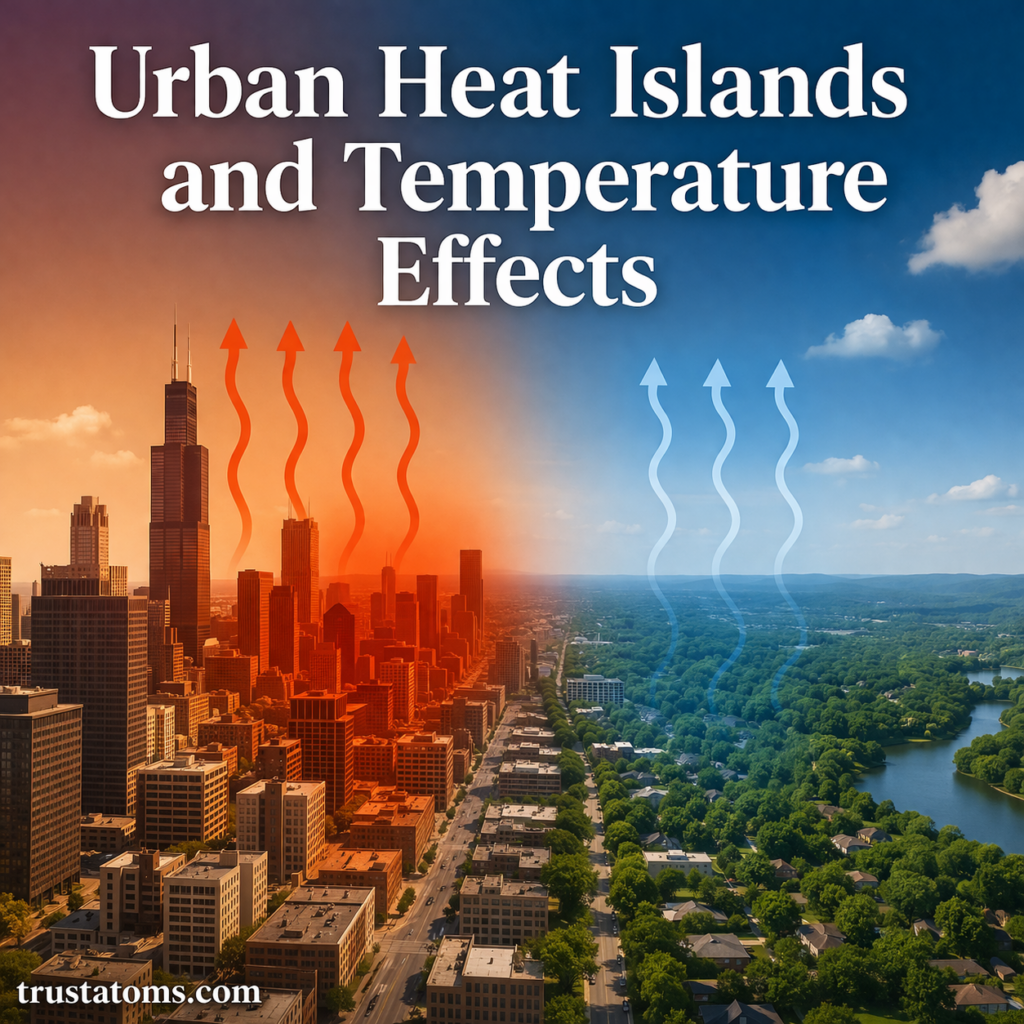
Cities are often significantly warmer than the rural areas that surround them. This phenomenon, known as the urban heat island (UHI) effect, is a well-documented environmental issue that impacts millions of people worldwide.
Understanding how and why urban heat islands form—and their effects on temperature, health, and energy use—can help individuals, planners, and policymakers create cooler, more sustainable cities.
What Is an Urban Heat Island?
An urban heat island occurs when a city experiences higher temperatures than nearby rural or suburban areas. The difference can range from a few degrees to over 10°F (5–6°C), especially during the evening and nighttime.
Key Characteristics
- Higher daytime and nighttime temperatures
- Reduced cooling after sunset
- Concentrated heat in densely built areas
- Strongest effects during summer months
Urban heat islands are most noticeable in large cities, but even smaller urban areas can experience them.
What Causes Urban Heat Islands?
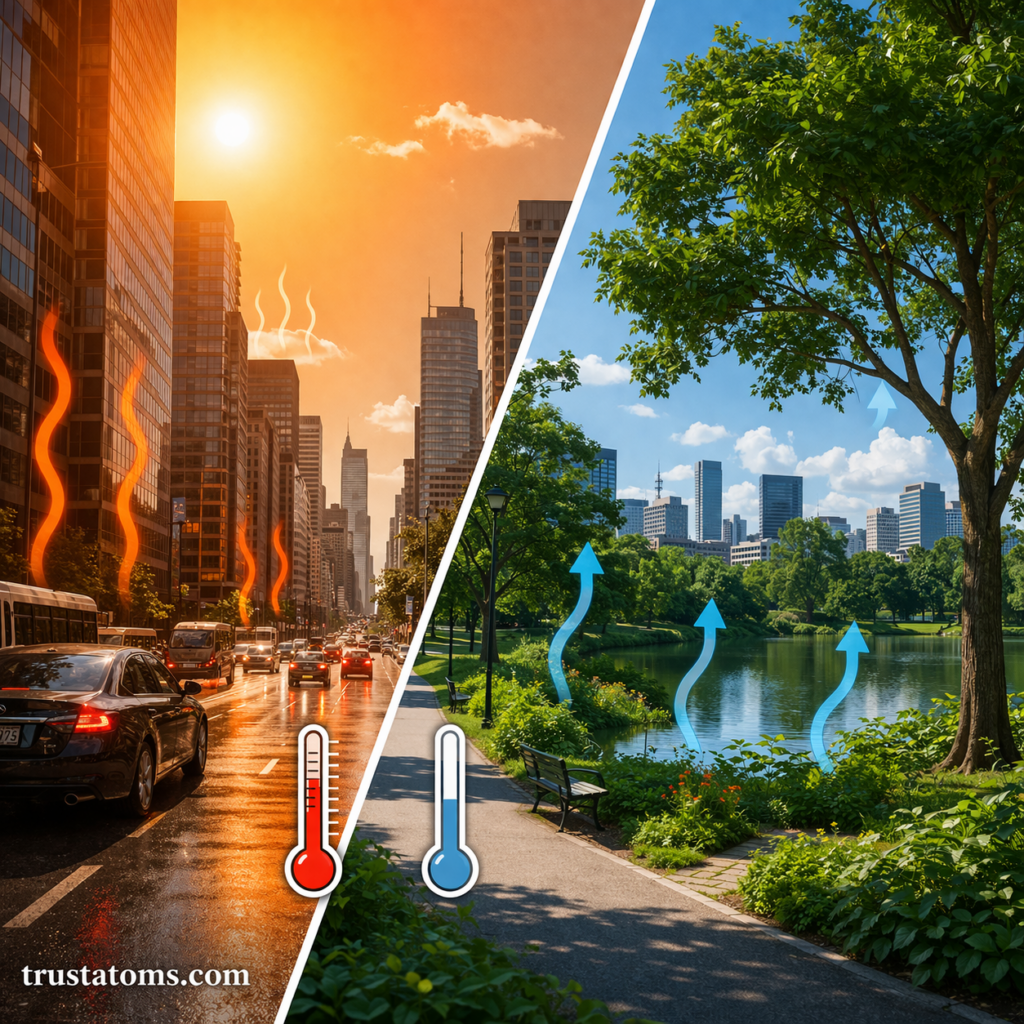
Several factors contribute to the formation of urban heat islands. These are primarily related to how cities are built and how they function.
1. Heat-Absorbing Materials
Urban surfaces like:
- Asphalt roads
- Concrete buildings
- Dark rooftops
absorb and store heat during the day. Unlike natural landscapes, these materials release heat slowly, keeping cities warmer at night.
2. Lack of Vegetation
Plants help cool the environment through shade and evapotranspiration (the release of water vapor). In cities:
- Trees are limited
- Green spaces are reduced
- Natural cooling is diminished
This leads to higher surface and air temperatures.
3. Waste Heat from Human Activity
Cities generate heat from:
- Vehicles
- Air conditioning systems
- Industrial processes
This “waste heat” adds directly to the surrounding air, increasing overall temperatures.
4. Urban Geometry (The “Canyon Effect”)
Tall buildings create narrow streets that:
- Trap heat
- Reduce airflow
- Limit heat escape
This effect is often called the urban canyon effect.
How Urban Heat Islands Affect Temperature
Urban heat islands influence temperature patterns in several important ways.
Daytime Heating
During the day:
- Surfaces absorb solar radiation
- Heat builds up rapidly
- Urban areas can be several degrees hotter than nearby regions
Nighttime Warming
At night:
- Stored heat is slowly released
- Cities remain warm while rural areas cool quickly
- Temperature differences become more noticeable
This is why cities often feel especially hot after sunset.
Impacts of Urban Heat Islands
Urban heat islands have wide-ranging effects on human health, energy consumption, and the environment.
1. Increased Health Risks
Higher temperatures can lead to:
- Heat exhaustion and heatstroke
- Dehydration
- Increased mortality during heat waves
Vulnerable populations include:
- Elderly individuals
- Children
- People with pre-existing health conditions
2. Higher Energy Demand
As temperatures rise:
- Air conditioning use increases
- Electricity demand spikes
- Power grids become stressed
This can lead to higher energy costs and even outages during extreme heat events.
3. Poor Air Quality
Heat accelerates chemical reactions in the atmosphere, leading to:
- Increased ground-level ozone
- Smog formation
- Respiratory issues
Urban heat islands can worsen existing air pollution problems.
4. Water and Ecosystem Impacts
Higher urban temperatures can:
- Warm nearby water bodies through runoff
- Stress aquatic ecosystems
- Alter local weather patterns
Real-World Examples
Urban heat islands are observed in cities around the world.
- Large metropolitan areas like New York, Tokyo, and Los Angeles often experience strong UHI effects
- Dense downtown districts are usually warmer than surrounding suburbs
- Industrial zones and areas with minimal vegetation show the highest temperature increases
How to Reduce Urban Heat Islands
Mitigating urban heat islands requires a combination of urban planning, technology, and community action.
1. Increase Green Spaces
Adding vegetation can significantly lower temperatures:
- Planting trees along streets
- Creating parks and green corridors
- Installing green roofs and walls
2. Use Reflective and Cool Materials
“Cool roofs” and reflective pavements:
- Reflect more sunlight
- Absorb less heat
- Lower surface temperatures
3. Improve Urban Design
Better city planning can reduce heat buildup:
- Increase spacing between buildings
- Design for better airflow
- Reduce heat-trapping structures
4. Reduce Waste Heat
Lowering energy use helps decrease heat emissions:
- Use energy-efficient appliances
- Promote public transportation
- Encourage renewable energy adoption
Urban Heat Islands and Climate Change
Urban heat islands and climate change are closely linked.
- Climate change increases baseline temperatures
- UHI effects amplify heat in cities
- Heat waves become more frequent and intense
This combination can make cities particularly vulnerable to extreme heat events.
Key Takeaways
- Urban heat islands occur when cities are warmer than surrounding areas
- Caused by heat-absorbing materials, lack of vegetation, and human activity
- Lead to higher temperatures, especially at night
- Impact health, energy use, air quality, and ecosystems
- Can be reduced through greener design, reflective materials, and smarter planning
Final Thoughts
Urban heat islands are a direct result of how modern cities are built and operated. While they pose serious challenges, they are also highly manageable with the right strategies.
By incorporating green infrastructure, improving urban design, and reducing energy use, cities can become cooler, healthier, and more resilient—benefiting both people and the environment.