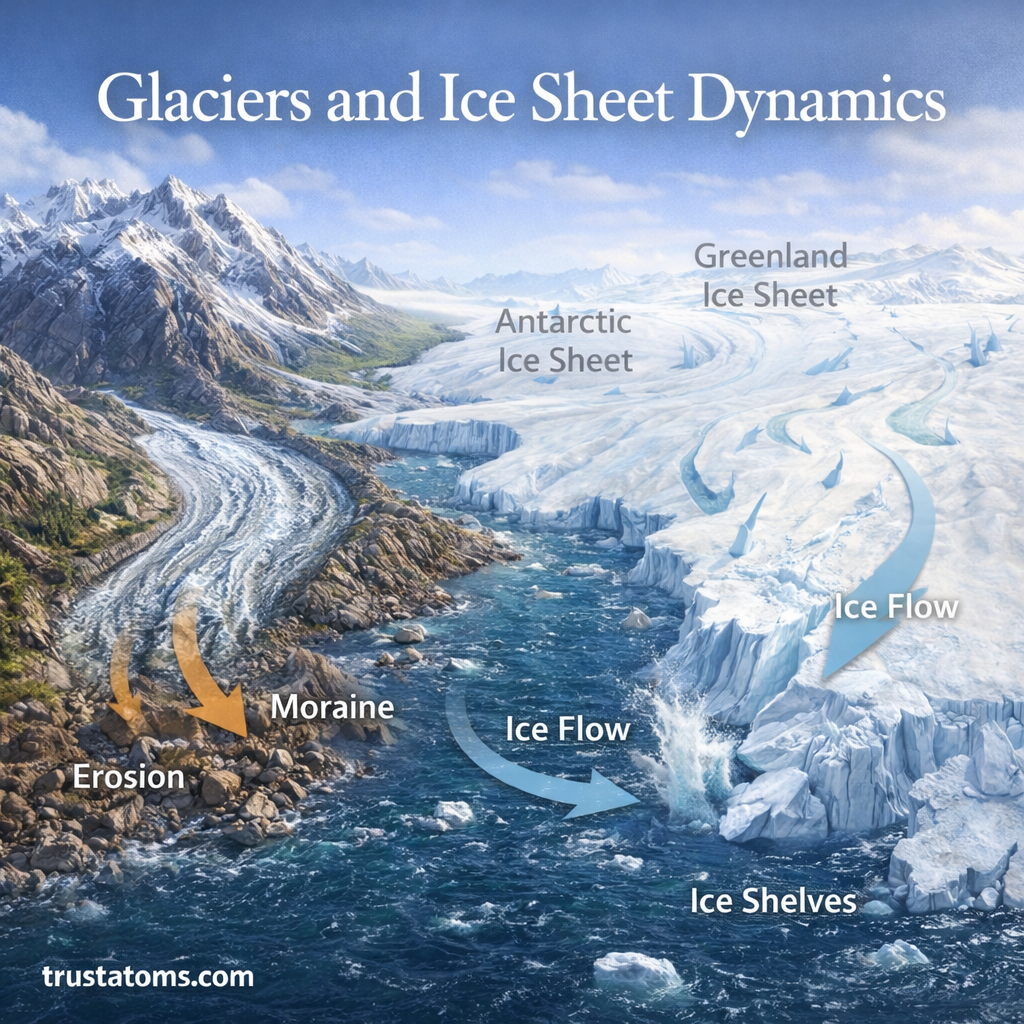
Glaciers and ice sheets are massive bodies of ice that shape landscapes, influence global sea levels, and act as important indicators of climate change. Though they may seem static, these frozen systems are constantly moving and evolving.
Understanding glacier and ice sheet dynamics helps explain how ice forms, flows, and interacts with the environment over time.
What Are Glaciers?
A glacier is a large, slow-moving mass of ice formed from compacted snow.
Glaciers develop when:
- Snow accumulates over many years
- Layers compress into dense ice
- The weight of the ice causes it to flow
Glaciers are commonly found in:
- Mountain regions (alpine glaciers)
- Polar areas
What Are Ice Sheets?
Ice sheets are enormous glaciers that cover vast land areas.
Key characteristics:
- Cover more than 50,000 square kilometers
- Found mainly in Greenland and Antarctica
- Can be several kilometers thick
Ice sheets hold the majority of Earth’s freshwater.
How Glaciers Form
Glacier formation begins with snowfall that does not fully melt.
Stages of Formation
- Snow Accumulation
- Snow builds up over time
- Compaction
- Snow compresses into firn (grainy ice)
- Glacial Ice Formation
- Firn becomes dense, solid ice
- Movement Begins
- Gravity causes the glacier to flow
Glacier Movement (Flow)
Glaciers are not stationary—they move slowly under their own weight.
Types of Glacier Movement
Internal Flow
- Ice deforms and moves within the glacier
- Occurs due to pressure and gravity
Basal Sliding
- Glacier slides over the ground beneath it
- Often aided by meltwater acting as a lubricant
Factors That Influence Movement
- Slope of the land
- Thickness of the ice
- Temperature (warmer ice moves more easily)
Zones of a Glacier
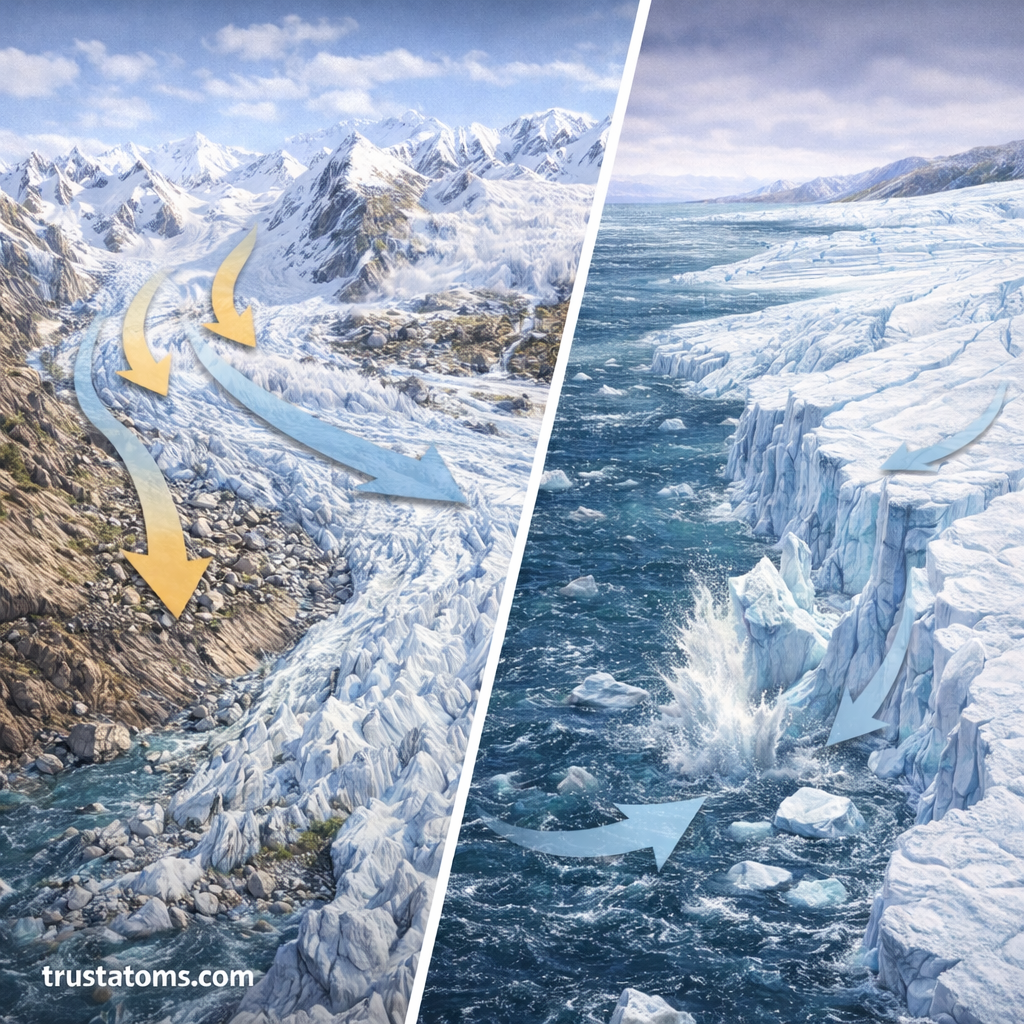
Glaciers are divided into zones based on gain and loss of ice.
Accumulation Zone
- Area where snowfall exceeds melting
- Ice builds up over time
Ablation Zone
- Area where ice loss exceeds gain
- Includes melting, evaporation, and calving
Equilibrium Line
- Boundary between accumulation and ablation zones
- Indicates whether a glacier is growing or shrinking
Ice Sheet Dynamics
Ice sheets behave similarly to glaciers but on a much larger scale.
Ice Flow in Ice Sheets
- Ice spreads outward from a central high point
- Movement is slow but continuous
Ice Streams
- Fast-moving channels within ice sheets
- Carry large amounts of ice toward the edges
Ice Shelves
- Floating extensions of ice sheets
- Form where ice flows into the ocean
- Help slow the movement of inland ice
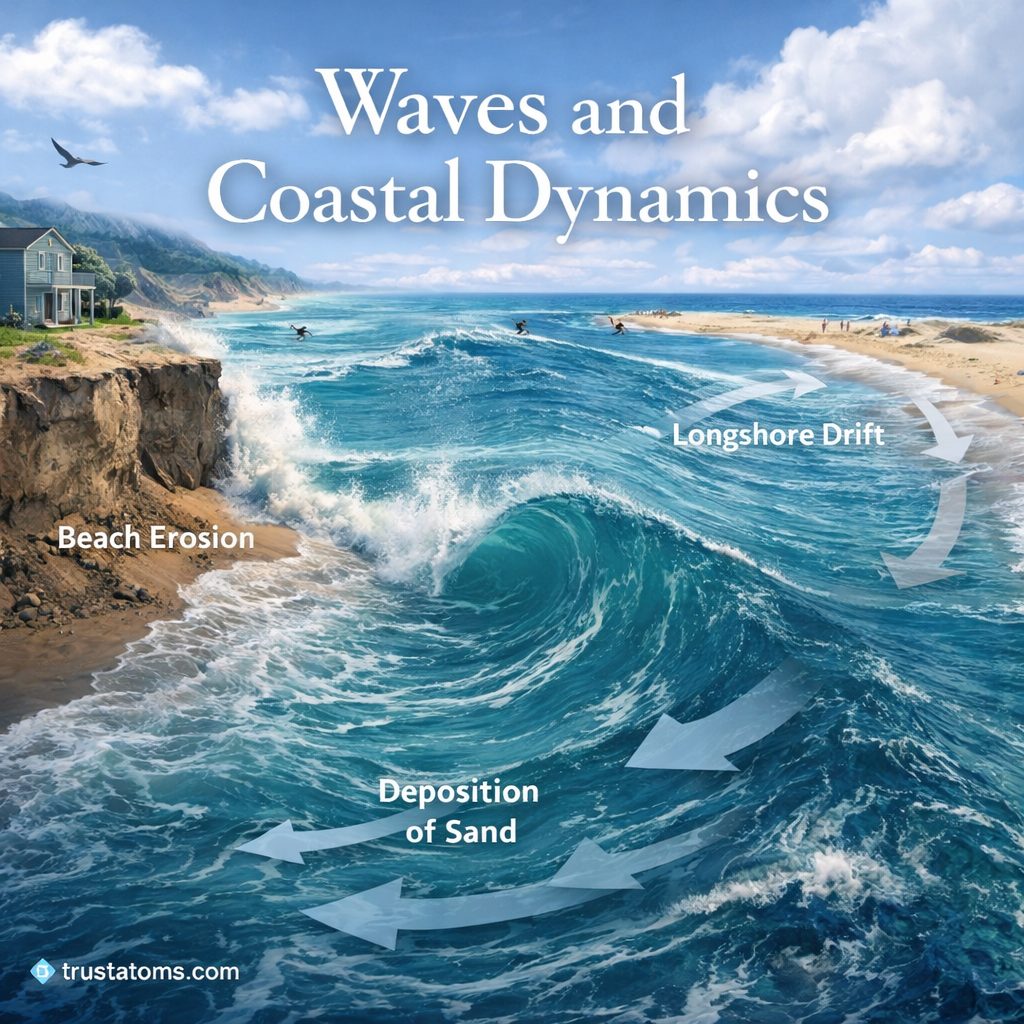
Glacial Erosion and Deposition
Glaciers are powerful agents of landscape change.
Erosion
- Ice scrapes and removes rock (abrasion)
- Picks up and carries debris (plucking)
Deposition
- Occurs when glaciers melt and drop sediment
- Forms landforms such as:
- Moraines (piles of debris)
- Drumlins (streamlined hills)
- Outwash plains
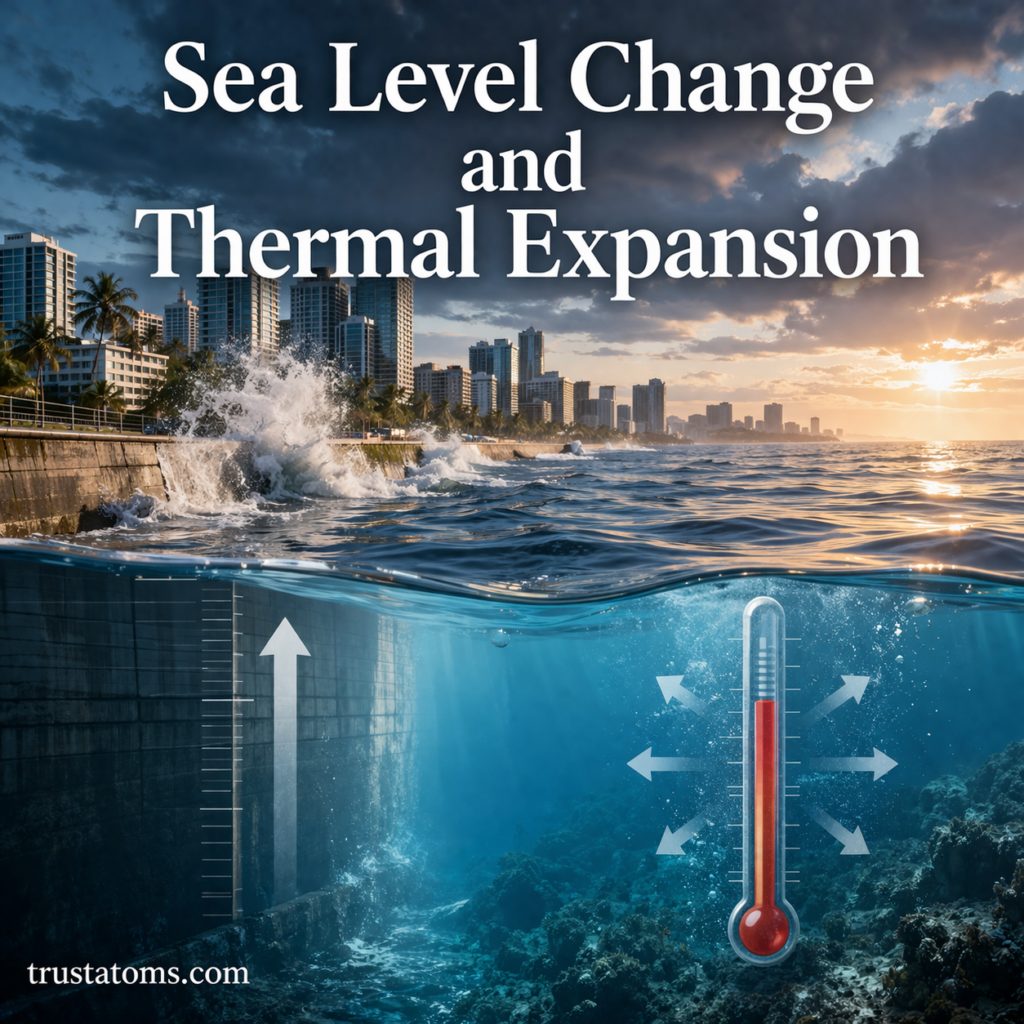
Glaciers and Sea Level
Glaciers and ice sheets play a major role in global sea levels.
Melting Ice
- Adds water to the oceans
- Contributes to sea level rise
Floating Ice vs Land Ice
- Melting floating ice (ice shelves) has little direct effect on sea level
- Melting land-based ice increases sea levels significantly
Climate Change and Ice Dynamics
Glaciers and ice sheets are highly sensitive to climate changes.
Current Trends
- Accelerated glacier melting worldwide
- Shrinking ice sheets in Greenland and Antarctica
- Increased iceberg calving
Impacts
- Rising sea levels
- Changes in ocean circulation
- Loss of freshwater resources
- Effects on ecosystems and weather patterns
Importance of Glaciers and Ice Sheets
These frozen systems are critical to Earth’s balance.
Freshwater Storage
- Store about 69% of the world’s freshwater
Climate Regulation
- Reflect sunlight (albedo effect)
- Help regulate global temperatures
Landscape Formation
- Carve valleys and shape mountains
- Influence river systems
Real-World Examples
Greenland Ice Sheet
- Second-largest ice body on Earth
- Rapidly losing mass due to warming temperatures
Antarctic Ice Sheet
- Largest ice sheet in the world
- Contains enough ice to significantly raise sea levels if melted
Alpine Glaciers
- Found in mountain regions worldwide
- Important freshwater sources for nearby communities
Final Thoughts
Glaciers and ice sheet dynamics reveal a constantly changing frozen world. These massive ice systems move, shape landscapes, and influence global climate in ways that are both powerful and complex.
As climate change accelerates, understanding how glaciers and ice sheets behave is essential for predicting future environmental changes and managing their global impacts.