When a major earthquake strikes, the shaking doesn’t always end with the initial event. In many cases, the ground continues to tremble for days, weeks, or even months. These follow-up events—known as aftershocks—are part of a broader pattern called a seismic sequence.
Understanding aftershocks and seismic sequences helps scientists assess ongoing risks and gives communities a clearer picture of what to expect after a major quake.
What Are Aftershocks?
Aftershocks are smaller earthquakes that occur in the same general area as a larger mainshock. They happen as the Earth’s crust adjusts to the changes caused by the initial rupture.
Key Characteristics of Aftershocks
- Occur after the main earthquake (mainshock)
- Usually decrease in frequency and magnitude over time
- Can still be strong enough to cause damage
- Often occur along the same fault line
Aftershocks are a normal and expected part of earthquake activity—not a separate or unusual event.
Why Do Aftershocks Occur?
After a major earthquake, the stress along a fault doesn’t disappear completely. Instead, it redistributes to surrounding areas in the crust.
The Process Behind Aftershocks
- A mainshock releases a large amount of built-up stress
- Nearby rocks and faults experience new stress patterns
- Smaller adjustments occur as the crust settles
- These adjustments generate aftershocks
Think of it like bending a stick: when it snaps, the surrounding material shifts and settles, causing smaller movements afterward.
What Is a Seismic Sequence?
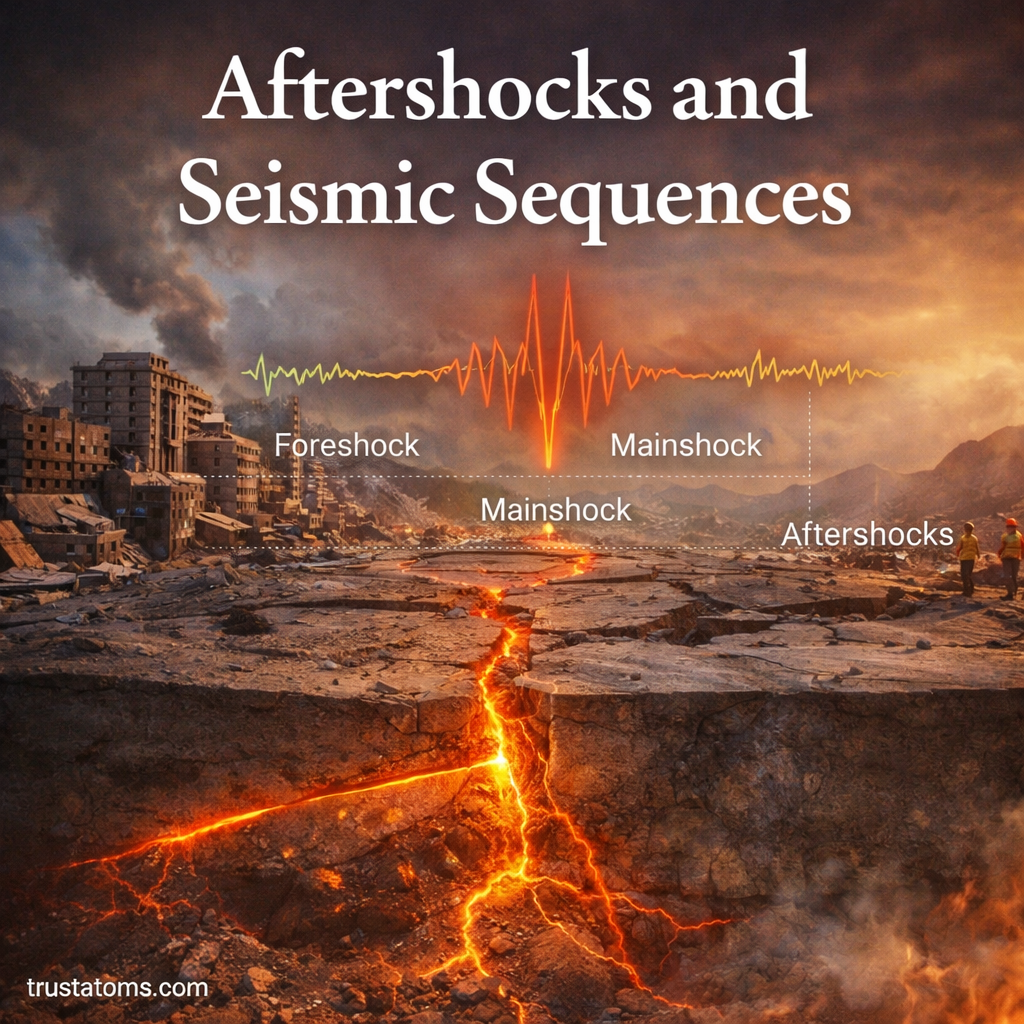
A seismic sequence is the full series of earthquakes that includes:
- Foreshocks (smaller quakes before the main event)
- The mainshock (largest and most significant quake)
- Aftershocks (follow-up quakes after the mainshock)
This sequence represents the complete cycle of stress buildup and release in a specific region.
Foreshocks vs Mainshock vs Aftershocks
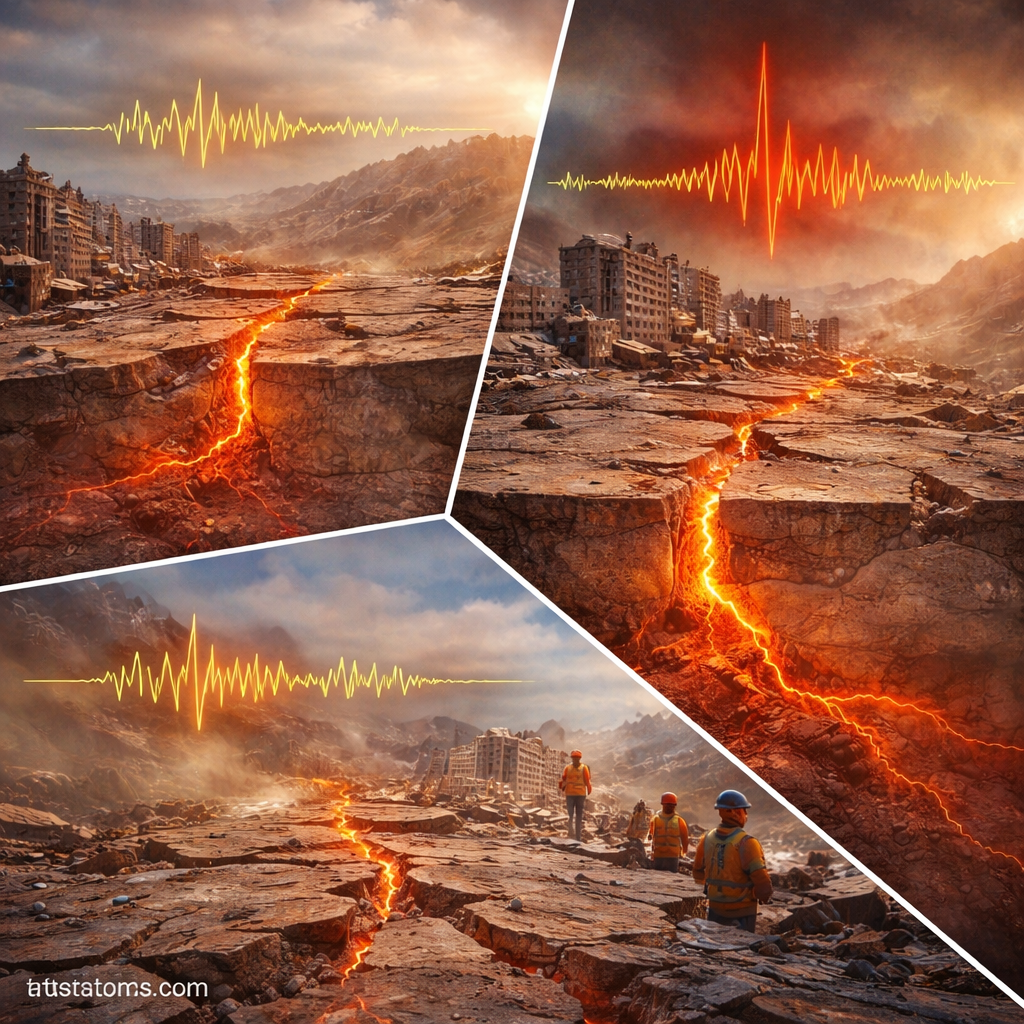
Understanding the differences between these events helps clarify how earthquakes evolve.
Foreshocks
- Occur before the main earthquake
- Usually smaller in magnitude
- Not always recognized until after the mainshock occurs
Mainshock
- The largest earthquake in the sequence
- Causes the most damage and energy release
Aftershocks
- Follow the mainshock
- Gradually decrease in size and frequency
- Can continue for extended periods
How Long Do Aftershocks Last?
The duration of aftershocks varies depending on the size of the main earthquake and the geological conditions.
Typical Aftershock Patterns
- Small earthquakes: aftershocks may last hours to days
- Moderate earthquakes: days to weeks
- Large earthquakes: weeks, months, or even years
A general scientific principle called Omori’s Law explains that aftershock frequency decreases over time.
Can Aftershocks Be Dangerous?
Yes—aftershocks can still pose serious risks, especially in already damaged areas.
Potential Dangers of Aftershocks
- Collapse of weakened buildings
- Landslides and rockfalls
- Damage to infrastructure like roads and bridges
- Disruption of rescue and recovery efforts
Even a smaller aftershock can cause significant damage if structures are already compromised.
Where Do Aftershocks Occur?
Aftershocks usually occur near the original fault rupture, but they can spread across a wider region.
Common Locations
- Along the same fault as the mainshock
- Nearby connected fault systems
- Areas where stress has been transferred
This is why regions surrounding a major earthquake remain at risk even after the initial shaking stops.
How Scientists Study Seismic Sequences
Seismologists analyze seismic sequences to better understand how earthquakes behave and how stress moves through the Earth’s crust.
Tools and Methods
- Seismographs to record ground motion
- Satellite data to track land deformation
- Computer models to simulate stress changes
- Historical data comparisons
These tools help scientists map aftershock patterns and improve hazard assessments.
Can Aftershocks Be Predicted?
Aftershocks cannot be predicted individually, but their general behavior can be estimated.
What Scientists Can Do
- Estimate how many aftershocks may occur
- Predict how quickly they will decrease
- Identify high-risk zones
What Scientists Cannot Do
- Predict exact timing of specific aftershocks
- Determine precise magnitudes in advance
This uncertainty is why safety precautions remain important after a major earthquake.
How to Stay Safe During Aftershocks
Preparedness is essential when aftershocks are expected.
Safety Tips
- Stay away from damaged buildings
- Be ready for additional shaking
- Follow local emergency instructions
- Keep emergency supplies accessible
- Drop, cover, and hold on during shaking
Remaining cautious can significantly reduce injury and damage risks.
Common Misconceptions About Aftershocks
“Aftershocks are harmless”
False—some aftershocks can be strong and dangerous.
“They happen randomly”
Not entirely. Aftershocks follow predictable statistical patterns, even if exact timing is unknown.
“Once they stop, the danger is over”
While risk decreases, new seismic activity can still occur in active regions.
Final Thoughts
Aftershocks and seismic sequences are a natural part of how the Earth releases stress along fault lines. While the mainshock often causes the most damage, the period that follows can still be hazardous.
By understanding how these events work, communities can stay alert, respond effectively, and reduce the risks associated with ongoing seismic activity.