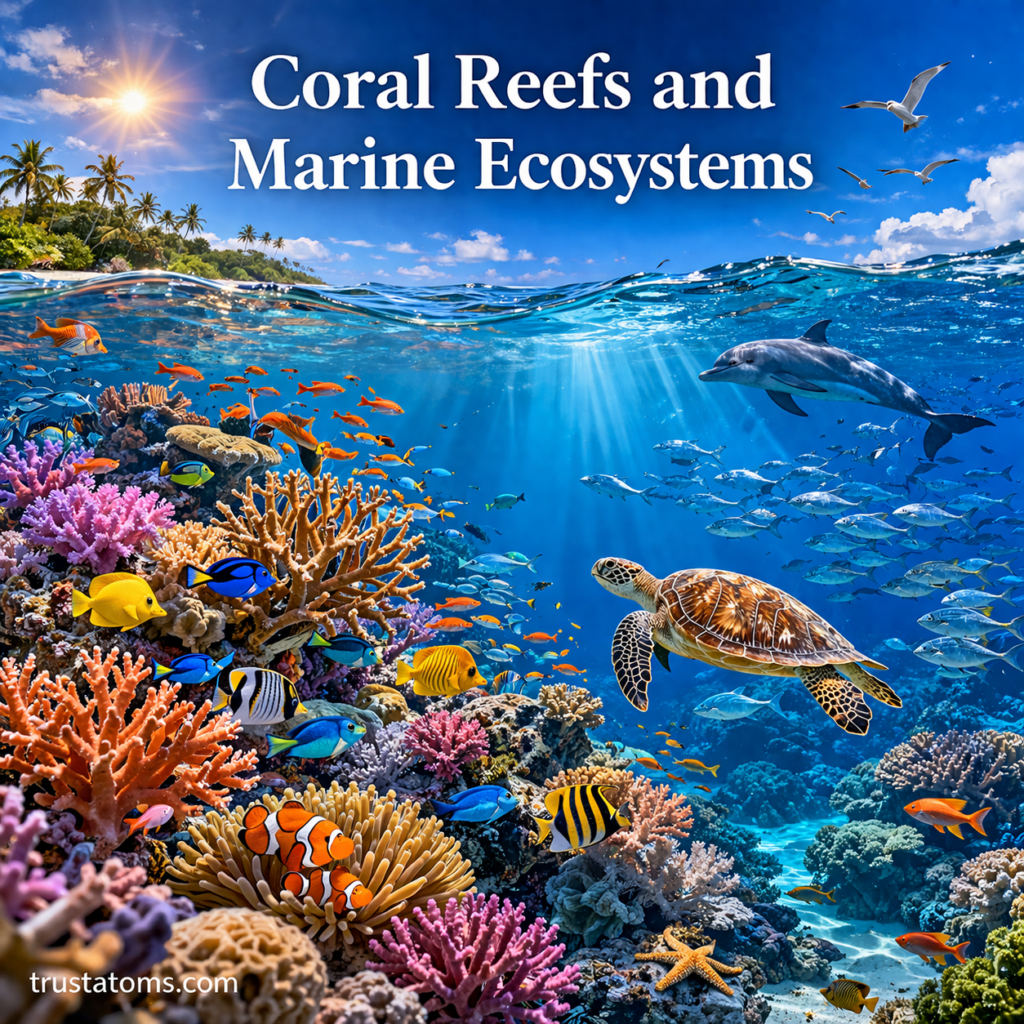
Coral reefs are among the most diverse and valuable ecosystems on Earth. Often called the “rainforests of the sea,” they support a vast array of marine life while protecting coastlines and sustaining human communities.
Understanding coral reefs and their role in marine ecosystems is essential for preserving ocean biodiversity and maintaining environmental balance.
What Are Coral Reefs?
Coral reefs are underwater structures formed by colonies of tiny animals called coral polyps.
These polyps:
- Secrete calcium carbonate to build hard skeletons
- Live in large, interconnected communities
- Form reef structures over thousands of years
Coral reefs thrive in:
- Warm, shallow ocean waters
- Clear, sunlit environments
- Stable temperature conditions
Types of Coral Reefs
There are three main types of coral reefs, each with unique characteristics.
Fringing Reefs
- Found close to shorelines
- Most common type
- Grow directly from the coast
Barrier Reefs
- Located farther offshore
- Separated from land by lagoons
- Larger and more complex than fringing reefs
Atolls
- Ring-shaped reefs surrounding a lagoon
- Formed around submerged volcanic islands
- Often found in the open ocean
Coral Reefs as Ecosystems
Coral reefs support incredibly rich ecosystems despite covering less than 1% of the ocean floor.
Biodiversity Hotspots
- Home to about 25% of all marine species
- Provide habitat for fish, crustaceans, mollusks, and more
Food Webs
Reefs are the foundation of complex food chains.
Key roles include:
- Producers: Algae and phytoplankton
- Consumers: Fish, sea turtles, and invertebrates
- Predators: Sharks and large fish
Symbiotic Relationships
Corals depend on a symbiotic relationship with microscopic algae called zooxanthellae.
- Algae live inside coral tissues
- Provide energy through photosynthesis
- Give corals their vibrant colors
Importance of Coral Reefs
Coral reefs provide essential benefits to both marine life and humans.
Coastal Protection
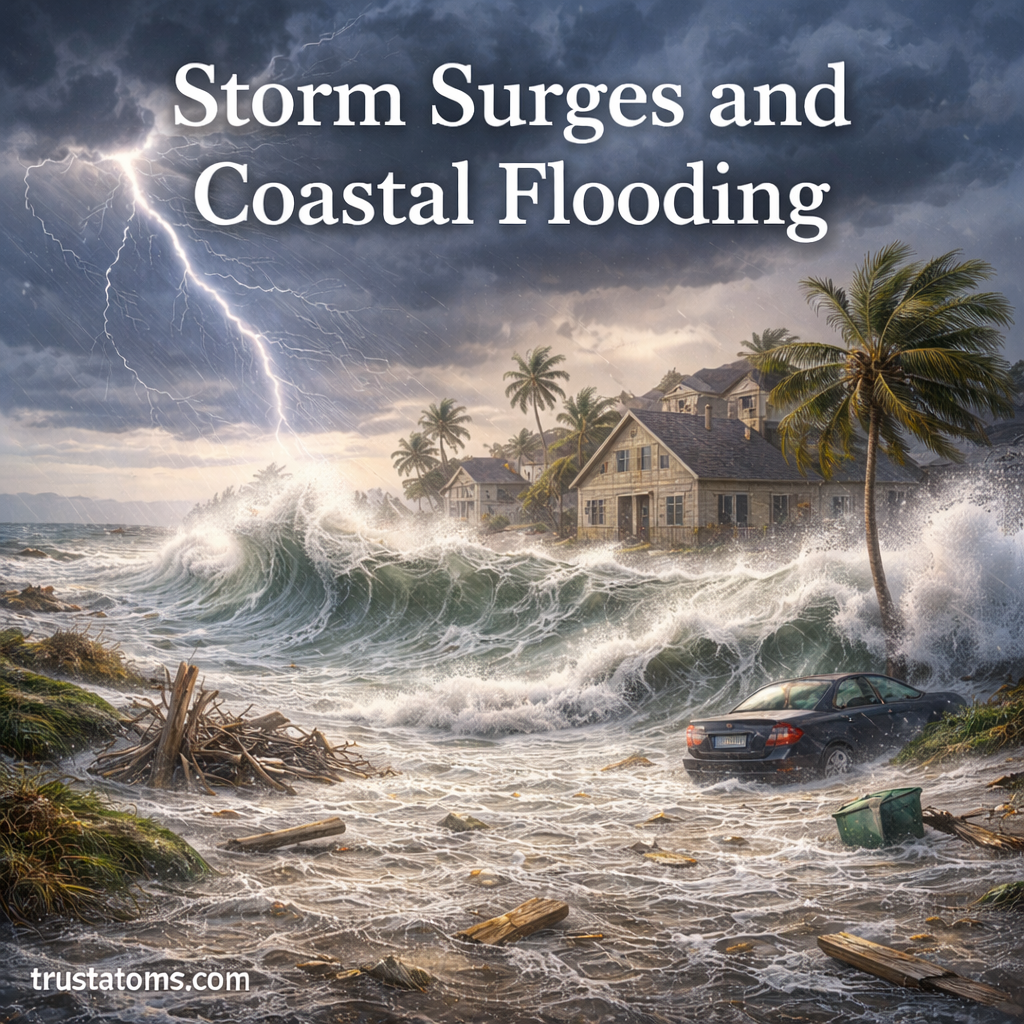
- Act as natural barriers against waves and storms
- Reduce coastal erosion
- Protect shorelines and infrastructure
Economic Value
- Support fishing industries
- Attract tourism and recreation
- Provide livelihoods for millions of people
Medical Research
- Source of compounds used in medicine
- Contribute to research on cancer, bacteria, and viruses
Threats to Coral Reefs
Coral reefs are highly sensitive to environmental changes and human activity.
Climate Change
- Rising ocean temperatures cause coral bleaching
- Corals lose their symbiotic algae
- Prolonged bleaching can lead to coral death
Ocean Acidification
- Increased carbon dioxide lowers ocean pH
- Weakens coral skeletons
- Slows reef growth
Pollution
- Runoff introduces harmful chemicals and sediments
- Reduces water clarity and quality
Overfishing
- Disrupts ecosystem balance
- Removes key species that maintain reef health
Coral Bleaching Explained
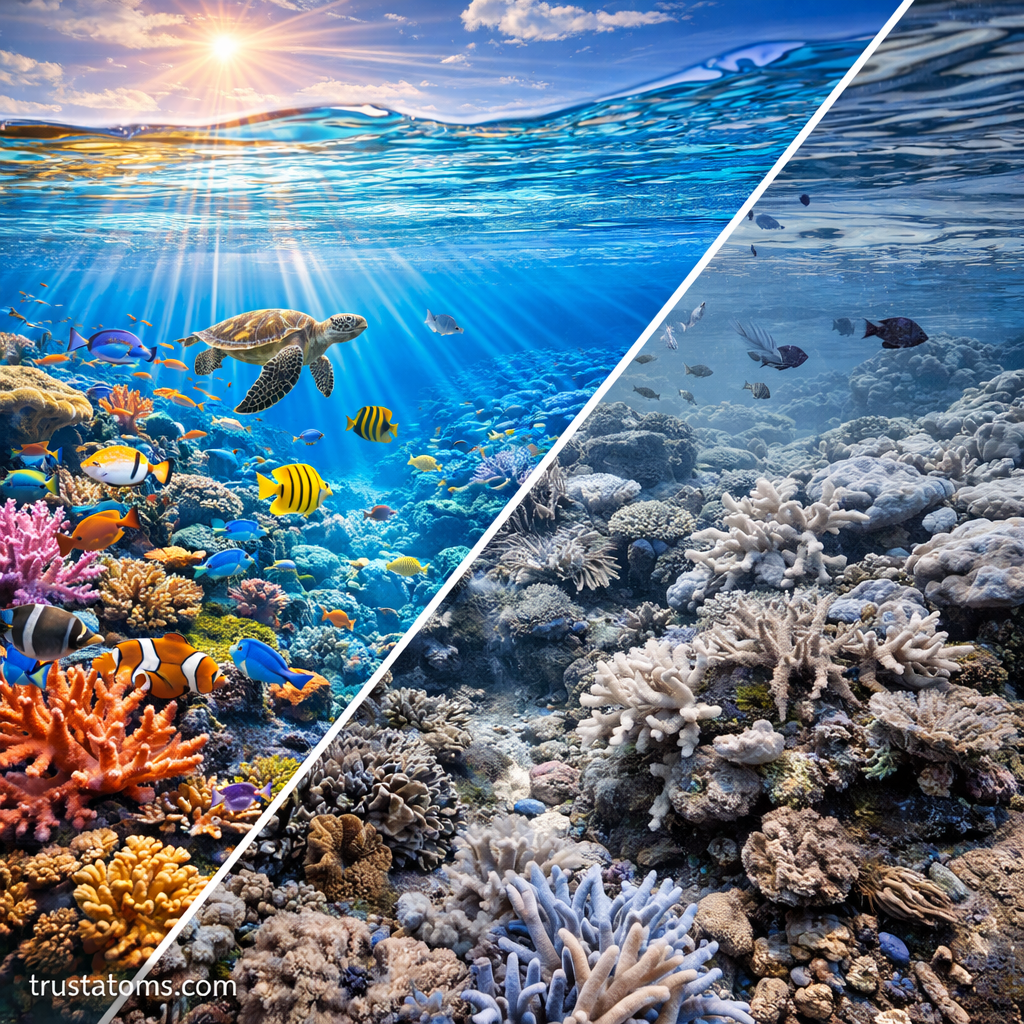
Coral bleaching occurs when corals are stressed, usually by heat.
What Happens
- Corals expel their algae
- Lose color and turn white
- Become more vulnerable to disease
If conditions improve, corals can recover. If not, they may die.
Conservation and Protection Efforts
Protecting coral reefs requires global and local action.
Marine Protected Areas (MPAs)
- Restrict harmful activities
- Allow ecosystems to recover
Sustainable Practices
- Responsible fishing
- Reduced pollution
- Eco-friendly tourism
Climate Action
- Reducing greenhouse gas emissions
- Limiting global temperature rise
The Future of Coral Reefs
The future of coral reefs depends on how effectively we address environmental challenges.
Key priorities:
- Monitoring reef health
- Restoring damaged reefs
- Raising public awareness
Innovative approaches such as coral farming and reef restoration projects offer hope for preserving these ecosystems.
Final Thoughts
Coral reefs are vital to marine ecosystems and human life, providing biodiversity, protection, and economic benefits. However, they face serious threats from climate change and human activity.
By understanding their importance and supporting conservation efforts, we can help protect these incredible ecosystems for future generations.