When most people think of volcanoes, they imagine lava and explosive eruptions. But one of the most destructive volcanic hazards isn’t fiery at all—it’s mud.
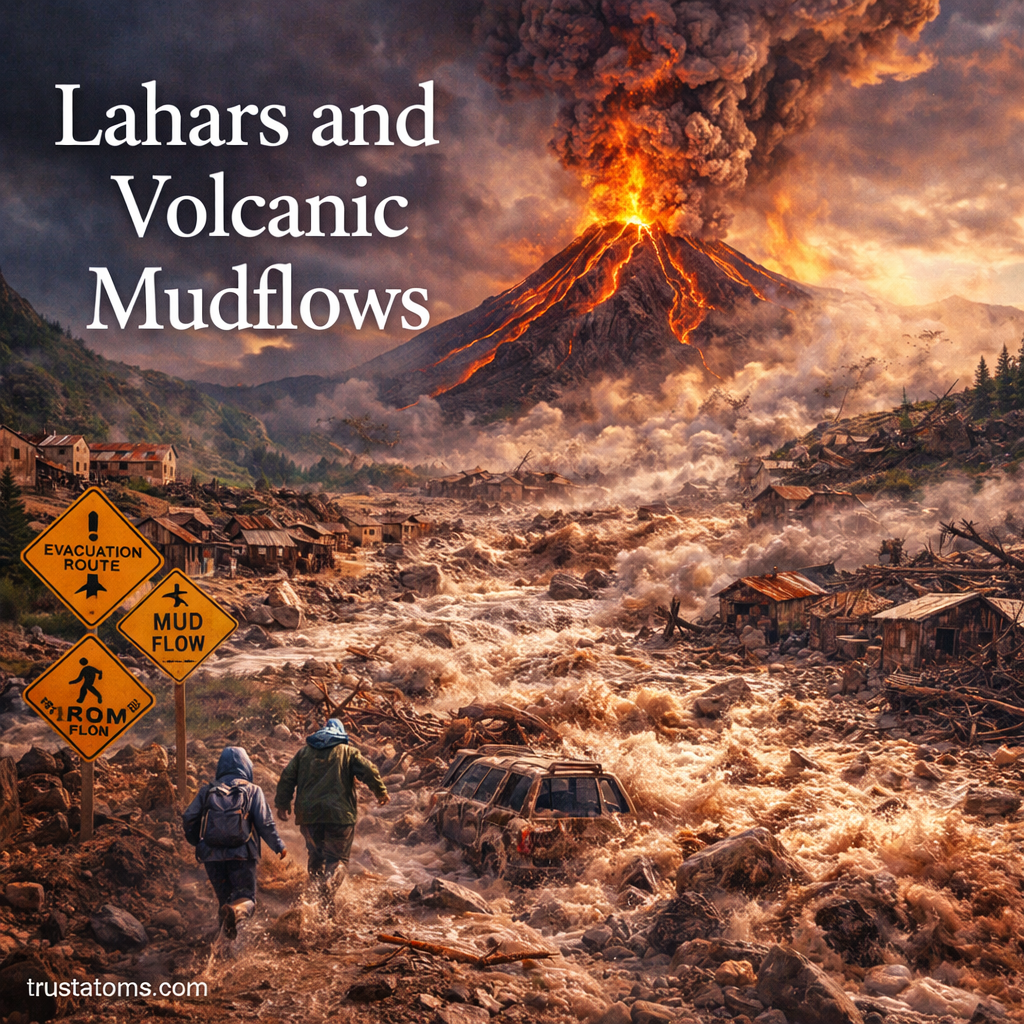
Lahars, also known as volcanic mudflows, are fast-moving mixtures of water, ash, rock, and debris that can rush down volcano slopes with devastating force. They can travel far beyond the volcano itself, impacting communities miles away.
What Is a Lahar?
A lahar is a dense, flowing mixture of volcanic material and water that behaves like a fast-moving river of mud.
Unlike lava, lahars are cooler but can be just as destructive due to their speed, weight, and reach.
Key Characteristics of Lahars
- Made of water, ash, rock fragments, and debris
- Can move as fast as 20–40 mph (32–64 km/h) or more
- Follow river valleys and low-lying areas
- Can travel dozens of miles from a volcano
Lahars can occur during or long after an eruption, making them especially dangerous.
How Do Lahars Form?
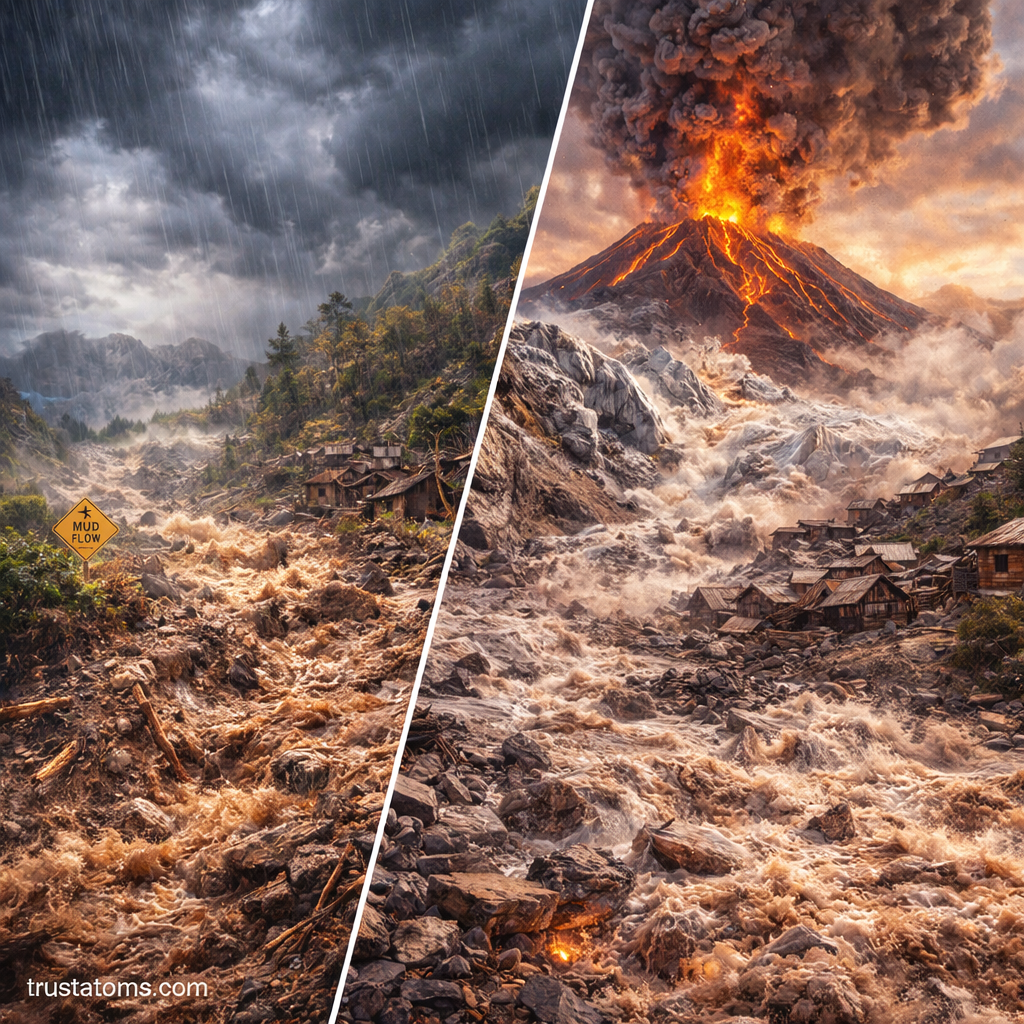
Lahars form when volcanic material mixes with a significant source of water.
Common Causes of Lahars
- Heavy Rainfall
- Rain mixes with loose ash and debris
- Common after eruptions
- Melting Snow and Ice
- Heat from eruptions melts glaciers or snowcaps
- Produces sudden, large mudflows
- Crater Lake Overflow
- Water stored in volcanic craters is released
- Can trigger powerful flows
- Landslides and Debris Collapse
- Volcanic slopes collapse and mix with water
- Creates fast-moving mud currents
Why Lahars Are So Dangerous
Lahars combine the destructive power of floods with the density of wet concrete.
Major Hazards of Lahars
- High speed makes them difficult to escape
- Massive force can destroy buildings, bridges, and roads
- Burial risk as thick mud covers entire areas
- Long travel distances extend danger far from the volcano
Even small lahars can cause significant damage, while large ones can devastate entire towns.
How Lahars Travel
Lahars typically follow natural drainage systems such as rivers and valleys.
Movement Patterns
- Accelerate downhill due to gravity
- Pick up additional debris as they move
- Spread out in flatter terrain
- Slow down but deposit thick layers of mud
Because they follow river paths, communities located along valleys are especially vulnerable.
Lahars vs Other Volcanic Hazards
Lahars differ from other volcanic hazards in important ways.
Lahars vs Lava Flows
- Lahars move faster and farther
- Lava is hotter but slower
- Lahars can occur without an eruption
Lahars vs Pyroclastic Flows
- Lahars are cooler and water-based
- Pyroclastic flows are hotter and gas-driven
- Both are highly destructive
Real-World Examples of Lahars
History has shown just how deadly lahars can be.
Notable Events
- 1985 Nevado del Ruiz lahar disaster
- Triggered by melting ice during an eruption
- Destroyed the town of Armero
- Killed over 20,000 people
- Mount Rainier (USA)
- Known for significant lahar risk due to glaciers
- Nearby communities are closely monitored
These events highlight the importance of early warning systems and preparedness.
Warning Signs of Lahars
While lahars can occur suddenly, there are sometimes warning signs.
Possible Indicators
- Heavy rainfall after an eruption
- Sudden increase in river flow
- Rumbling sounds from upstream
- Rising water levels carrying debris
Recognizing these signs can help save lives.
How Scientists Monitor Lahar Risk
Volcanologists and emergency agencies use various tools to track and predict lahar activity.
Monitoring Methods
- Rainfall measurement systems
- River level sensors
- Seismic monitoring for ground movement
- Hazard mapping of high-risk areas
These tools help identify when conditions are right for lahars to form.
How to Stay Safe During a Lahar
Preparedness is critical in areas near volcanoes.
Safety Tips
- Move to higher ground immediately
- Avoid river valleys and low-lying areas
- Follow evacuation routes and alerts
- Stay informed through local authorities
- Do not attempt to cross flowing mud or debris
Quick action can make the difference between safety and disaster.
Common Misconceptions About Lahars
“Lahars only happen during eruptions”
False—they can occur long after an eruption due to rain or other triggers.
“They move slowly like mud”
Not true—lahars can move extremely fast and behave more like floods.
“Only areas near volcanoes are at risk”
Lahars can travel far downstream, affecting distant communities.
Why Understanding Lahars Matters
Lahars are one of the most underestimated volcanic hazards. Their ability to strike quickly and travel long distances makes them especially dangerous.
Importance of Awareness
- Helps communities prepare evacuation plans
- Improves hazard mapping and land-use decisions
- Supports early warning systems
- Reduces loss of life during volcanic events
Final Thoughts
Lahars may not have the dramatic visuals of lava or explosions, but they are among the most destructive forces associated with volcanoes. Their speed, reach, and power make them a serious threat to communities near and far.
By understanding how lahars form and behave, we can better prepare for these dangerous events and reduce their impact.