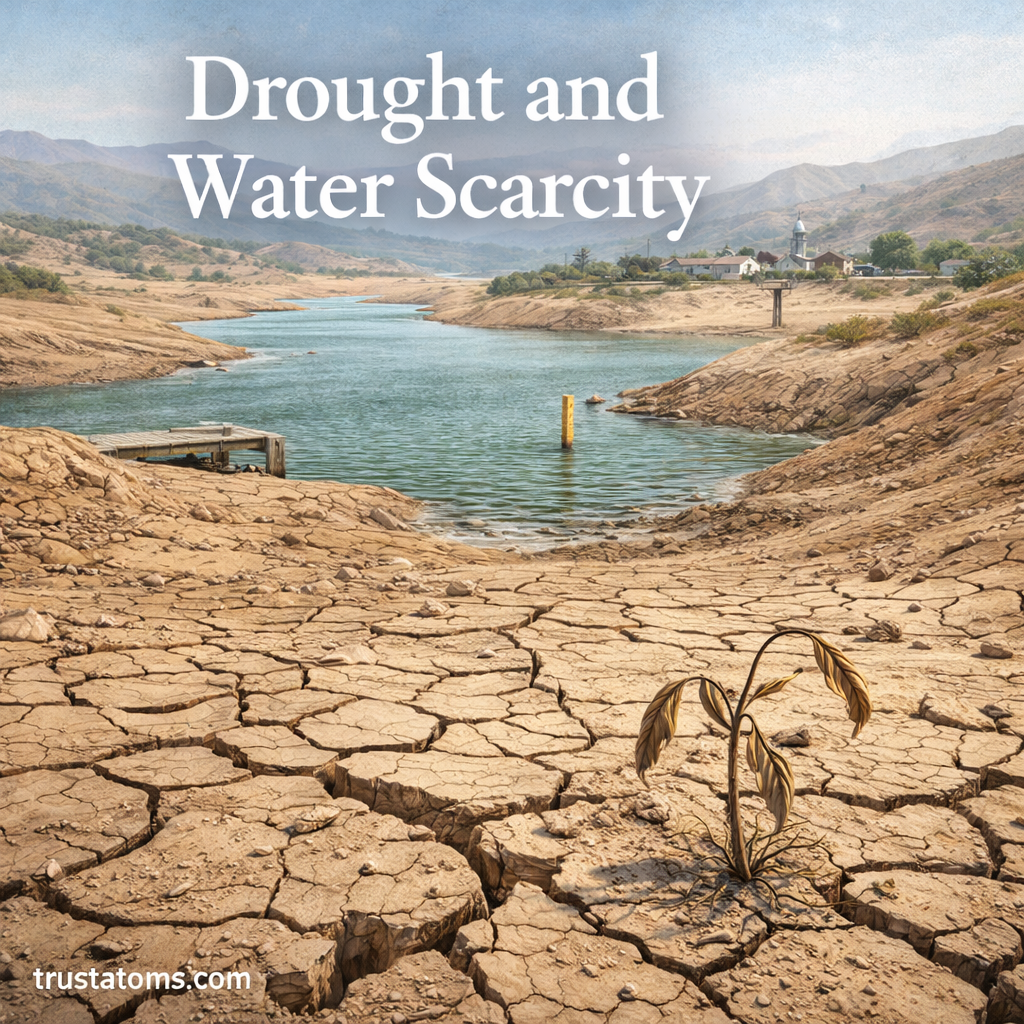
Drought and water scarcity are growing global challenges that affect ecosystems, agriculture, economies, and daily life. While drought refers to a prolonged period of below-average rainfall, water scarcity occurs when there is not enough available water to meet demand.
Understanding these issues is essential as climate patterns shift and populations continue to grow.
What Is a Drought?
A drought is a long period with little or no rainfall, leading to a shortage of water. Unlike sudden disasters, droughts develop slowly and can last for months or even years.
Types of Drought
- Meteorological Drought
Occurs when rainfall is significantly below normal levels. - Agricultural Drought
Happens when soil moisture is insufficient for crops and plant growth. - Hydrological Drought
Affects water levels in rivers, lakes, and reservoirs. - Socioeconomic Drought
Occurs when water shortages begin to impact people, industries, and economies.
What Is Water Scarcity?
Water scarcity is a broader concept that includes both natural shortages and human-driven factors.
There are two main types:
Physical Water Scarcity
- Not enough natural water resources to meet demand
- Common in arid regions and deserts
Economic Water Scarcity
- Water exists, but access is limited due to lack of infrastructure or management
- Common in developing regions
Main Causes of Drought and Water Scarcity
Drought and water shortages are influenced by both natural processes and human activities.
Natural Causes
- Prolonged lack of rainfall
- High temperatures increasing evaporation
- Climate variability and shifting weather patterns
Human Causes
- Overuse of water resources (agriculture, industry, households)
- Deforestation reducing water retention
- Poor water management and infrastructure
- Population growth increasing demand
Impacts of Drought
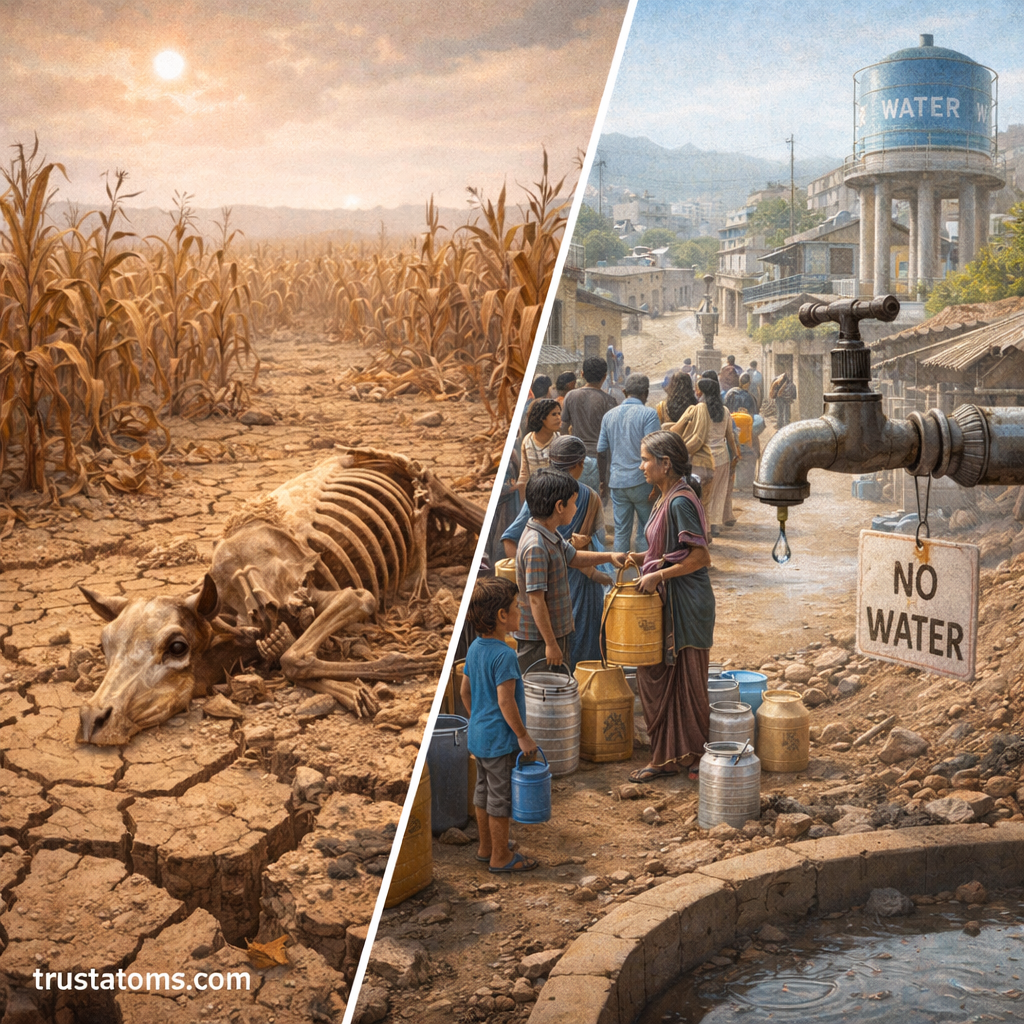
Drought has widespread consequences that affect nearly every aspect of life.
Environmental Impacts
- Drying of rivers, lakes, and wetlands
- Loss of plant and animal habitats
- Increased risk of wildfires
Agricultural Impacts
- Crop failure and reduced yields
- Livestock loss due to lack of water and food
- Soil degradation and desertification
Economic Impacts
- Rising food prices
- Loss of income for farmers
- Increased costs for water supply and energy
Human and Social Impacts
- Water shortages for drinking and sanitation
- Health risks due to poor water quality
- Migration and displacement in extreme cases
The Role of Climate Change
Climate change is intensifying drought conditions in many regions.
Key effects include:
- More frequent and prolonged droughts
- Higher temperatures increasing evaporation rates
- Changing rainfall patterns
These changes make water management more challenging and increase the risk of long-term scarcity.
Regions Most Affected
Drought and water scarcity can occur anywhere, but some areas are particularly vulnerable.
- Arid and semi-arid regions (e.g., deserts)
- Areas with seasonal rainfall patterns
- Regions with high population density and limited water resources
- Agricultural zones heavily dependent on rainfall
Strategies to Manage and Reduce Water Scarcity
Addressing drought and water scarcity requires both short-term actions and long-term planning.
Water Conservation
- Reducing household water use
- Using efficient irrigation systems in agriculture
- Recycling and reusing water where possible
Sustainable Water Management
- Protecting watersheds and natural water sources
- Improving storage systems like reservoirs
- Monitoring and regulating water use
Technological Solutions
- Desalination to convert seawater into usable water
- Advanced irrigation technologies (drip systems)
- Water-efficient appliances and infrastructure
Environmental Protection
- Reforestation to improve water retention
- Wetland restoration
- Soil conservation practices
What Individuals Can Do
Small actions can make a meaningful difference when practiced widely.
- Fix leaks and reduce water waste at home
- Use water-efficient appliances
- Limit unnecessary water use (e.g., overwatering lawns)
- Support policies and initiatives focused on water conservation
The Future of Water Resources
As global demand for water continues to rise, sustainable management will be critical. Balancing human needs with environmental protection is essential to ensure long-term water availability.
Innovation, education, and responsible usage will play key roles in addressing drought and water scarcity challenges.
Final Thoughts
Drought and water scarcity are complex issues driven by both natural and human factors. Their impacts are far-reaching, affecting ecosystems, food systems, and communities worldwide.
By understanding the causes and adopting sustainable practices, societies can reduce risks and build resilience against future water challenges.