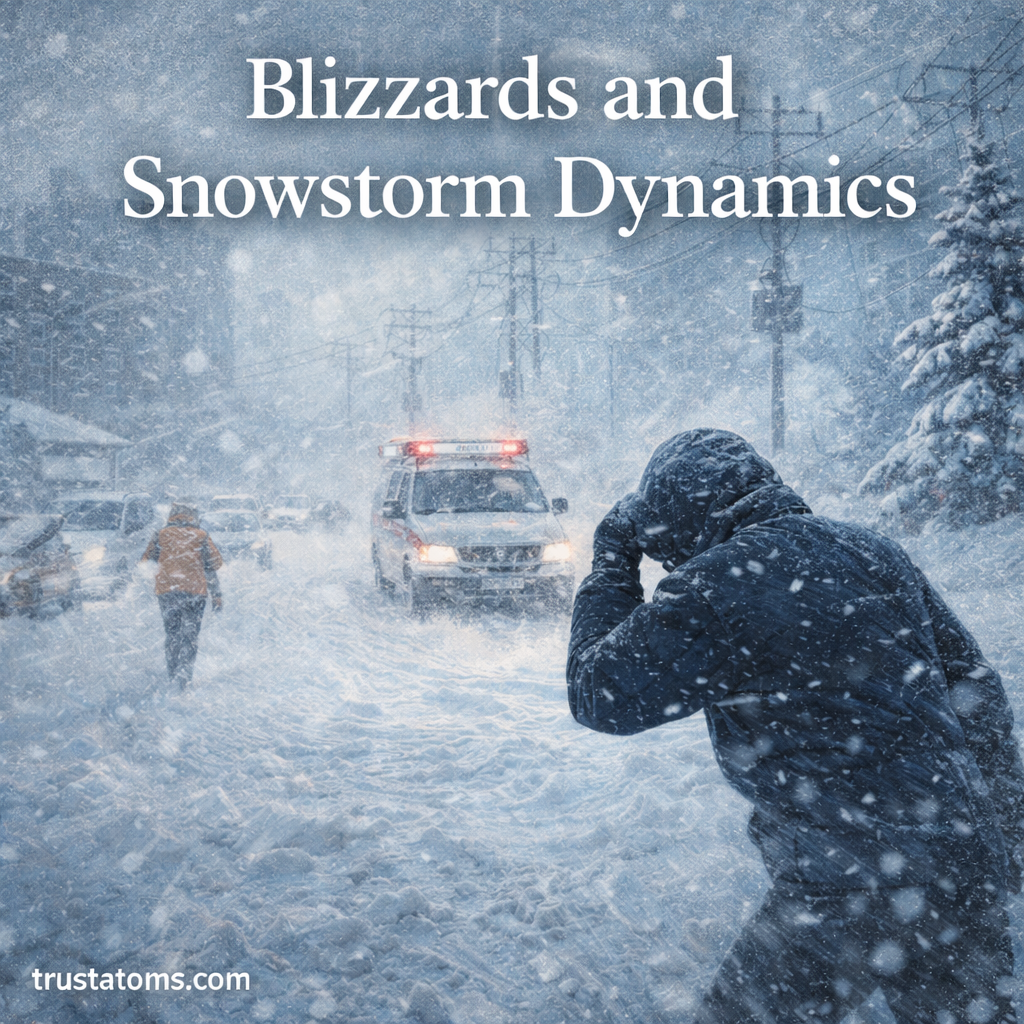
Blizzards are among the most extreme winter weather events, combining heavy snowfall, strong winds, and dangerously low visibility. These powerful storms can disrupt transportation, damage infrastructure, and pose serious risks to human safety.
Understanding how blizzards form and behave can help individuals and communities better prepare for severe winter conditions.
What Is a Blizzard?
A blizzard is a severe snowstorm characterized not just by snowfall, but by strong winds and reduced visibility.
Official Criteria (General Guidelines)
- Sustained winds or frequent gusts of 35 mph (56 km/h) or higher
- Visibility reduced to less than 1/4 mile (400 meters)
- Conditions lasting for at least 3 hours
Unlike regular snowstorms, blizzards are defined by wind and visibility, not just snowfall amount.
How Snowstorms Form
Snowstorms develop when moist air rises into cold regions of the atmosphere, causing water vapor to freeze into snow.
Key Ingredients
- Cold Air
Temperatures must be at or below freezing (0°C or 32°F). - Moisture
Water vapor from oceans, lakes, or the atmosphere fuels snowfall. - Lift
Air must rise, which can occur due to weather fronts or terrain (mountains).
When these elements combine, snow begins to form and fall to the ground.
What Makes a Blizzard Different?
Blizzards are intensified snowstorms with additional dynamic factors.
Strong Winds
High winds blow snow across the ground, creating drifting snow and whiteout conditions.
Blowing and Drifting Snow
Even after snowfall stops, strong winds can continue to reduce visibility.
Whiteout Conditions
Visibility can drop to near zero, making navigation extremely dangerous.
Types of Snowstorms
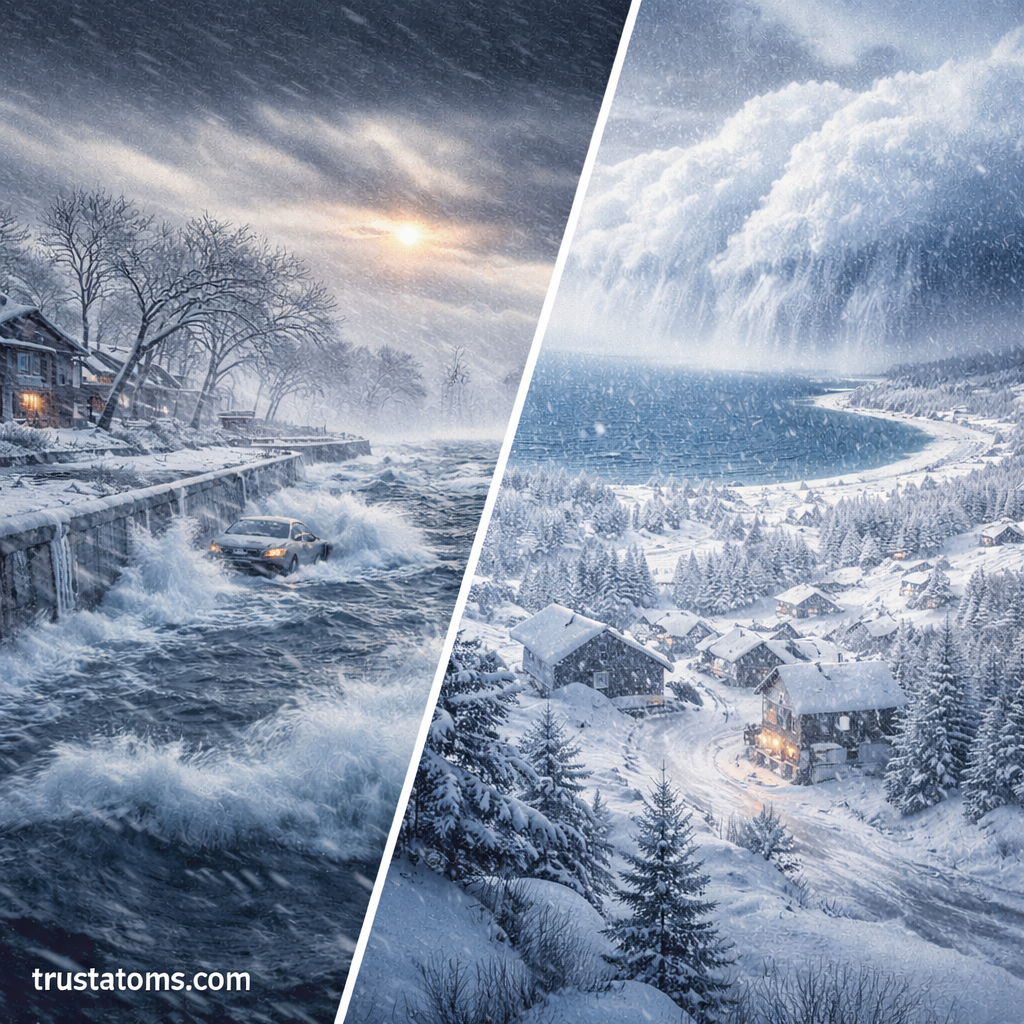
Not all snowstorms are blizzards. There are several types based on formation and intensity.
Frontal Snowstorms
- Occur when warm and cold air masses collide
- Produce widespread snowfall
Lake-Effect Snowstorms
- Form when cold air passes over warmer lake water
- Can produce intense, localized snowfall
Nor’easters
- Powerful storms along the northeastern coasts
- Combine snow, wind, and coastal impacts
Blizzard Dynamics: How They Intensify
Blizzards often strengthen due to specific atmospheric conditions.
Pressure Systems
Low-pressure systems draw in moist air and increase wind speeds.
Temperature Gradients
Sharp differences between warm and cold air masses intensify storm activity.
Jet Stream Influence
The jet stream can steer storms and enhance their development.
Terrain Effects
Mountains can force air upward, increasing snowfall on windward slopes.
Impacts of Blizzards
Blizzards can have severe and wide-ranging consequences.
Transportation Disruptions
- Road closures due to snow and poor visibility
- Flight cancellations and delays
- Rail and public transit interruptions
Infrastructure Damage
- Power outages from heavy snow and ice
- Collapsed roofs under snow weight
- Downed trees and power lines
Economic Impacts
- Business closures
- Increased emergency response costs
- Supply chain disruptions
Human Health and Safety
- Hypothermia and frostbite
- Increased risk of accidents
- Isolation in remote or snowbound areas
Staying Safe During a Blizzard
Preparation and awareness are critical during severe winter storms.
Before a Blizzard
- Monitor weather forecasts and warnings
- Stock up on food, water, and essential supplies
- Prepare emergency kits (flashlights, batteries, blankets)
During a Blizzard
- Stay indoors and avoid unnecessary travel
- Keep warm with layered clothing
- Use heating sources safely to prevent carbon monoxide poisoning
If You Must Travel
- Inform someone of your route
- Carry emergency supplies in your vehicle
- Stay with your vehicle if stranded
Long-Term Preparedness and Mitigation
Communities can reduce blizzard impacts through planning and infrastructure.
Infrastructure Planning
- Snow removal systems and equipment
- Reinforced power lines
- Emergency shelters
Early Warning Systems
- Weather alerts and communication systems
- Public awareness campaigns
Urban Design
- Buildings designed to handle snow loads
- Efficient road networks for snow clearing
Blizzards and Climate Change
Climate change is influencing winter storms in complex ways.
- Warmer air can hold more moisture, potentially increasing snowfall intensity
- Shifting weather patterns may alter storm frequency and location
- Some regions may experience fewer snowstorms but more intense events
Understanding these changes is key to future preparedness.
Final Thoughts
Blizzards are powerful weather events driven by a combination of cold temperatures, moisture, and strong winds. Their ability to disrupt daily life and pose serious risks makes understanding their dynamics essential.
With proper preparation, awareness, and planning, individuals and communities can better withstand the challenges posed by severe winter storms.