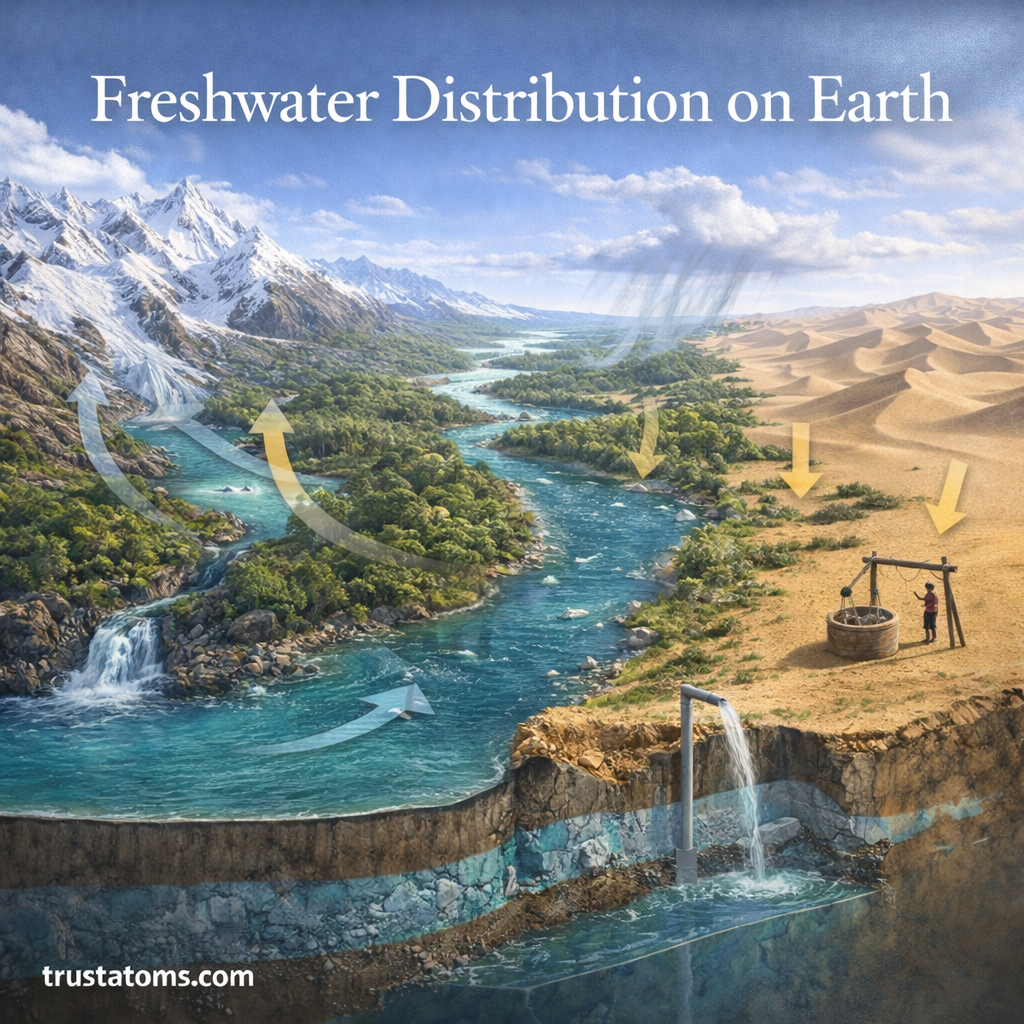
Water covers about 71% of Earth’s surface, but only a small fraction of it is usable freshwater. Understanding how freshwater is distributed across the planet is essential for managing water resources, supporting ecosystems, and sustaining human life.
Despite the abundance of water on Earth, accessible freshwater is surprisingly limited and unevenly distributed.
How Much Freshwater Exists?
Of all the water on Earth:
- 97% is saltwater (oceans)
- Only 3% is freshwater
But even within that 3%, most freshwater is not easily accessible.
Breakdown of Freshwater
- ~69% stored in glaciers and ice caps
- ~30% stored as groundwater
- ~1% found in surface water (lakes, rivers, wetlands)
This means only a tiny portion of Earth’s water is readily available for human use.
Major Freshwater Reservoirs
Freshwater is stored in several key locations across Earth.
Glaciers and Ice Caps
- Largest freshwater reservoir
- Found in polar regions and high mountains
- Difficult to access but critical for global water balance
Groundwater
- Stored in underground aquifers
- Major source of drinking water worldwide
- Can be accessed through wells
Surface Water
Includes:
- Lakes
- Rivers
- Wetlands
This is the most accessible form of freshwater but represents a very small percentage of total water.
Atmospheric Water
- Water vapor in the air
- Plays a key role in weather and precipitation
- Small but constantly moving part of the cycle
Why Freshwater Distribution Matters
The uneven distribution of freshwater has major implications.
Water Availability
- Some regions have abundant water (rainforests, temperate zones)
- Others face scarcity (deserts, arid regions)
Population and Demand
- High population areas may strain limited water supplies
- Urban growth increases demand for freshwater
Agriculture
- Irrigation accounts for a large portion of freshwater use
- Regions with limited water face challenges in food production
Factors That Influence Freshwater Distribution
Several natural and human factors affect where freshwater is found.
Climate
- Rainfall patterns determine water availability
- Seasonal changes affect water supply
Geography
- Mountains store water as snow and ice
- Rivers distribute water across regions
Geological Features
- Aquifers determine groundwater storage
- Soil and rock types influence water retention
Human Activity
- Water extraction alters natural distribution
- Pollution reduces usable freshwater
- Infrastructure (dams, reservoirs) redistributes water
Global Patterns of Freshwater Distribution
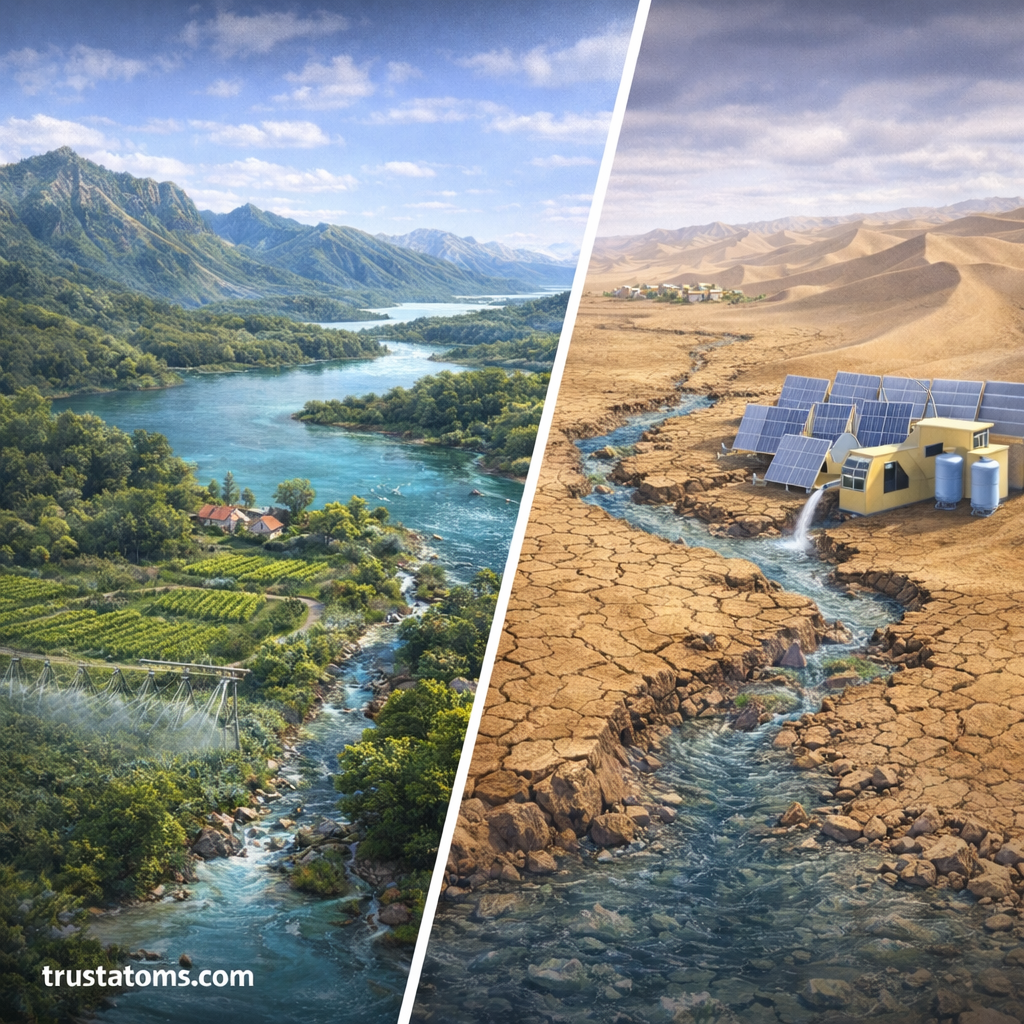
Freshwater is not evenly spread across the planet.
Water-Rich Regions
- Tropical rainforests (Amazon Basin)
- Northern regions with large lakes and rivers (Canada, Russia)
Water-Scarce Regions
- Middle East
- North Africa
- Parts of Central Asia
Seasonal Variability
- Some areas experience wet and dry seasons
- Snowmelt can temporarily increase water availability
Challenges in Freshwater Availability
Even though freshwater exists, access is a major issue.
Limited Accessibility
- Most freshwater is locked in ice or underground
- Surface water is a small fraction
Pollution
- Industrial waste
- Agricultural runoff
- Plastic and chemical contamination
Overuse
- Excessive groundwater pumping
- River diversion for agriculture and cities
Climate Change
- Alters precipitation patterns
- Melts glaciers, affecting long-term supply
- Increases drought frequency
Importance of Freshwater Conservation
Protecting freshwater resources is essential for sustainability.
Key Conservation Strategies
- Reduce Water Waste
- Use efficient appliances
- Fix leaks
- Protect Natural Sources
- Preserve wetlands and forests
- Prevent pollution
- Improve Water Management
- Use sustainable irrigation methods
- Monitor water usage
- Promote Recycling and Reuse
- Treat and reuse wastewater
- Harvest rainwater
Real-World Examples
The Great Lakes (North America)
- One of the largest freshwater systems in the world
- Supplies water to millions of people
The Amazon River Basin
- Largest river system by discharge
- Critical for global water cycling
The Sahara Region
- Extremely limited freshwater availability
- Relies heavily on groundwater and oasis systems
Final Thoughts
Freshwater distribution on Earth highlights a critical reality: while water is abundant globally, usable freshwater is scarce and unevenly distributed.
Understanding where freshwater exists—and how it moves and changes—is essential for managing this vital resource. As global demand increases and environmental pressures grow, protecting and conserving freshwater will remain one of the most important challenges of our time.