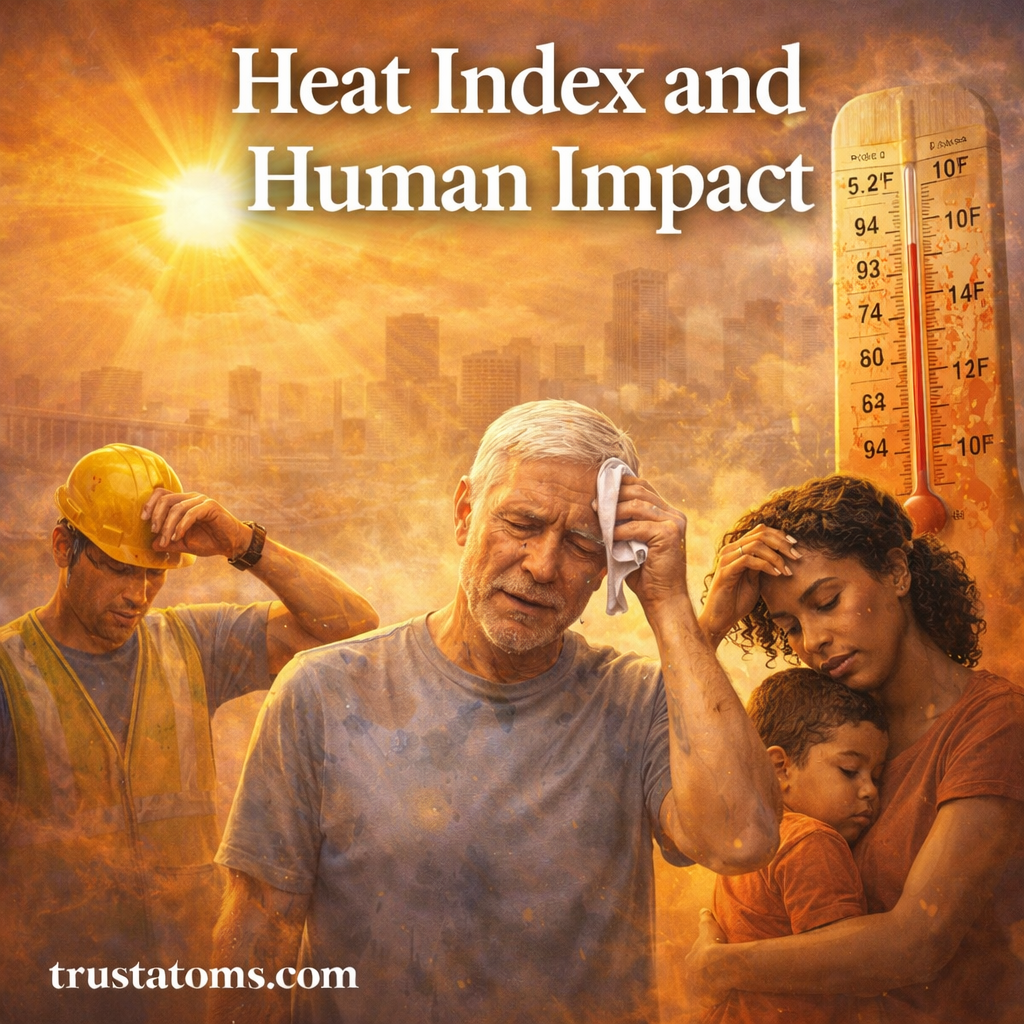
Extreme heat is one of the leading weather-related health risks worldwide. While temperature alone tells part of the story, the heat index provides a more accurate measure of how hot it actually feels to the human body.
Understanding the heat index and its effects is essential for staying safe, especially during heatwaves and in regions with high humidity.
What Is the Heat Index?
The heat index is a measure that combines air temperature and humidity to determine how hot it feels to people.
Why Humidity Matters
Humidity affects the body’s ability to cool itself through sweat.
- High humidity slows down evaporation
- Sweat stays on the skin instead of cooling the body
- The body retains more heat
As a result, a temperature of 90°F (32°C) can feel like over 100°F (38°C) when humidity is high.
How the Human Body Regulates Temperature
The body maintains a stable internal temperature through a process called thermoregulation.
Key Cooling Mechanisms
- Sweating and evaporation
- Increased blood flow to the skin
- Breathing adjustments
When these systems are overwhelmed, heat-related illnesses can occur.
Heat Index Categories and Risk Levels
Heat index values are often grouped into categories to indicate danger levels.
General Heat Index Levels
- 80–90°F: Caution (fatigue possible)
- 90–103°F: Extreme caution (heat cramps and exhaustion possible)
- 103–124°F: Danger (heat exhaustion likely)
- 125°F and above: Extreme danger (heat stroke highly likely)
These categories help individuals and authorities determine appropriate safety measures.
Effects of High Heat Index on the Body
As the heat index rises, the strain on the body increases.
Common Heat-Related Conditions
Heat Cramps
- Muscle spasms caused by loss of electrolytes
- Often occur during physical activity
Heat Exhaustion
- Heavy sweating
- Weakness and dizziness
- Nausea or headache
Heat Stroke
- Body temperature above 104°F (40°C)
- Confusion or loss of consciousness
- Medical emergency requiring immediate attention
Who Is Most at Risk?
Some groups are more vulnerable to high heat index conditions.
High-Risk Populations
- Older adults
- Infants and young children
- People with chronic illnesses
- Outdoor workers
- Athletes
Additional Risk Factors
- Dehydration
- Lack of acclimatization
- Poor ventilation or no air conditioning
- Urban heat island effect
Recognizing these risks is key to prevention.
Heat Index vs Actual Temperature
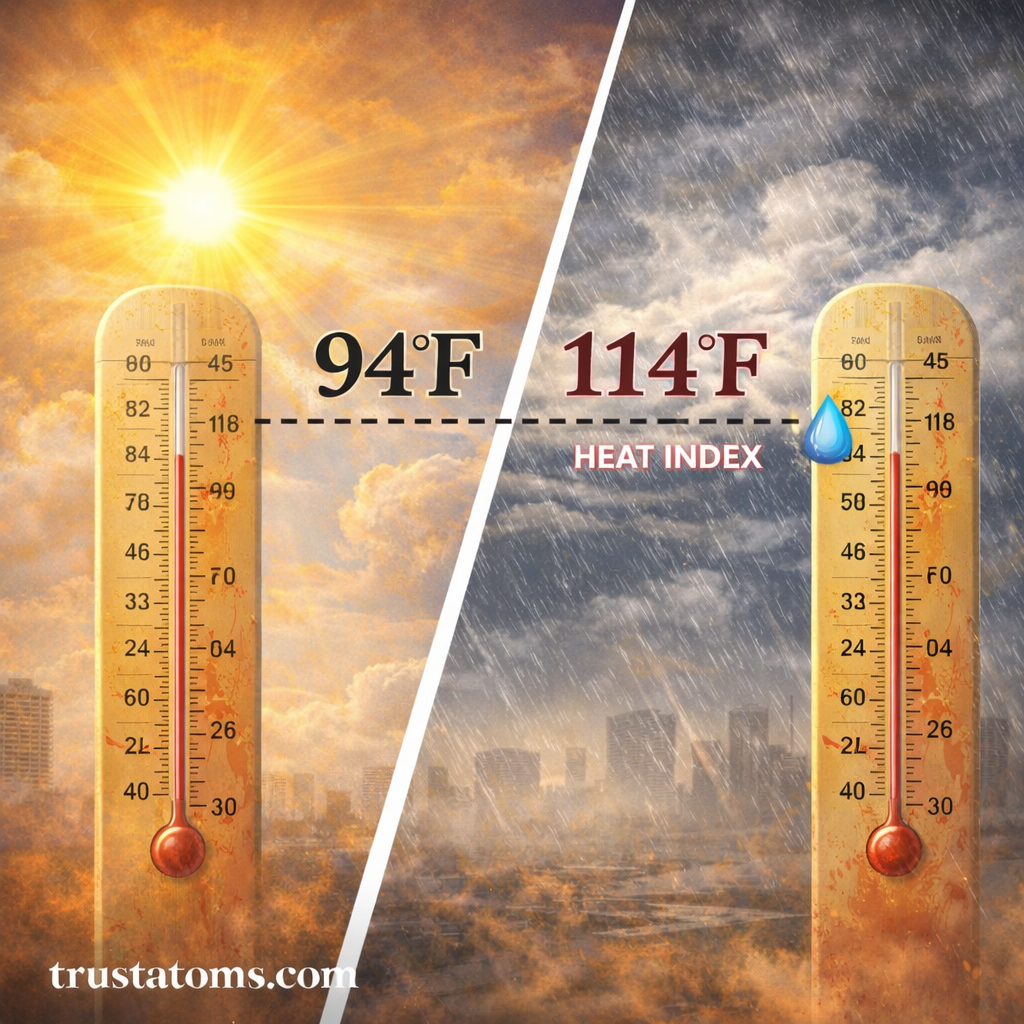
Many people underestimate danger by focusing only on temperature.
Key Differences
- Temperature measures air heat only
- Heat index accounts for human comfort and safety
- High humidity makes temperatures feel significantly hotter
For example, 95°F with high humidity can feel like 110°F or more.
How to Stay Safe in High Heat
Preventing heat-related illness starts with simple but effective strategies.
Personal Safety Tips
- Stay hydrated by drinking water regularly
- Wear lightweight, light-colored clothing
- Avoid outdoor activity during peak heat hours
- Take frequent breaks in shaded or cool areas
- Use fans or air conditioning when possible
Home and Environment Tips
- Keep blinds or curtains closed during the day
- Use ventilation to circulate air
- Check on vulnerable individuals regularly
Role of Urban Environments
Cities often experience higher heat index levels due to the urban heat island effect.
Causes of Urban Heat Islands
- Concrete and asphalt absorbing heat
- Limited vegetation
- High population density
- Waste heat from vehicles and buildings
Mitigation Strategies
- Planting trees and increasing green spaces
- Using reflective building materials
- Improving urban design for airflow
These changes can significantly reduce heat exposure.
Climate Change and Rising Heat Risk
Global temperatures are increasing, leading to more frequent and intense heatwaves.
Key Trends
- Longer heatwave durations
- Higher humidity levels in some regions
- Increased nighttime temperatures
- Greater health risks for vulnerable populations
Understanding these trends highlights the importance of heat preparedness.
Common Mistakes to Avoid
- Ignoring humidity levels
- Waiting until you feel thirsty to drink water
- Overexerting during peak heat hours
- Leaving children or pets in parked cars
- Underestimating indoor heat risks
Avoiding these mistakes can prevent serious health consequences.
Final Thoughts
The heat index is a critical tool for understanding how environmental conditions affect human health. By combining temperature and humidity, it provides a more realistic picture of heat danger.
Staying informed and taking proactive steps can significantly reduce the risks associated with high heat index conditions. As heatwaves become more common, awareness and preparedness are more important than ever.