The world’s oceans play a critical role in regulating Earth’s climate and supporting marine life. However, increasing levels of carbon dioxide (CO₂) in the atmosphere are changing ocean chemistry in a process known as ocean acidification.
This shift in ocean chemistry has far-reaching effects on marine ecosystems, biodiversity, and global food systems.
What Is Ocean Acidification?
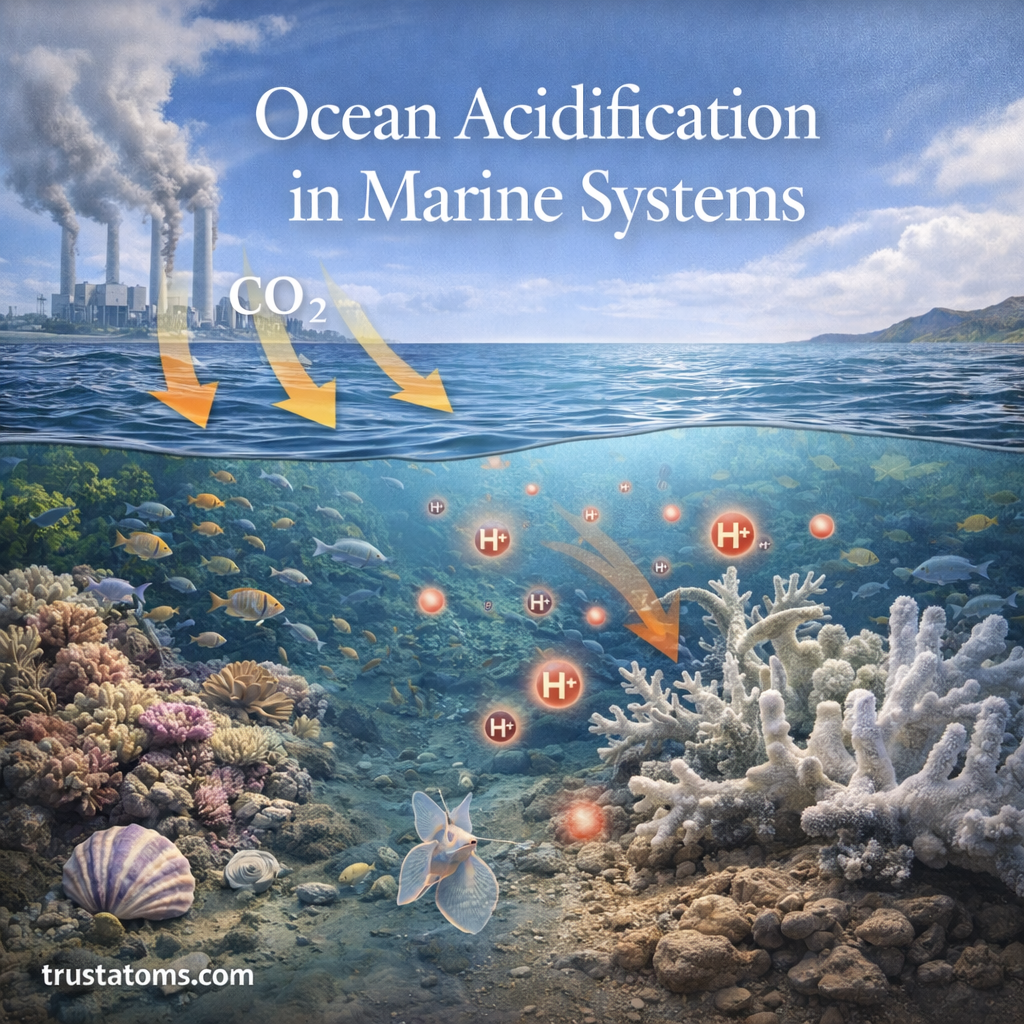
Ocean acidification is the process by which seawater becomes more acidic due to the absorption of carbon dioxide from the atmosphere.
When CO₂ dissolves in seawater, it forms carbonic acid, which lowers the ocean’s pH.
- The ocean is naturally slightly alkaline (average pH ~8.1)
- As more CO₂ is absorbed, pH decreases
- Even small changes in pH can have major biological impacts
How Ocean Acidification Happens
The process begins with rising atmospheric CO₂ levels, primarily from human activities such as burning fossil fuels.
Step-by-Step Process
- CO₂ is released into the atmosphere
- Oceans absorb a large portion of this CO₂
- CO₂ reacts with seawater to form carbonic acid
- Carbonic acid releases hydrogen ions
- Increased hydrogen ions lower ocean pH
Changes in Ocean Chemistry
Ocean acidification affects the balance of key chemical components in seawater.
Reduced Carbonate Ions
- Carbonate ions are essential for marine organisms
- Used to build shells and skeletons (calcium carbonate)
Increased Hydrogen Ions
- Lower pH levels
- Interfere with biological processes
Impact on Calcium Carbonate Formation
- Makes it harder for organisms to form shells
- Can cause existing shells to weaken or dissolve
Effects on Marine Life
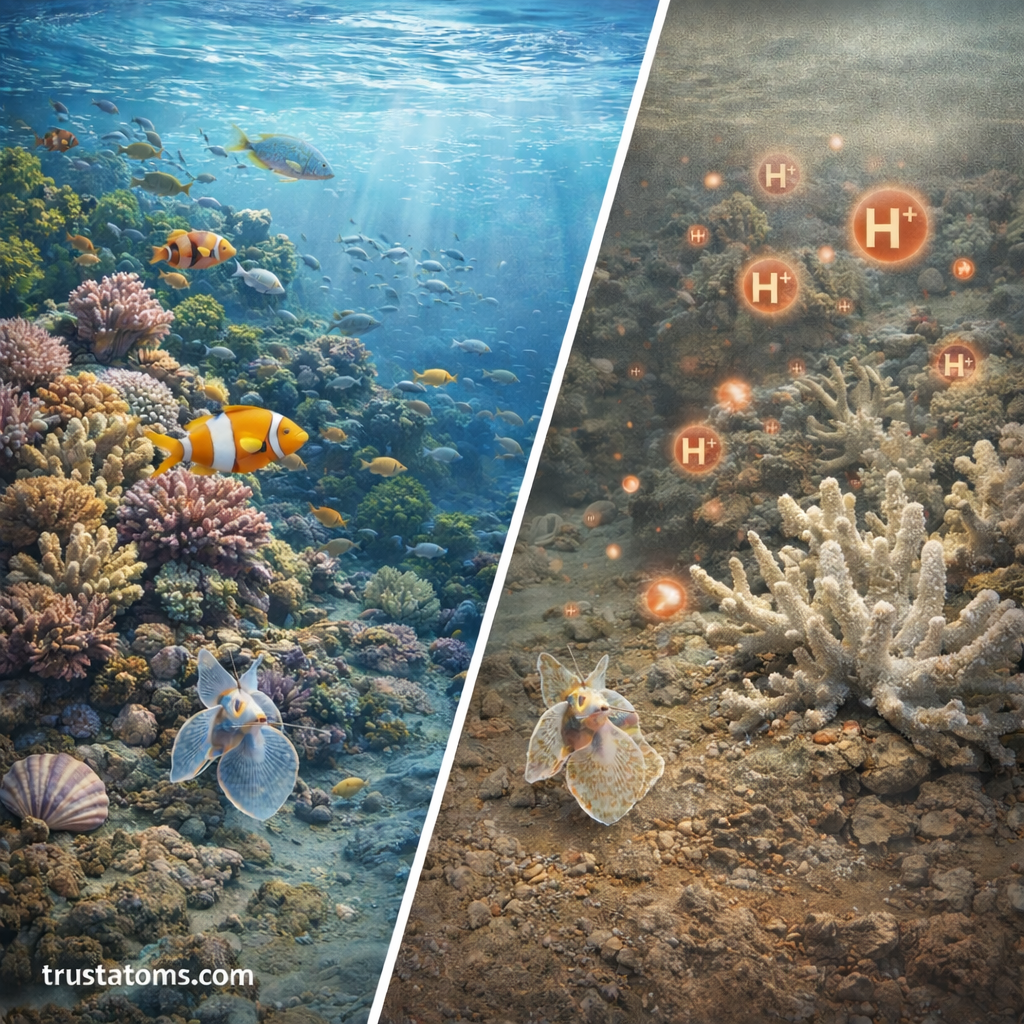
Ocean acidification has serious consequences for many marine organisms.
Shell-Building Organisms
Affected species include:
- Corals
- Mollusks (clams, oysters, snails)
- Some plankton species
These organisms struggle to build and maintain their shells and skeletons.
Coral Reefs
- Coral reefs rely on calcium carbonate structures
- Acidification slows reef growth
- Weakens reef structures, making them more vulnerable
Fish and Marine Animals
- Changes in water chemistry can affect behavior
- May impact navigation, reproduction, and survival
- Alters food availability within ecosystems
Impacts on Marine Ecosystems
Ocean acidification affects entire ecosystems, not just individual species.
Food Web Disruption
- Plankton populations may decline
- Impacts ripple through the food chain
- Affects fish, marine mammals, and seabirds
Habitat Loss
- Coral reefs provide shelter for many species
- Degradation leads to biodiversity loss
Reduced Biodiversity
- Sensitive species decline
- Ecosystem balance is disrupted
Economic and Human Impacts
Ocean acidification also affects human systems and industries.
Fisheries and Aquaculture
- Shellfish industries are particularly vulnerable
- Reduced productivity and economic losses
Tourism
- Coral reef damage affects tourism
- Loss of natural attractions
Food Security
- Marine ecosystems provide a major food source
- Disruptions can affect global food supply
Ocean Acidification and Climate Change
Ocean acidification is closely linked to climate change.
- Both are driven by increased CO₂ emissions
- Oceans absorb about 25–30% of human-produced CO₂
- Acts as a buffer but leads to chemical changes
While this absorption helps slow atmospheric warming, it comes at a cost to marine systems.
Regional Variations in Acidification
Ocean acidification does not occur evenly across the globe.
High-Risk Areas
- Polar regions (colder water absorbs more CO₂)
- Coastal upwelling zones (bring CO₂-rich water to the surface)
Coastal Areas
- More vulnerable due to pollution and runoff
- Can experience faster chemical changes
Possible Solutions and Mitigation
Addressing ocean acidification requires both global and local actions.
Reduce Carbon Emissions
- Transition to renewable energy
- Improve energy efficiency
- Reduce reliance on fossil fuels
Protect Marine Ecosystems
- Establish marine protected areas
- Restore coral reefs and seagrass beds
Improve Water Quality
- Reduce pollution and nutrient runoff
- Manage coastal development
Scientific Monitoring
- Track changes in ocean chemistry
- Support research and conservation efforts
Future Outlook
Ocean acidification is expected to continue as long as CO₂ emissions remain high.
Potential Future Impacts
- Greater challenges for marine life
- Increased stress on fisheries
- More widespread ecosystem changes
However, reducing emissions and protecting ecosystems can help slow these effects.
Final Thoughts
Ocean acidification is a critical environmental issue that highlights the deep connection between the atmosphere and the oceans. As CO₂ levels rise, the chemistry of seawater changes in ways that threaten marine life and global ecosystems.
Understanding this process is essential for protecting ocean health and ensuring the sustainability of marine resources for future generations.