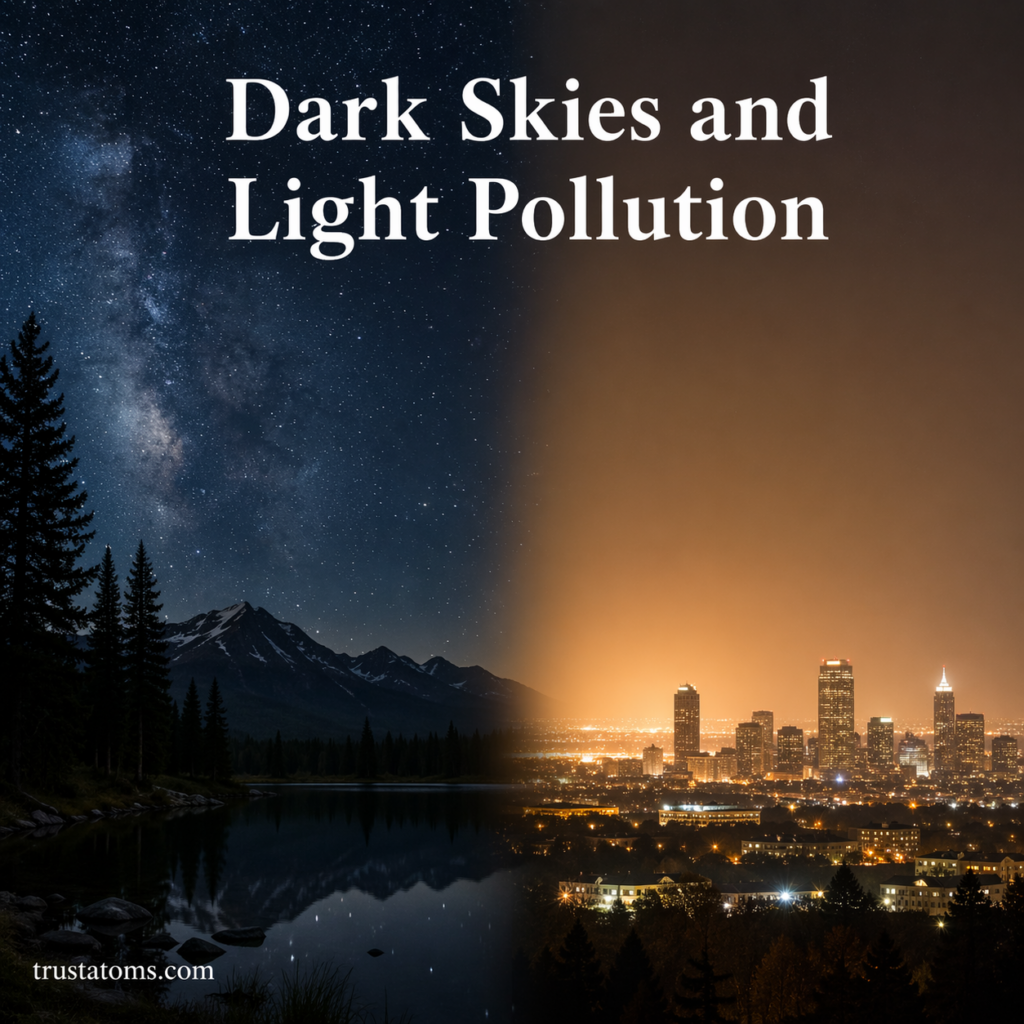
For most of human history, the night sky was a vivid, star-filled canvas visible from nearly anywhere on Earth. Today, for a large portion of the population, that view has faded due to light pollution—the excessive or misdirected artificial light produced by modern life.
Understanding dark skies and light pollution isn’t just about astronomy—it’s about preserving ecosystems, improving human health, and reconnecting with a natural wonder that’s slowly disappearing.
What Are Dark Skies?
“Dark skies” refer to areas where artificial light is minimal, allowing the natural night sky to be clearly visible.
In true dark-sky locations, you can see:
- Thousands of stars with the naked eye
- The Milky Way stretching across the sky
- Meteor showers, planets, and faint celestial objects
- Natural night sky brightness without artificial interference
These areas are becoming increasingly rare, especially near urban environments.
What Is Light Pollution?
Light pollution is the overuse or poor use of artificial lighting that brightens the night sky and reduces visibility of stars and other celestial objects.
Main Types of Light Pollution
- Skyglow
The brightening of the sky over cities caused by scattered artificial light - Glare
Excessive brightness that causes visual discomfort - Light Trespass
Unwanted light entering homes or natural habitats - Clutter
Overlapping, excessive lighting often found in urban areas
Causes of Light Pollution
Light pollution is primarily caused by human activity and poor lighting design.
Common sources include:
- Streetlights without proper shielding
- Bright commercial signage and billboards
- Outdoor lighting left on unnecessarily
- Residential lighting that spills into the sky
- Sports stadiums and large facilities
In many cases, it’s not the amount of light—but how it’s used—that creates the problem.
How Light Pollution Affects Astronomy
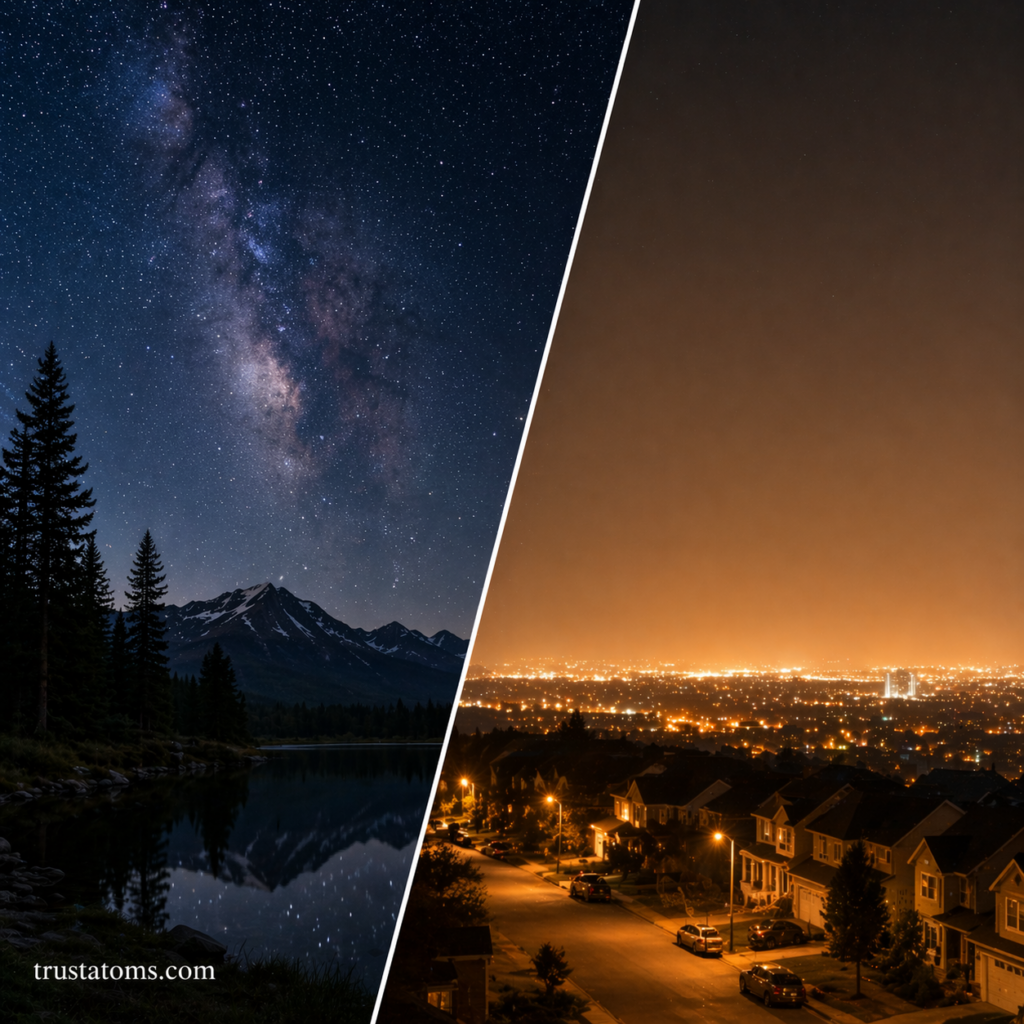
For astronomers, both amateur and professional, light pollution is a major obstacle.
Key impacts include:
- Reduced visibility of stars and galaxies
Faint objects become impossible to detect - Interference with telescopes and imaging
Observations lose clarity and contrast - Limited access for urban populations
Many people grow up never seeing a truly dark sky
Even basic stargazing becomes difficult in heavily lit areas, making astronomy less accessible to the public.
Environmental and Health Impacts
Light pollution doesn’t just affect the sky—it impacts life on Earth in significant ways.
Effects on wildlife:
- Disrupts migration patterns in birds
- Confuses sea turtle hatchlings moving toward artificial light
- Alters predator-prey relationships
- Affects nocturnal animal behavior
Effects on human health:
- Disrupts circadian rhythms (sleep cycles)
- Reduces melatonin production
- Contributes to sleep disorders and fatigue
Artificial light at night can interfere with natural biological processes that evolved over millions of years.
Economic and Energy Costs
Excessive lighting isn’t just harmful—it’s wasteful.
- Billions of dollars are spent annually on unnecessary lighting
- Energy is wasted when light is directed upward instead of downward
- Increased electricity use contributes to carbon emissions
Reducing light pollution can lower energy costs while benefiting the environment.
Protecting Dark Skies
Efforts to preserve dark skies are growing worldwide, led by organizations and local communities.
Practical solutions include:
- Using shielded lighting
Direct light downward where it’s needed - Switching to warmer color temperatures
Reduce blue light emissions - Installing motion sensors and timers
Prevent unnecessary lighting - Turning off lights when not in use
Especially in commercial and residential settings - Supporting dark-sky policies and initiatives
Encourage responsible lighting standards
Dark Sky Reserves and Parks
Some areas are officially protected to preserve natural darkness.
These locations are designated as dark sky parks or reserves, where strict lighting regulations are enforced.
Visitors to these areas can experience:
- Exceptional stargazing conditions
- Clear views of the Milky Way
- Educational astronomy programs
These protected spaces are essential for both scientific research and public awareness.
How You Can Reduce Light Pollution at Home
You don’t need to live in a rural area to make a difference.
Simple steps you can take:
- Replace outdoor bulbs with downward-facing fixtures
- Use lower-intensity lighting where possible
- Turn off lights when they’re not needed
- Close blinds or curtains at night
- Choose warm-colored LED bulbs
Small changes at the individual level can collectively make a significant impact.
Why Dark Skies Matter
Dark skies are more than just a scientific resource—they’re part of our shared human experience.
They inspire curiosity, support ecosystems, and connect us to the universe. Losing them means losing a piece of our natural heritage.
Preserving the night sky ensures that future generations can look up and experience the same sense of wonder that has inspired humanity for thousands of years.
Final Thoughts
Light pollution is one of the most easily reversible environmental issues—but it requires awareness and action.
By improving how we use artificial light, we can restore darker skies, reduce environmental harm, and rediscover the beauty of the universe above us.
Even small steps—like adjusting a single outdoor light—can help bring the stars back into view.