Comets are among the most captivating objects in the night sky. With glowing comas and long, streaming tails, they have fascinated observers for centuries. But beyond their beauty lies a deeper scientific story—one shaped by their unique orbits and origins.
In this guide, you’ll learn what comets are, how their orbits work, and why their paths through the solar system are so different from planets.
What Is a Comet?
A comet is a small celestial body made mostly of ice, dust, and rocky material. Often described as “dirty snowballs,” comets originate from the outer regions of the solar system.
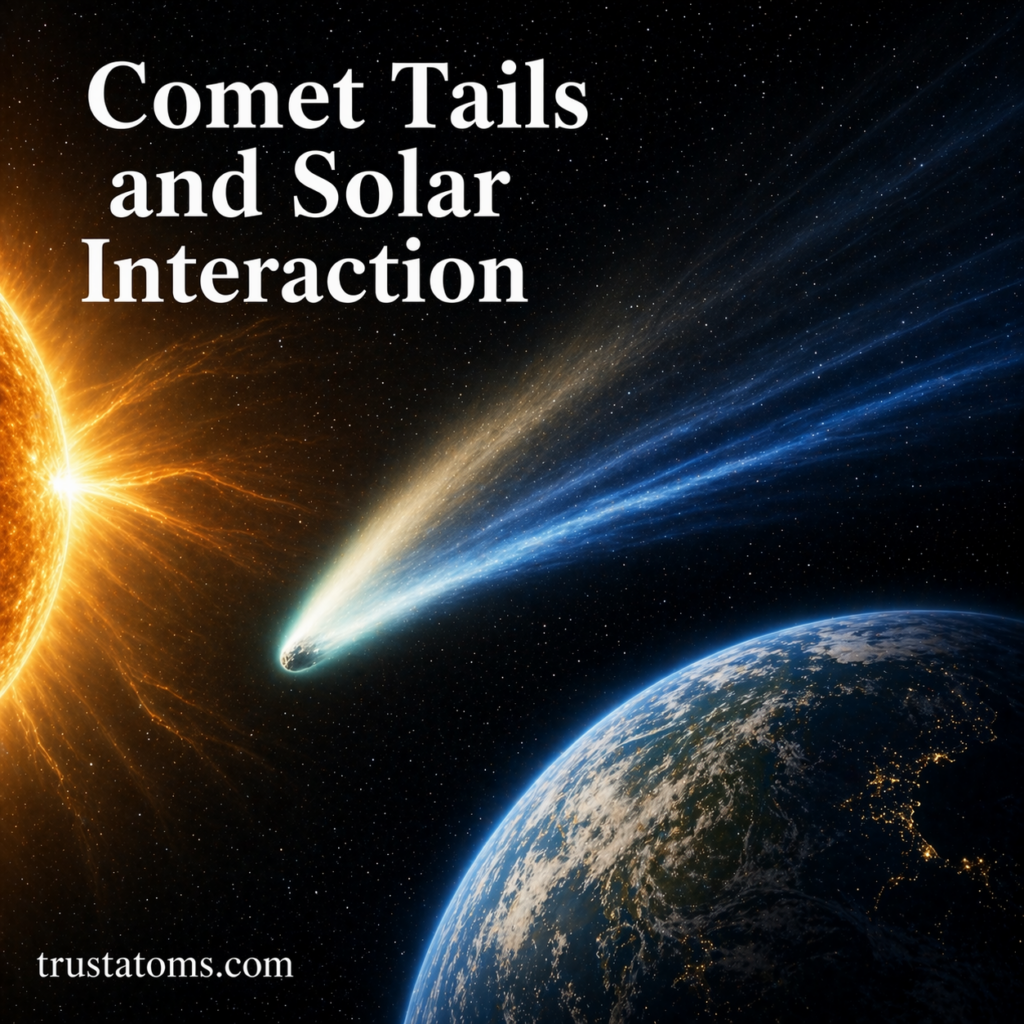
When they travel close to the Sun, heat causes their icy surfaces to vaporize, creating a glowing atmosphere called a coma and sometimes a long tail.
Where Do Comets Come From?
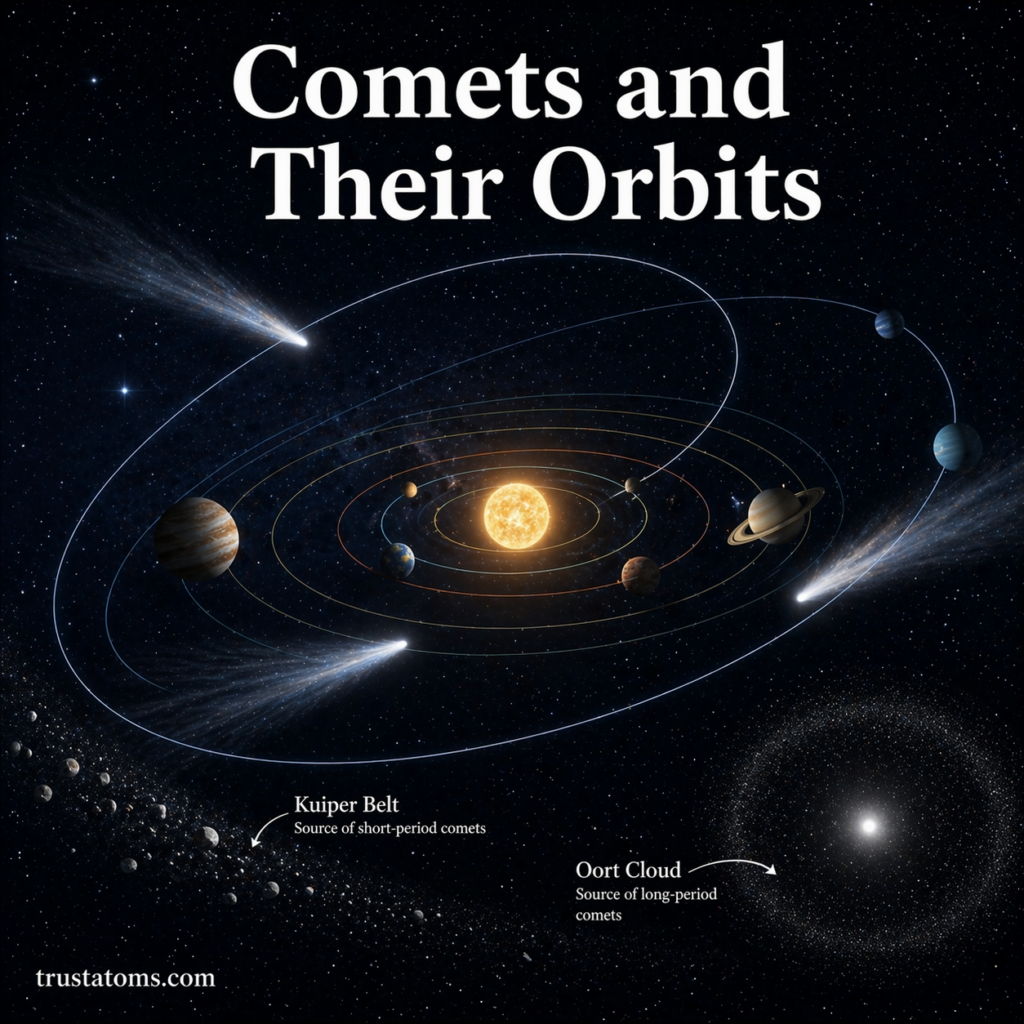
Most comets originate from two distant regions:
The Kuiper Belt
The Kuiper Belt is a disk-shaped region beyond Neptune. It contains icy bodies and is the source of many short-period comets.
The Oort Cloud
The Oort Cloud is a distant, spherical shell surrounding the solar system. It is believed to be the origin of long-period comets.
These regions act as reservoirs, sending comets inward due to gravitational disturbances.
Understanding Comet Orbits
Unlike planets, which follow nearly circular orbits, comets travel along highly elongated (elliptical) paths.
Key Features of Comet Orbits
- Highly elliptical paths that stretch far beyond the planets
- Extreme distance variation from the Sun
- Long orbital periods for some comets
A comet’s orbit determines how often it appears in the inner solar system—and how visible it becomes from Earth.
Types of Comets Based on Their Orbits
Astronomers classify comets into categories based on how long they take to orbit the Sun.
1. Short-Period Comets
- Orbital period: Less than 200 years
- Origin: Kuiper Belt
- Orbits: More predictable and less elongated
A well-known example is Halley’s Comet, which returns approximately every 76 years.
2. Long-Period Comets
- Orbital period: Thousands to millions of years
- Origin: Oort Cloud
- Orbits: Extremely elongated and unpredictable
These comets may appear only once in a human lifetime—or even once in recorded history.
3. Non-Periodic Comets
Some comets follow paths that take them out of the solar system entirely after a single pass around the Sun.
- Do not return
- Often influenced by gravitational interactions
- May originate from the outermost regions of the solar system
What Happens When a Comet Approaches the Sun?
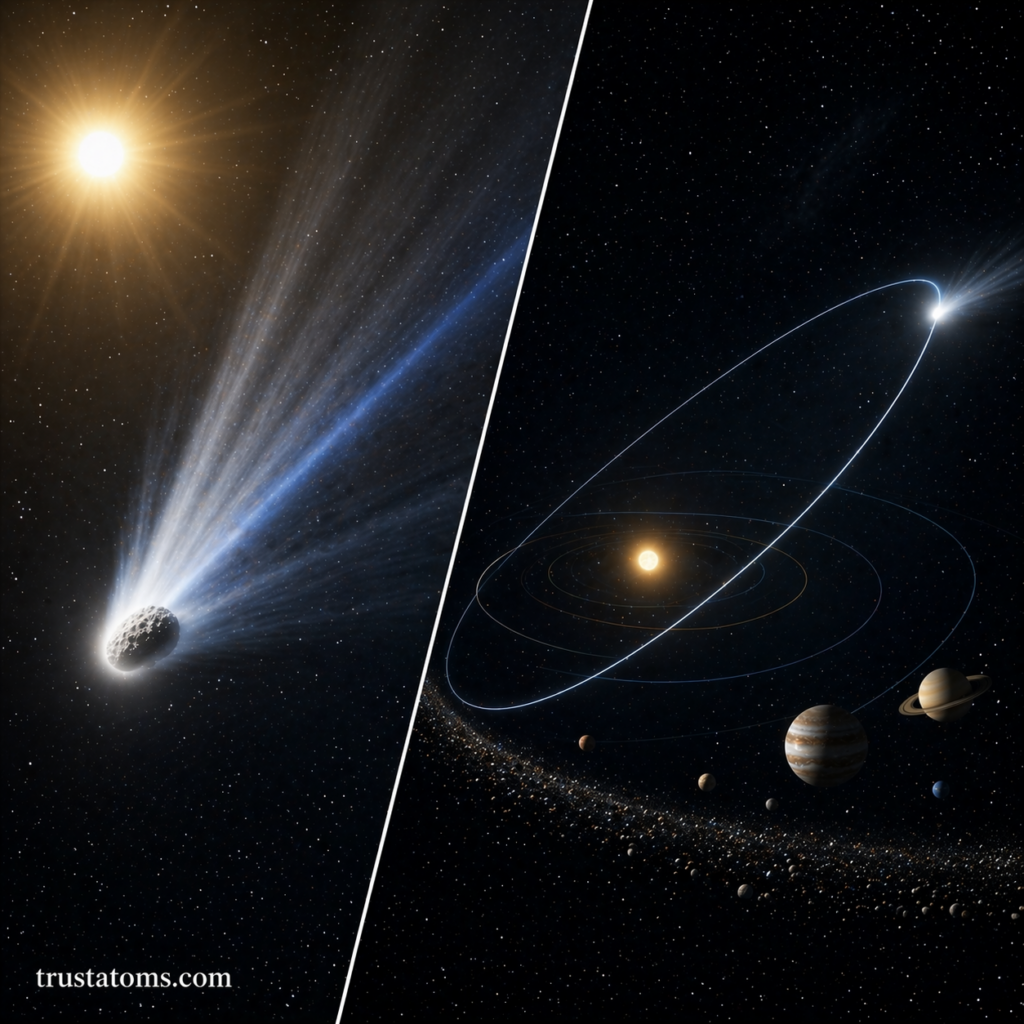
As a comet gets closer to the Sun, solar radiation begins to heat its surface.
Key Changes
- Ice turns directly into gas (sublimation)
- A glowing coma forms around the nucleus
- One or more tails develop
Types of Tails
- Dust tail – made of small solid particles
- Ion tail – made of charged gases
Interestingly, a comet’s tail always points away from the Sun due to solar wind and radiation pressure.
Why Comet Orbits Change Over Time
Comet orbits are not fixed—they can evolve due to various influences.
Factors That Affect Orbits
- Gravitational pulls from planets (especially Jupiter)
- Collisions with other objects
- Outgassing, which can act like a small propulsion force
These changes can alter a comet’s path, shorten its orbit, or even eject it from the solar system.
The Importance of Studying Comets
Comets are valuable to scientists because they contain some of the oldest material in the solar system.
What Comets Reveal
- The composition of early solar system materials
- Clues about how planets formed
- Possible sources of water and organic compounds on Earth
Missions like Rosetta have studied comets up close, providing detailed insights into their structure and chemistry.
Common Misconceptions About Comets
“Comets are rare”
In reality, thousands of comets exist, though many are too faint to see.
“All comets have long tails”
Not always. Tails form only when comets approach the Sun.
“Comet orbits are stable”
They can change significantly over time due to gravitational and physical effects.
Final Thoughts
Comets are more than just spectacular sights in the sky—they are dynamic travelers with complex orbits shaped by gravity, heat, and time. Their journeys from the outer solar system to the Sun and back again tell a story of cosmic motion and transformation.
By studying comet orbits, scientists gain a deeper understanding of how our solar system formed and continues to evolve.