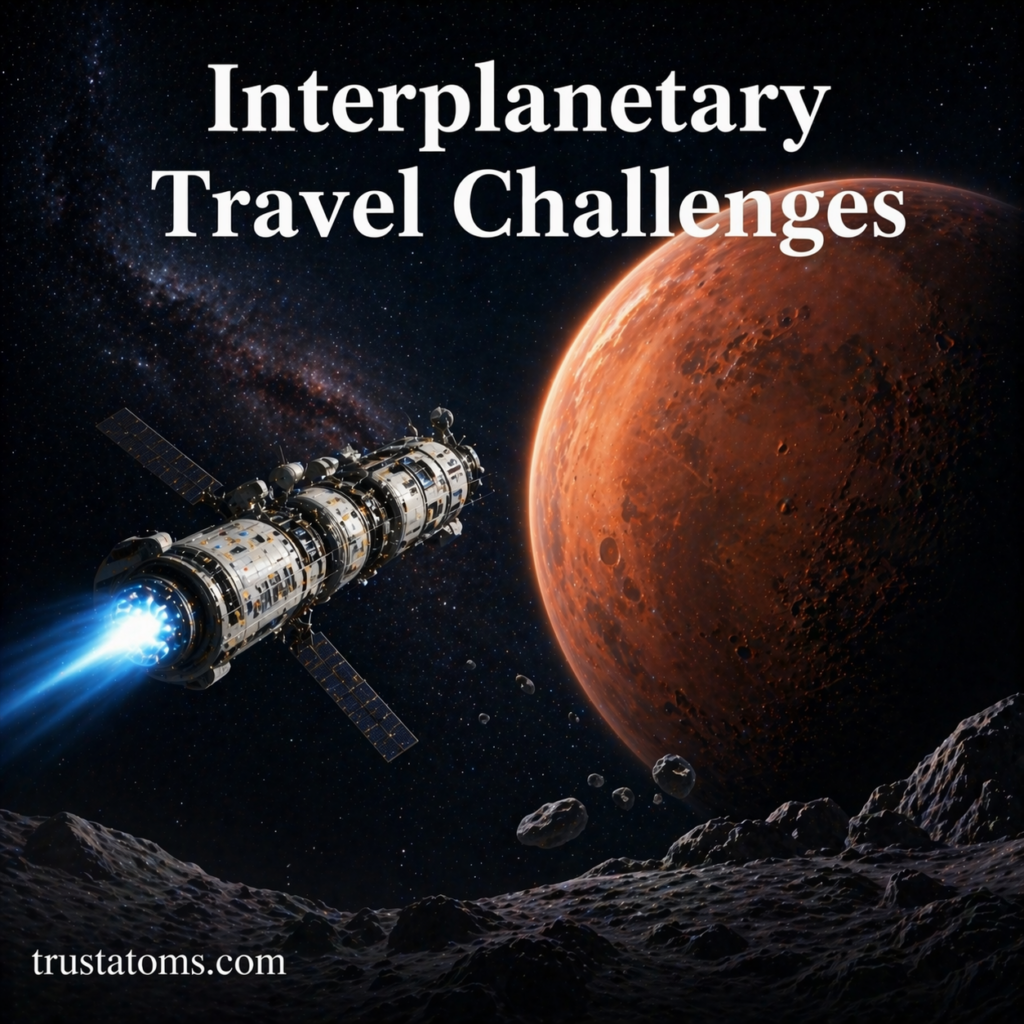
Traveling between planets is one of humanity’s greatest technological challenges. While missions to worlds like Mars and Jupiter have expanded our knowledge, sending spacecraft—and especially humans—across the solar system requires overcoming extreme conditions and complex engineering problems.
This guide breaks down the major challenges of interplanetary travel and what scientists are doing to solve them.
The Vast Distances of Space
The biggest obstacle in interplanetary travel is distance.
How Far Are We Talking?
- Earth to Mars: ~34 million to 250 million miles (depending on orbit positions)
- Earth to Jupiter: ~365 million miles at closest approach
Why Distance Matters
- Travel times can take months or years
- Communication delays increase with distance
- More fuel and resources are required
Even traveling at tens of thousands of miles per hour, spacecraft still take a long time to reach their destinations.
Fuel and Propulsion Limitations
Getting a spacecraft off Earth and across space requires enormous energy.
Current Propulsion Systems
- Chemical rockets (used for launches)
- Ion propulsion (efficient but low thrust)
Key Challenges
- Carrying enough fuel adds weight
- Faster travel requires more energy
- Slowing down at the destination also requires fuel
Future Solutions
- Nuclear propulsion
- Solar sails
- Advanced ion engines
Improving propulsion is one of the most important steps toward faster interplanetary travel.
Harsh Space Environment
Space is an extremely hostile environment for both humans and machines.
Major Hazards
- Radiation exposure from the Sun
- Extreme temperature variations
- Micrometeoroids traveling at high speeds
Impact on Missions
- Electronics can be damaged
- Human health is at risk
- Spacecraft materials degrade over time
Protective shielding and advanced materials are essential for long-duration missions.
Life Support for Human Missions
Sending humans beyond Earth orbit introduces additional challenges.
Key Requirements
- Oxygen and breathable air
- Food and water supply
- Waste management systems
- Temperature control
Long-Term Challenges
- Muscle and bone loss in microgravity
- Psychological effects of isolation
- Limited medical support
Maintaining astronaut health over long journeys is a major focus for space agencies.
Navigation and Orbital Mechanics
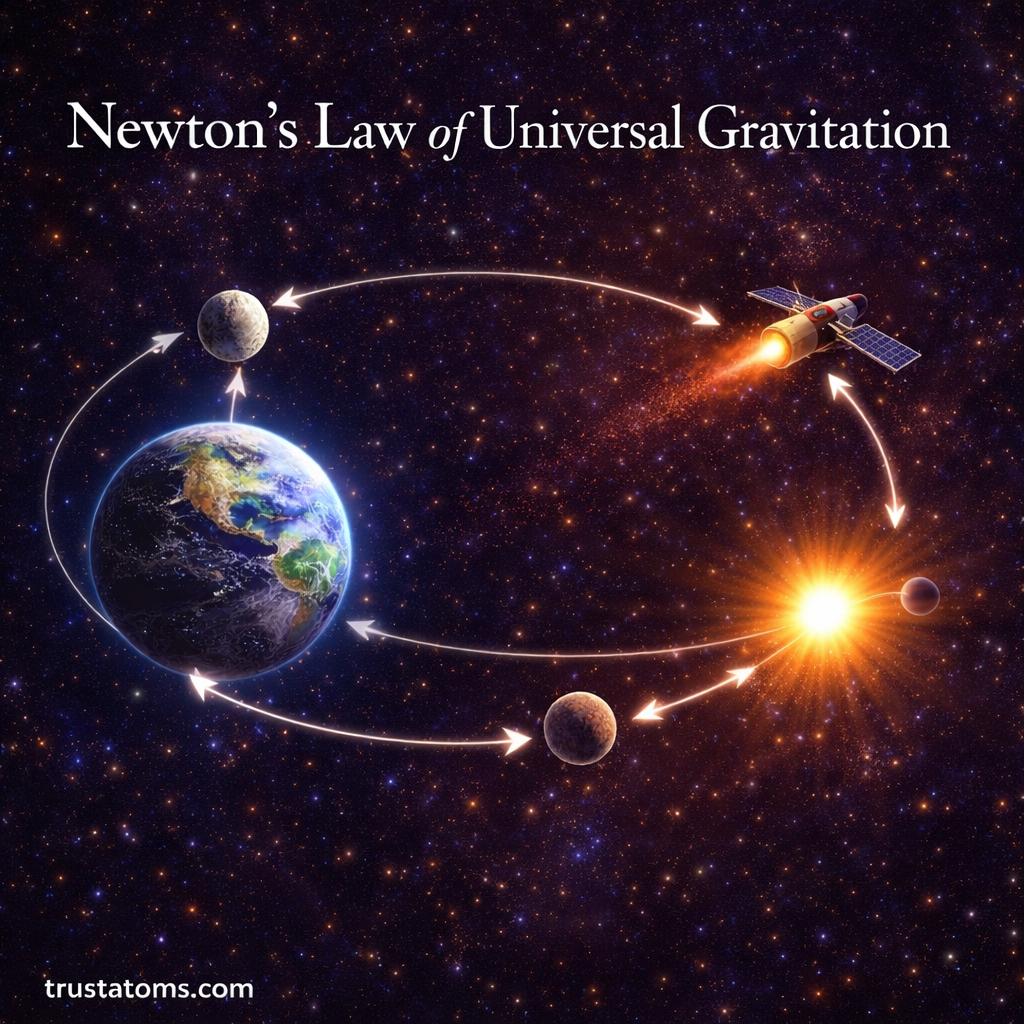
Traveling between planets isn’t as simple as flying in a straight line.
Why Navigation Is Complex
- Planets are constantly moving in orbit
- Spacecraft must follow precise trajectories
- Timing is critical for efficient travel
Gravity Assists
Space missions often use gravity assists (flybys) to gain speed.
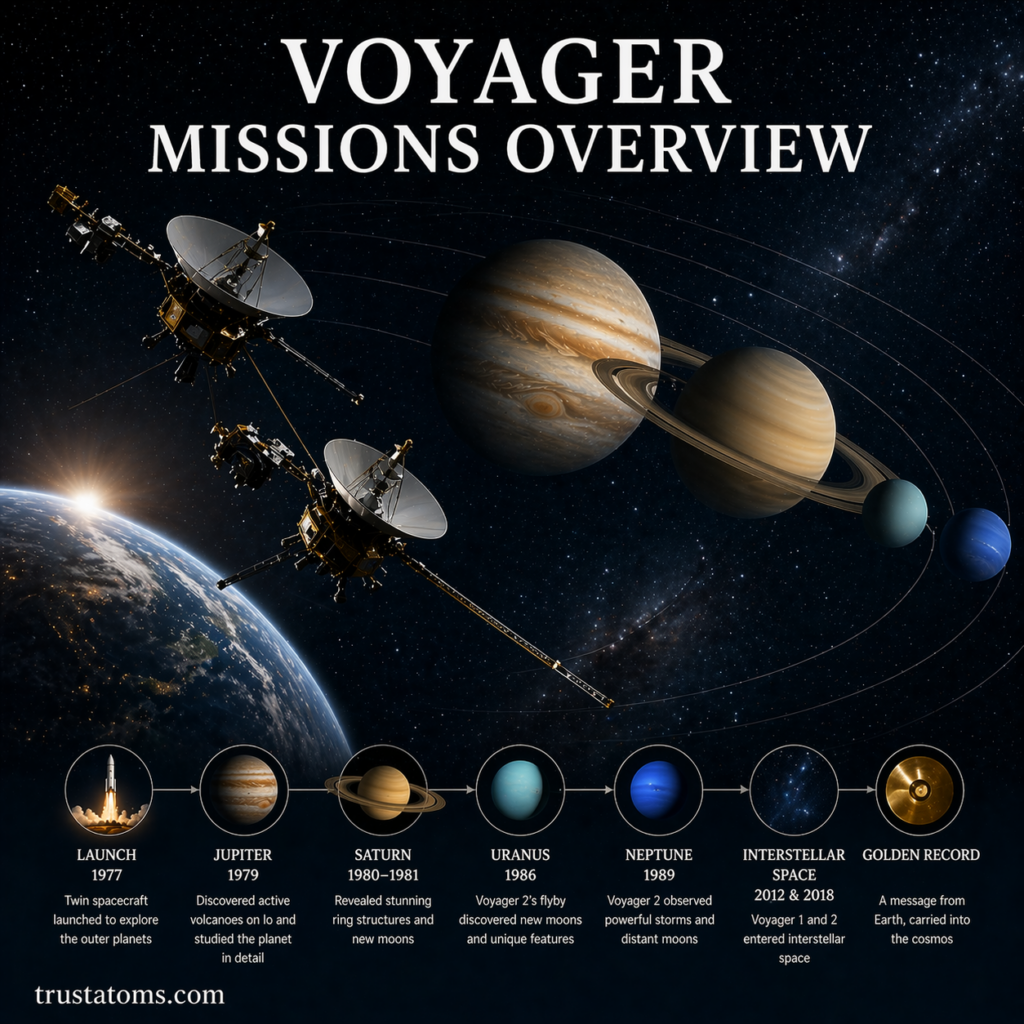
- Used in missions like Voyager 1
- Saves fuel and increases efficiency
Accurate navigation ensures missions reach their targets successfully.
Communication Delays
As spacecraft travel farther from Earth, communication becomes slower.
Time Delays
- Mars: 4 to 24 minutes one way
- Outer planets: hours
Why It Matters
- Real-time control is impossible
- Spacecraft must operate autonomously
- Delays complicate emergency responses
Advanced onboard systems help spacecraft make decisions without immediate human input.
Entry, Descent, and Landing (EDL)
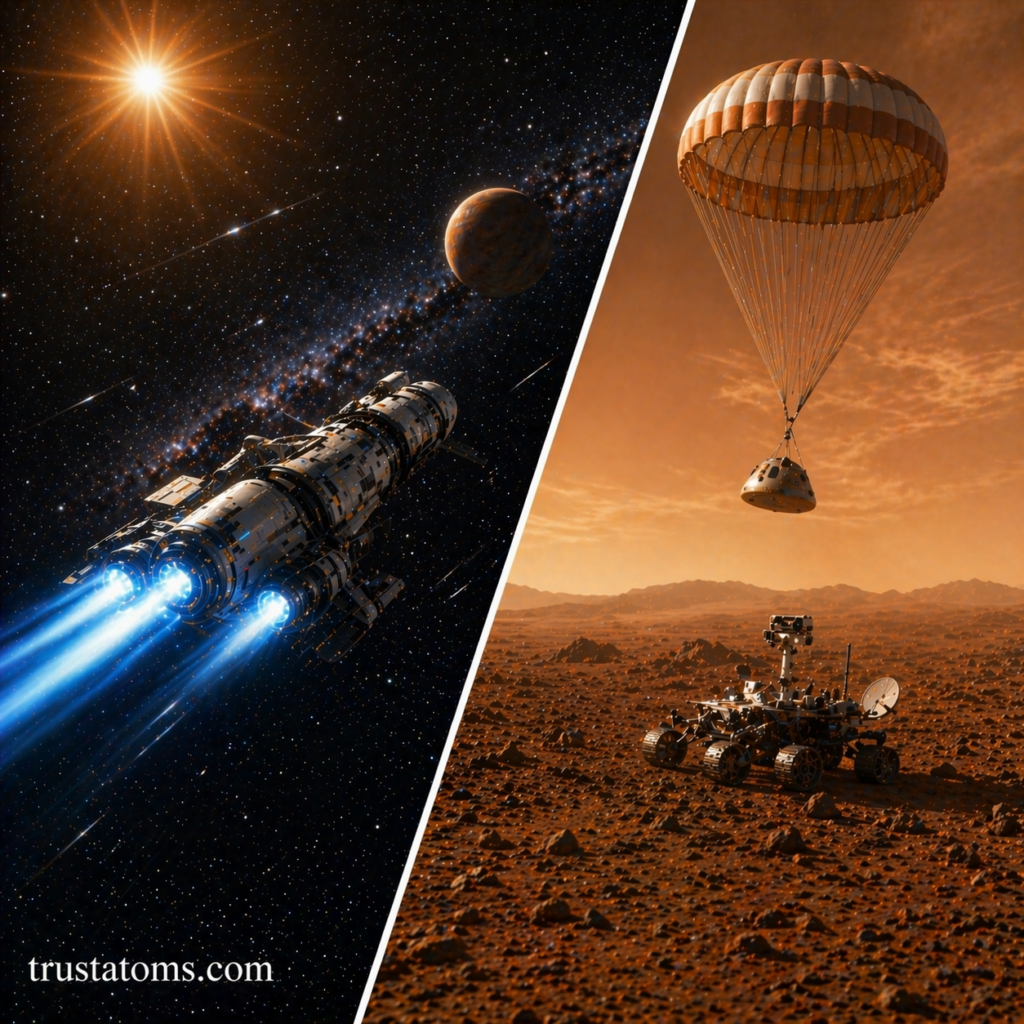
Landing on another planet is one of the most dangerous phases of a mission.
Challenges
- Thin or thick atmospheres behave differently
- High speeds during entry
- Limited ability to correct errors
Example
Landing on Mars is often called the “seven minutes of terror” due to the complexity and risk involved.
Each planet or moon requires a unique landing strategy.
Psychological and Human Factors
For crewed missions, mental health is just as important as physical health.
Key Issues
- Isolation from Earth
- Confined living spaces
- Communication delays with loved ones
Solutions Being Studied
- Virtual reality environments
- Improved spacecraft design
- Careful crew selection and training
These factors are critical for missions to Mars and beyond.
Cost and Resource Constraints
Interplanetary missions are extremely expensive.
Why Costs Are High
- Advanced technology development
- Launch and mission operations
- Long mission timelines
Impact
- Limits the number of missions
- Requires international collaboration
- Demands careful planning and prioritization
Budget constraints influence which missions are approved and when they launch.
Future Innovations in Interplanetary Travel
Despite the challenges, new technologies are making interplanetary travel more achievable.
Emerging Solutions
- Reusable rockets
- Artificial gravity concepts
- Nuclear thermal propulsion
- Autonomous spacecraft systems
Companies and agencies are working to reduce travel time and improve mission safety.
Why Interplanetary Travel Matters
Exploring other planets is about more than curiosity—it has long-term benefits for humanity.
Key Benefits
- Expands scientific knowledge
- Prepares for potential human colonization
- Advances technology used on Earth
- Inspires future generations
Interplanetary travel is a stepping stone toward becoming a multi-planetary species.
Final Thoughts
Interplanetary travel is incredibly complex, involving challenges related to distance, fuel, radiation, and human survival. While robotic missions have already explored much of the solar system, sending humans farther into space will require continued innovation and global collaboration.
As technology advances, what once seemed impossible—traveling between planets—may become a routine part of humanity’s future.