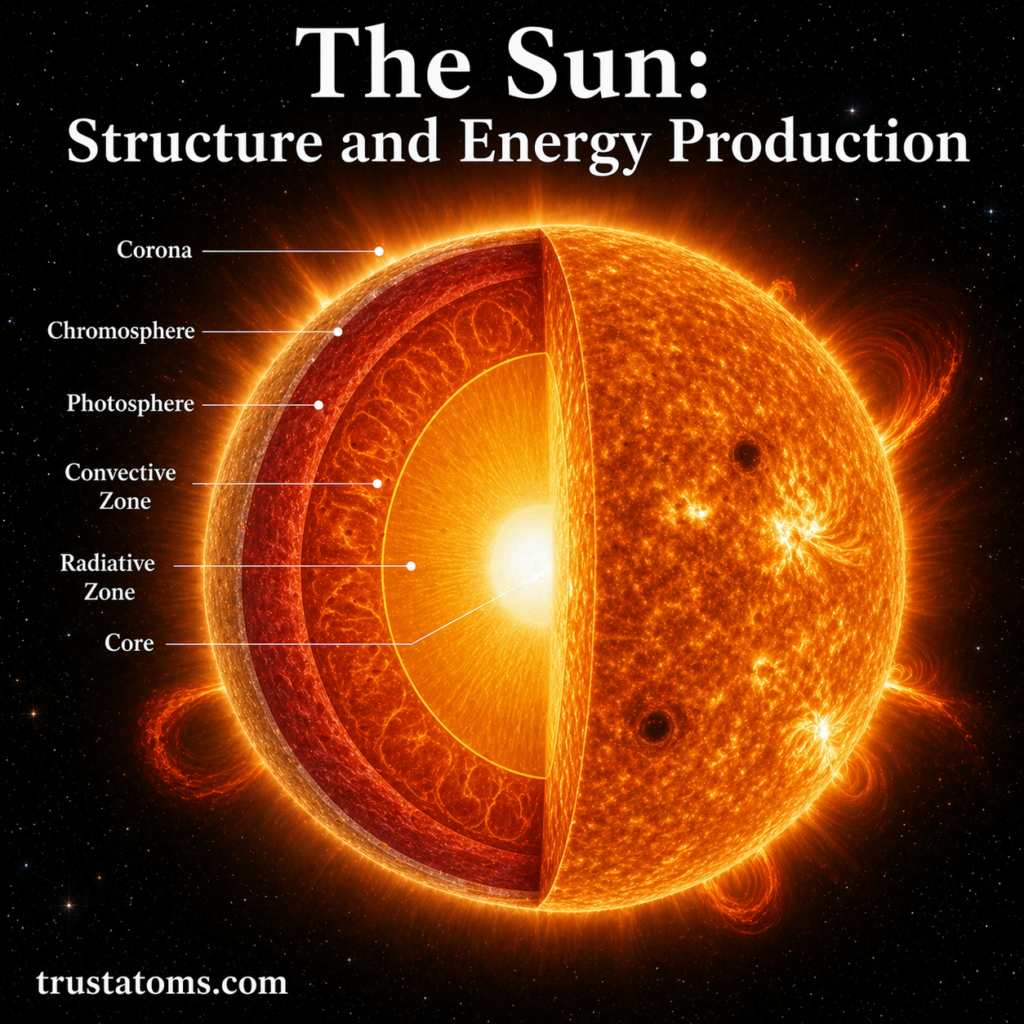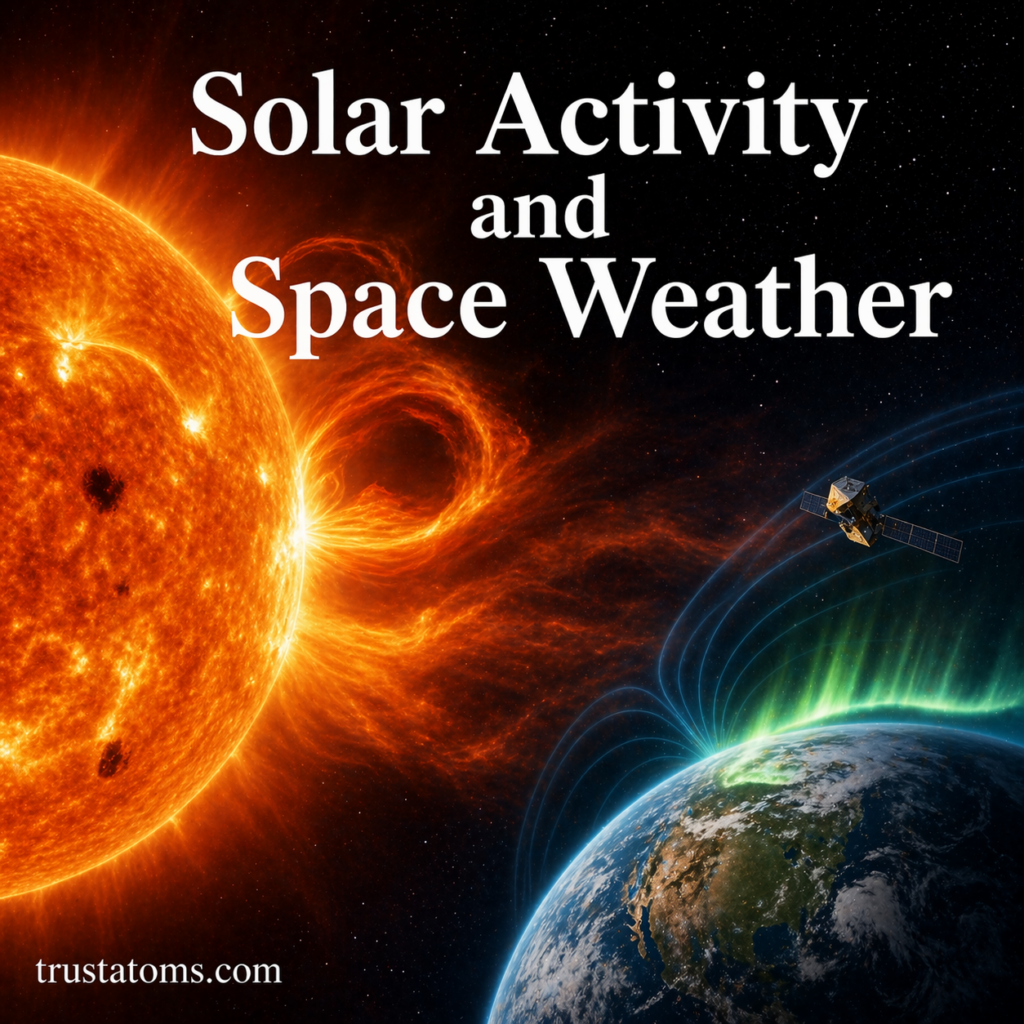
The Sun is far more than a steady source of light and heat—it’s a dynamic, active star constantly releasing energy and charged particles into space. This activity creates what scientists call space weather, a set of conditions that can affect planets, satellites, and even technology on Earth.
From solar flares to massive eruptions of plasma, solar activity plays a critical role in shaping the space environment throughout the solar system.
What Is Solar Activity?
Solar activity refers to the various energetic events that occur on and around the Sun. These events are driven by the Sun’s magnetic field, which is constantly shifting and interacting.
Key Forms of Solar Activity
- Sunspots: Dark, cooler regions on the Sun’s surface caused by magnetic activity
- Solar flares: Sudden bursts of energy and radiation
- Coronal mass ejections (CMEs): Massive clouds of charged particles ejected into space
- Solar wind: A continuous stream of charged particles flowing outward from the Sun
These phenomena vary in intensity and frequency, often following an approximately 11-year solar cycle.
The Solar Cycle: A Pattern of Activity
The Sun goes through regular cycles of increasing and decreasing activity.
Phases of the Solar Cycle
- Solar Minimum
- Few sunspots
- Lower levels of solar activity
- Solar Maximum
- Many sunspots
- Increased flares and CMEs
During solar maximum, space weather becomes more intense and frequent, increasing the likelihood of impacts on Earth and beyond.
What Is Space Weather?
Space weather describes how solar activity affects the space environment, particularly near planets like Earth.
It includes:
- Changes in radiation levels
- Variations in magnetic fields
- Movement of charged particles through space
Unlike weather on Earth, space weather is driven by solar energy and magnetic interactions rather than atmospheric conditions.
How Solar Activity Affects Earth
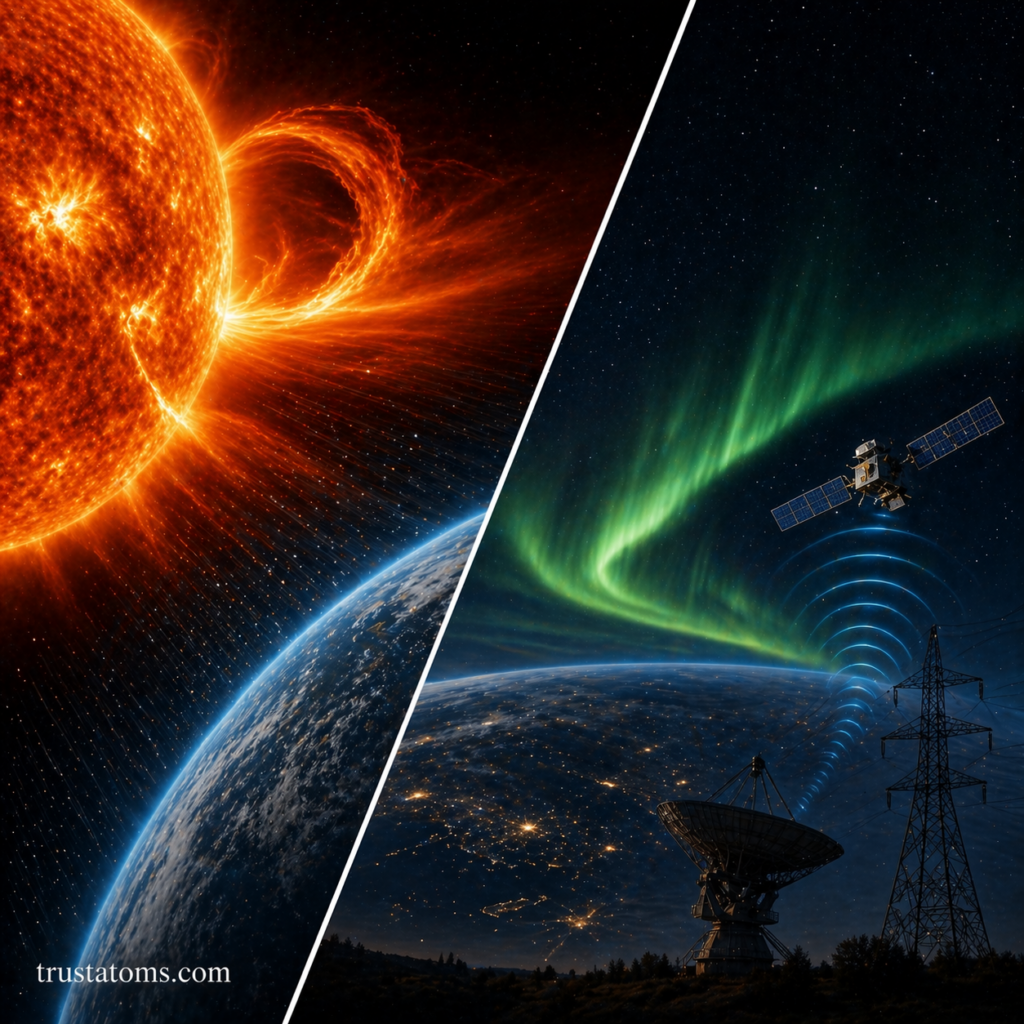
Although Earth is protected by its atmosphere and magnetic field, strong solar activity can still have noticeable effects.
Common Impacts
- Auroras (Northern and Southern Lights):
Caused by charged particles interacting with Earth’s atmosphere - Satellite Disruptions:
Interference with communication and navigation systems - Power Grid Disturbances:
Strong geomagnetic storms can overload electrical systems - Radio Signal Interference:
Solar flares can disrupt high-frequency communications
The Role of Earth’s Magnetic Field
Earth’s magnetic field acts as a protective shield against solar radiation.
How It Works
- Deflects charged particles from the solar wind
- Traps some particles in the Van Allen radiation belts
- Channels particles toward the poles, creating auroras
Without this magnetic protection, Earth’s surface would be exposed to much higher levels of radiation.
Effects on Other Planets
Not all planets are equally protected from solar activity.
Mars
- Thin atmosphere and weak magnetic field
- More exposed to solar radiation
- Evidence suggests solar wind stripped away much of its atmosphere over time
Venus
- No global magnetic field
- Thick atmosphere provides some protection
- Solar wind interacts directly with its upper atmosphere
Mercury
- Very close to the Sun
- Experiences intense solar radiation
- Weak magnetic field offers limited protection
Gas Giants
- Strong magnetic fields (especially Jupiter)
- Powerful radiation belts
- Complex interactions with solar wind
Space Weather and Modern Technology
As human technology expands into space, understanding space weather becomes increasingly important.
Vulnerable Systems
- Satellites (GPS, communications, weather monitoring)
- Astronauts in space
- Aviation systems at high altitudes
- Power grids on Earth
Why Monitoring Matters
- Predicting solar storms helps protect infrastructure
- Early warnings allow operators to shut down or adjust systems
- Reduces risk to astronauts and space missions
Tools Used to Study Space Weather
Scientists use a combination of ground-based and space-based tools.
Space Observatories
- Monitor the Sun’s surface and atmosphere
- Detect solar flares and CMEs
Satellites
- Measure solar wind speed and particle density
- Track geomagnetic activity
Ground-Based Instruments
- Observe auroras
- Monitor magnetic field changes
These tools help create forecasts similar to weather predictions on Earth.
When Space Weather Becomes Dangerous
Most solar activity is harmless, but extreme events can pose serious risks.
Major Solar Storms
- Can disrupt global communications
- May damage satellites permanently
- Could cause widespread power outages
One of the most famous events, the Carrington Event (1859), caused telegraph systems to fail and produced auroras visible near the equator.
A similar event today would have far greater consequences due to our reliance on technology.
Common Misconceptions
- The Sun is not constant—it is highly active and variable
- Space is not empty; it’s filled with particles and magnetic fields
- Earth is protected, but not immune to solar effects
- Space weather can impact everyday life, especially through technology
Final Thoughts
Solar activity and space weather reveal the powerful influence of the Sun on the entire solar system. While invisible to the naked eye most of the time, these forces shape planetary environments, impact technology, and even create stunning natural displays like auroras.
As our dependence on satellites and space-based systems grows, understanding and predicting space weather becomes more important than ever—bridging the gap between astronomy and everyday life.