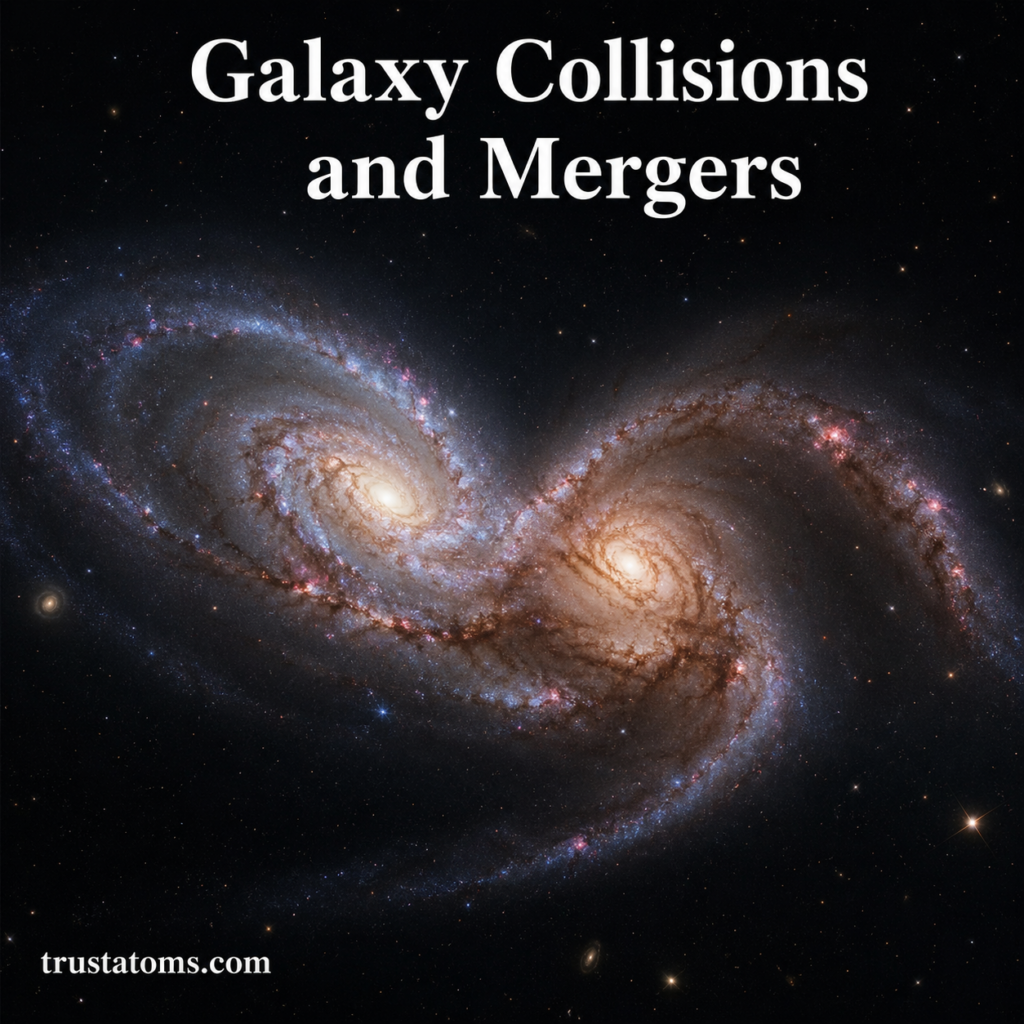
Galaxies are not isolated islands in space—they constantly interact, influence each other, and sometimes collide in spectacular cosmic events. These encounters, known as galaxy collisions and mergers, play a major role in shaping the structure and evolution of the universe.
Despite the dramatic name, galaxy collisions are not chaotic smash-ups like car crashes. Instead, they unfold over millions or even billions of years, gradually transforming galaxies into entirely new forms.
What Are Galaxy Collisions and Mergers?
A galaxy collision occurs when two or more galaxies pass close enough for their gravitational forces to interact. When these interactions eventually lead to a single, unified system, the process is called a galaxy merger.
Because galaxies are mostly empty space, direct star-to-star collisions are extremely rare. Instead, gravity reshapes the galaxies by:
- Distorting their shapes
- Triggering new star formation
- Redistributing gas, dust, and dark matter
- Potentially forming entirely new galaxy types
Why Do Galaxies Collide?
Galaxy collisions are a natural consequence of gravity acting over vast distances.
Key Causes
- Gravitational attraction between nearby galaxies
- Dense regions of the universe where galaxies cluster together
- The motion of galaxies within galaxy groups and clusters
For example, galaxies in clusters are constantly moving and interacting, increasing the likelihood of close encounters and eventual mergers.
Types of Galaxy Interactions
Not all galaxy encounters result in a full merger. There are several types of interactions depending on distance, mass, and velocity.
1. Flyby Interactions
- Galaxies pass close to each other but do not merge
- Gravitational forces distort shapes temporarily
- Can create tidal tails and warped structures
2. Minor Mergers
- A large galaxy absorbs a much smaller one
- The smaller galaxy is often stretched and disrupted
- The larger galaxy gains mass and new stars
3. Major Mergers
- Two galaxies of similar size collide and merge
- Leads to dramatic restructuring
- Often results in the formation of an elliptical galaxy
What Happens During a Galaxy Collision?
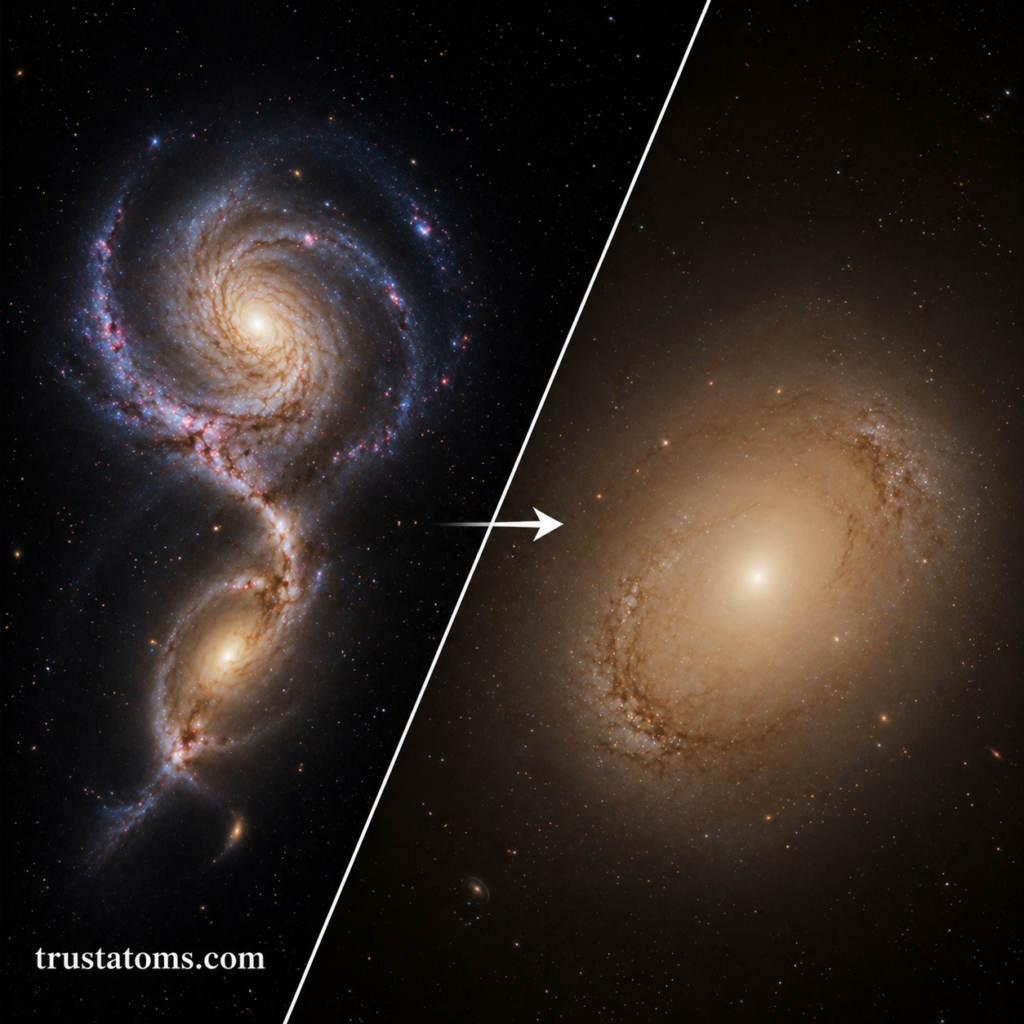
Galaxy collisions are slow and complex processes that unfold in stages.
Stage 1: Initial Approach
- Galaxies begin to feel each other’s gravitational pull
- Outer regions start to stretch and distort
Stage 2: First Pass
- Galaxies swing past each other
- Long tidal tails of stars and gas form
- Star formation rates increase
Stage 3: Repeated Interactions
- Galaxies slow down due to gravitational friction
- They orbit each other and lose energy
Stage 4: Final Merger
- The galaxies combine into a single system
- Structures settle into a new stable shape
Star Formation and “Starbursts”
One of the most important effects of galaxy collisions is the triggering of intense star formation, known as a starburst.
Why Starbursts Occur
- Gas clouds collide and compress
- Increased density leads to rapid star formation
- Massive, short-lived stars are created
These starbursts can significantly change a galaxy’s appearance and brightness.
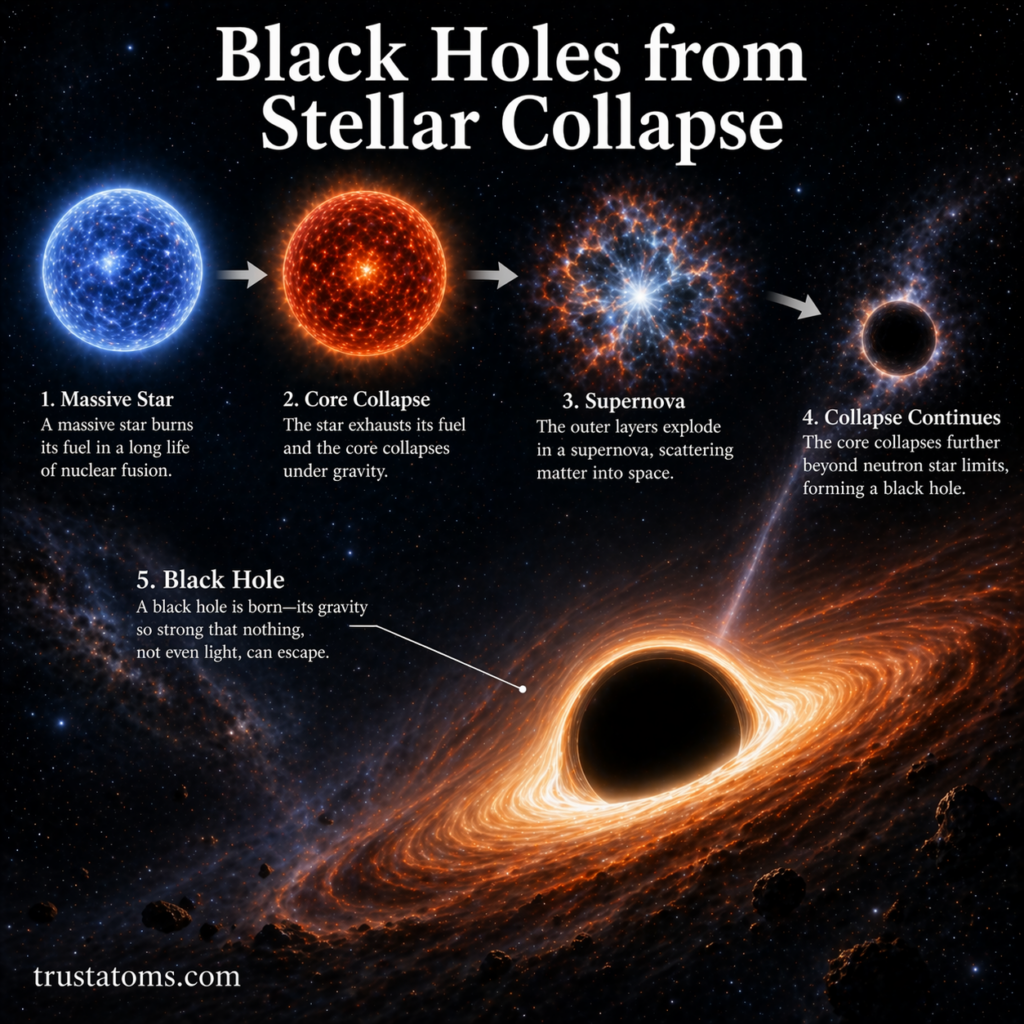
What Happens to Black Holes?
Most large galaxies contain supermassive black holes at their centers. When galaxies merge:
- Their central black holes move toward each other
- They eventually merge into a larger black hole
- This process can release enormous amounts of energy
These events are important sources of gravitational waves and can influence the surrounding galaxy.
Famous Examples of Galaxy Collisions
The Antennae Galaxies
- A well-known pair of interacting galaxies
- Famous for their long, antenna-like tidal tails
- Active regions of star formation
The Milky Way and Andromeda
- Our galaxy is on a collision course with the Andromeda galaxy
- Expected to occur in about 4–5 billion years
- Will likely result in a large elliptical galaxy
How Galaxy Mergers Shape the Universe
Galaxy collisions are essential to cosmic evolution. Over time, they:
- Build larger galaxies from smaller ones
- Transform spiral galaxies into elliptical galaxies
- Redistribute matter across the universe
- Influence galaxy clusters and large-scale structure
This process, known as hierarchical formation, explains how galaxies grow over billions of years.
Will Earth Be Affected by a Future Collision?
When the Milky Way merges with Andromeda:
- Stars are unlikely to collide directly
- The solar system may shift position within the galaxy
- The night sky would look dramatically different
While visually spectacular, the event poses little direct threat to Earth.
Key Takeaways
- Galaxy collisions are slow, gravity-driven interactions
- Most stars do not collide due to vast distances between them
- Collisions trigger star formation and structural changes
- Supermassive black holes can merge during these events
- Galaxy mergers are a fundamental part of cosmic evolution
Final Thoughts
Galaxy collisions and mergers are among the most powerful and transformative events in the universe. Far from being rare, they are a natural and ongoing process that shapes galaxies over billions of years.
By studying these interactions, astronomers gain insight into the past, present, and future of galaxies—including our own. In a universe defined by motion and gravity, even the largest structures are constantly changing.