Volcanic Gas Emissions and Hazards: What They Are and Why They Matter

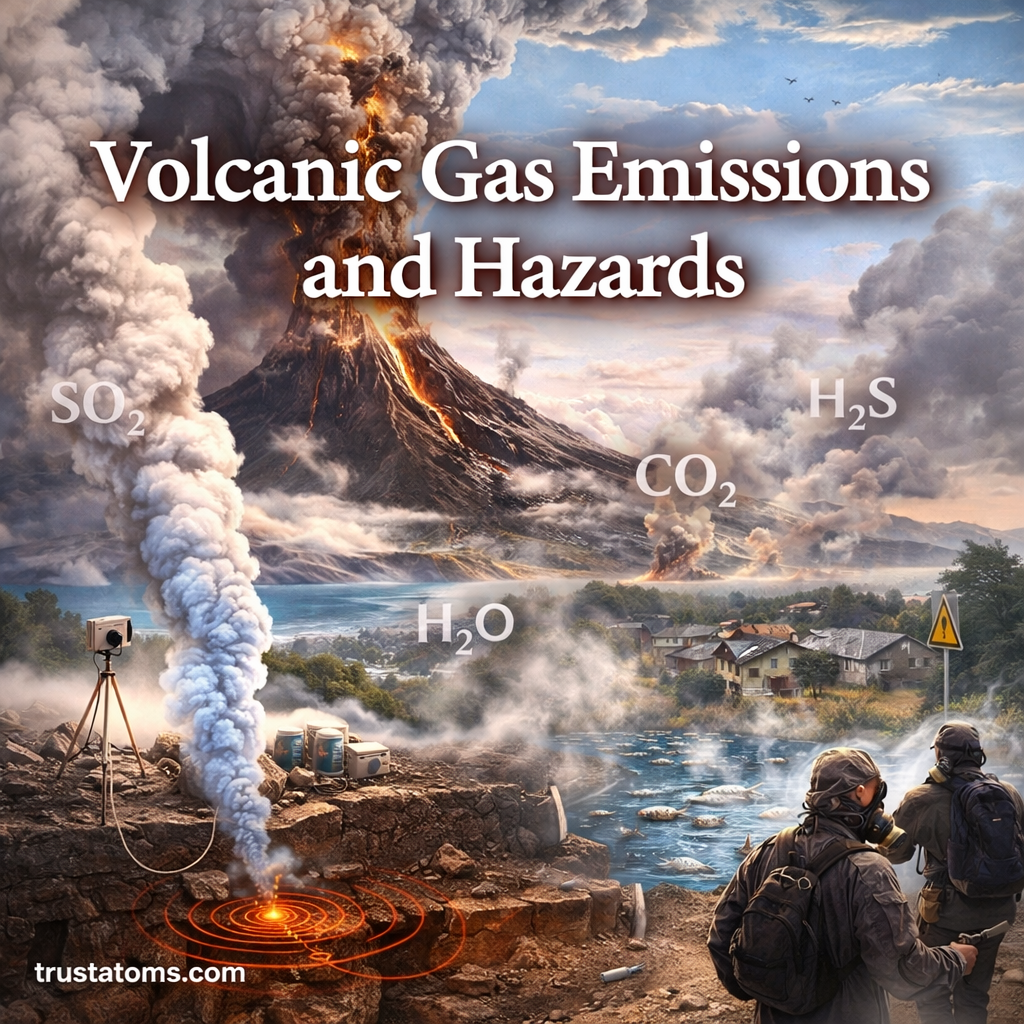
Illustration of volcanic gas emissions showing an erupting volcano releasing gases like carbon dioxide and sulfur dioxide affecting nearby areas.
Volcanoes release gases such as carbon dioxide and sulfur dioxide, which can create hazardous conditions near vents and in surrounding communities.

Volcanic gas emissions are gases released from magma and volcanic systems through eruptions, vents, and surrounding ground. These emissions can threaten human health, damage vegetation, reduce air quality, and sometimes affect climate, even when no lava or ash is visible.

The greatest immediate dangers include carbon dioxide accumulating in poorly ventilated areas and toxic gases reaching harmful concentrations near volcanic vents. Studying these processes connects geology, atmospheric chemistry, and environmental safety within Earth science.

Continue reading “Volcanic Gas Emissions and Hazards: What They Are and Why They Matter”
Seismic Monitoring Systems: How We Detect and Track Earthquakes

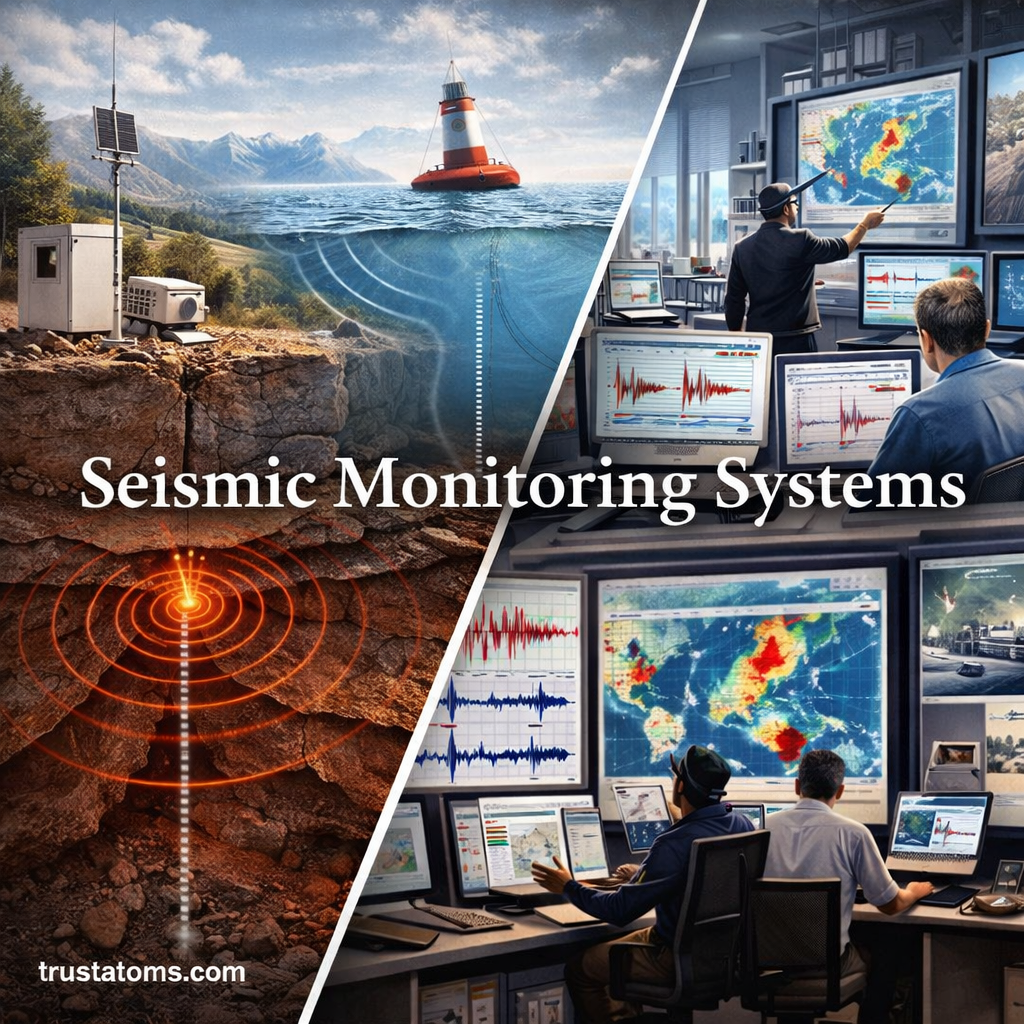
Illustration of seismic monitoring systems showing seismometer stations, ocean buoys, and a control center analyzing earthquake data.
Illustration showing how seismic monitoring systems detect and analyze earthquakes using sensors and data networks.

Seismic monitoring systems detect earthquakes by measuring ground vibrations with sensitive instruments called seismometers and analyzing the resulting seismic waves. Networks of monitoring stations use these measurements to locate earthquakes, estimate their magnitude, track aftershocks, and support rapid warnings before strong shaking reaches some locations.

These systems combine underground sensors, communication networks, and automated analysis to monitor seismic activity around the clock. They are an important part of Earth science, helping researchers investigate tectonic activity while providing information that communities can use to prepare for earthquakes.

Continue reading “Seismic Monitoring Systems: How We Detect and Track Earthquakes”

Submarine Earthquakes and Tsunami Risk: Causes, Impacts, and Safety

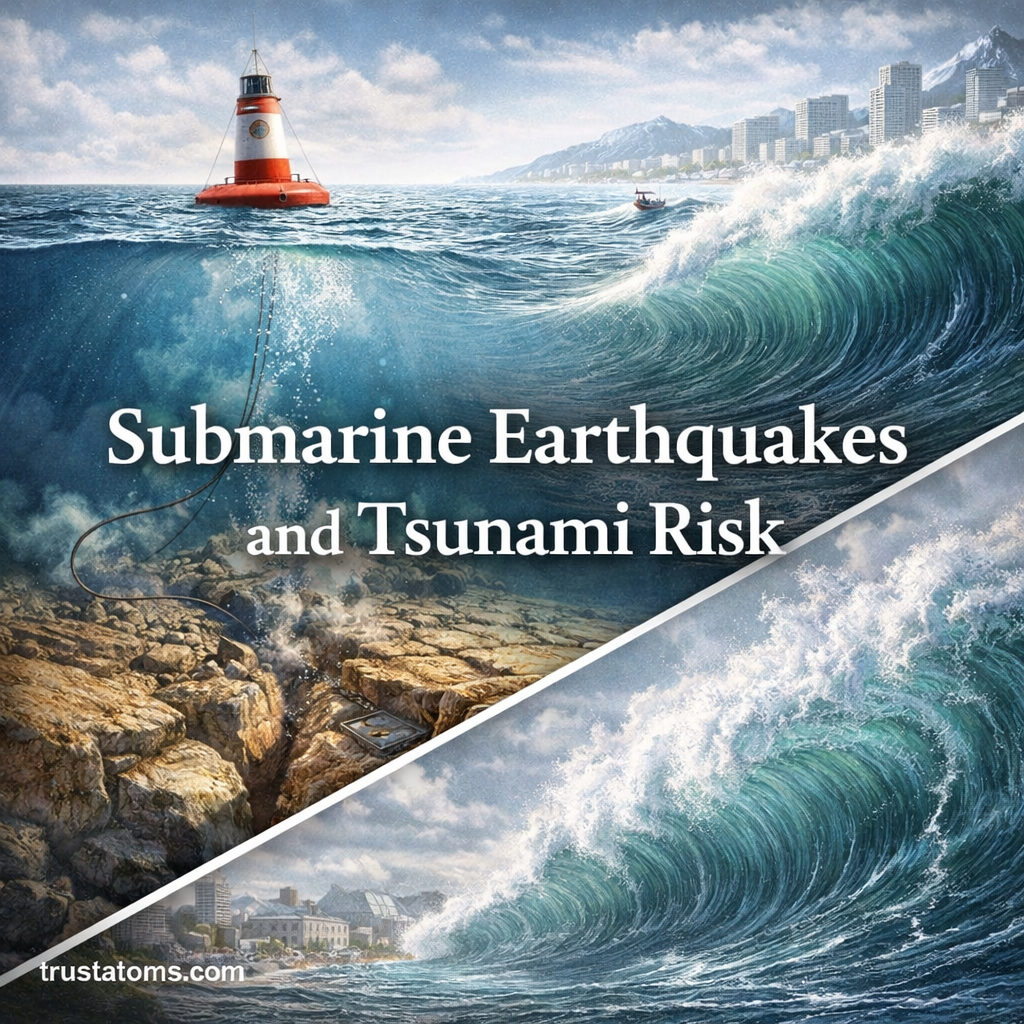
Illustration showing a submarine earthquake beneath the ocean and a tsunami wave approaching a coastal city.
Illustration demonstrating how submarine earthquakes can trigger tsunamis and impact coastal regions. trustatoms.com.

Submarine earthquakes occur beneath the ocean floor and are among the most powerful geological events on Earth. While many go unnoticed, some can trigger tsunamis—massive ocean waves capable of causing widespread destruction along coastlines.

Understanding how these underwater earthquakes work and how they lead to tsunamis is essential for coastal safety and disaster preparedness.

Continue reading “Submarine Earthquakes and Tsunami Risk: Causes, Impacts, and Safety”

Avalanches and Mountain Hazards: Causes, Types, and Safety

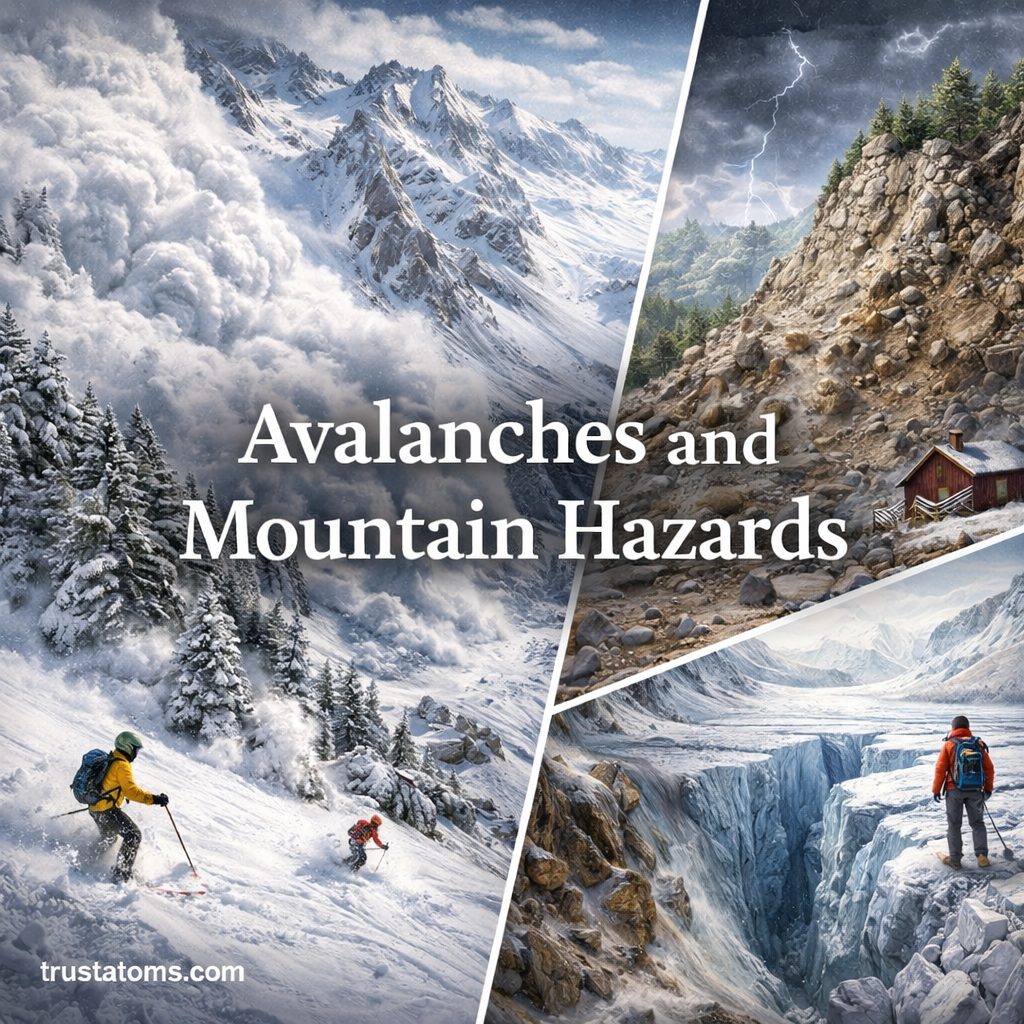
Illustration of avalanches and mountain hazards showing snow avalanche, rockfall, and glacier crevasse in a mountainous landscape.
Illustration highlighting avalanches and common mountain hazards in alpine environments.

Avalanches occur when snow loses stability and rapidly moves downhill under gravity, often triggered by weak snow layers, new snowfall, wind loading, or human activity. Mountain hazards also include rockfalls, landslides, glacier crevasses, and severe weather, making terrain assessment and preparation essential for safety.

An avalanche can bury people, damage infrastructure, and block transportation routes within seconds. Understanding these hazards through Earth science helps explain how snow, weather, gravity, and mountain terrain interact, particularly in areas used for skiing, hiking, and mountaineering.

Continue reading “Avalanches and Mountain Hazards: Causes, Types, and Safety”

Sinkholes and Ground Collapse: Causes, Types, and Prevention

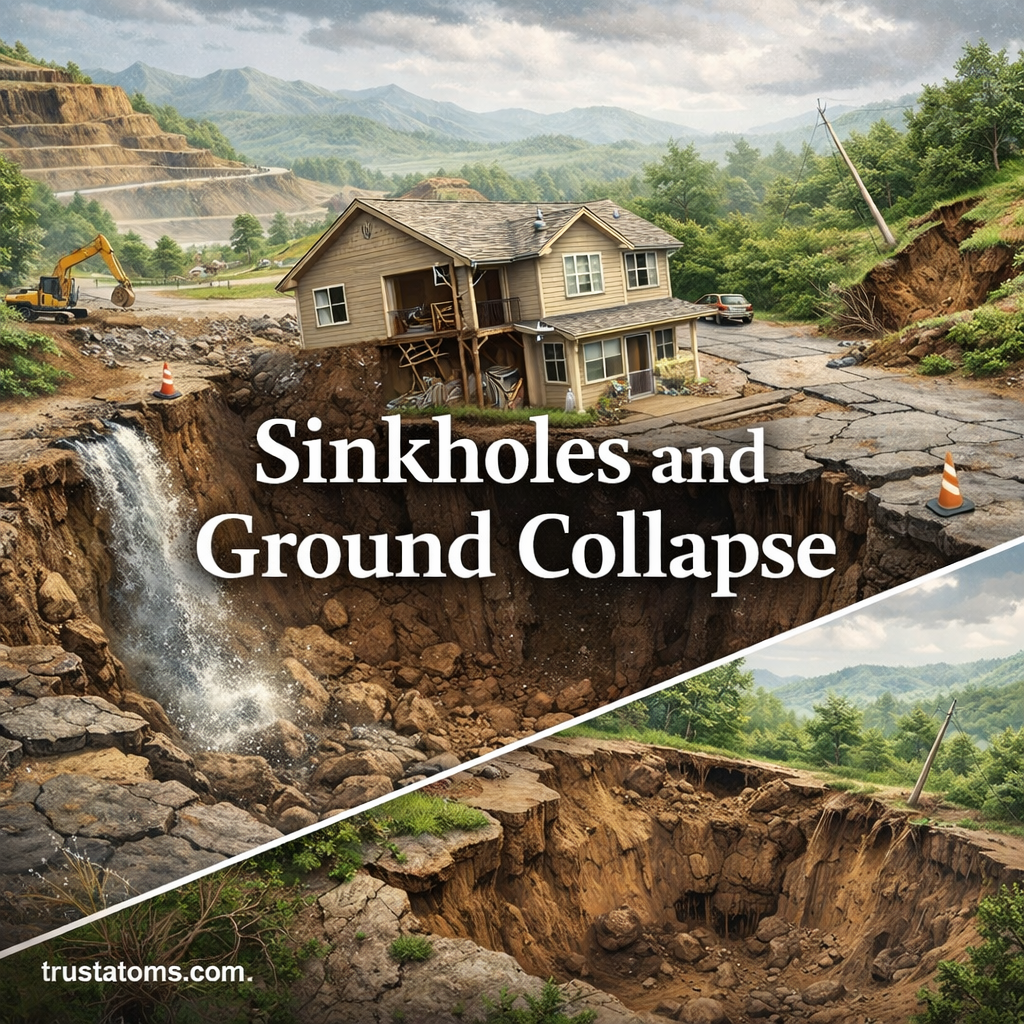
Illustration of a sinkhole and ground collapse showing a house sinking into the ground with underlying soil erosion.
Illustration demonstrating how sinkholes and ground collapse can damage land and structures.

Sinkholes form when the ground subsides or collapses as soluble rock dissolves underground, allowing overlying soil and sediment to settle into developing openings. Ground collapse can also result from leaking pipes, abandoned mines, and other processes that remove support beneath the surface.

Some sinkholes develop gradually, while others appear suddenly and damage roads, buildings, or utilities. Understanding these hazards is part of Earth science because groundwater movement, rock properties, and human land use all influence ground stability.

Continue reading “Sinkholes and Ground Collapse: Causes, Types, and Prevention”

Landslides and Slope Instability: Causes, Types, and Prevention

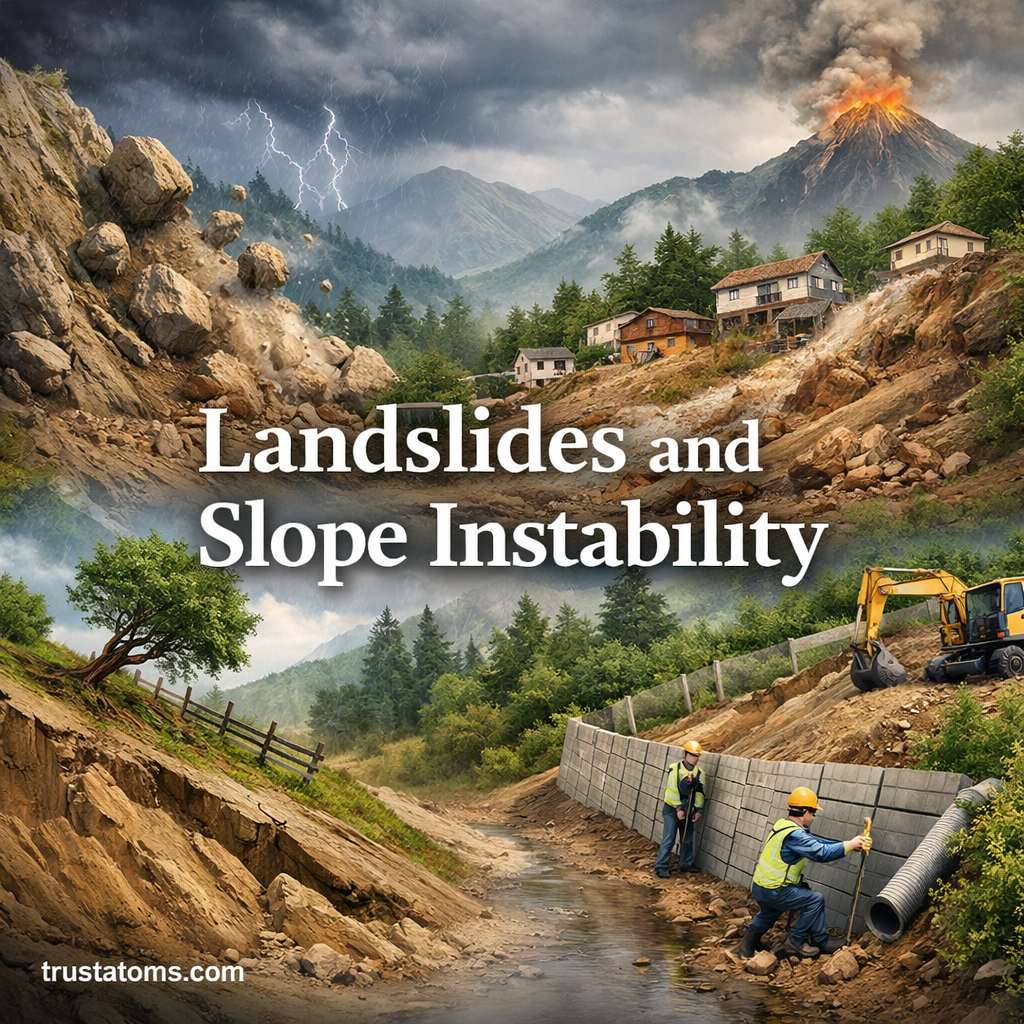
Illustration of landslides and slope instability showing rockfalls, debris flow, and slope failure on a hillside.
Illustration showing how landslides and slope instability occur on natural slopes.

Landslides occur when rock, soil, or debris moves downhill under gravity because the forces pulling material downslope exceed the forces holding it in place. Slope instability develops when conditions such as heavy rainfall, earthquakes, erosion, or excavation weaken a hillside enough to increase the likelihood of failure.

Some landslides happen suddenly, while others move so slowly that their effects become visible only after months or years. Studying these processes through Earth science helps explain how slopes change and how communities can recognize hazards before they cause serious damage.

Continue reading “Landslides and Slope Instability: Causes, Types, and Prevention”

Tsunamis and Ocean Displacement: How Powerful Waves Are Created

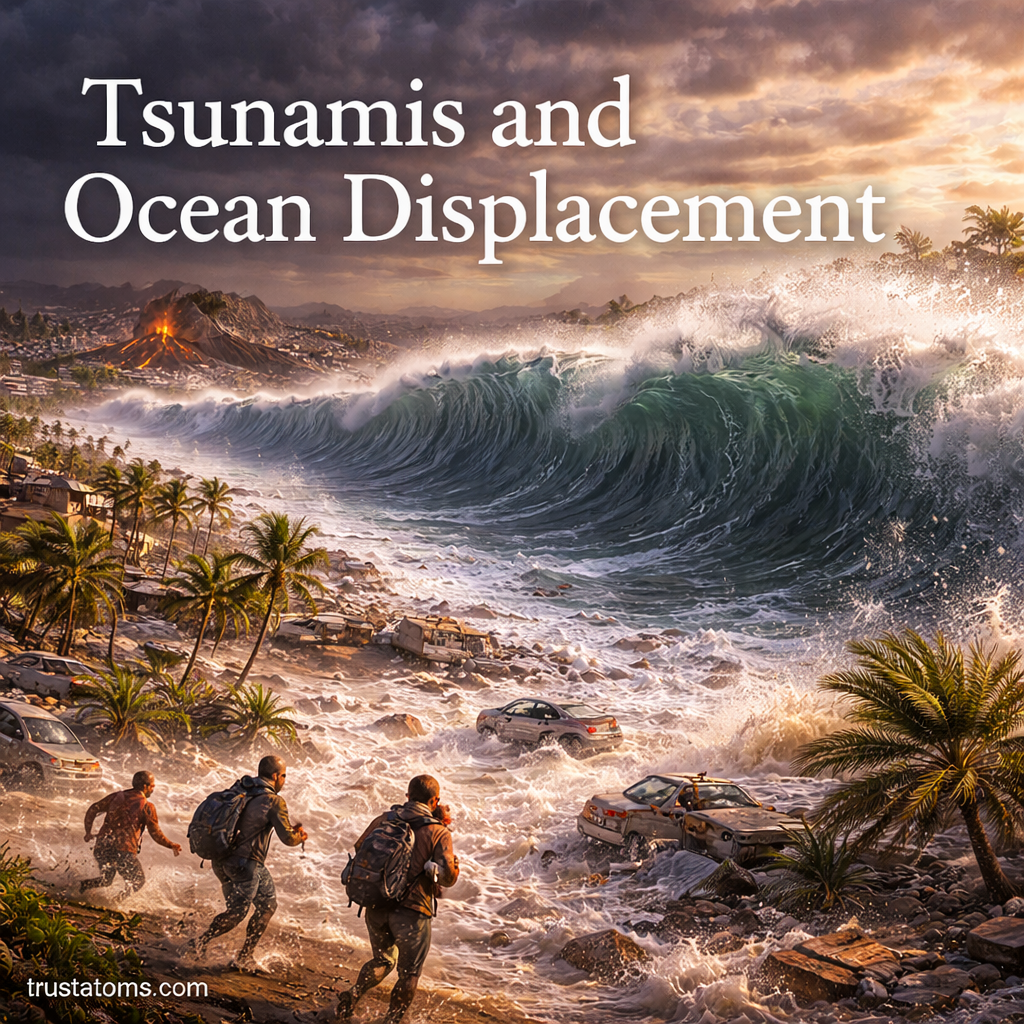
Illustration showing a massive tsunami wave caused by ocean displacement crashing into a coastal area.
A tsunami can produce powerful coastal flooding when waves generated by sudden ocean displacement enter shallow water.

Tsunamis are powerful ocean waves created when a large volume of water is suddenly displaced, usually by an underwater earthquake, landslide, or volcanic disturbance. The displaced water generates long waves that can cross entire ocean basins and produce destructive flooding when they reach coastlines.

Unlike ordinary wind-driven waves, tsunamis involve motion through much of the water column and can remain difficult to detect in deep water. Their formation connects geological activity with ocean physics, making them an important subject within Earth science and coastal hazard research.

Continue reading “Tsunamis and Ocean Displacement: How Powerful Waves Are Created”

Lahars and Volcanic Mudflows: Understanding a Hidden Volcanic Danger

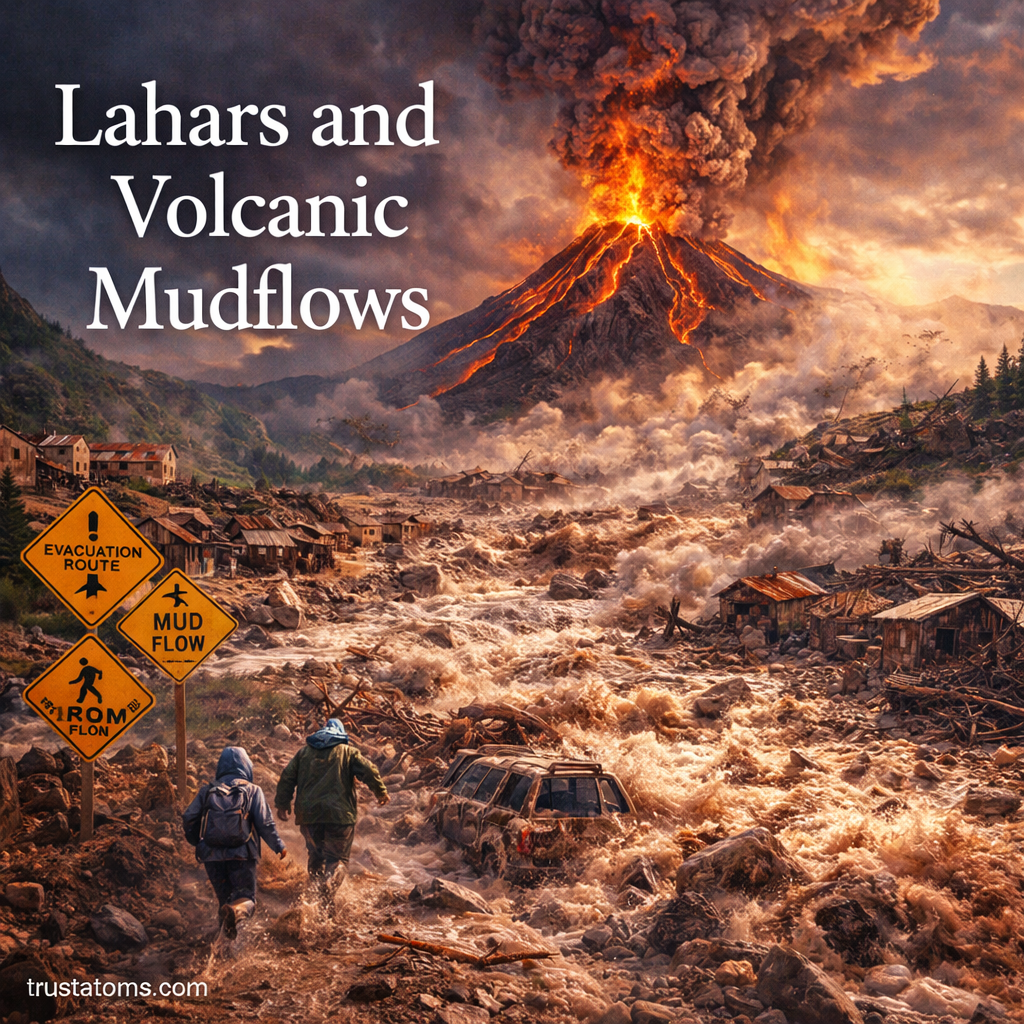
Illustration showing a volcanic lahar mudflow rushing down a valley toward a village after an eruption.
Illustration of lahars and volcanic mudflows showing fast-moving debris flowing down a volcano toward nearby communities.

Lahars are flowing mixtures of water, volcanic ash, rocks, and other debris that travel down volcanic slopes and river valleys. Often called volcanic mudflows, they can move rapidly, destroy infrastructure, and threaten communities many kilometers from a volcano, sometimes without an ongoing eruption.

Unlike lava, lahars do not need to be hot to cause severe damage. Understanding these hazards through Earth science helps explain how volcanic landscapes, water, and gravity combine to produce dangerous flows and why advance evacuation planning is essential.

Continue reading “Lahars and Volcanic Mudflows: Understanding a Hidden Volcanic Danger”

Pyroclastic Flows and Volcanic Hazards: Understanding One of Nature’s Deadliest Forces

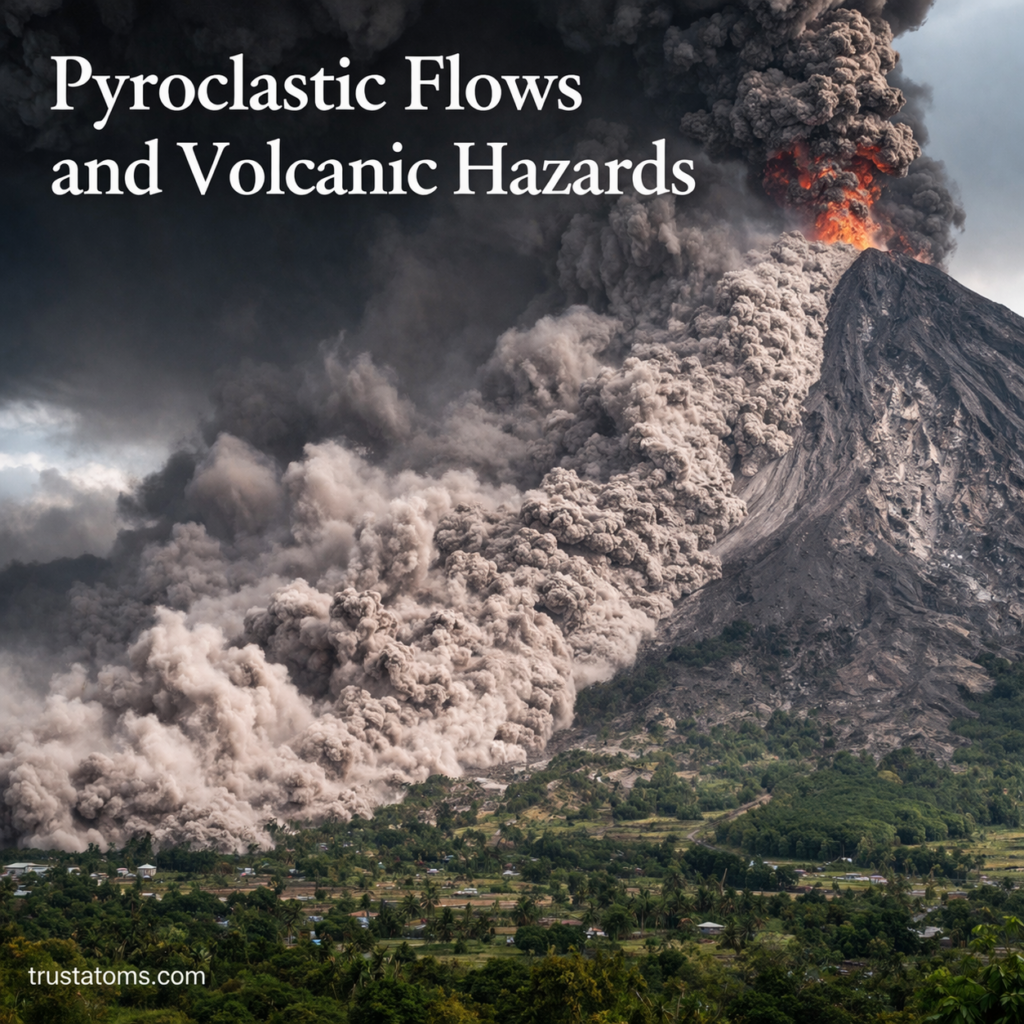
Illustration showing a volcanic eruption with a fast-moving pyroclastic flow descending the mountain toward a nearby valley.
Illustration of pyroclastic flows and volcanic hazards showing a fast-moving ash cloud and eruption impacting surrounding areas.

Pyroclastic flows are fast-moving currents of extremely hot gas, volcanic ash, and rock fragments that rush across the ground during certain volcanic eruptions. They are among the most dangerous volcanic hazards because their intense heat, speed, and destructive force can overwhelm communities with little opportunity to escape.

Volcanic eruptions can produce a wide range of hazards, but few are as fast, destructive, and deadly as pyroclastic flows. Understanding their formation and behavior is part of Earth science, which examines the geological processes that shape Earth’s surface and create natural hazards.

Continue reading “Pyroclastic Flows and Volcanic Hazards: Understanding One of Nature’s Deadliest Forces”

Shield vs Composite Volcanoes: Understanding the Key Differences

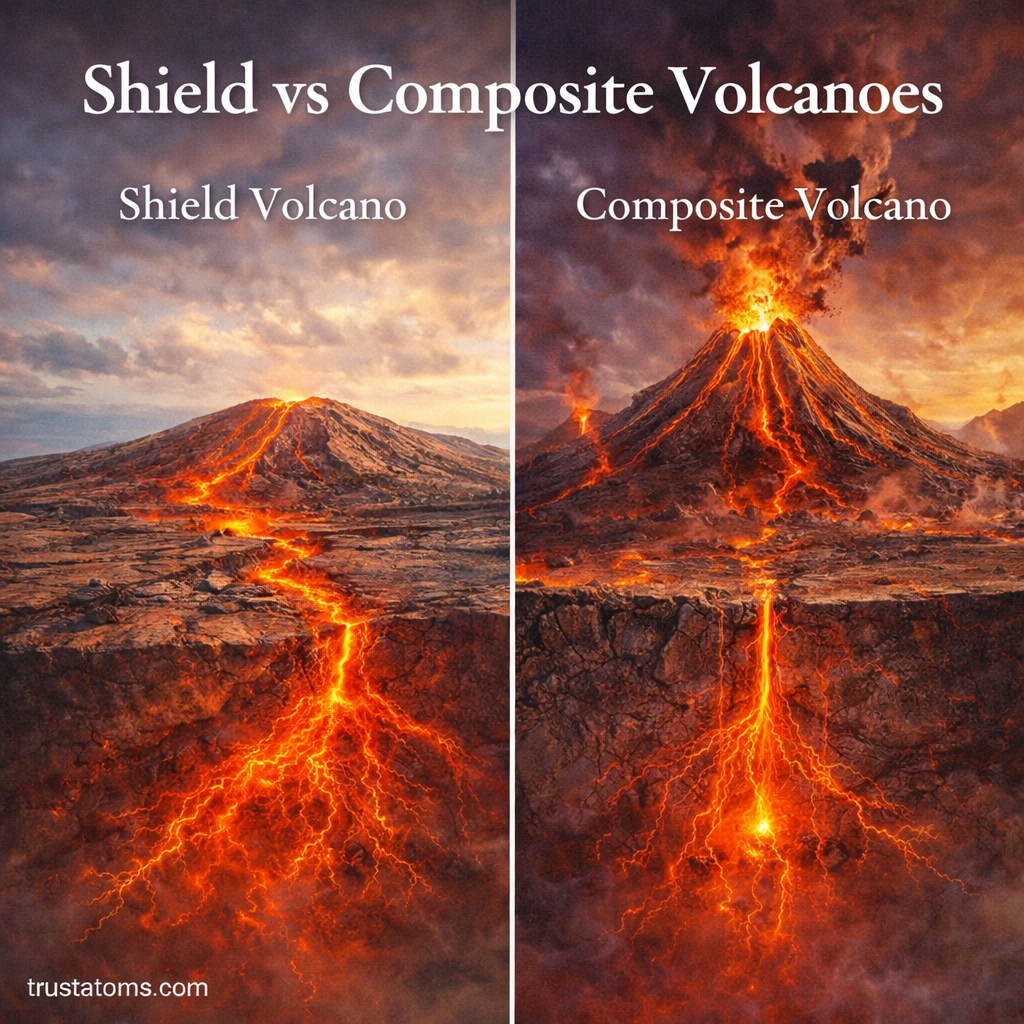
Split illustration comparing shield volcano and composite volcano with different shapes, eruption styles, and magma movement.
Shield volcanoes typically have broad, gentle slopes formed by fluid lava, while composite volcanoes develop steeper profiles from accumulated lava and fragmented volcanic material.

Shield volcanoes are broad, gently sloping volcanoes built mainly by fluid basaltic lava, while composite volcanoes are steeper, layered mountains that commonly erupt more viscous magma. Shield volcanoes usually produce flowing lava, whereas composite volcanoes are more likely to generate explosive eruptions involving ash, volcanic gases, and fast-moving debris.

Both types form when magma reaches Earth’s surface, but differences in magma chemistry, gas content, and tectonic setting produce contrasting landscapes and hazards. Comparing them is part of Earth science, which examines how geological processes shape the planet and affect surrounding environments.

Continue reading “Shield vs Composite Volcanoes: Understanding the Key Differences”