Earth Science explores the planet’s systems, natural processes, climate, geology, weather, and environmental changes. This section provides educational content designed to explain how Earth works and how different systems interact over time.
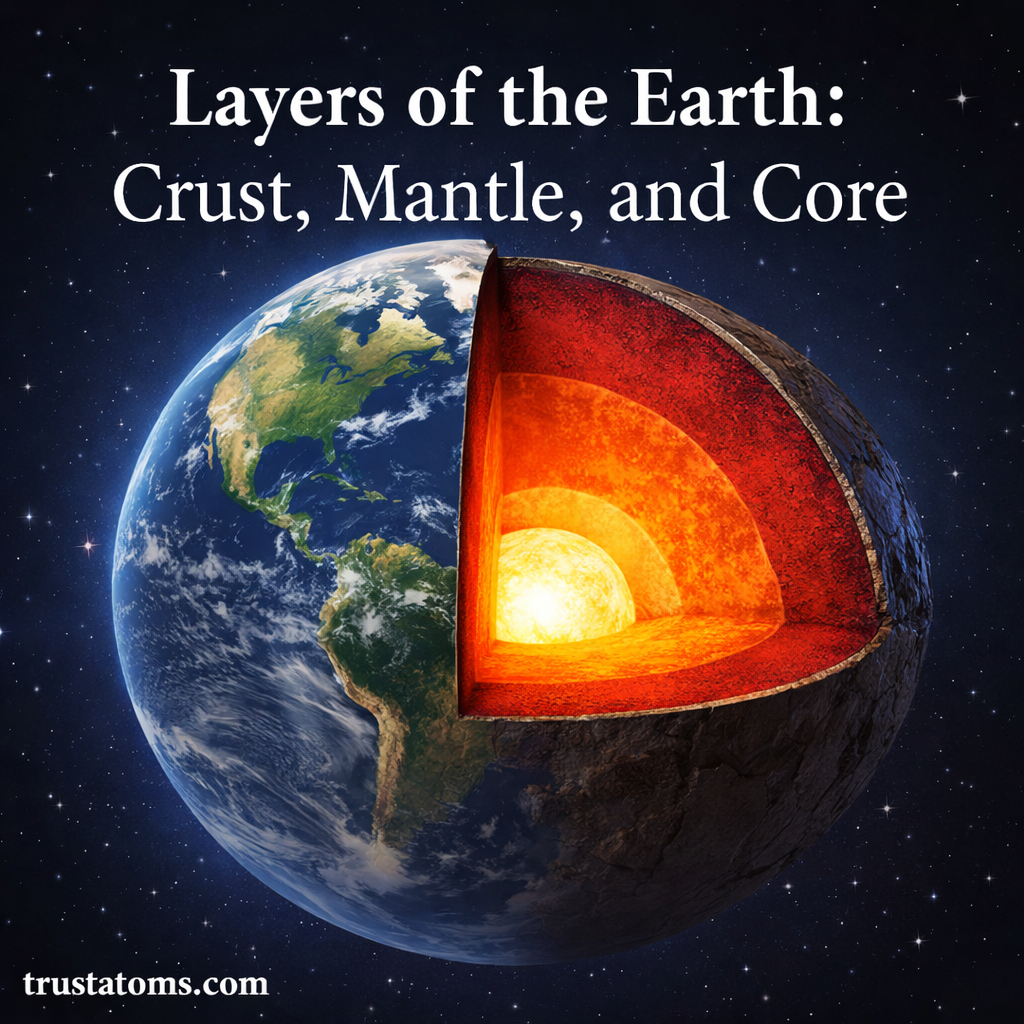
Cutaway illustration of Earth highlighting the crust, mantle, and core layers. trustatoms.com.
The Earth is made up of several layers, each with its own unique composition, structure, and role in shaping the planet. These layers—known as the crust, mantle, and core—work together to drive processes like earthquakes, volcanic activity, and plate tectonics.
Understanding Earth’s layers helps explain how the planet formed, how it continues to change, and why natural events occur.
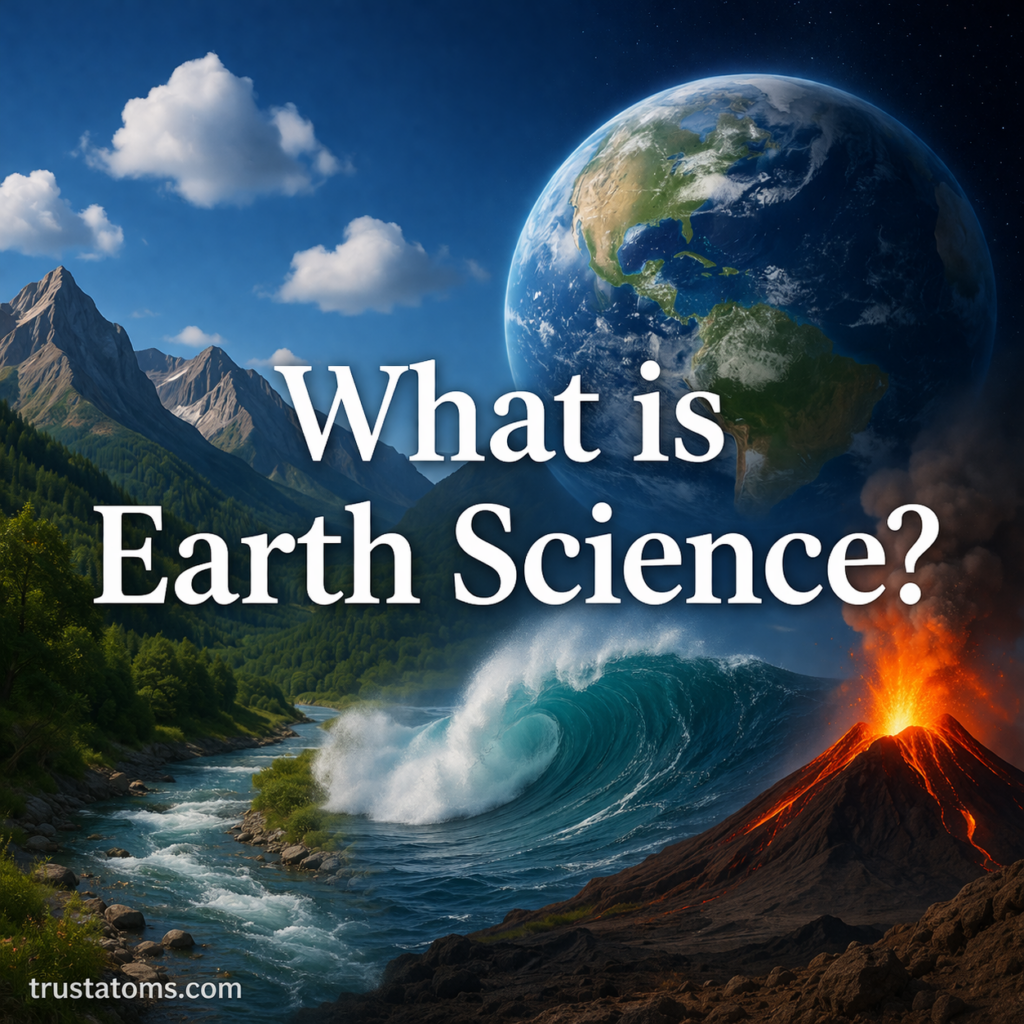
Illustration representing Earth science concepts including land, water, atmosphere, and geological activity. trustatoms.com.
Earth science is the study of our planet—its structure, systems, processes, and history. It explores everything from rocks and oceans to weather systems, earthquakes, and Earth’s place within the solar system.
Rather than focusing on a single topic, Earth science combines multiple scientific disciplines to explain how Earth works as a dynamic and interconnected system. It helps scientists understand natural events, environmental changes, and the processes that shape life on Earth.
Earth science also overlaps with several scientific fields. Planetary studies frequently connect with What Is Astronomy?, environmental systems often intersect with What Is Biology?, and many geological processes rely on concepts found in What Is Chemistry?and What Is Physics?.