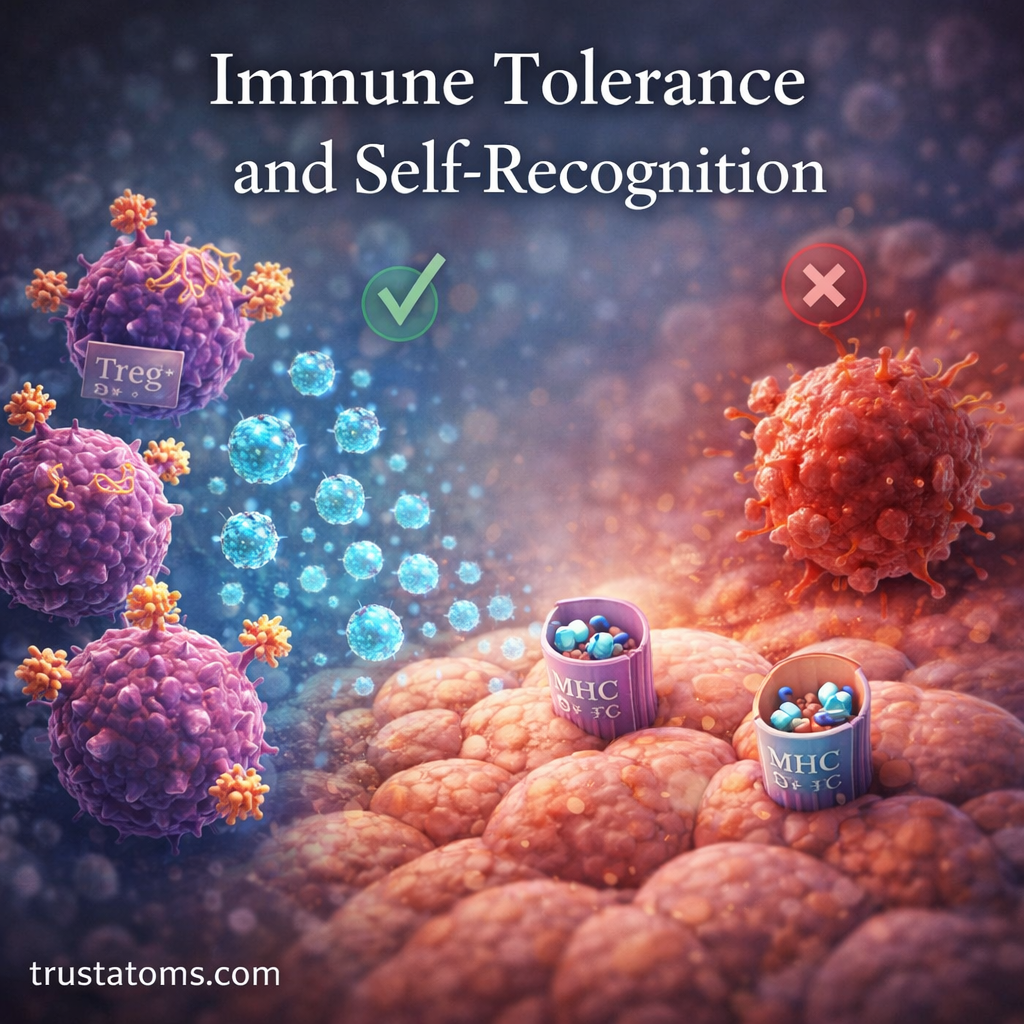
Immune Tolerance and Self-Recognition

Illustration showing immune tolerance and self-recognition with immune cells distinguishing between healthy and harmful cells.
Immune cells recognizing self and maintaining tolerance to prevent autoimmune response. trustatoms.com.

The immune system is designed to protect the body from harmful invaders like bacteria, viruses, and toxins. But just as important as attacking threats is the ability to avoid attacking the body itself. This critical function is known as immune tolerance.

Immune tolerance allows the body to distinguish between “self” (its own cells and tissues) and “non-self” (foreign substances). When this system works properly, it prevents unnecessary damage. When it fails, it can lead to autoimmune diseases and chronic inflammation.

Continue reading “Immune Tolerance and Self-Recognition”
Cytokines in Immune Signaling

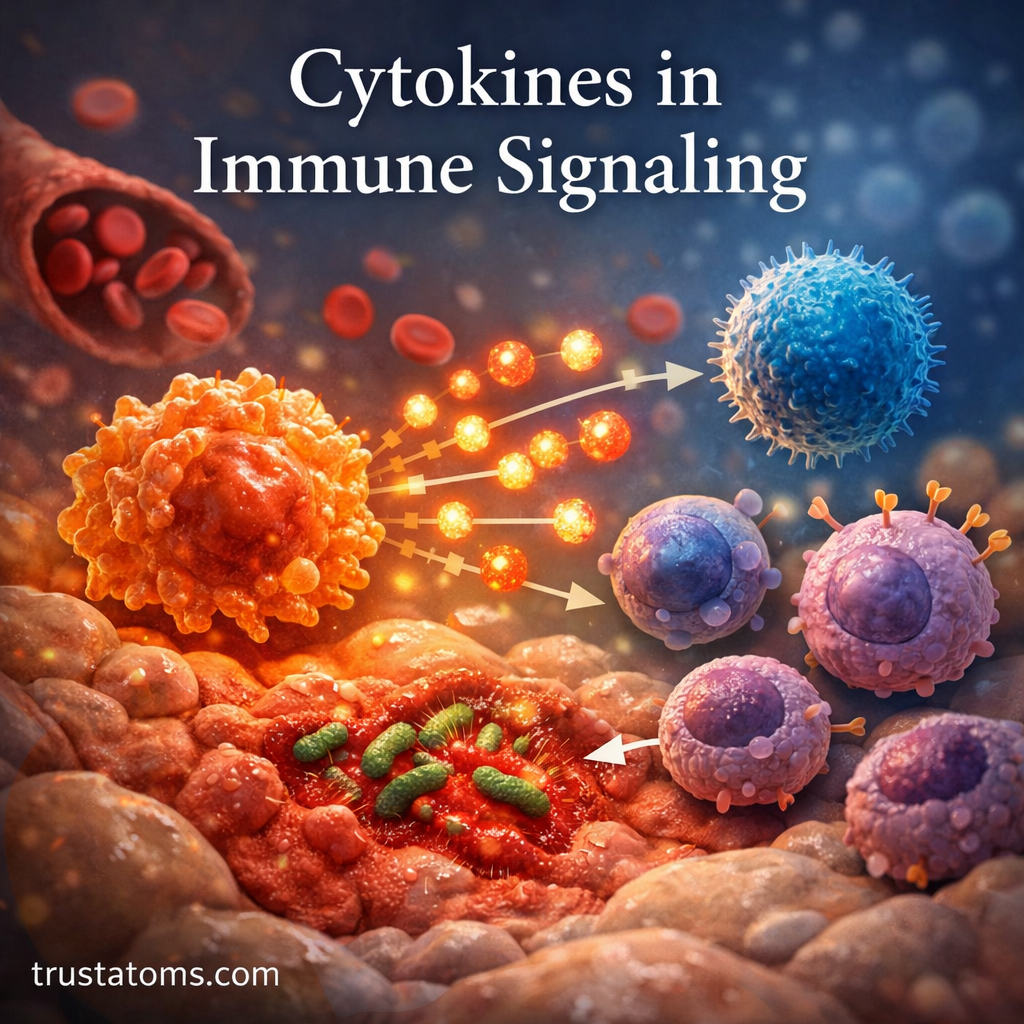
Illustration of cytokines signaling between immune cells showing communication and immune response processes.
Cytokines signaling between immune cells during an immune response. trustatoms.com.

Cytokines are small signaling proteins that play a central role in how the immune system communicates, coordinates, and responds to threats. From fighting infections to regulating inflammation, cytokines act as messengers between cells, ensuring the body reacts appropriately to internal and external challenges.

Understanding cytokines is key to grasping how immune responses work—both in maintaining health and in disease conditions like autoimmune disorders, chronic inflammation, and infections.

Continue reading “Cytokines in Immune Signaling”

Thymus Function in T Cell Maturation

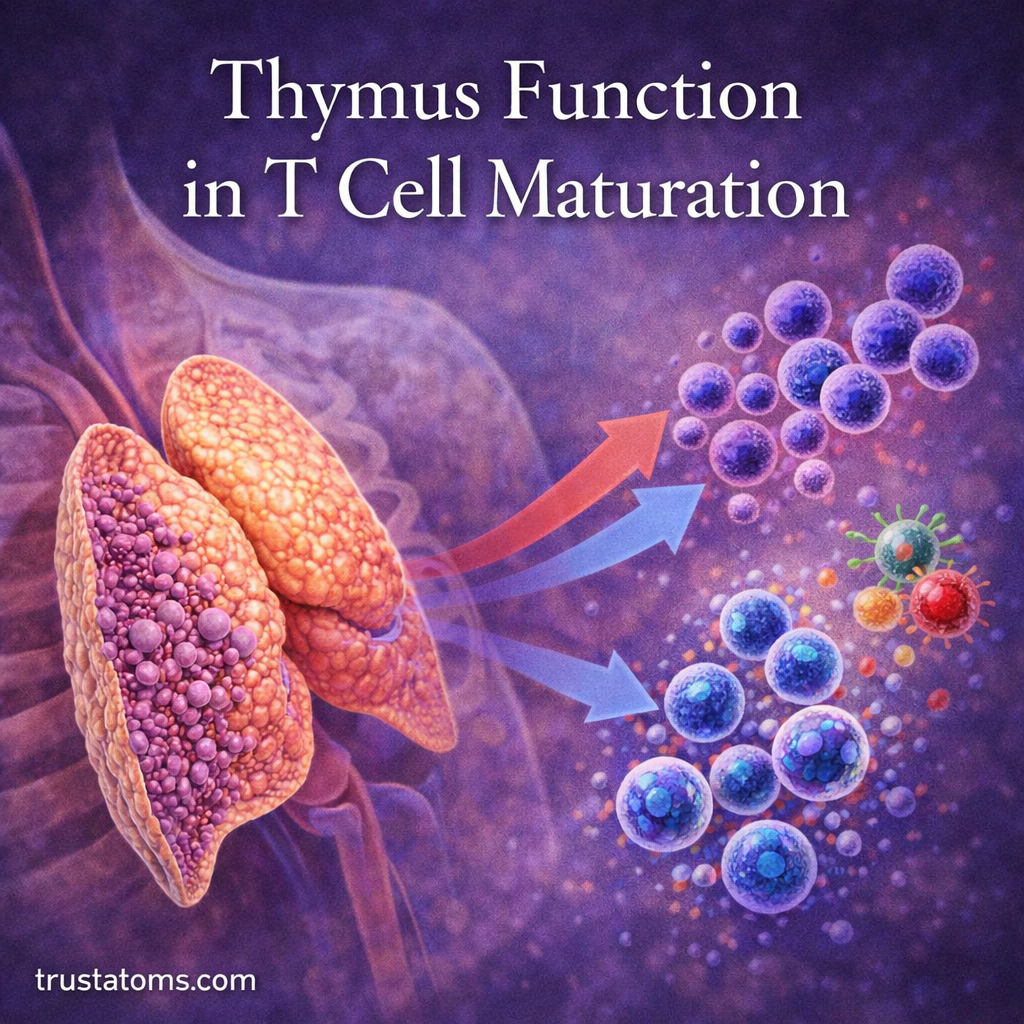
Illustration of the thymus showing T cell development and maturation into functional immune cells.
The thymus maturing T cells to support immune defense and prevent harmful immune responses. trustatoms.com.

The thymus is a specialized organ of the immune system responsible for the development and maturation of T cells. Although relatively small and often overlooked, it plays a critical role in training immune cells to recognize threats while avoiding damage to the body’s own tissues.

Located in the upper chest, just behind the sternum, the thymus is most active during childhood and early adulthood.

Continue reading “Thymus Function in T Cell Maturation”

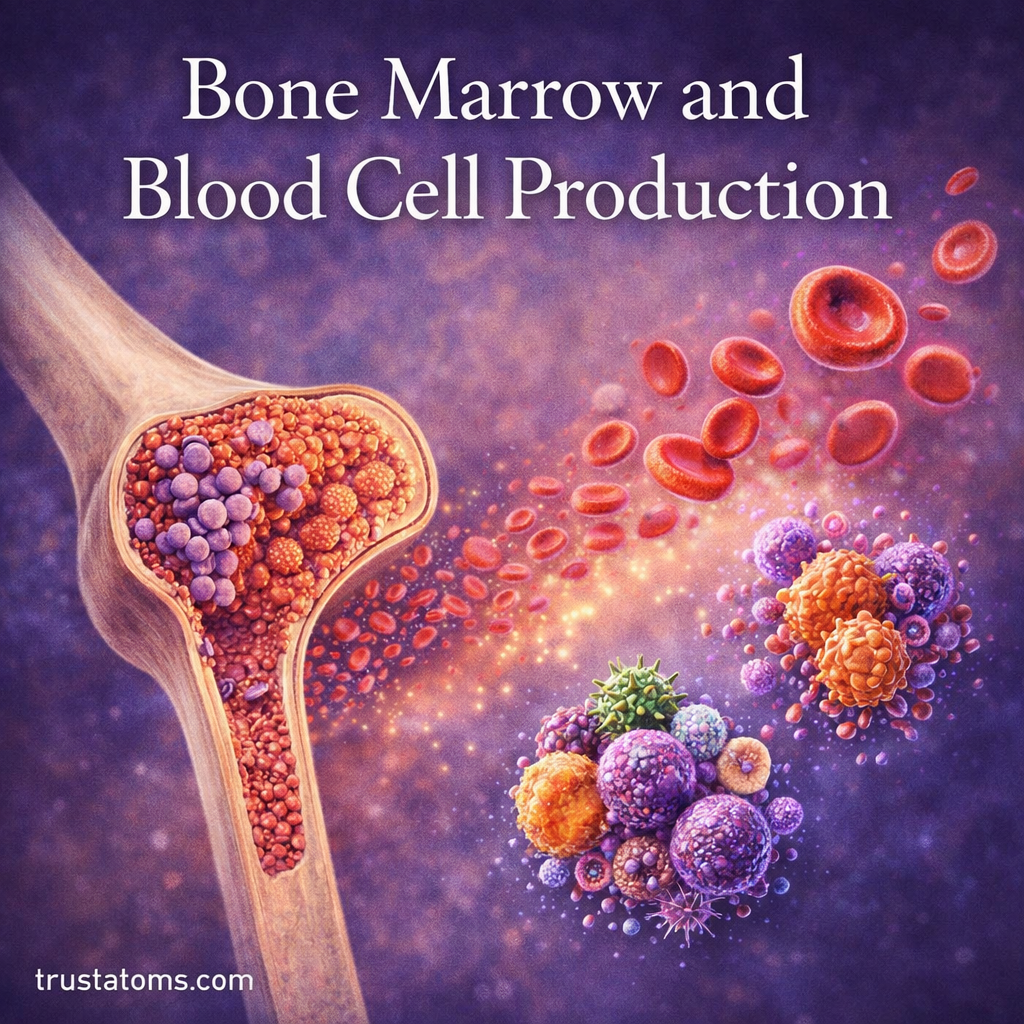
Bone Marrow and Blood Cell Production

Illustration of bone marrow inside a bone producing red blood cells, white blood cells, and platelets.
Bone marrow producing essential blood cells including red blood cells, white blood cells, and platelets. trustatoms.com.

Bone marrow is a soft, spongy tissue found inside bones that plays a critical role in producing the cells your body needs to survive. From oxygen-carrying red blood cells to infection-fighting white blood cells, bone marrow is the foundation of the circulatory and immune systems.

This process of blood cell formation is known as hematopoiesis, and it occurs continuously throughout your life.

Continue reading “Bone Marrow and Blood Cell Production”

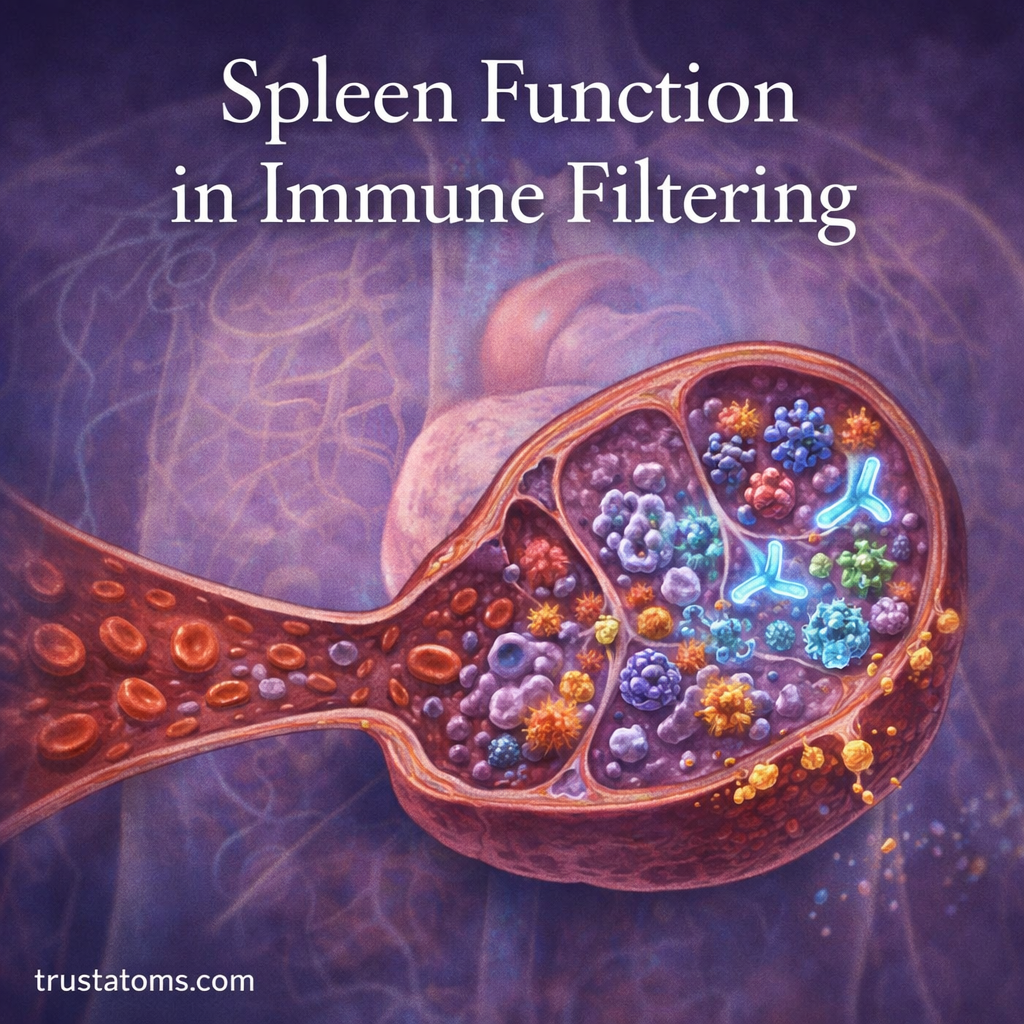
Spleen Function in Immune Filtering

Illustration of the spleen filtering blood with immune cells identifying and removing pathogens and damaged cells.
The spleen filtering blood and coordinating immune responses by removing pathogens and damaged cells. trustatoms.com.

The spleen is a vital organ that plays a dual role in the body—filtering blood and supporting immune defense. Often overlooked, it acts as a quality control center for blood cells while also helping detect and respond to infections.

Located in the upper left abdomen, the spleen works closely with the immune and circulatory systems to maintain internal balance and protect against harmful invaders.

Continue reading “Spleen Function in Immune Filtering”

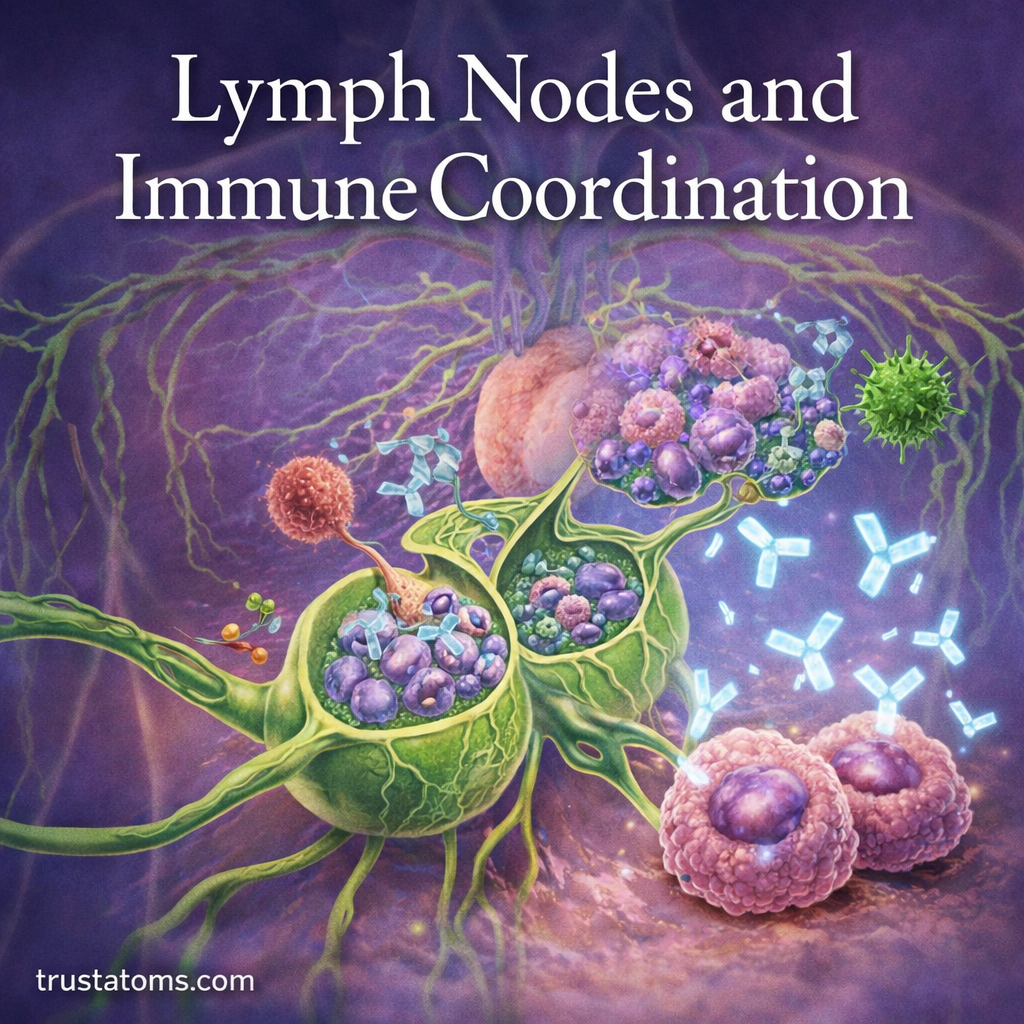
Lymph Nodes and Immune Coordination

Illustration of lymph nodes coordinating immune response with immune cells interacting and filtering pathogens.
Lymph nodes coordinating immune responses by filtering lymph and activating immune cells. trustatoms.com.

Lymph nodes are small, bean-shaped structures that play a central role in the immune system. Acting as filtration hubs and coordination centers, they help detect harmful substances, activate immune responses, and organize the body’s defense against infection.

Although often overlooked, lymph nodes are essential for connecting different parts of the immune system and ensuring a fast, targeted response to threats.

Continue reading “Lymph Nodes and Immune Coordination”

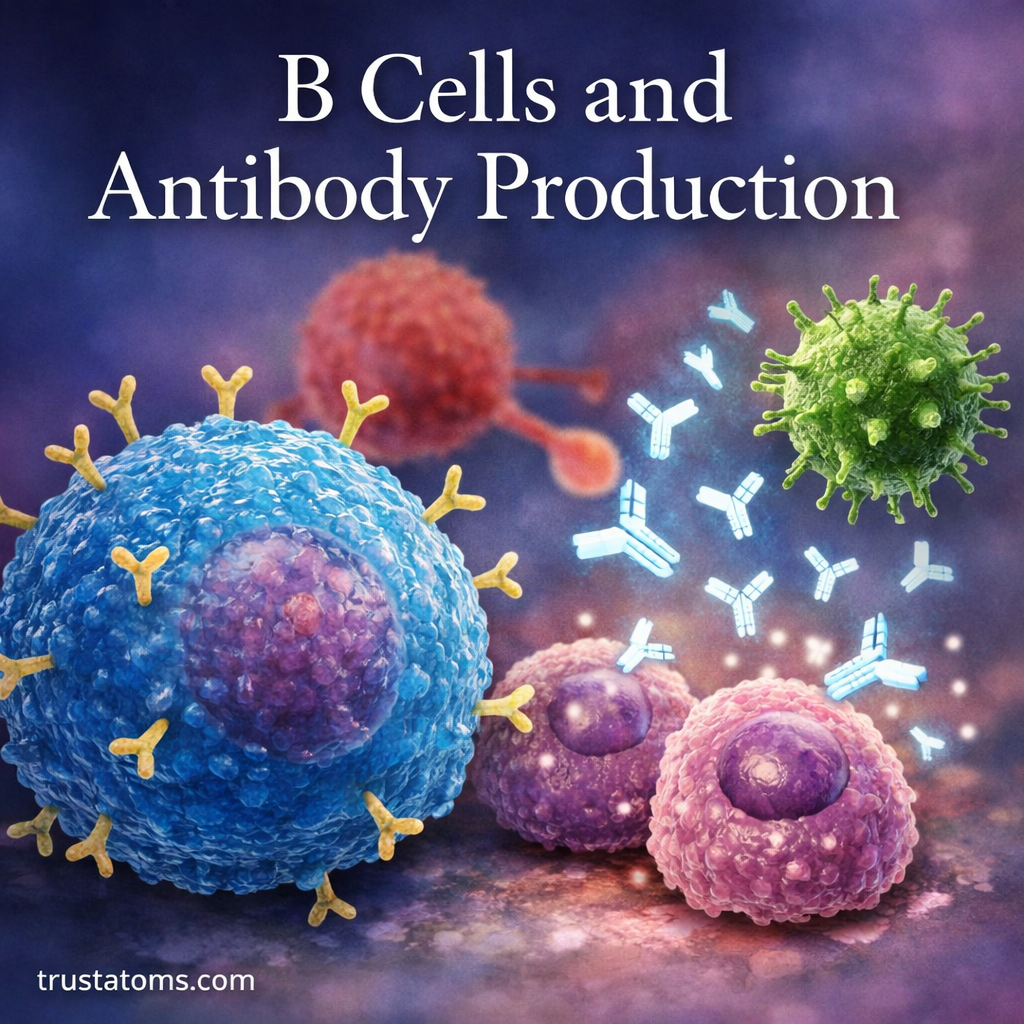
B Cells and Antibody Production

Illustration showing B cells producing antibodies to target and neutralize pathogens.
B cells producing antibodies to identify and neutralize harmful pathogens. trustatoms.com.

B cells are a vital part of the immune system, responsible for producing antibodies that identify and neutralize harmful invaders like bacteria and viruses. As a key component of adaptive immunity, B cells provide targeted, long-lasting protection that improves with repeated exposure to pathogens.

This article explains how B cells develop, how they produce antibodies, and why they are essential for immune defense.

Continue reading “B Cells and Antibody Production”

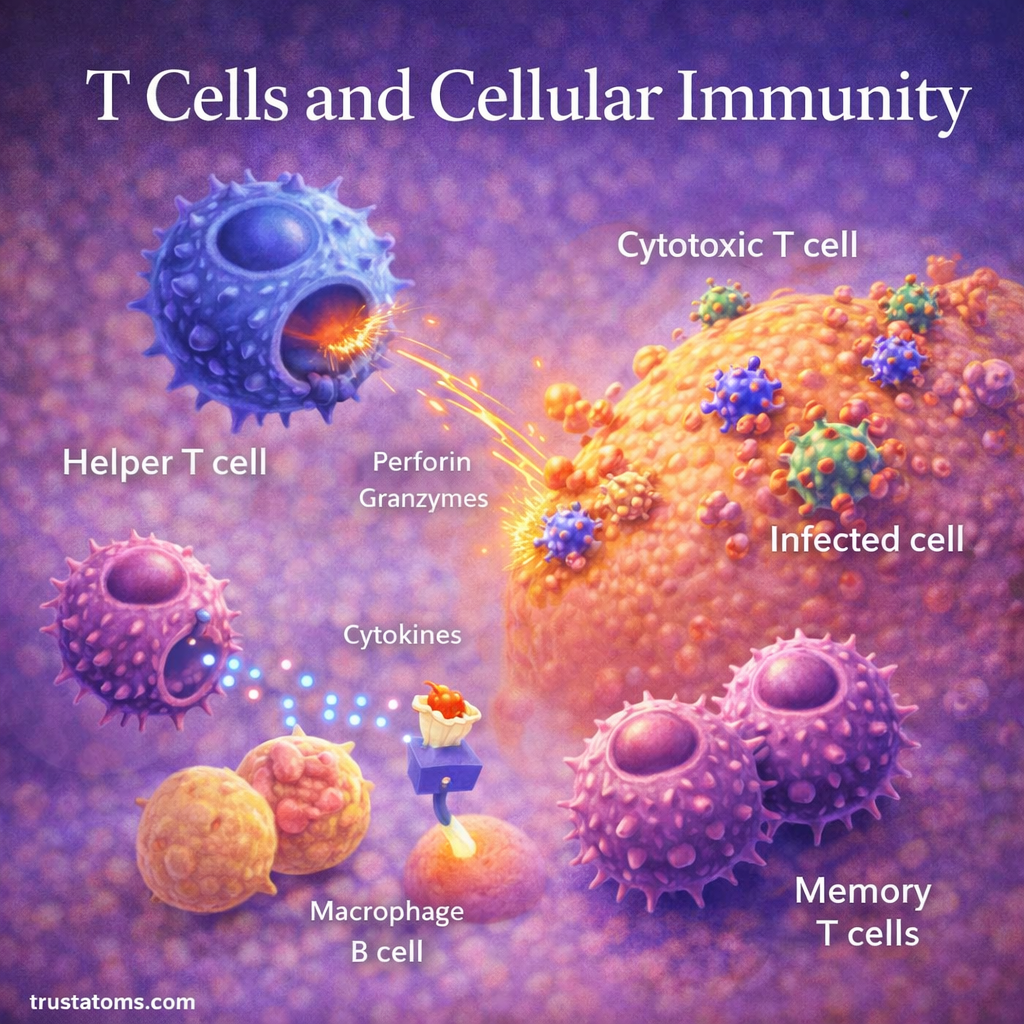
T Cells and Cellular Immunity: How Your Body Targets Infected Cells

Illustration showing T cells and cellular immunity with helper T cells, cytotoxic T cells, memory T cells, and infected cell interaction.
Diagram of T cells in cellular immunity showing how helper, cytotoxic, and memory T cells coordinate immune defense. trustatoms.com

Your immune system has multiple ways to defend against disease. While antibodies handle many threats outside cells, T cells specialize in identifying and eliminating infected or abnormal cells from within. This process is known as cellular immunity.

T cells are a central part of adaptive immunity, providing precision, coordination, and long-term protection against specific pathogens.

Continue reading “T Cells and Cellular Immunity: How Your Body Targets Infected Cells”

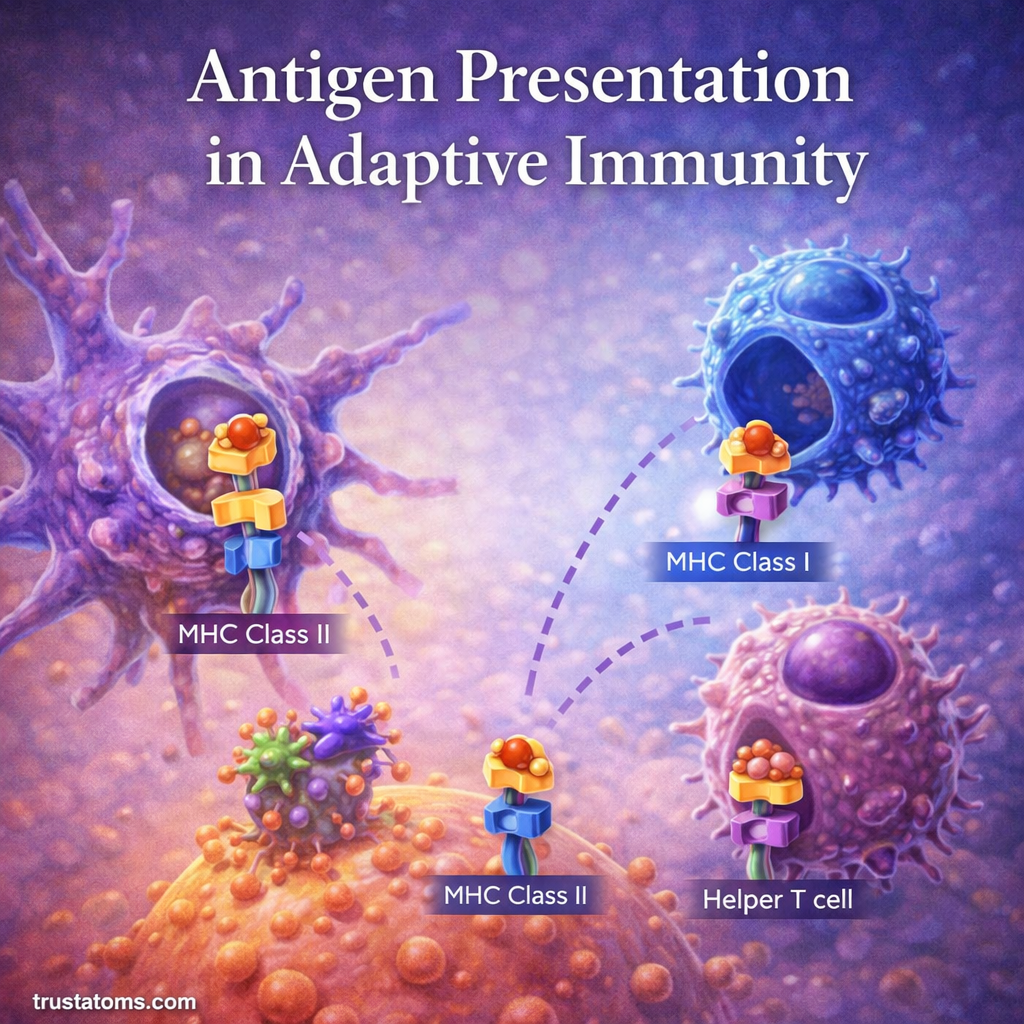
Antigen Presentation in Adaptive Immunity: How the Body Identifies Specific Threats

Illustration showing antigen presentation in adaptive immunity with antigen-presenting cell, MHC molecules, and T cell activation.
Diagram of antigen presentation showing how immune cells display antigens to activate T cells in adaptive immunity. trustatoms.com

Your immune system doesn’t just fight invaders—it learns to recognize them. A key process that makes this possible is antigen presentation, which allows the body to identify specific pathogens and activate a targeted immune response.

Antigen presentation is central to adaptive immunity, the part of the immune system that provides precision, memory, and long-term protection.

Continue reading “Antigen Presentation in Adaptive Immunity: How the Body Identifies Specific Threats”

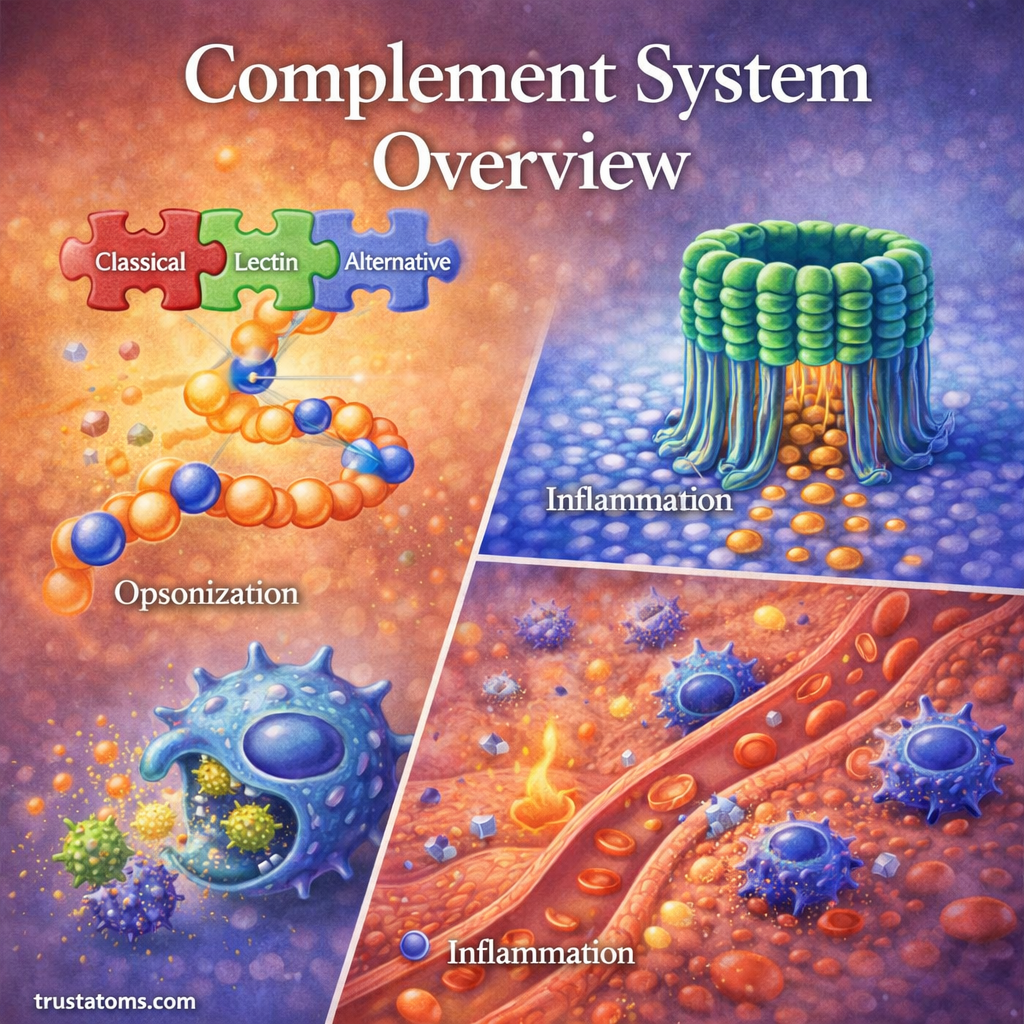
Complement System Overview: How Your Immune System Amplifies Defense

Illustration of the complement system showing activation pathways, opsonization, inflammation, and membrane attack complex.
Diagram of the complement system highlighting key functions like opsonization, inflammation, and pathogen destruction. trustatoms.com

The immune system doesn’t rely on just one line of defense—it uses layered strategies that work together. One of the most powerful and often overlooked components is the complement system.

The complement system is a group of proteins in your blood that enhances (or “complements”) the ability of immune cells to fight infections. It plays a key role in both innate immunity and adaptive immunity, helping your body detect, attack, and clear harmful invaders.

Continue reading “Complement System Overview: How Your Immune System Amplifies Defense”