Phagocytosis in Innate Immunity: How Your Body Engulfs and Destroys Invaders

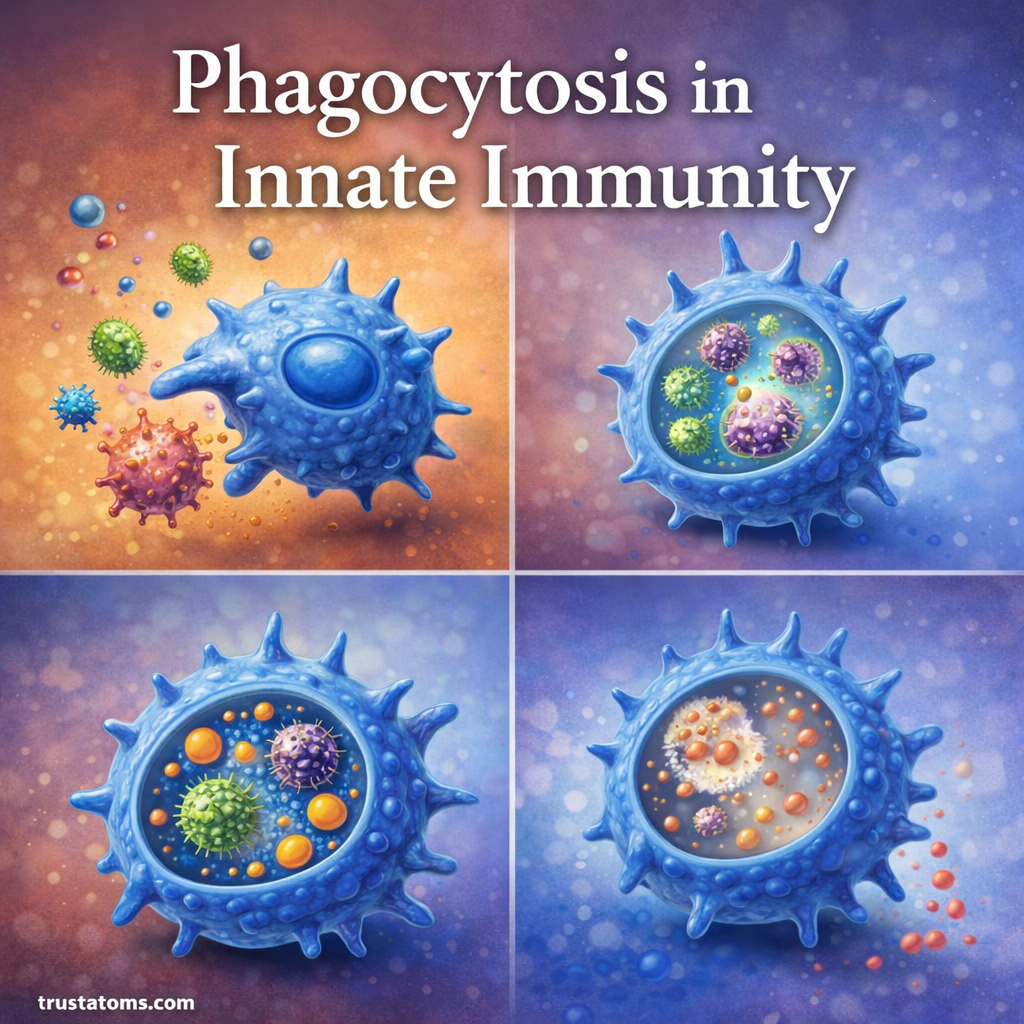
Illustration showing phagocytosis in innate immunity with immune cell engulfing and digesting pathogens in multiple stages.
Illustration of phagocytosis showing how immune cells engulf and break down harmful pathogens. trustatoms.com

Every day, your body encounters harmful bacteria, viruses, and debris. One of the most powerful ways your immune system handles these threats is through phagocytosis—a process where specialized cells literally “eat” invaders.

Phagocytosis is a core function of innate immunity, your body’s fast, non-specific defense system. It acts quickly to neutralize threats before they can spread or cause serious harm.

Continue reading “Phagocytosis in Innate Immunity: How Your Body Engulfs and Destroys Invaders”
Skin and Mucosal Immunity: How Your Body’s First Line of Defense Works

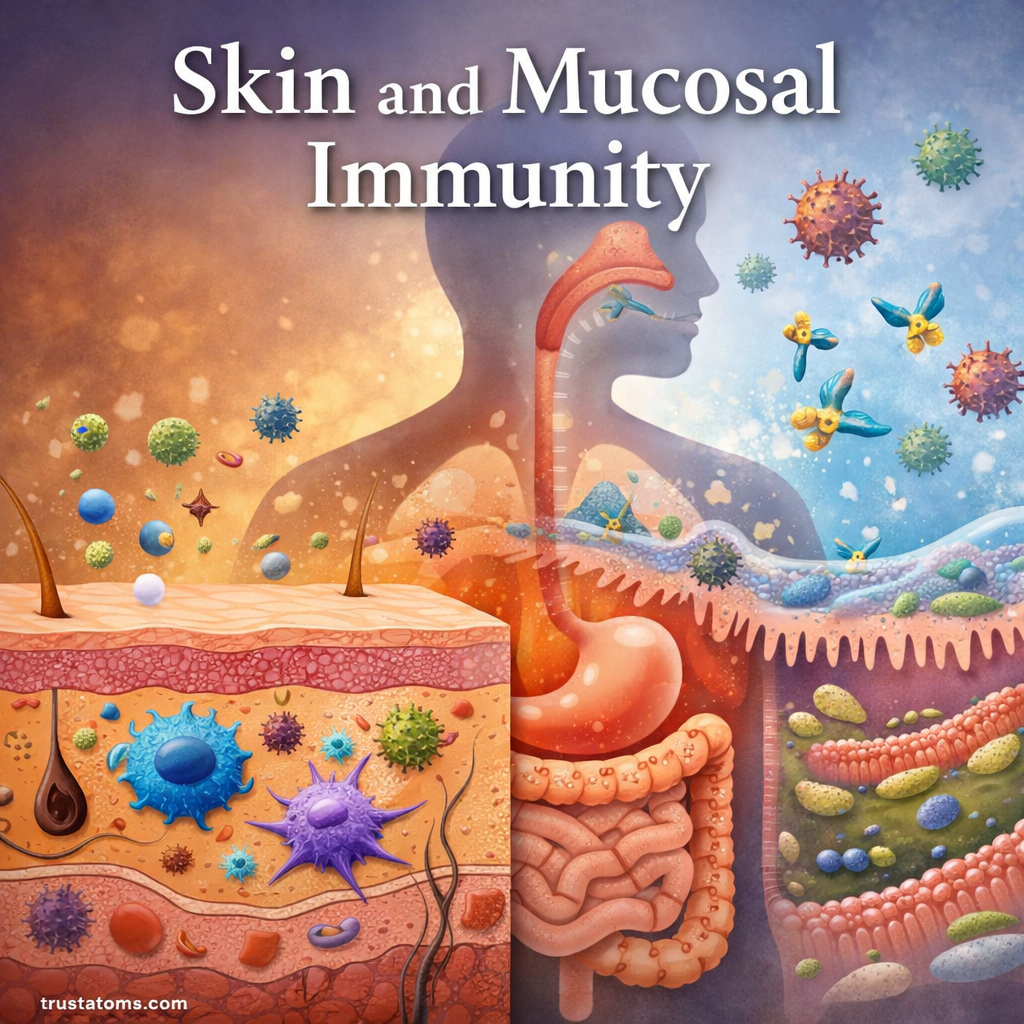
Illustration showing skin and mucosal immunity with human body silhouette, skin layers, and mucosal defenses protecting against pathogens.
Illustration of skin and mucosal immunity showing how the body’s outer barriers defend against microbes. trustatoms.com

Your body is constantly exposed to microbes, allergens, and environmental threats. The first systems that stand between you and these invaders are your skin and mucosal surfaces. Together, they form a powerful, layered defense known as skin and mucosal immunity—a critical part of your innate and adaptive immune systems.

Understanding how these barriers work can help you better protect your health and recognize how the body naturally prevents infection.

Continue reading “Skin and Mucosal Immunity: How Your Body’s First Line of Defense Works”

Physical Barriers in Immune Defense

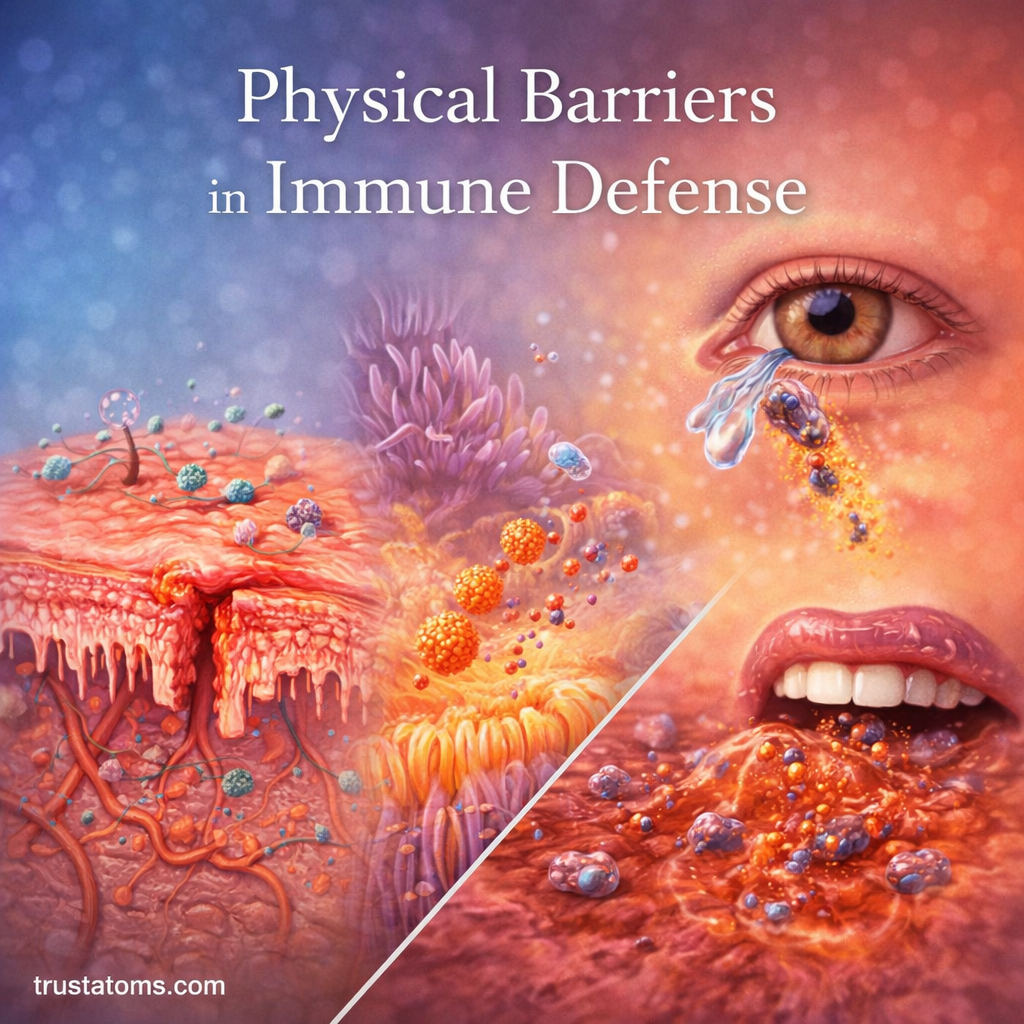
Illustration of physical barriers in immune defense including skin layers, mucus membranes, and protective secretions like tears and saliva.
Visual representation of the body’s physical barriers, including skin, mucus, and protective secretions that block pathogens. trustatoms.com

Before the immune system even needs to fight an infection, the body relies on its first line of defense: physical barriers. These structures prevent harmful pathogens—like bacteria, viruses, and fungi—from entering the body in the first place.

Physical barriers are part of the innate immune system, meaning they work automatically and immediately. They are always active, forming a constant shield between your internal environment and the outside world.

Continue reading “Physical Barriers in Immune Defense”

Inflammation as an Immune Response

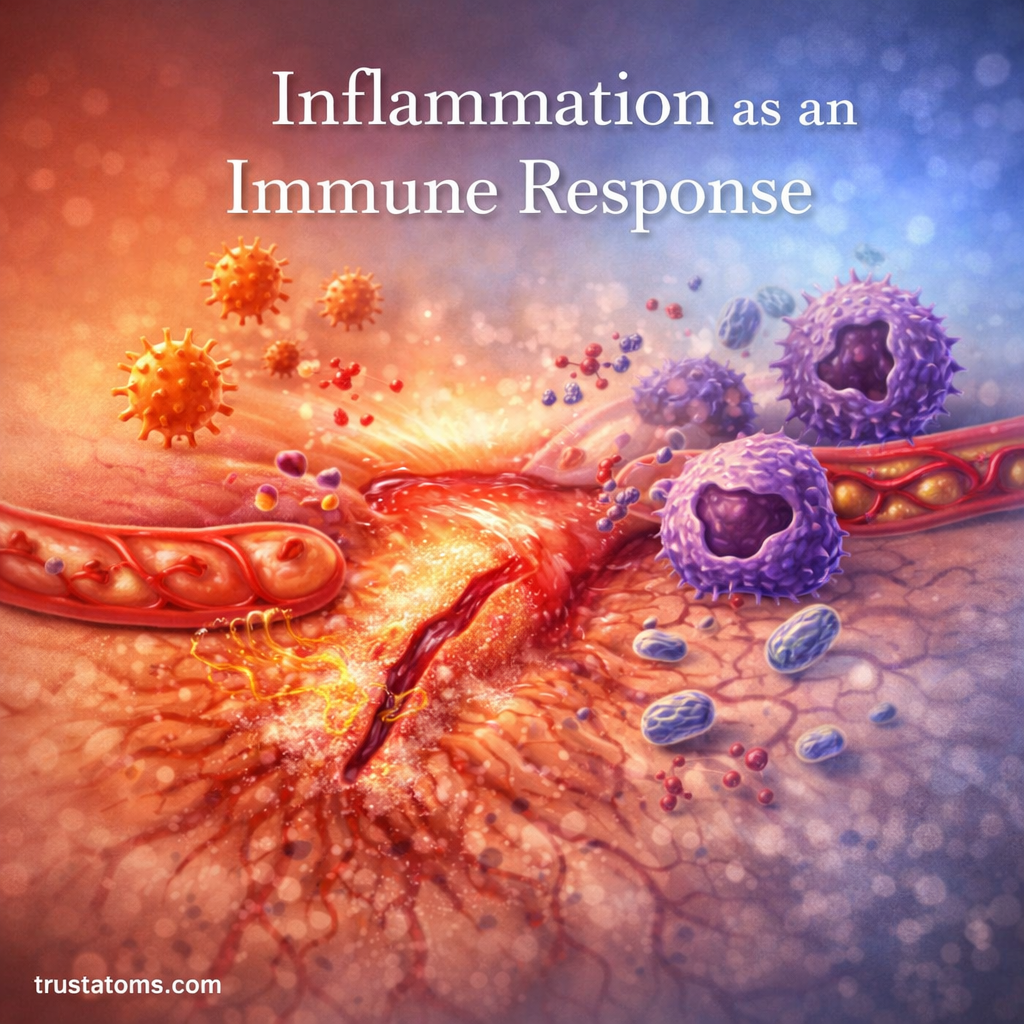
Illustration of inflammation as an immune response showing swollen tissue, immune cells, and increased blood flow at an injury site.
Visual representation of inflammation as the body’s immediate immune response to injury or infection. trustatoms.com

Inflammation is one of the body’s most important defense mechanisms. When you get a cut, infection, or injury, your immune system responds quickly—and inflammation is the first visible sign that your body is working to heal and protect itself.

Although often associated with pain or discomfort, inflammation is a natural and necessary part of the immune response. Understanding how it works helps explain both healing and disease.

Continue reading “Inflammation as an Immune Response”

Immune Memory and Long-Term Protection

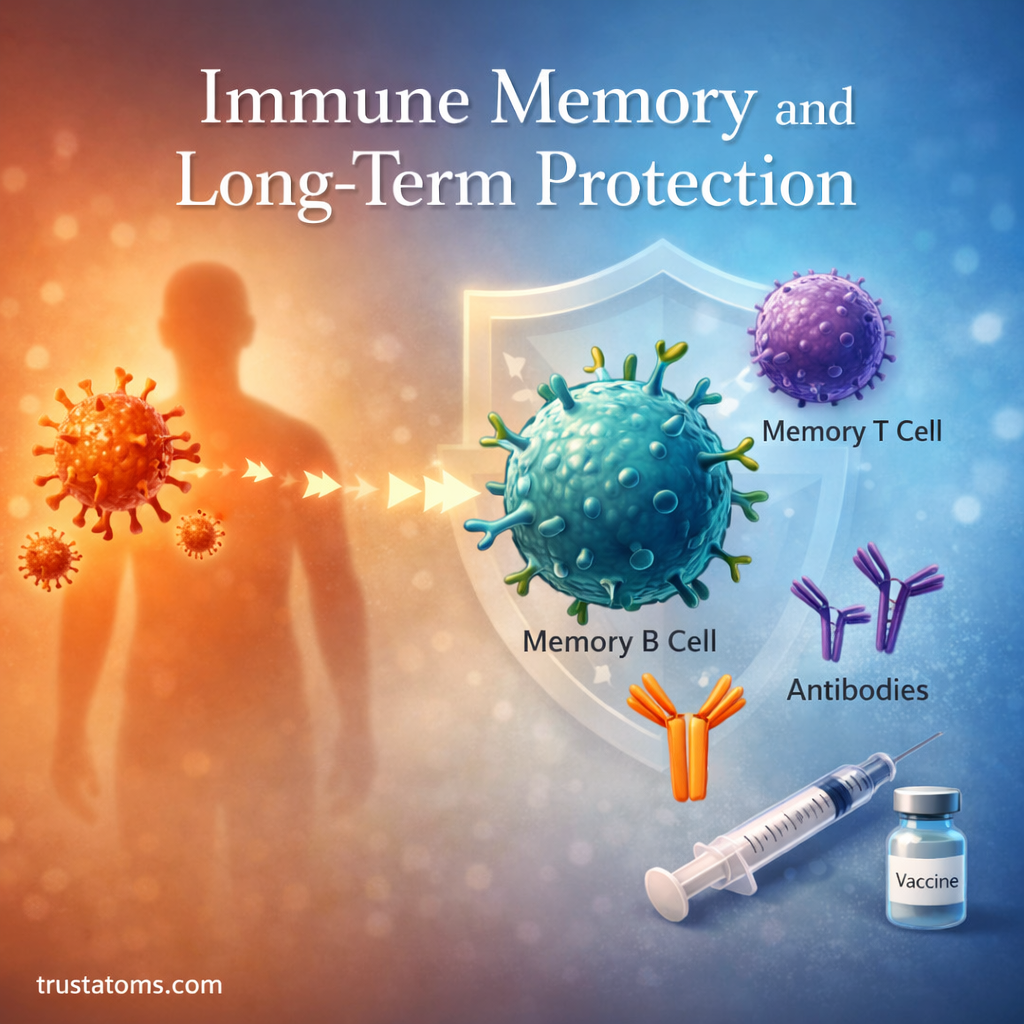
Illustration showing immune memory and long-term protection with antibodies, memory cells, and vaccine concept.
Illustration of how immune memory helps the body build long-term protection against infections. trustatoms.com

The human immune system does more than just fight off infections—it remembers them. This ability, known as immune memory, allows your body to respond faster and more effectively when it encounters the same pathogen again. It’s the reason why most people don’t get sick from the same virus repeatedly and why vaccines provide long-term protection.

Understanding how immune memory works is key to understanding immunity, disease prevention, and overall health.

Continue reading “Immune Memory and Long-Term Protection”

Antibodies and Their Functions

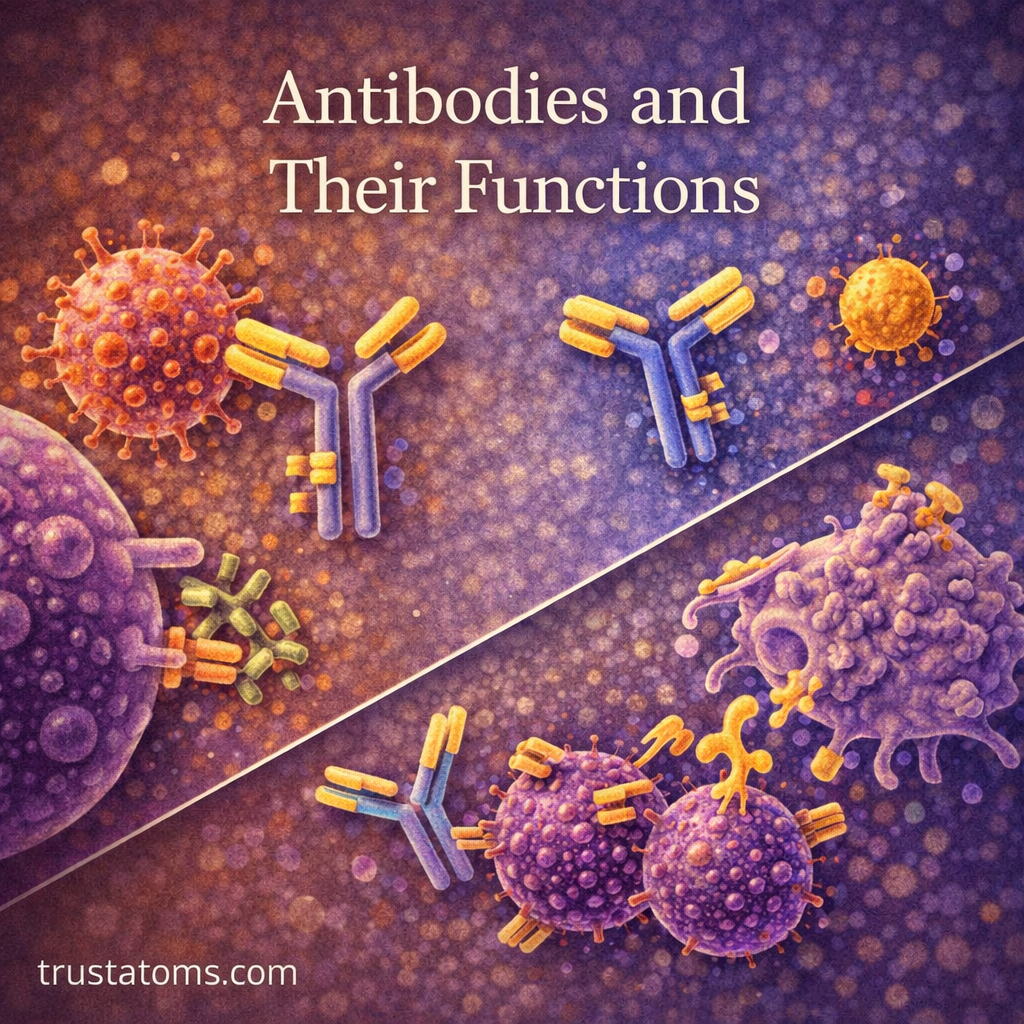
Illustration showing antibodies binding to viruses and bacteria, demonstrating immune system functions like neutralization and tagging.
Diagram showing how antibodies recognize and bind to pathogens to help neutralize and eliminate infections. trustatoms.com.

Antibodies are one of the most important tools your immune system uses to fight infections. These specialized proteins identify harmful invaders, bind to them, and help neutralize or destroy them.

They play a central role in protecting the body from disease and are key to how immunity—and vaccines—work.

Continue reading “Antibodies and Their Functions”

Antigens and Immune Recognition

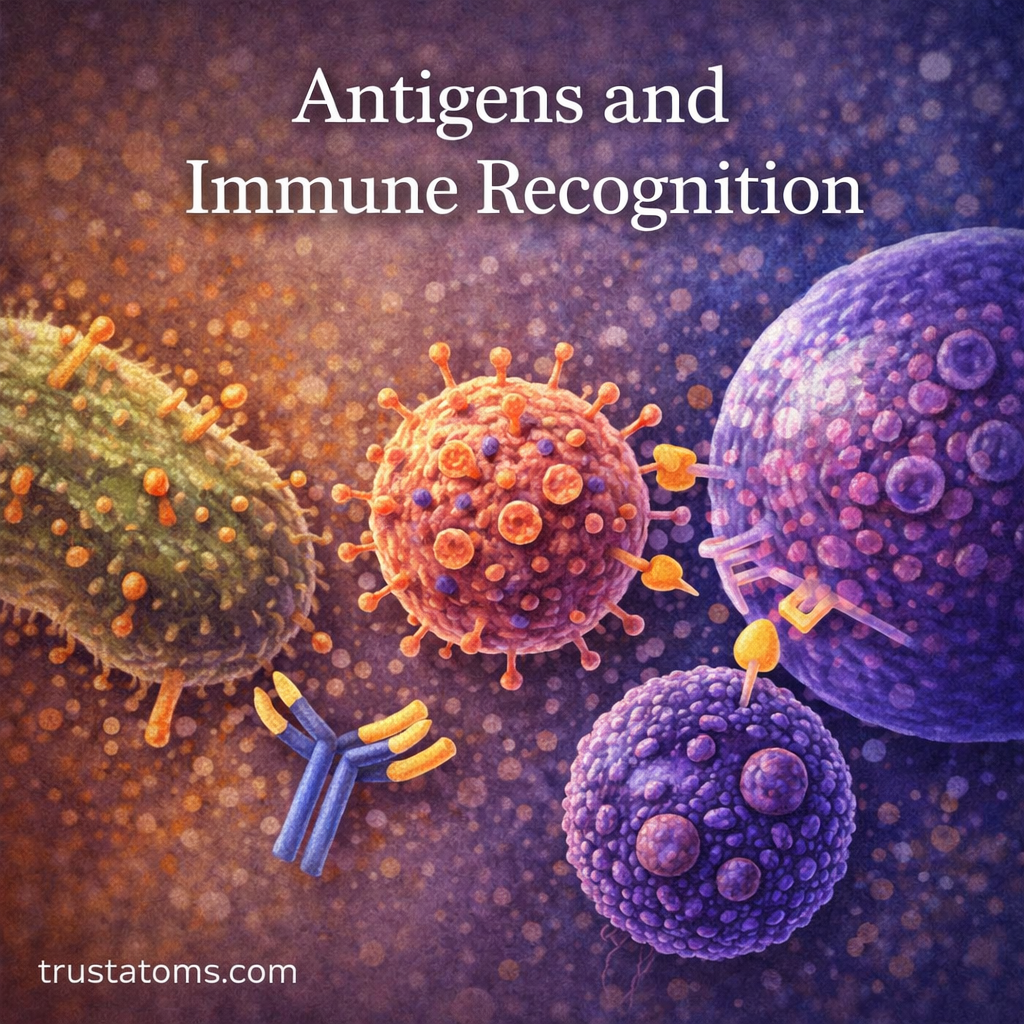
Illustration showing antigens on bacteria and viruses with antibodies and immune cells recognizing and binding to them.
Diagram showing how the immune system recognizes antigens on pathogens and triggers a defense response. trustatoms.com.

The immune system’s ability to protect the body depends on one critical function: recognizing what belongs and what doesn’t. This is where antigens come in.

Antigens are the molecular “identifiers” that allow the immune system to detect harmful invaders and trigger a defense response. Without this recognition process, the body would not be able to distinguish between safe cells and dangerous threats.

Continue reading “Antigens and Immune Recognition”

White Blood Cells and Immune Defense

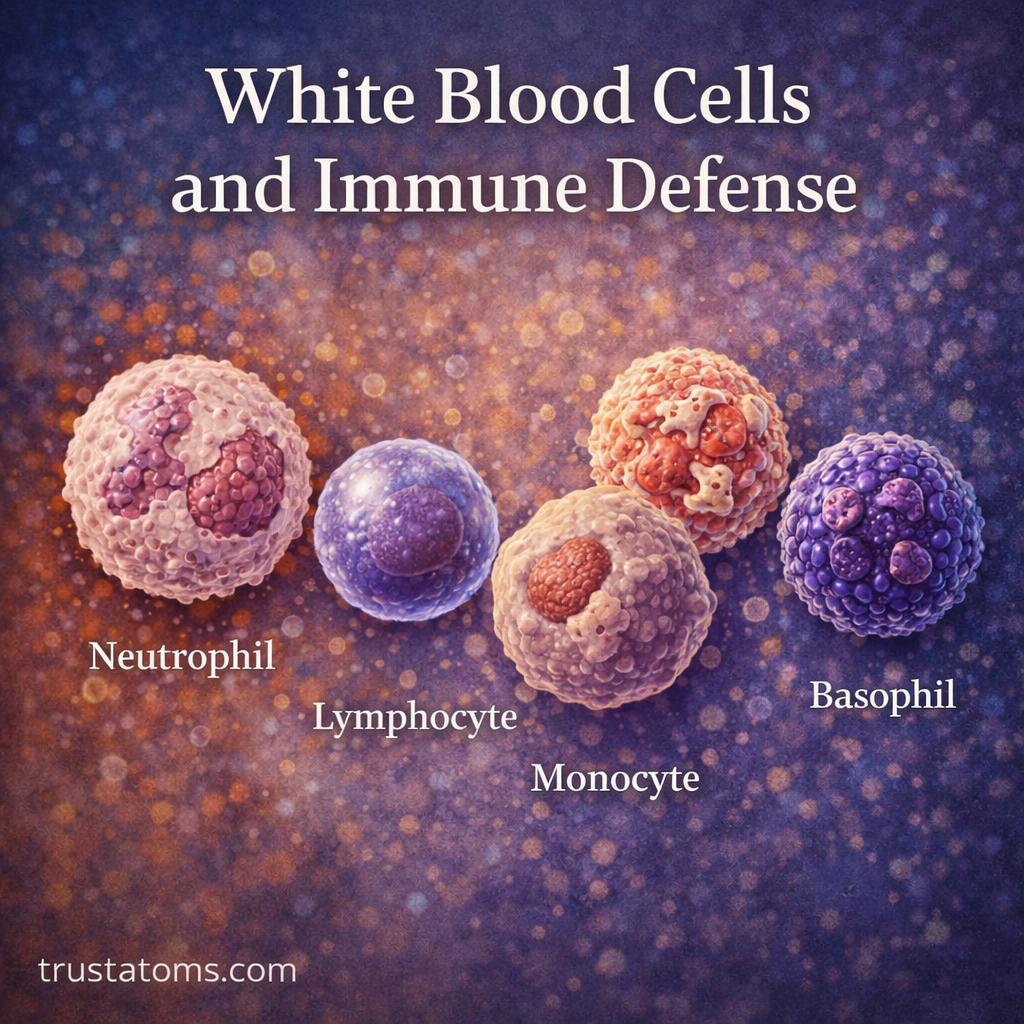
Illustration showing different types of white blood cells including neutrophils, lymphocytes, monocytes, and basophils.
Overview of white blood cells and their role in immune defense against infections. trustatoms.com.

White blood cells, also known as leukocytes, are essential components of the immune system. They act as the body’s defense force, constantly patrolling for harmful invaders such as bacteria, viruses, parasites, and abnormal cells.

Without white blood cells, the body would be unable to fight infections or recover from illness effectively.

Continue reading “White Blood Cells and Immune Defense”

Immune Cells: Key Types and Functions

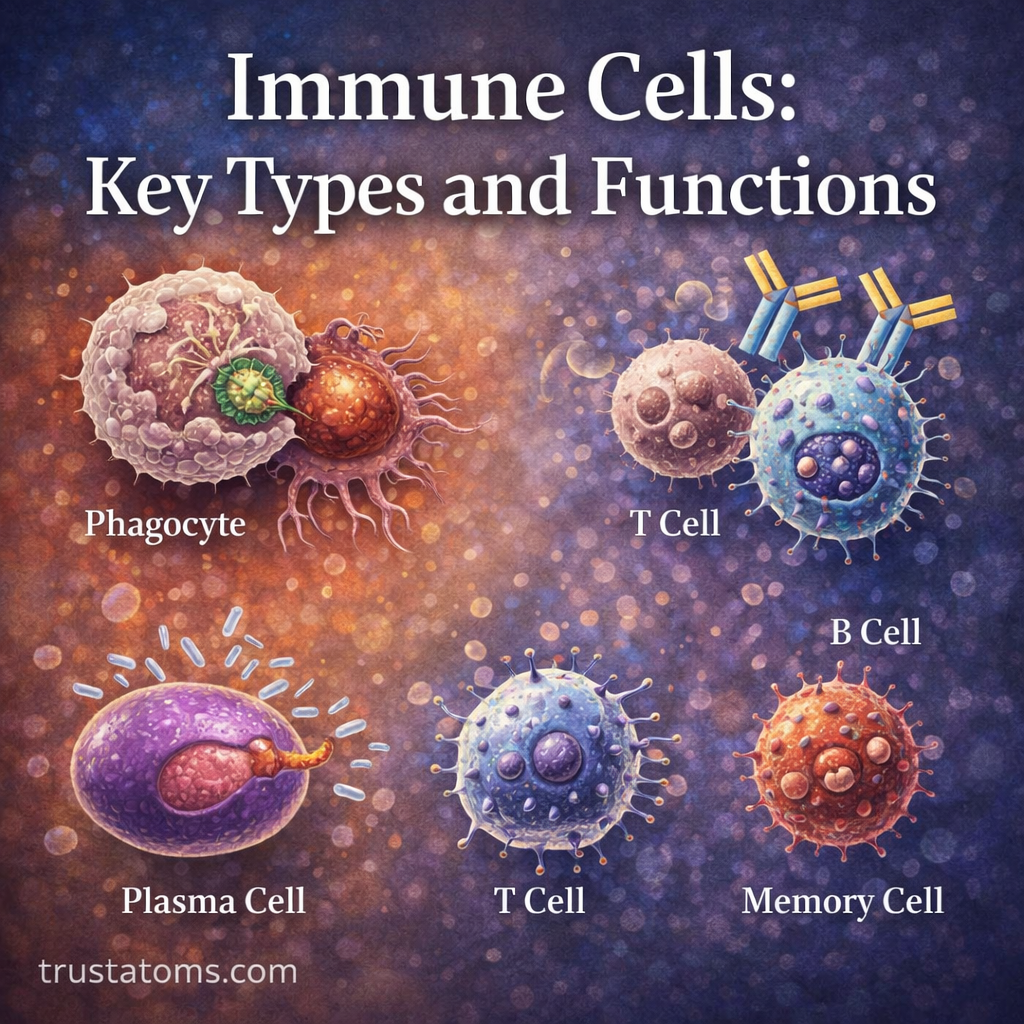
Illustration showing different immune cell types including phagocytes, T cells, B cells, plasma cells, and memory cells.
Overview of key immune cell types and their roles in protecting the body from infections. trustatoms.com.

Immune cells are the body’s frontline defenders, constantly working to detect, attack, and eliminate harmful invaders like bacteria, viruses, and abnormal cells. These cells are part of a highly coordinated system that keeps you healthy and protects against disease.

Each type of immune cell has a specific role, and together they form a powerful defense network that adapts and improves over time.

Continue reading “Immune Cells: Key Types and Functions”

Innate vs Adaptive Immunity

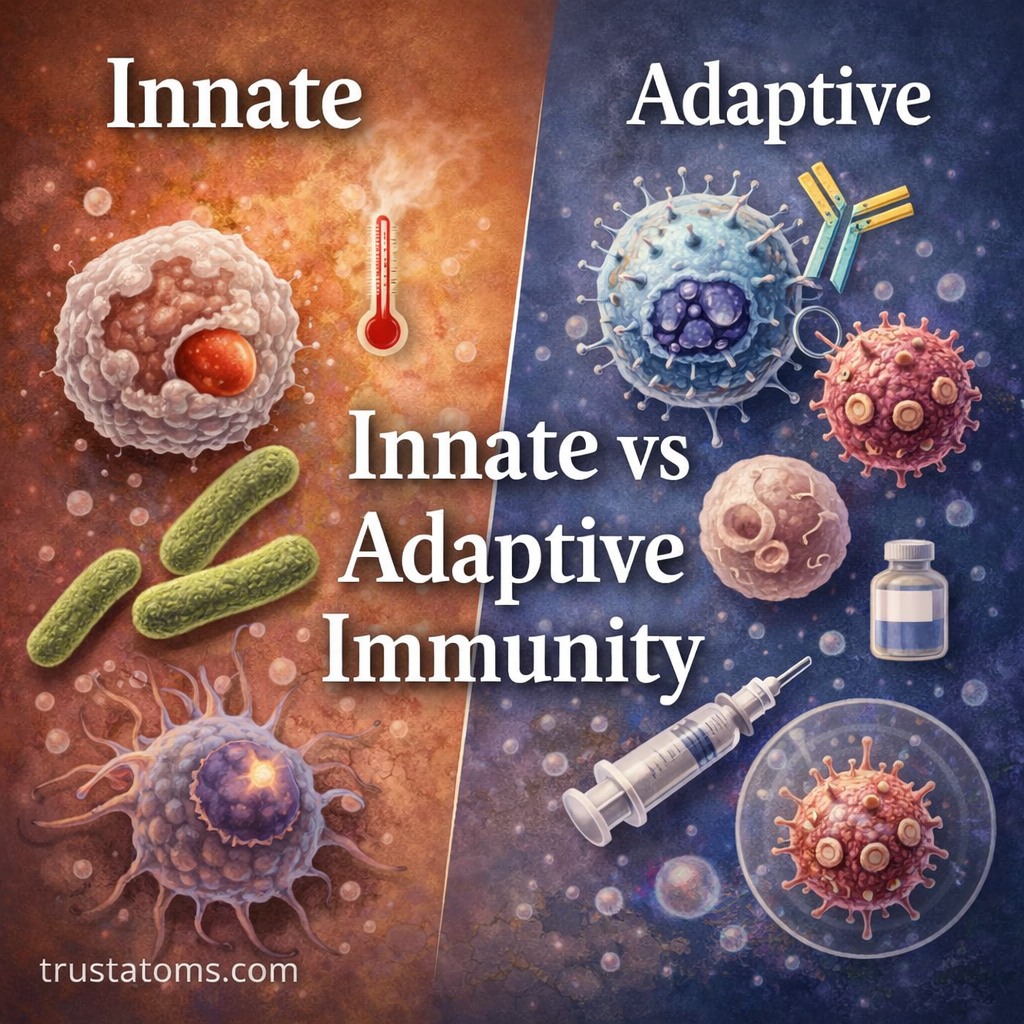
Illustration comparing innate and adaptive immunity with immune cells, bacteria, antibodies, and a split visual layout.
Visual comparison of innate and adaptive immunity showing immediate and targeted immune responses. trustatoms.com.

The human immune system protects the body using two powerful and complementary defense strategies: innate immunity and adaptive immunity. While both work toward the same goal—defending against harmful invaders—they operate in very different ways.

Understanding how these two systems differ (and work together) helps explain how your body fights infections, responds to vaccines, and builds long-term protection.

Continue reading “Innate vs Adaptive Immunity”