Surfactant Function in Alveolar Stability

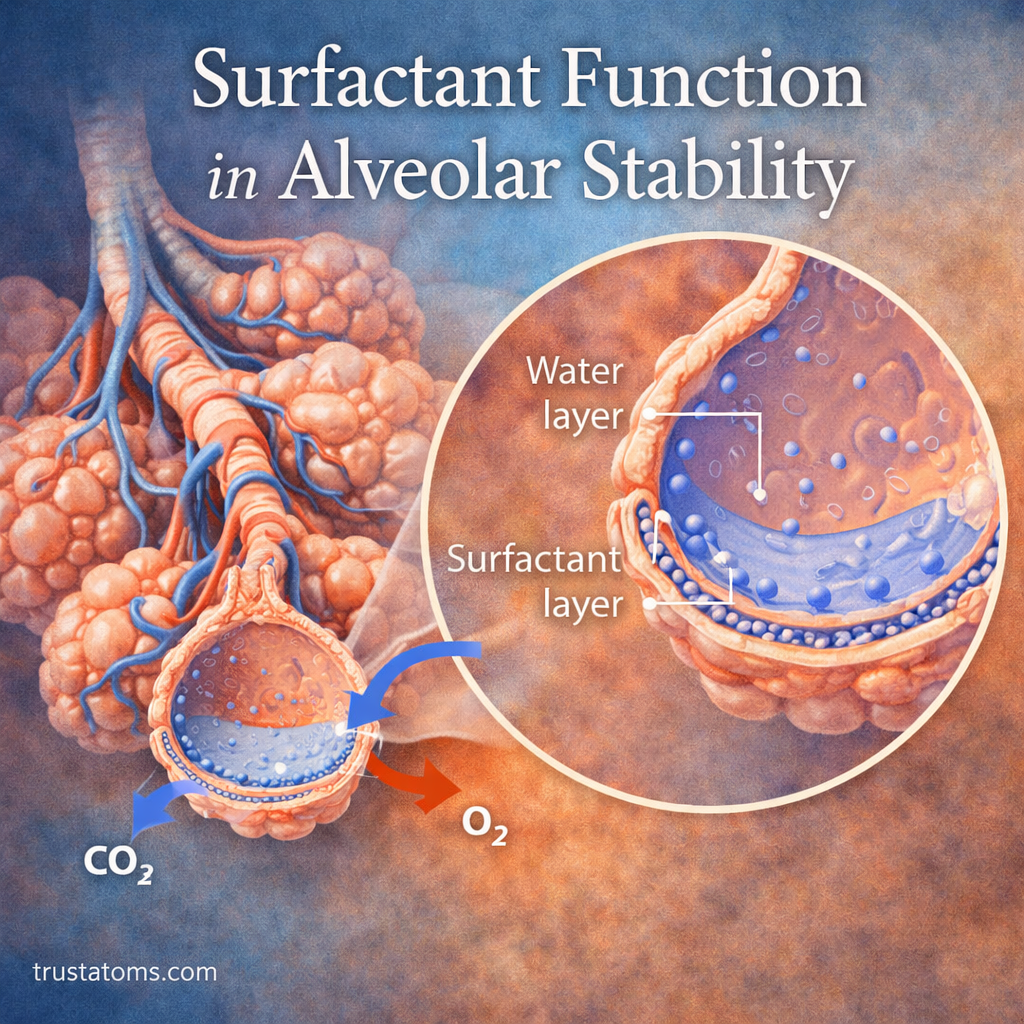
Illustration of surfactant function in alveoli showing reduced surface tension and stabilized air sacs in the lungs.
Close-up of alveoli demonstrating how surfactant reduces surface tension to keep air sacs open and stable. trustatoms.com.

Surfactant is a specialized substance in the lungs that plays a critical role in keeping the alveoli stable and functional. Without it, breathing would require significantly more effort, and the tiny air sacs responsible for gas exchange could collapse.

Understanding how surfactant works provides key insight into respiratory efficiency, lung development, and conditions that affect breathing.

Continue reading “Surfactant Function in Alveolar Stability”
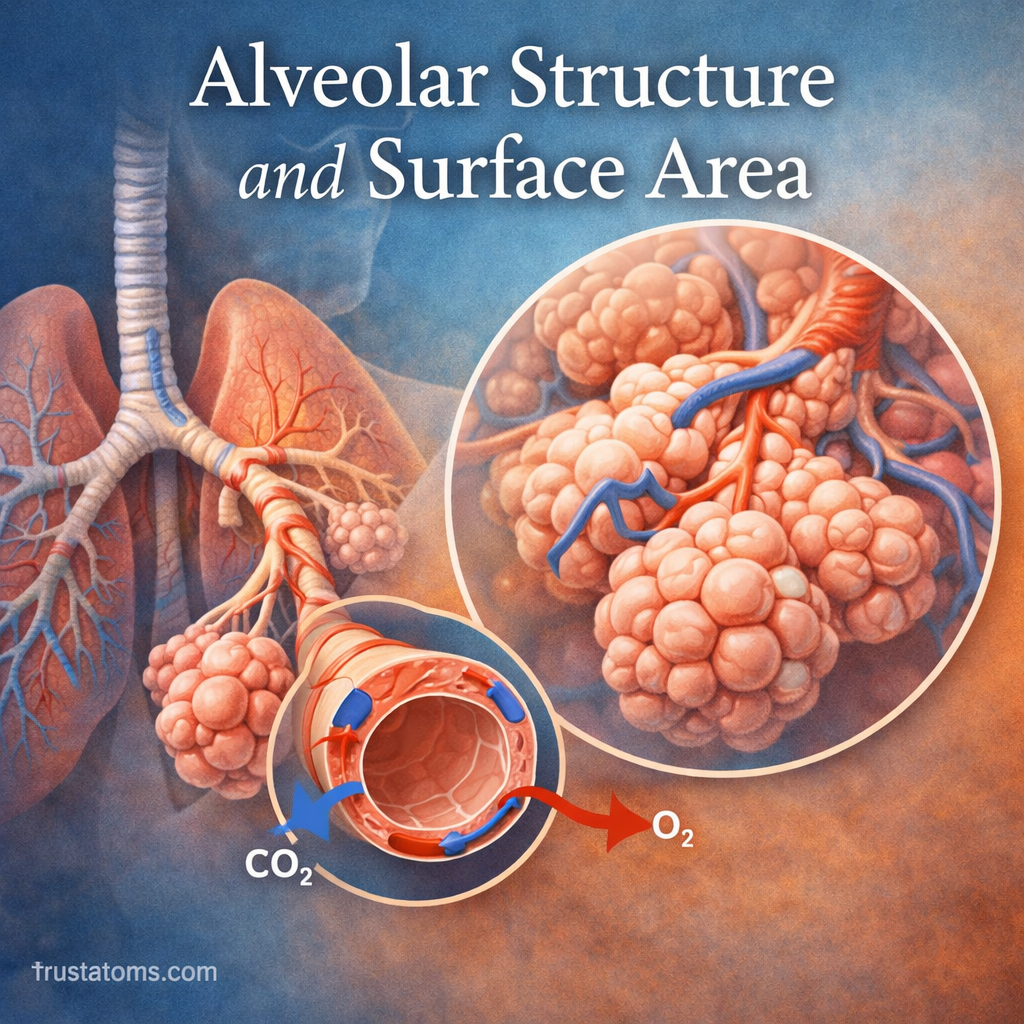
Alveolar Structure and Surface Area

Illustration of alveoli structure and surface area showing air sacs and surrounding capillaries in the lungs.
Detailed view of alveoli highlighting their structure and large surface area for efficient gas exchange. trustatoms.com.

Alveoli are tiny air sacs in the lungs where oxygen and carbon dioxide are exchanged between the air and the bloodstream. Although each alveolus is microscopic, their combined structure creates a massive surface area that is essential for efficient respiration.

Understanding alveolar structure and surface area helps explain how the lungs meet the body’s oxygen demands—and why even small damage to this system can have major consequences.

Continue reading “Alveolar Structure and Surface Area”

Bronchioles and Airway Resistance

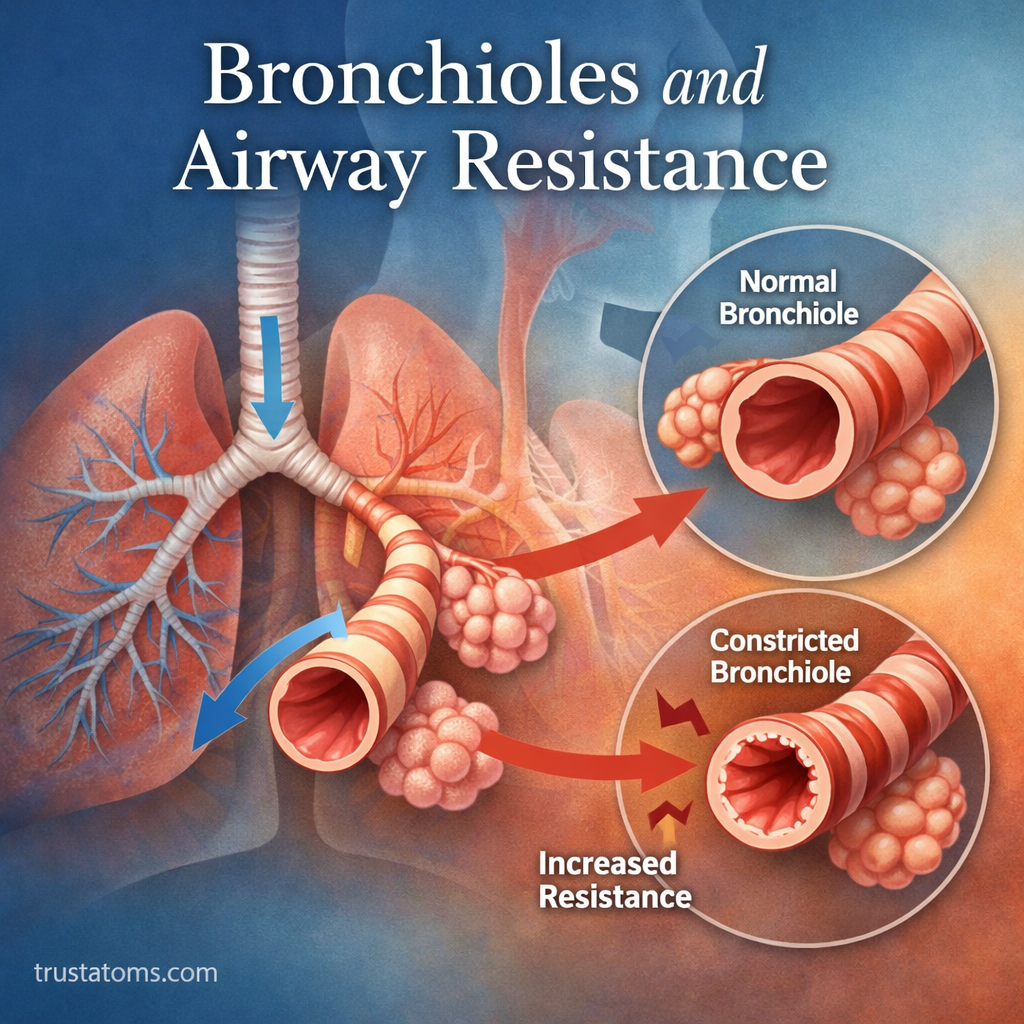
Illustration showing bronchioles and airway resistance with normal and constricted airways in the lungs.
Simple diagram of bronchioles demonstrating how airway narrowing increases resistance in the lungs. trustatoms.com.

Bronchioles are the smallest airways in the respiratory system, playing a critical role in regulating airflow to the lungs. While they are tiny compared to the trachea and bronchi, their structure and function have a major impact on airway resistance and overall breathing efficiency.

Understanding how bronchioles influence airflow helps explain normal respiration, exercise performance, and common respiratory conditions such as asthma.

Continue reading “Bronchioles and Airway Resistance”

Trachea and Bronchi in Airflow Distribution

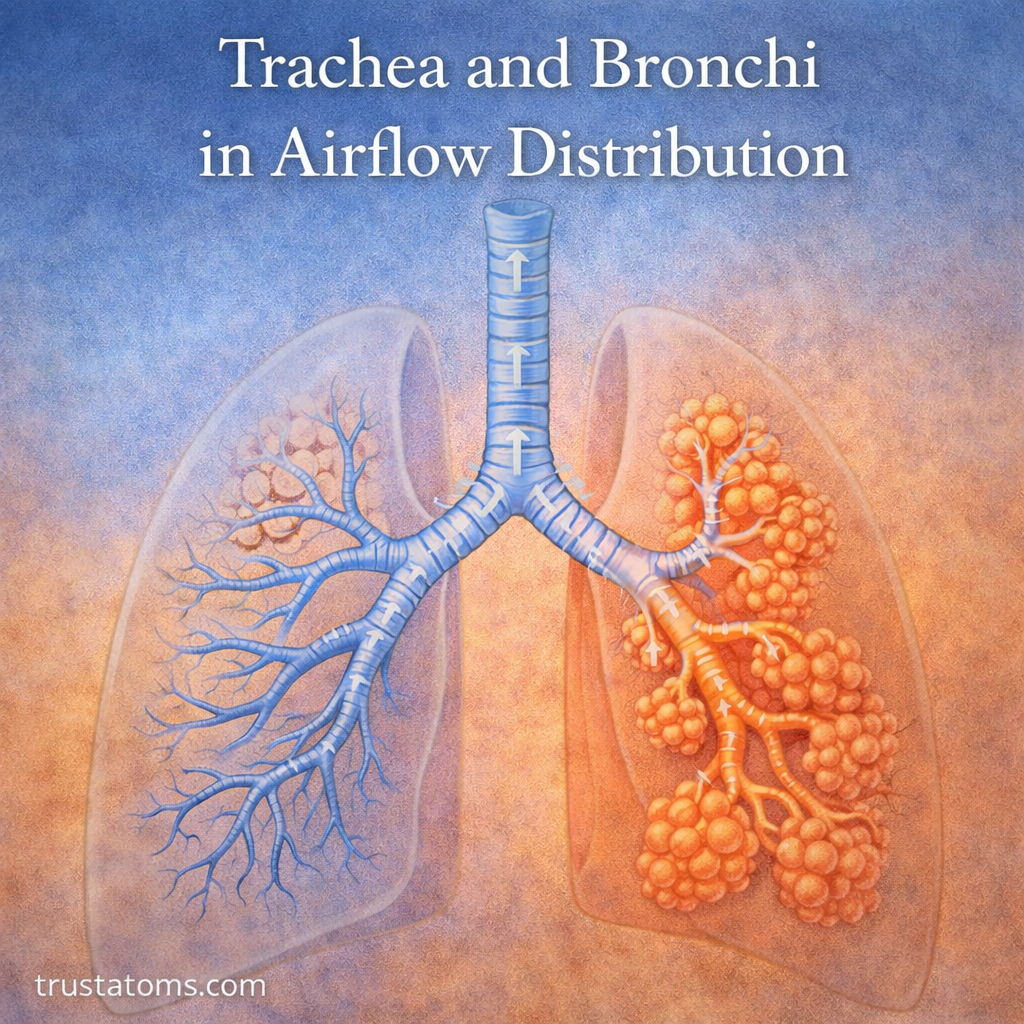
Diagram showing airflow moving through the trachea into branching bronchi and lungs.
Air flows through the trachea and bronchi, distributing oxygen throughout the lungs. trustatoms.com.

The trachea and bronchi play a central role in directing air from the upper respiratory tract into the lungs. These structures act as a branching airway system, ensuring that inhaled air is efficiently distributed to every part of the lungs.

Understanding how airflow moves through the trachea and bronchi provides insight into how the respiratory system supports breathing, oxygen delivery, and overall lung function.

Continue reading “Trachea and Bronchi in Airflow Distribution”

Upper vs Lower Respiratory Tract

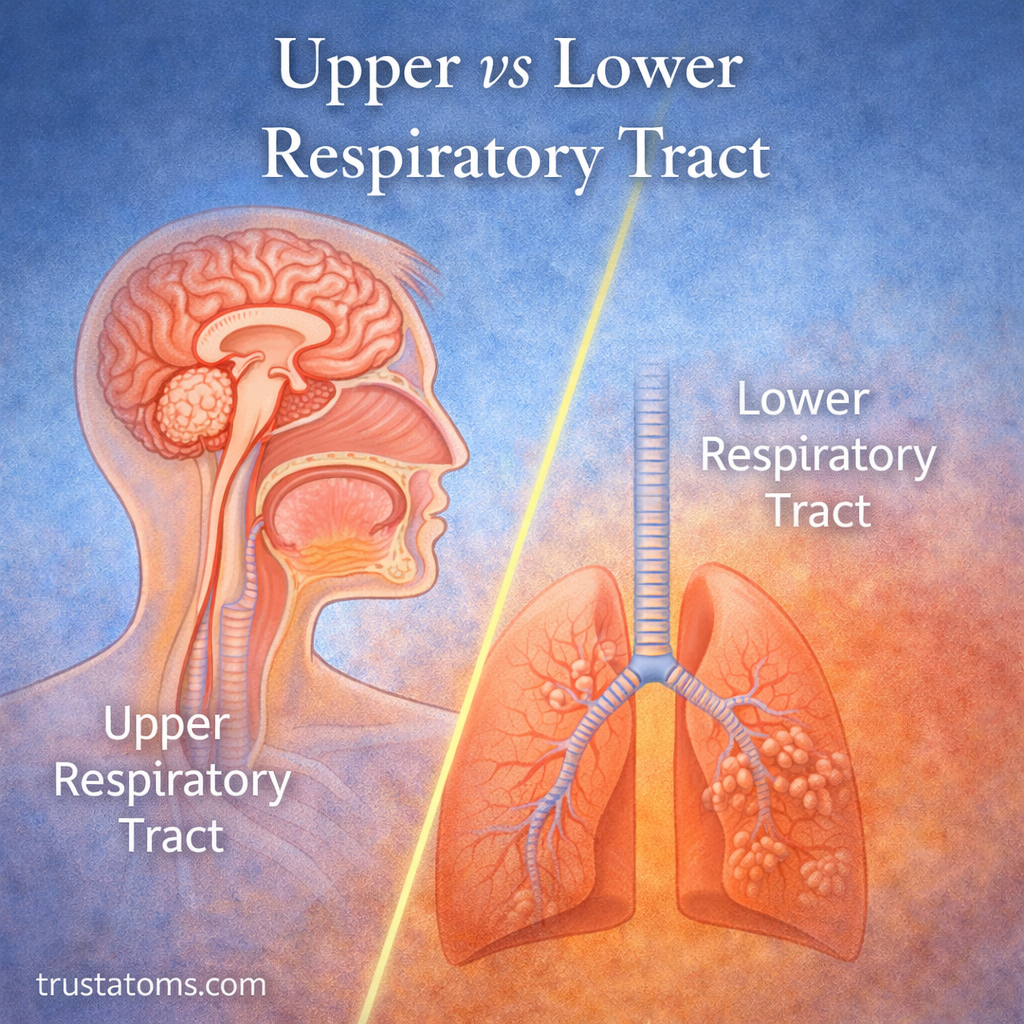
Diagram comparing the upper and lower respiratory tract including nasal passages, throat, trachea, and lungs.
The respiratory system is divided into upper and lower tracts, each with distinct roles in breathing and protection. trustatoms.com.

The respiratory system is divided into two main sections: the upper respiratory tract and the lower respiratory tract. Together, these structures work to move air in and out of the body, filter harmful particles, and enable gas exchange.

Understanding the differences between these two regions helps clarify how breathing works and how various respiratory conditions develop.

Continue reading “Upper vs Lower Respiratory Tract”

Respiratory Rate and Ventilation Control

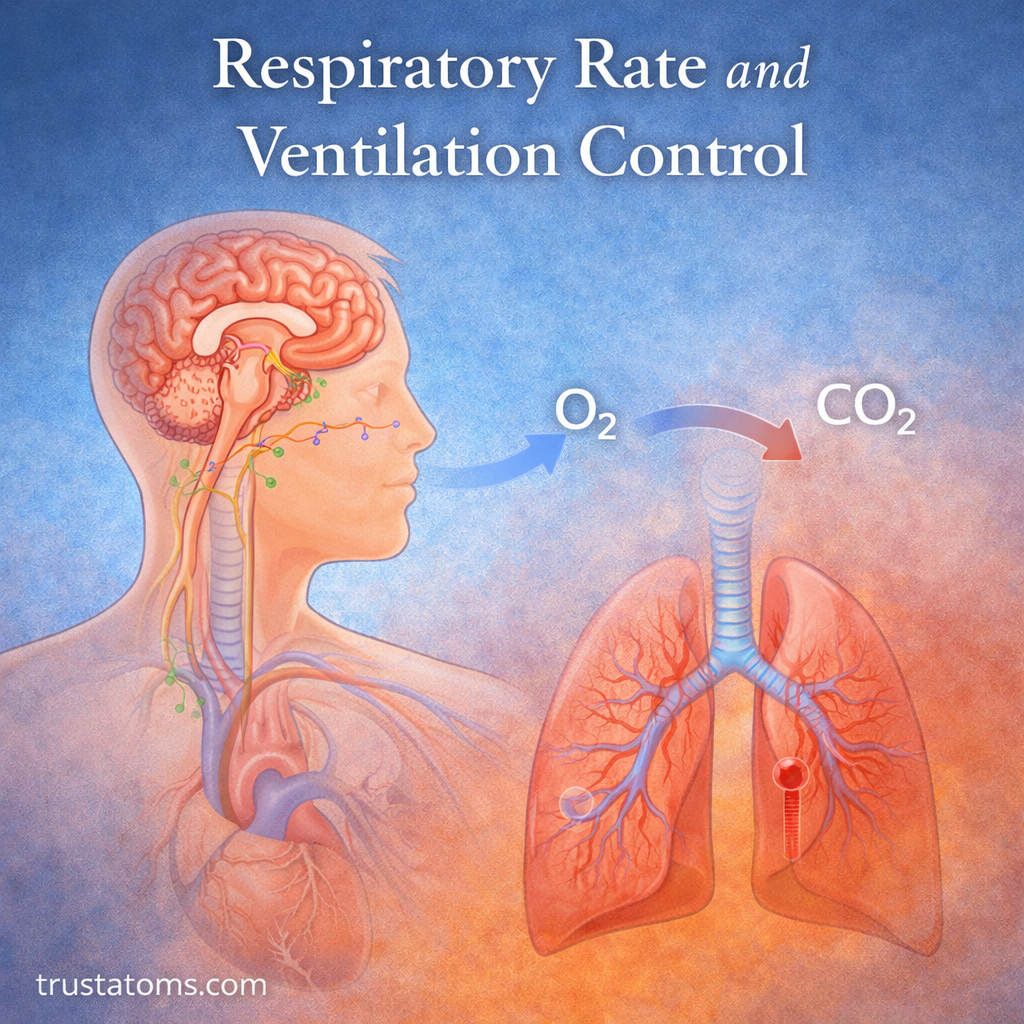
Illustration showing brain control of breathing with lungs exchanging oxygen and carbon dioxide.
The brain regulates breathing rate to balance oxygen intake and carbon dioxide removal. trustatoms.com.

Breathing is something most people rarely think about, yet it is constantly adjusted to meet the body’s needs. Respiratory rate and ventilation control ensure that oxygen is delivered efficiently and carbon dioxide is removed at the right pace.

This system is highly responsive, automatically adapting to changes in activity, environment, and internal chemistry.

Continue reading “Respiratory Rate and Ventilation Control”

Lung Volumes and Capacities Overview

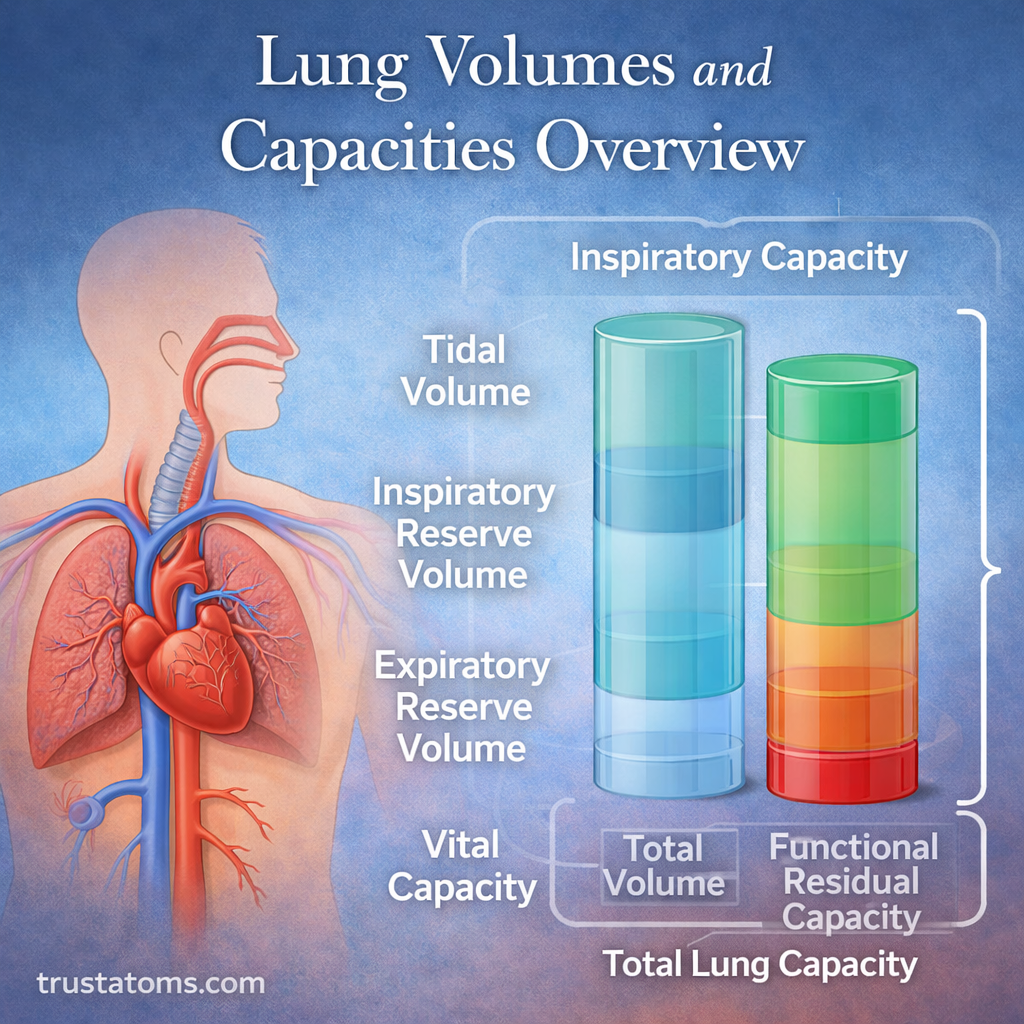
Diagram showing lung volumes and capacities including tidal volume, inspiratory reserve, expiratory reserve, and functional residual capacity.
Lung volumes and capacities illustrate how air moves and is stored within the respiratory system. trustatoms.com.

Lung volumes and capacities describe how much air your lungs can hold and how air moves during breathing. These measurements are essential for understanding respiratory health, diagnosing lung conditions, and evaluating overall lung function.

Whether you’re at rest or exercising, your lungs constantly adjust how much air they take in and release. Knowing how these volumes work gives insight into how efficiently your respiratory system performs.

Continue reading “Lung Volumes and Capacities Overview”

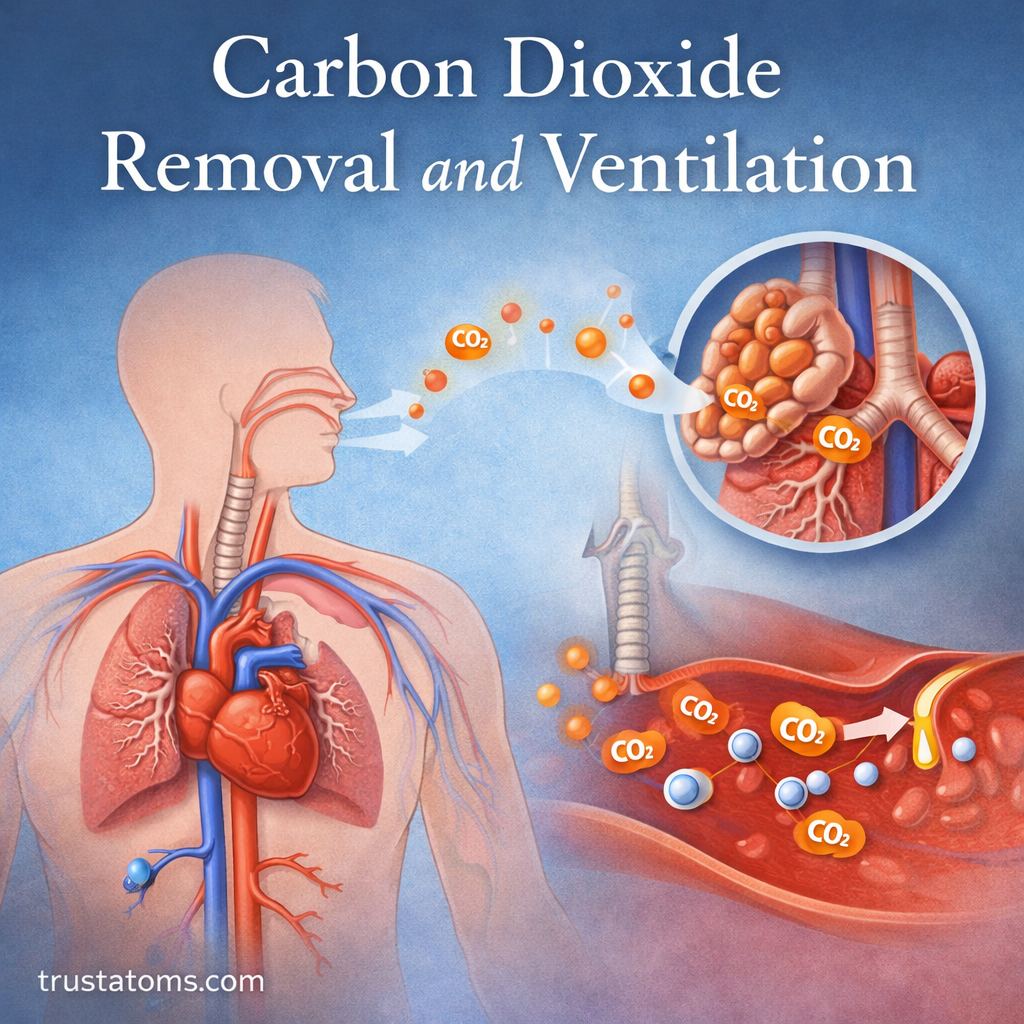
Carbon Dioxide Removal and Ventilation

Illustration showing carbon dioxide traveling from body tissues to the lungs and being exhaled during ventilation.
Carbon dioxide is transported from tissues to the lungs and removed through breathing. trustatoms.com

Carbon dioxide (CO₂) removal is just as important as oxygen delivery in maintaining a stable internal environment. Every time your cells produce energy, they generate carbon dioxide as a waste product. If this gas is not efficiently removed, it can disrupt blood pH and impair normal body function.

Ventilation—the process of breathing—plays a central role in clearing carbon dioxide from the body and maintaining balance.

Continue reading “Carbon Dioxide Removal and Ventilation”

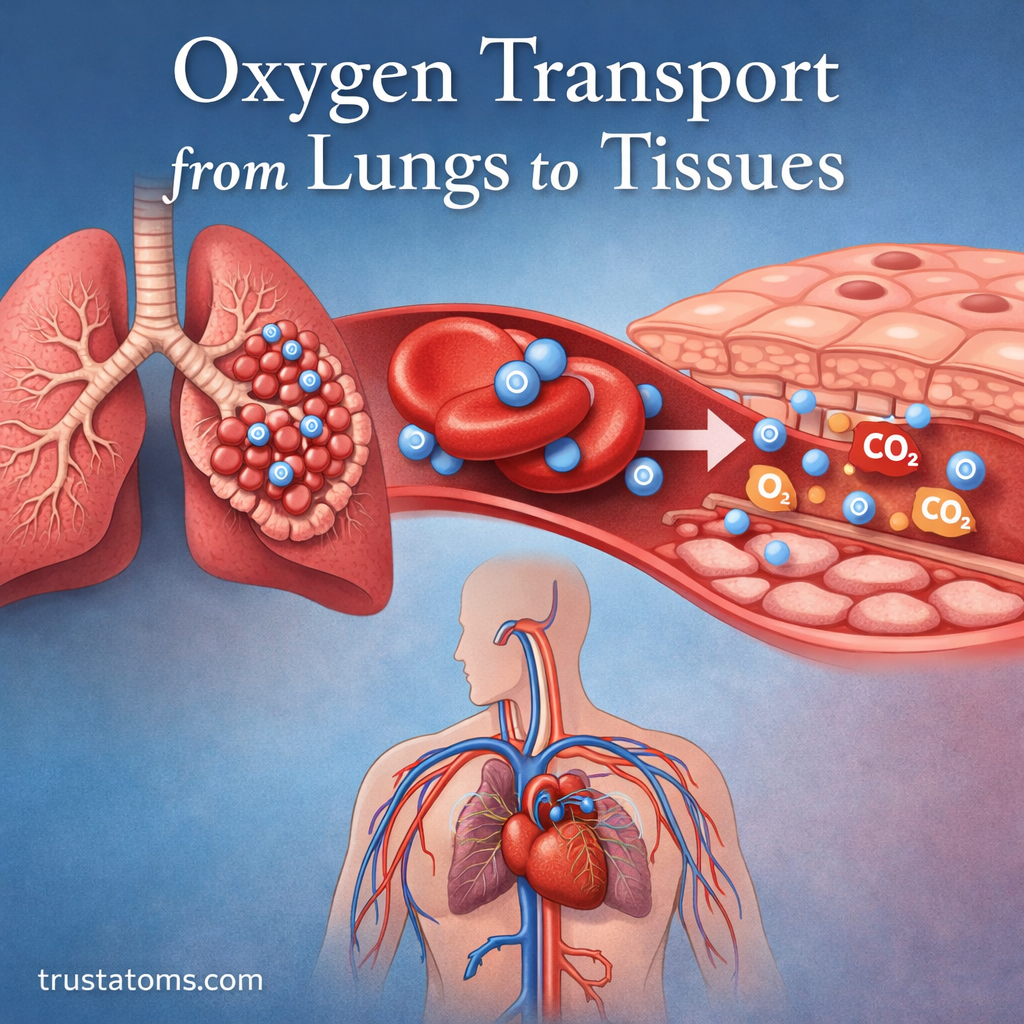
Oxygen Transport from Lungs to Tissues

Illustration showing oxygen transport from the lungs through the bloodstream to body tissues.
Oxygen moves from the lungs into the blood and is delivered to tissues throughout the body. trustatoms.com.

Oxygen transport is a vital process that keeps every cell in your body functioning. From the moment you inhale, oxygen begins a carefully coordinated journey—from the lungs, into the bloodstream, and ultimately to tissues that depend on it for energy production.

Understanding how oxygen moves through the body helps explain everything from exercise performance to how diseases affect breathing and circulation.

Continue reading “Oxygen Transport from Lungs to Tissues”

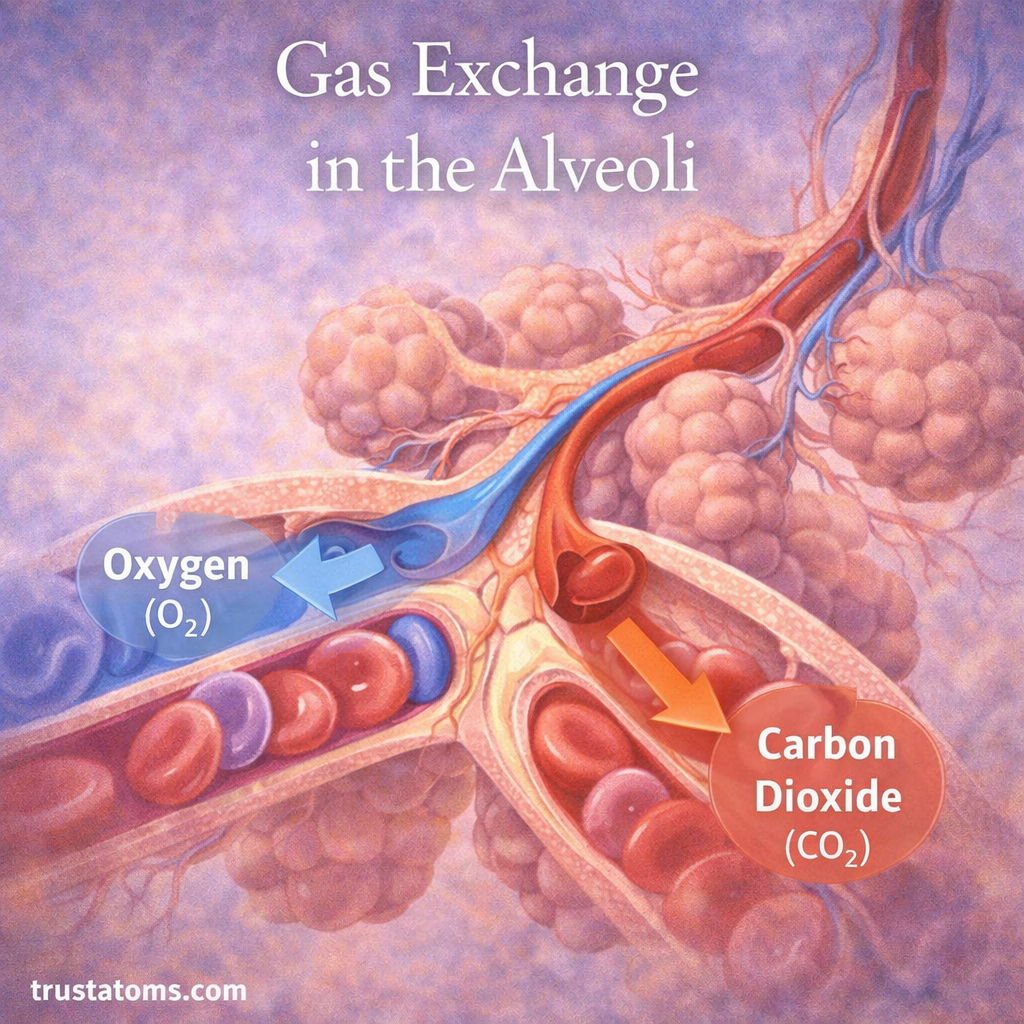
Gas Exchange in the Alveoli

Diagram of alveoli showing oxygen entering the bloodstream and carbon dioxide leaving through surrounding capillaries during gas exchange.
Illustration of gas exchange in the alveoli showing oxygen entering the blood and carbon dioxide being removed. trustatoms.com.

Gas exchange in the alveoli is one of the most critical processes in the human body. It is where oxygen enters the bloodstream and carbon dioxide is removed. This exchange supports cellular respiration—the process that allows your cells to produce energy.

Although it happens at a microscopic level, this process occurs continuously and efficiently with every breath you take.

Continue reading “Gas Exchange in the Alveoli”