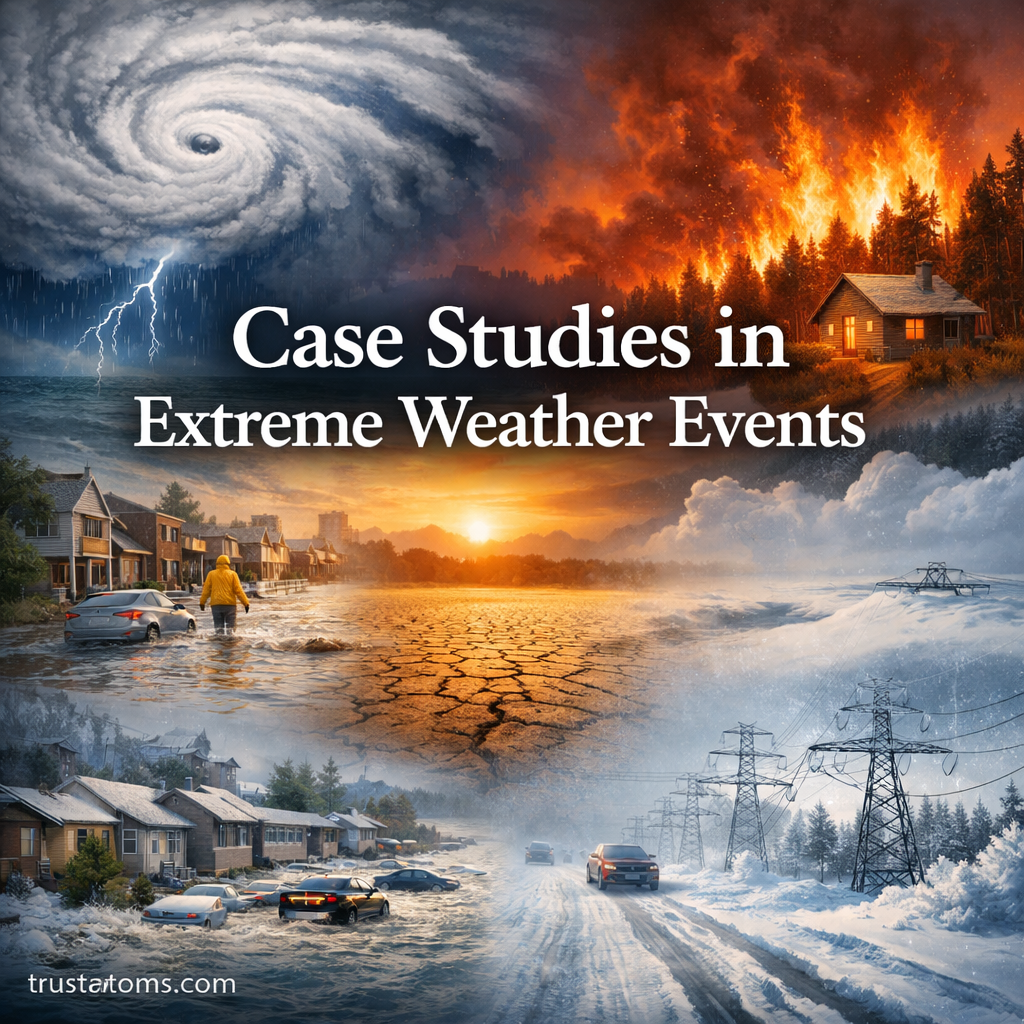
Extreme weather events are becoming more frequent and intense due to shifts in global climate systems. These events—ranging from hurricanes and heatwaves to floods and wildfires—offer valuable insights into atmospheric processes, human vulnerability, and disaster preparedness.
In this article, we’ll explore real-world case studies of extreme weather events, examining their causes, impacts, and lessons for the future.
What Defines an Extreme Weather Event?
An extreme weather event is any meteorological phenomenon that deviates significantly from the average conditions of a region. These events often:
- Occur rarely or with unusual intensity
- Cause widespread damage or disruption
- Challenge infrastructure and emergency response systems
Common types include:
- Hurricanes and cyclones
- Heatwaves
- Floods
- Droughts
- Wildfires
- Cold waves
Case Study 1: Hurricane Katrina
Overview
In August 2005, Hurricane Katrina struck the Gulf Coast of the United States, causing catastrophic damage, particularly in New Orleans.
Key Impacts
- Over 1,800 fatalities
- $125+ billion in damages
- Massive flooding due to levee failures
Scientific Insights
- Warm ocean waters fueled rapid intensification
- Low-lying geography increased flood vulnerability
- Failure of engineered flood defenses highlighted infrastructure risks
Lessons Learned
- Importance of resilient infrastructure
- Need for effective evacuation planning
- Role of wetlands as natural flood barriers
Case Study 2: European Heatwave of 2003
Overview
The summer of 2003 brought record-breaking temperatures across Europe, particularly affecting countries like France and Italy.
Key Impacts
- Estimated 70,000 excess deaths
- Severe drought and crop failures
- Increased wildfire activity
Scientific Insights
- Persistent high-pressure systems trapped heat
- Urban heat island effect intensified temperatures
- Climate change increased baseline temperatures
Lessons Learned
- Need for heatwave early warning systems
- Importance of urban planning (green spaces, cooling centers)
- Public awareness of heat-related health risks
Case Study 3: 2011 Thailand Floods
Overview
In 2011, prolonged monsoon rains caused widespread flooding across Thailand.
Key Impacts
- Over 800 deaths
- Displacement of millions
- Major disruption to global supply chains
Scientific Insights
- Excessive rainfall overwhelmed river systems
- Poor drainage infrastructure worsened flooding
- Land subsidence increased flood risk
Lessons Learned
- Importance of floodplain management
- Need for improved urban drainage systems
- Global economic vulnerability to localized disasters
Case Study 4: Australian Bushfires 2019–2020
Overview
Known as the “Black Summer,” these wildfires devastated large parts of Australia.
Key Impacts
- Burned over 18 million hectares
- Nearly 3 billion animals affected
- Severe air pollution across major cities
Scientific Insights
- Extreme heat and drought created ideal fire conditions
- Strong winds accelerated fire spread
- Climate variability increased fire season length
Lessons Learned
- Need for controlled burns and land management
- Importance of early detection systems
- Health impacts of prolonged smoke exposure
Case Study 5: Texas Winter Storm 2021
Overview
In February 2021, a severe cold wave impacted Texas, causing widespread power outages.
Key Impacts
- Millions without electricity or heat
- Hundreds of deaths
- Billions in economic losses
Scientific Insights
- Polar vortex disruption allowed Arctic air to move south
- Energy infrastructure was not winterized
- Increased demand overwhelmed the power grid
Lessons Learned
- Importance of energy grid resilience
- Need for infrastructure adaptation to rare events
- Value of emergency preparedness at household level
Common Patterns Across Extreme Weather Events
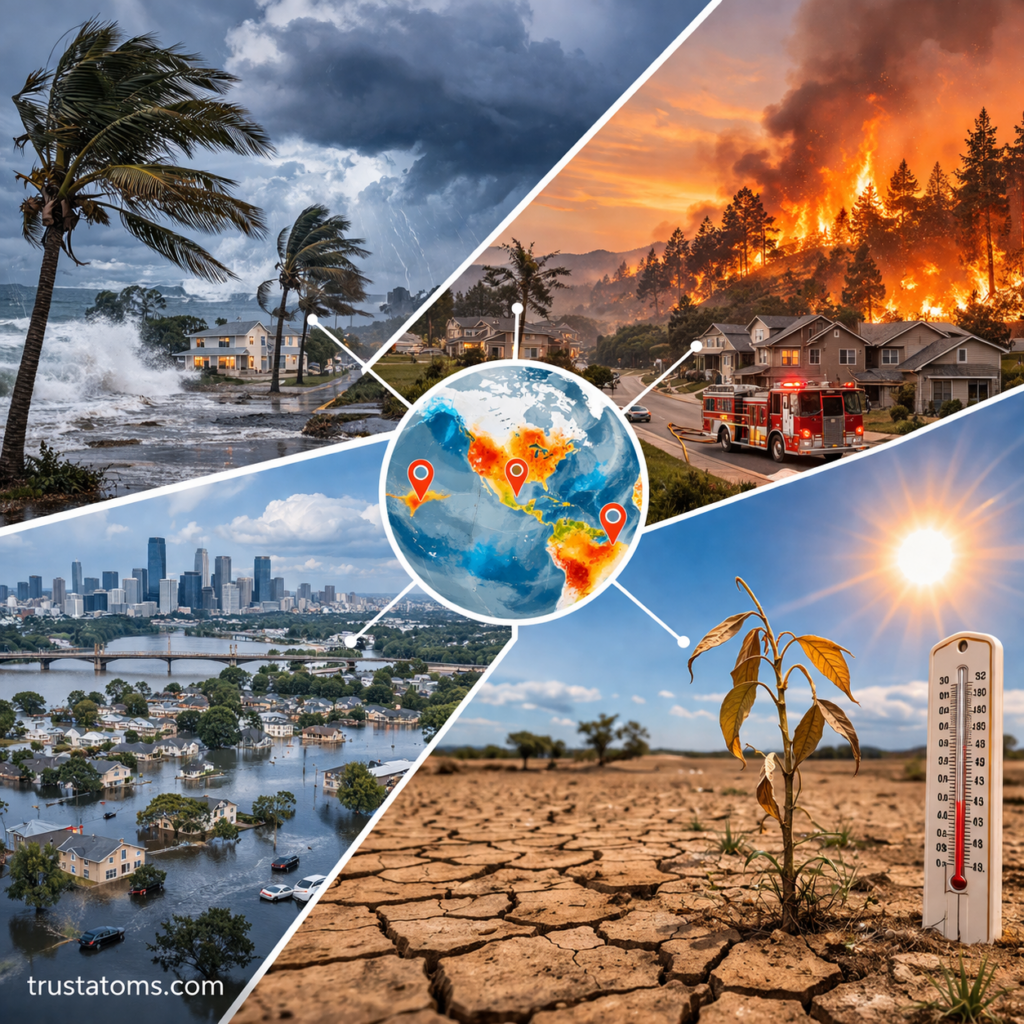
Despite differences in type and location, several recurring themes emerge:
1. Climate Influence
- Rising global temperatures increase event intensity
- Changing atmospheric patterns alter frequency
2. Human Vulnerability
- Urbanization increases exposure to hazards
- Socioeconomic factors affect resilience
3. Infrastructure Limitations
- Aging systems often fail under extreme stress
- Poor planning amplifies disaster impacts
4. Cascading Effects
- One event can trigger multiple crises (e.g., power outages, supply chain disruptions)
How Scientists Study Extreme Weather Events
Researchers use a combination of tools and methods:
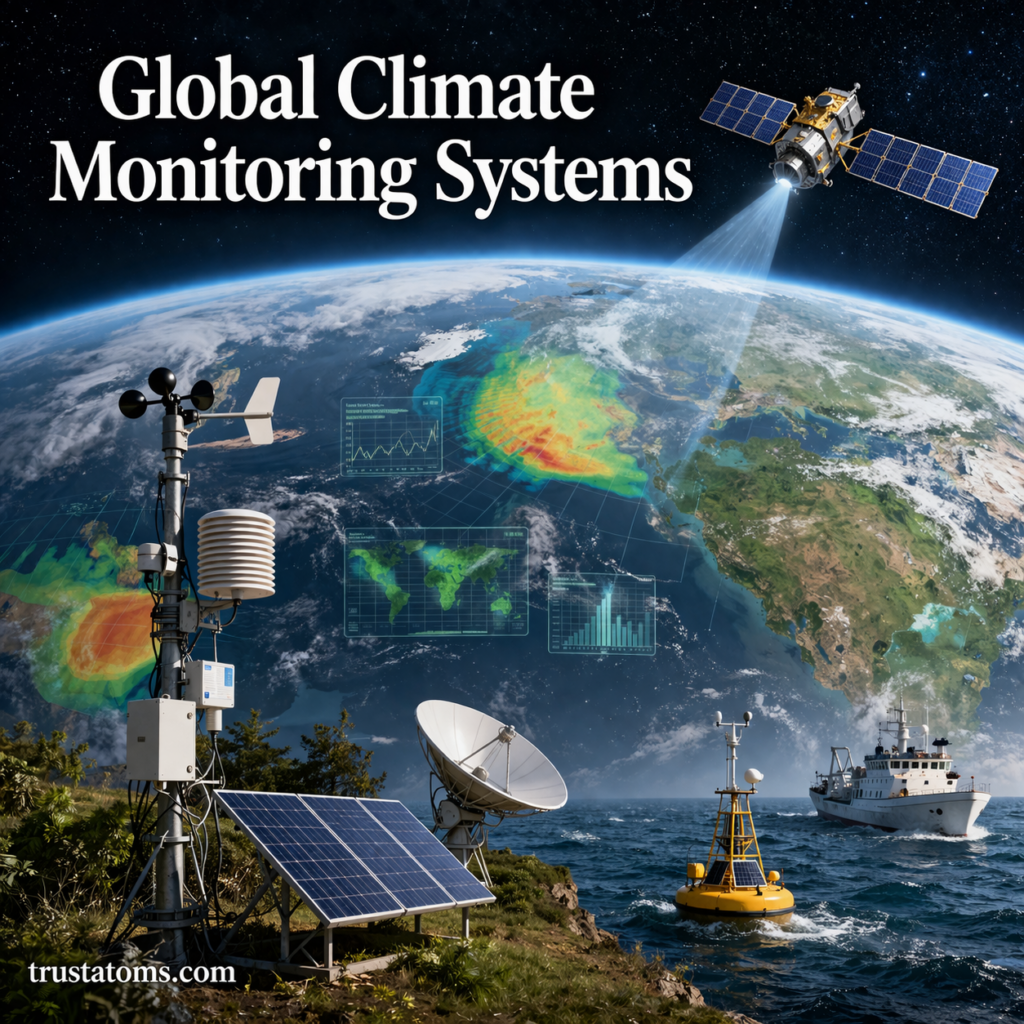
- Satellite observations
- Climate models and simulations
- Historical weather data analysis
- Field studies and damage assessments
These approaches help scientists:
- Identify trends and patterns
- Predict future risks
- Develop mitigation strategies
Preparing for Future Extreme Weather
Based on these case studies, effective preparedness includes:
Individual Actions
- Create emergency kits
- Stay informed through weather alerts
- Develop evacuation plans
Community Strategies
- Invest in resilient infrastructure
- Improve emergency response systems
- Promote public education
Global Efforts
- Reduce greenhouse gas emissions
- Strengthen international cooperation
- Advance climate research
Final Thoughts
Extreme weather events are powerful reminders of Earth’s dynamic systems and the growing influence of climate change. By studying past events like Hurricane Katrina, the European heatwave, and the Australian bushfires, we gain critical knowledge that can help reduce future risks.
Preparedness, adaptation, and scientific understanding are key to building a safer and more resilient world.