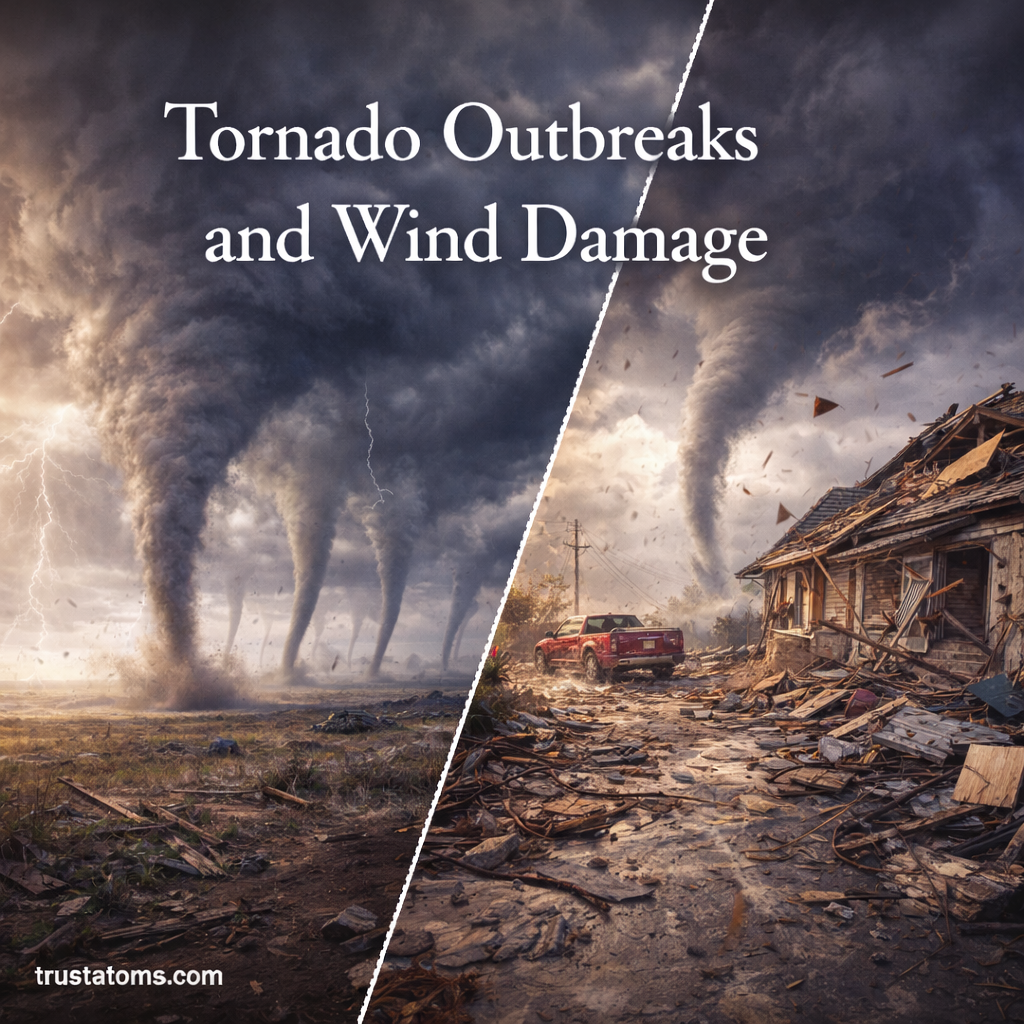
Tornadoes are among the most destructive weather phenomena on Earth. When multiple tornadoes occur within a short period and across a wide area, the event is known as a tornado outbreak. These outbreaks can cause widespread devastation, especially when combined with extreme wind damage.
Understanding how tornado outbreaks form and how wind damage occurs is essential for improving forecasting, safety measures, and disaster preparedness.
What Is a Tornado Outbreak?
A tornado outbreak is a weather event in which several tornadoes develop from the same storm system over a relatively short time.
Key Characteristics
- Multiple tornadoes (often dozens)
- Occur within hours or a single day
- Linked to a large, organized storm system
- Cover a wide geographic area
Outbreaks are typically associated with powerful thunderstorms known as supercells.
How Tornadoes Form
Tornadoes form under specific atmospheric conditions that promote instability and rotation.
Essential Ingredients
- Warm, moist air near the surface
- Cool, dry air above
- Wind shear (changes in wind speed and direction with height)
- Strong updrafts within thunderstorms
Formation Process
- Warm air rises rapidly into a thunderstorm
- Wind shear creates a horizontal spinning motion
- Updraft tilts the spinning air vertically
- A rotating column of air (mesocyclone) forms
- The rotation tightens and extends downward
- A tornado forms when it reaches the ground
This process can happen quickly, making tornadoes difficult to predict with precision.
What Causes Tornado Outbreaks?
Tornado outbreaks occur when large-scale weather conditions support the formation of multiple rotating storms.
Contributing Factors
- Strong low-pressure systems
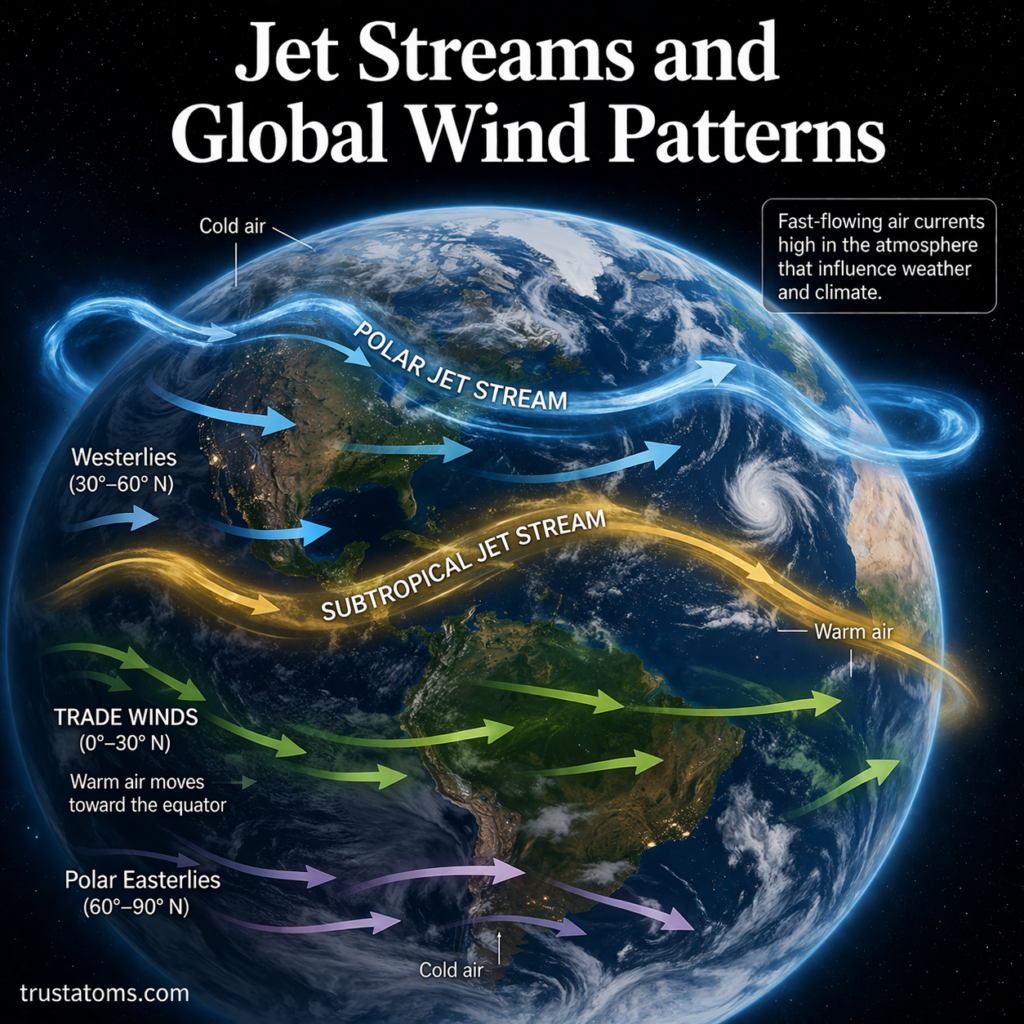
- Powerful jet stream activity
- High atmospheric instability
- Abundant moisture from sources like the Gulf of Mexico
When these factors align, they create an environment where many supercells can develop simultaneously.
Types of Tornado-Producing Storms
Different storm systems can produce tornadoes, but some are more likely to generate outbreaks.
Supercell Thunderstorms
- Most common source of strong tornadoes
- Contain a rotating updraft (mesocyclone)
- Can produce long-lived and powerful tornadoes
Squall Lines
- Long lines of thunderstorms
- Can produce weaker, short-lived tornadoes
- Often associated with damaging straight-line winds
Tropical Systems
- Hurricanes and tropical storms can spawn tornadoes
- Usually weaker but still dangerous
- Often occur in outer rainbands
Understanding Wind Damage from Tornadoes
Tornadoes are defined by their extreme wind speeds, which can exceed 200 mph (320 km/h) in the strongest cases.
Types of Wind Damage
- Direct impact damage – structures destroyed by intense winds
- Debris impact – objects turned into high-speed projectiles
- Uplift forces – roofs and buildings lifted or torn apart
- Tree damage – snapping, uprooting, or stripping of branches
Wind damage is often the most destructive aspect of tornadoes.
The Enhanced Fujita (EF) Scale
Tornado strength is measured using the Enhanced Fujita Scale, which estimates wind speed based on observed damage.
EF Scale Categories
- EF0: 65–85 mph (light damage)
- EF1: 86–110 mph (moderate damage)
- EF2: 111–135 mph (considerable damage)
- EF3: 136–165 mph (severe damage)
- EF4: 166–200 mph (devastating damage)
- EF5: 200+ mph (incredible destruction)
Higher EF ratings indicate greater wind speeds and more severe damage.
Patterns of Tornado Damage

Tornado damage often follows recognizable patterns that help scientists study their behavior.
Common Patterns
- Narrow, concentrated damage paths
- Rotational damage (objects twisted or scattered in different directions)
- Sharp boundaries between damaged and undamaged areas
- Debris trails extending miles from the origin
These patterns distinguish tornado damage from other types of wind events.
Real-World Tornado Outbreak Examples
Several historic outbreaks demonstrate the destructive power of these events.
2011 Super Outbreak (United States)
- Over 300 tornadoes in just a few days
- Included multiple EF4 and EF5 tornadoes
- Widespread destruction across several states
1974 Super Outbreak
- One of the largest outbreaks in history
- 148 tornadoes across North America
- Led to major advancements in forecasting
2021 Western Kentucky Tornado Event
- Long-track tornado traveled over 160 miles
- Significant damage to towns and infrastructure
- Highlighted importance of warning systems
Safety and Preparedness During Tornado Outbreaks
Being prepared can significantly reduce the risk of injury or loss of life.
Safety Tips
- Monitor weather alerts and warnings
- Have a designated safe shelter (basement or interior room)
- Avoid windows and exterior walls
- Keep emergency supplies ready
Warning Systems
- Weather radios
- Smartphone alerts
- Sirens in communities
Quick response to warnings is critical during fast-moving outbreaks.
Why Studying Tornado Outbreaks Matters
Tornado outbreaks provide valuable data for improving weather science and public safety.
Key Benefits
- Better forecasting and early warnings
- Improved understanding of severe storms
- Enhanced building design and safety standards
- Increased public awareness and preparedness
Ongoing research continues to improve how we respond to these dangerous events.
Final Thoughts
Tornado outbreaks represent some of the most intense and unpredictable weather events on Earth. Driven by complex atmospheric conditions, they can produce multiple destructive tornadoes in a short period.
By understanding how tornadoes form, how outbreaks develop, and how wind damage occurs, we can better prepare for their impact and reduce the risks they pose to communities.