Flooding is one of the most common and destructive natural hazards on Earth. It occurs when water overflows onto land that is normally dry, often due to rivers exceeding their capacity. River overflow, in particular, plays a major role in shaping landscapes, ecosystems, and human settlements.
Understanding how flooding happens—and how to prepare for it—can help reduce damage, protect communities, and improve long-term resilience.
What Is River Overflow?
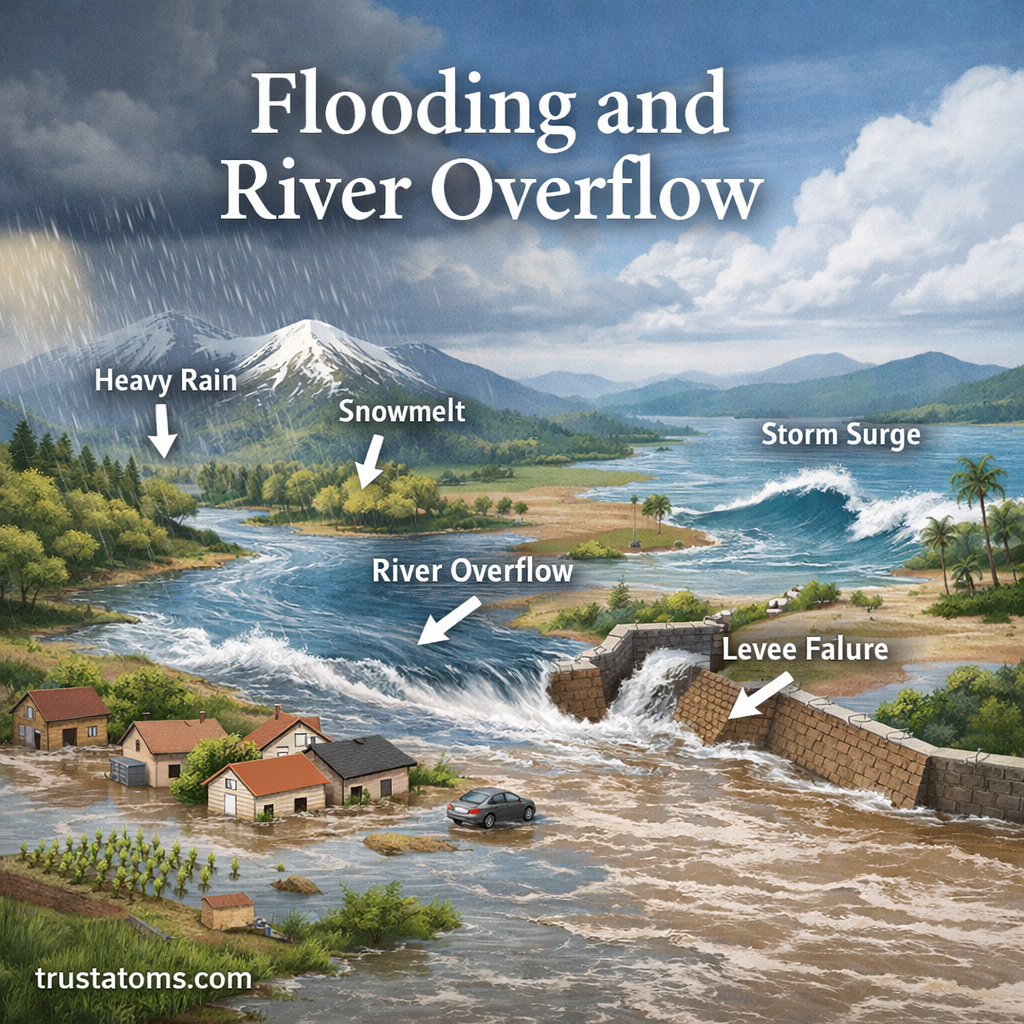
River overflow happens when a river’s water level rises beyond its banks, spilling into surrounding areas such as floodplains, towns, or farmland.
This typically occurs when:
- Water input (rain, snowmelt) exceeds the river’s capacity
- The river channel cannot carry the volume fast enough
- Natural or human-made barriers restrict flow
Floodplains—flat areas near rivers—are especially vulnerable because they are designed by nature to absorb excess water.
Main Causes of Flooding
Flooding can result from a variety of natural and human-related factors. Often, multiple causes combine to create severe events.
1. Heavy Rainfall
Intense or prolonged rainfall is the most common cause of flooding. When the ground becomes saturated, it can no longer absorb water, leading to runoff into rivers.
2. Snowmelt
Rapid melting of snow and ice, especially in spring, can send large volumes of water into rivers quickly, increasing the risk of overflow.
3. Storm Surges
Coastal flooding can occur when strong winds from storms push seawater inland, raising water levels in nearby rivers and estuaries.
4. Dam or Levee Failure
Man-made structures like dams and levees are designed to control water. When they fail or are overwhelmed, sudden and severe flooding can occur.
5. Urbanization
Cities with large areas of concrete and asphalt prevent water from soaking into the ground, increasing surface runoff and flood risk.
6. Blocked or Narrowed Channels
Debris, sediment buildup, or construction can reduce a river’s capacity, making overflow more likely.
Types of Flooding
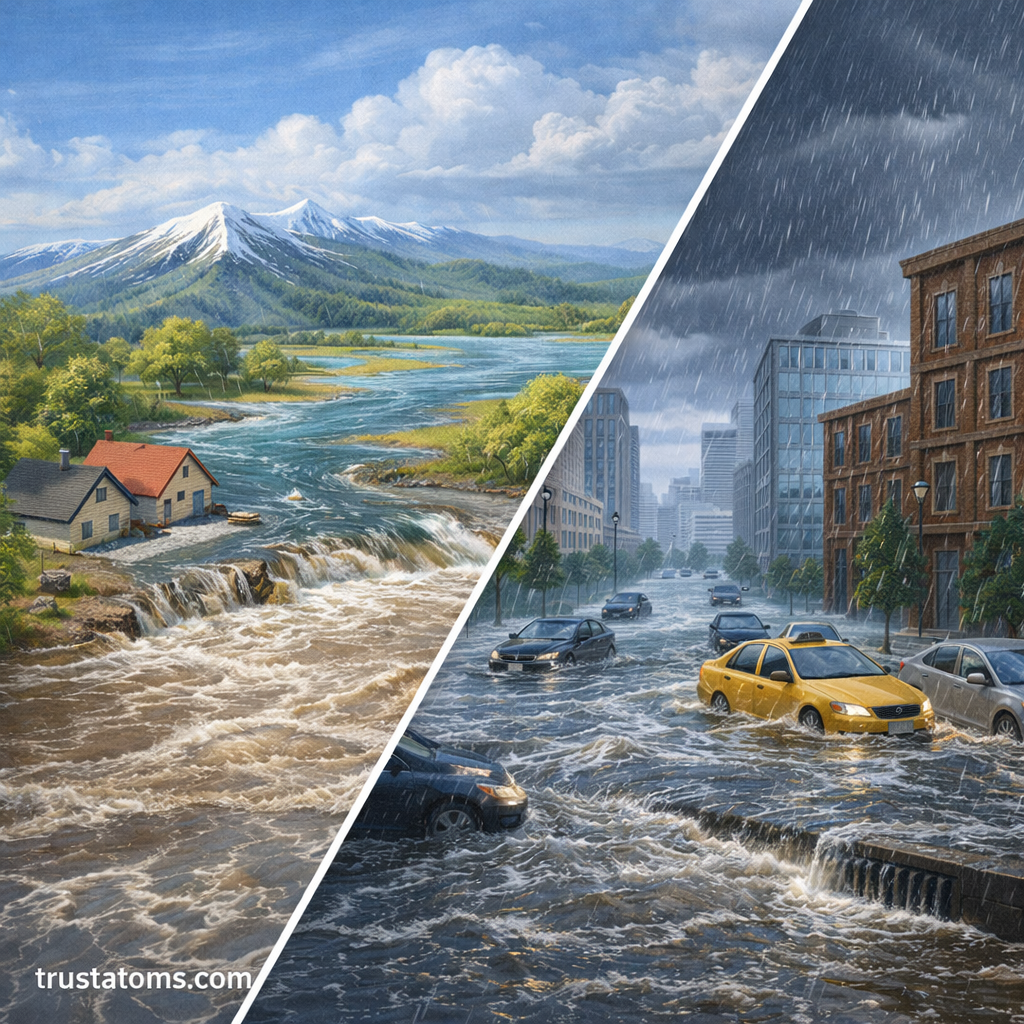
Flooding is not a single event type—different forms occur depending on conditions and geography.
River (Fluvial) Flooding
Occurs when rivers overflow their banks due to excess water from rainfall or snowmelt.
Flash Flooding
Happens suddenly, often within minutes or hours of intense rainfall. These floods are fast-moving and highly dangerous.
Coastal Flooding
Triggered by storm surges, hurricanes, or high tides, affecting coastal regions and nearby rivers.
Urban Flooding
Occurs in cities where drainage systems are overwhelmed, leading to water accumulation on streets and infrastructure.
Impacts of Flooding
Flooding can have widespread and long-lasting consequences for both natural environments and human communities.
Environmental Impacts
- Soil erosion and loss of nutrients
- Habitat destruction for plants and animals
- Water contamination from pollutants and debris
Economic Impacts
- Damage to homes, businesses, and infrastructure
- Loss of crops and agricultural productivity
- Expensive recovery and rebuilding efforts
Human Impacts
- Injury or loss of life
- Displacement of communities
- Health risks from contaminated water and mold
Benefits of Natural Flooding
While often destructive, flooding also plays an important natural role in ecosystems.
- Replenishes soil nutrients in floodplains
- Supports wetlands and biodiversity
- Helps maintain natural river cycles
Historically, many civilizations settled near rivers because periodic flooding enriched agricultural land.
Flood Prevention and Mitigation
Reducing flood risk involves a combination of engineering, planning, and environmental management.
Structural Solutions
- Dams and reservoirs to control water flow
- Levees and floodwalls to protect populated areas
- Improved drainage systems in urban environments
Natural Solutions
- Restoring wetlands to absorb excess water
- Preserving floodplains instead of developing them
- Planting vegetation to reduce runoff and erosion
Planning and Policy
- Zoning laws to limit construction in high-risk areas
- Early warning systems for communities
- Emergency preparedness plans
What to Do Before, During, and After a Flood
Being prepared can significantly reduce the risks associated with flooding.
Before a Flood
- Monitor weather forecasts and alerts
- Prepare an emergency kit (food, water, essentials)
- Know evacuation routes
During a Flood
- Move to higher ground immediately
- Avoid walking or driving through floodwaters
- Follow local emergency instructions
After a Flood
- Avoid contaminated water
- Inspect structures for damage
- Document losses for insurance claims
The Future of Flooding
Flood risks are increasing in many parts of the world due to:
- Climate change causing more intense rainfall
- Rising sea levels affecting coastal areas
- Expanding urban development
As these challenges grow, integrating sustainable planning with advanced technology will be critical in managing flood risks effectively.
Final Thoughts
Flooding and river overflow are natural processes that can become dangerous when they intersect with human activity. While floods cannot be completely prevented, understanding their causes and implementing smart mitigation strategies can greatly reduce their impact.
By combining engineering solutions, environmental conservation, and community preparedness, societies can better adapt to the challenges posed by flooding.