Cyclones are among the most powerful and destructive weather systems on Earth. Accurate tracking and prediction are essential for minimizing damage, protecting lives, and improving emergency response.
Advancements in science and technology have made it possible to monitor cyclones in real time, providing early warnings and more reliable forecasts than ever before.
What Is a Cyclone?
A cyclone is a large-scale system of rotating winds that forms around a low-pressure center.
Types of Cyclones
- Tropical cyclones (hurricanes or typhoons depending on region)
- Extratropical cyclones (mid-latitude storms)
- Polar cyclones
Tropical cyclones are the most destructive due to their strong winds, heavy rainfall, and storm surges.
How Cyclones Form
Cyclones develop under specific atmospheric and oceanic conditions.
Key Conditions for Formation
- Warm ocean water (typically above 26°C or 79°F)
- Moist air in the atmosphere
- Low vertical wind shear
- Pre-existing weather disturbances
- Coriolis effect (causes rotation)
When these conditions align, a storm system can intensify into a cyclone.
Why Cyclone Tracking Matters
Tracking cyclones helps governments and communities prepare for impact.
Benefits of Accurate Tracking
- Early evacuation planning
- Reduced loss of life
- Better resource allocation
- Improved infrastructure protection
- More precise impact forecasting
Even small improvements in prediction accuracy can save lives.
Tools Used in Cyclone Tracking
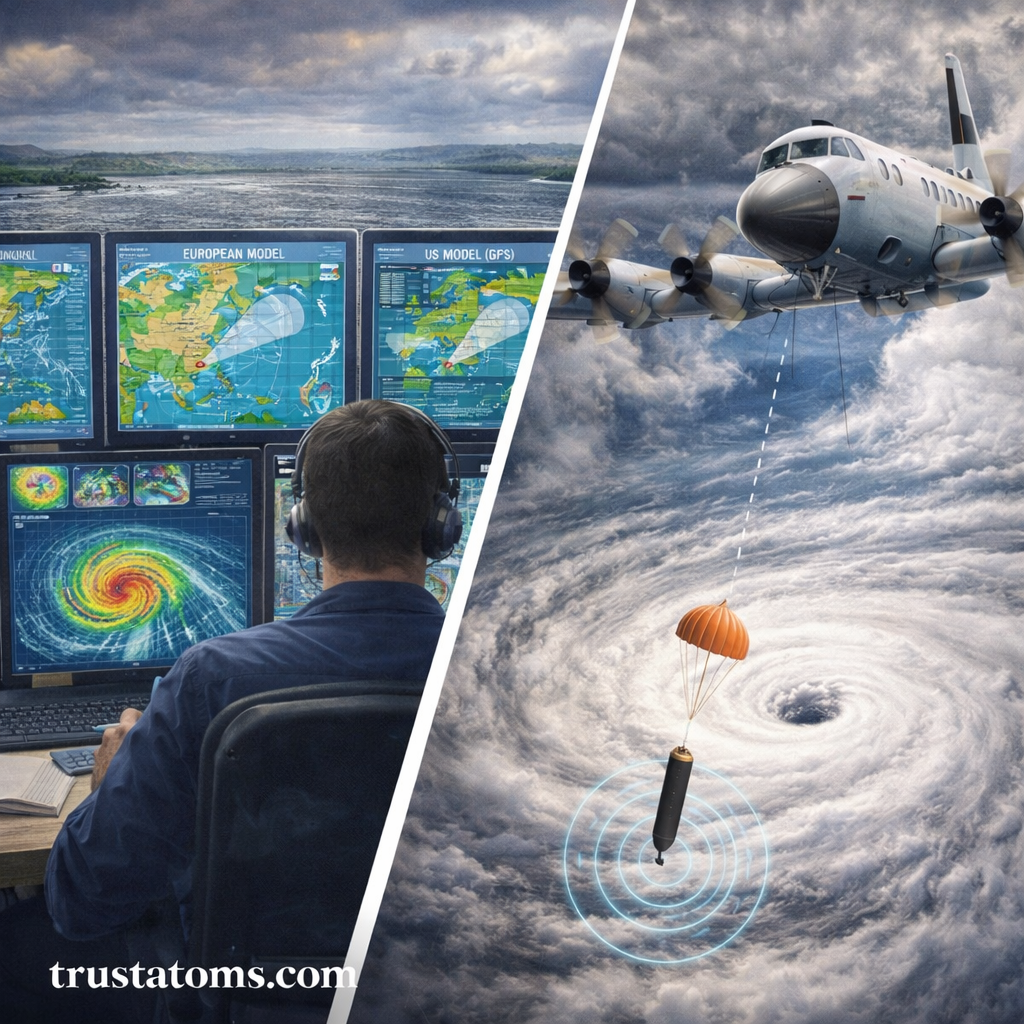
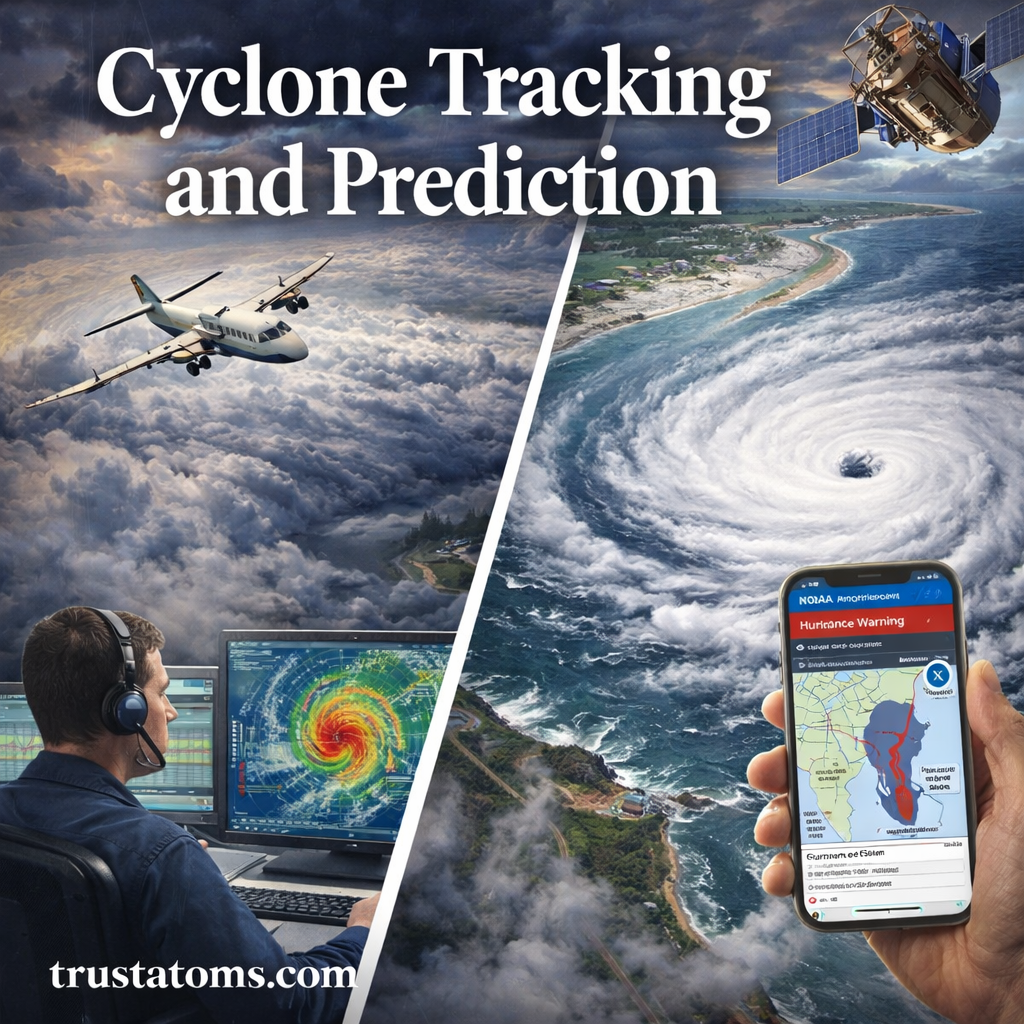
Scientists rely on multiple technologies to monitor cyclones as they develop and move.
Satellite Technology
Satellites provide continuous, large-scale observations.
- Track cloud formations and storm structure
- Measure sea surface temperatures
- Monitor storm intensity and movement
Weather Radar
Radar systems provide detailed local data.
- Detect rainfall intensity
- Track storm movement near land
- Identify dangerous features like eye walls
Ocean Buoys
Buoys collect real-time ocean data.
- Measure wave height and pressure
- Record sea surface temperatures
- Provide early signs of storm development
Aircraft Reconnaissance
Specialized aircraft fly into storms.
- Collect direct measurements of wind speed
- Measure pressure inside the cyclone
- Improve forecast accuracy
How Cyclone Prediction Works
Prediction involves analyzing data and running computer models to forecast future behavior.
Key Prediction Elements
- Storm path (track forecasting)
- Intensity (wind speed and pressure)
- Timing of landfall
- Rainfall and flooding potential
Forecast Models
Meteorologists use multiple models to improve accuracy.
- Global weather models
- Regional high-resolution models
- Ensemble forecasting (multiple simulations)
Combining these models reduces uncertainty and improves reliability.
Understanding the Cone of Uncertainty
The “cone of uncertainty” shows the probable path of a cyclone’s center.
Important Points to Know
- The cone widens over time due to uncertainty
- The storm can impact areas outside the cone
- It does not represent the size of the storm
Misinterpreting this cone is a common mistake during storm events.
Factors That Influence Cyclone Movement
Cyclones do not move randomly—they are guided by environmental forces.
Key Influencing Factors
- High and low-pressure systems
- Wind patterns in the atmosphere
- Ocean temperatures
- Land interaction
Changes in these factors can cause sudden shifts in direction or intensity.
Challenges in Cyclone Prediction
Despite technological advances, forecasting cyclones remains complex.
Major Challenges
- Rapid intensification (quick increase in strength)
- Unpredictable changes in direction
- Limited data in remote ocean areas
- Interaction with other weather systems
These challenges highlight the need for continuous research and improvement.
Advances in Cyclone Forecasting
Modern science is improving both accuracy and lead time.
Recent Innovations
- Artificial intelligence and machine learning models
- Improved satellite resolution
- Real-time data integration
- Better ocean-atmosphere modeling
These advancements are helping meteorologists make faster and more accurate predictions.
How Communities Use Cyclone Forecasts
Forecast data plays a critical role in emergency preparedness.
Practical Applications
- Issuing evacuation orders
- Closing schools and businesses
- Preparing emergency shelters
- Deploying emergency services
- Protecting infrastructure
Timely action based on forecasts can significantly reduce damage.
Common Mistakes to Avoid
- Ignoring early warnings
- Misunderstanding the cone of uncertainty
- Waiting too long to evacuate
- Focusing only on wind instead of flooding risks
- Relying on a single forecast source
Staying informed and acting early is key to safety.
Future of Cyclone Tracking and Prediction
The future of cyclone forecasting is focused on speed, accuracy, and accessibility.
What to Expect
- More precise storm intensity forecasts
- Earlier detection of rapid intensification
- Increased use of AI-driven models
- Better communication of risks to the public
These improvements will help communities respond more effectively to storms.
Final Thoughts
Cyclone tracking and prediction are vital components of modern disaster management. By combining advanced technology with scientific modeling, meteorologists can provide life-saving information to communities in harm’s way.
Understanding how cyclones are tracked and predicted empowers individuals to make informed decisions and respond quickly when severe weather threatens.