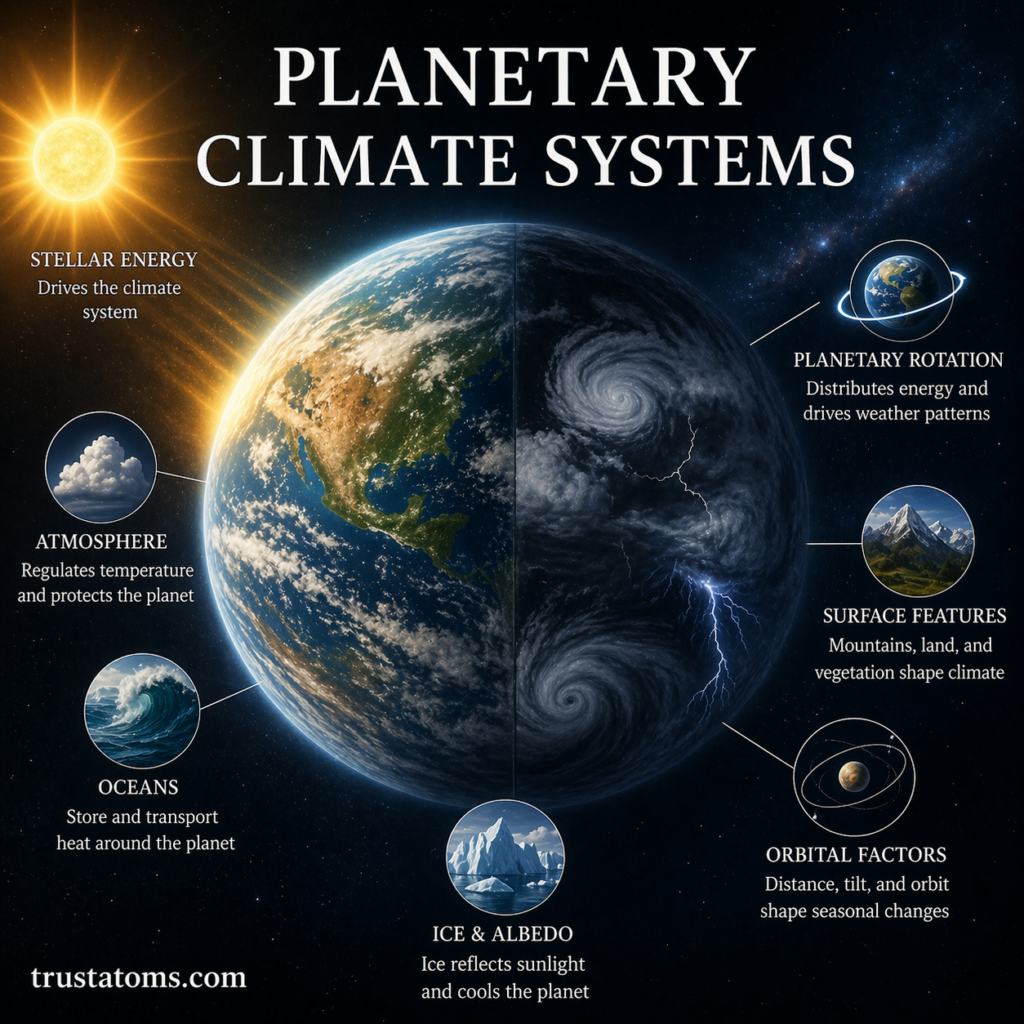
Planetary climate systems determine how temperatures, weather patterns, and atmospheric conditions behave on a planet. These systems are shaped by a complex interaction of factors such as solar energy, atmospheric composition, rotation, and surface features.
Understanding planetary climates not only helps us better understand Earth but also plays a crucial role in studying other planets and assessing their potential habitability.
What Is a Planetary Climate System?
A planetary climate system refers to the long-term patterns of temperature, weather, and atmospheric behavior on a planet.
It includes how energy flows through the planet’s:
- Atmosphere
- Surface
- Oceans (if present)
- Ice caps and landforms
Unlike short-term weather, climate represents stable, long-term trends that can last decades, centuries, or even longer.
Key Components of Planetary Climate Systems
Every planetary climate is influenced by several core components working together.
1. Energy from the Star
The primary driver of climate is energy received from a star.
- Determines surface temperature
- Influences atmospheric circulation
- Affects seasonal changes
Planets closer to their star receive more energy, while distant planets receive less.
2. Atmosphere
A planet’s atmosphere plays a major role in regulating temperature and weather.
Key functions include:
- Trapping heat (greenhouse effect)
- Distributing energy globally
- Protecting the surface from radiation
Different atmospheric compositions lead to vastly different climates.
Examples:
- Thick carbon dioxide atmosphere → extreme heat (like Venus)
- Thin atmosphere → weak heat retention (like Mars)
3. Planetary Rotation
Rotation affects how energy is distributed across a planet.
- Fast rotation → more even temperature distribution
- Slow rotation → extreme temperature differences between day and night
Rotation also influences wind patterns and storm systems.
4. Surface Features
The type of surface on a planet affects how it absorbs and reflects energy.
Important factors include:
- Oceans (store and transport heat)
- Land masses (heat up and cool quickly)
- Ice (reflects sunlight and cools the planet)
This is often referred to as a planet’s albedo, or reflectivity.
5. Orbital Characteristics
A planet’s orbit shapes its climate over time.
- Distance from star → overall temperature
- Orbital shape → seasonal variation
- Axial tilt → intensity of seasons
Earth’s moderate tilt is what creates balanced seasonal cycles.
The Greenhouse Effect and Climate Regulation
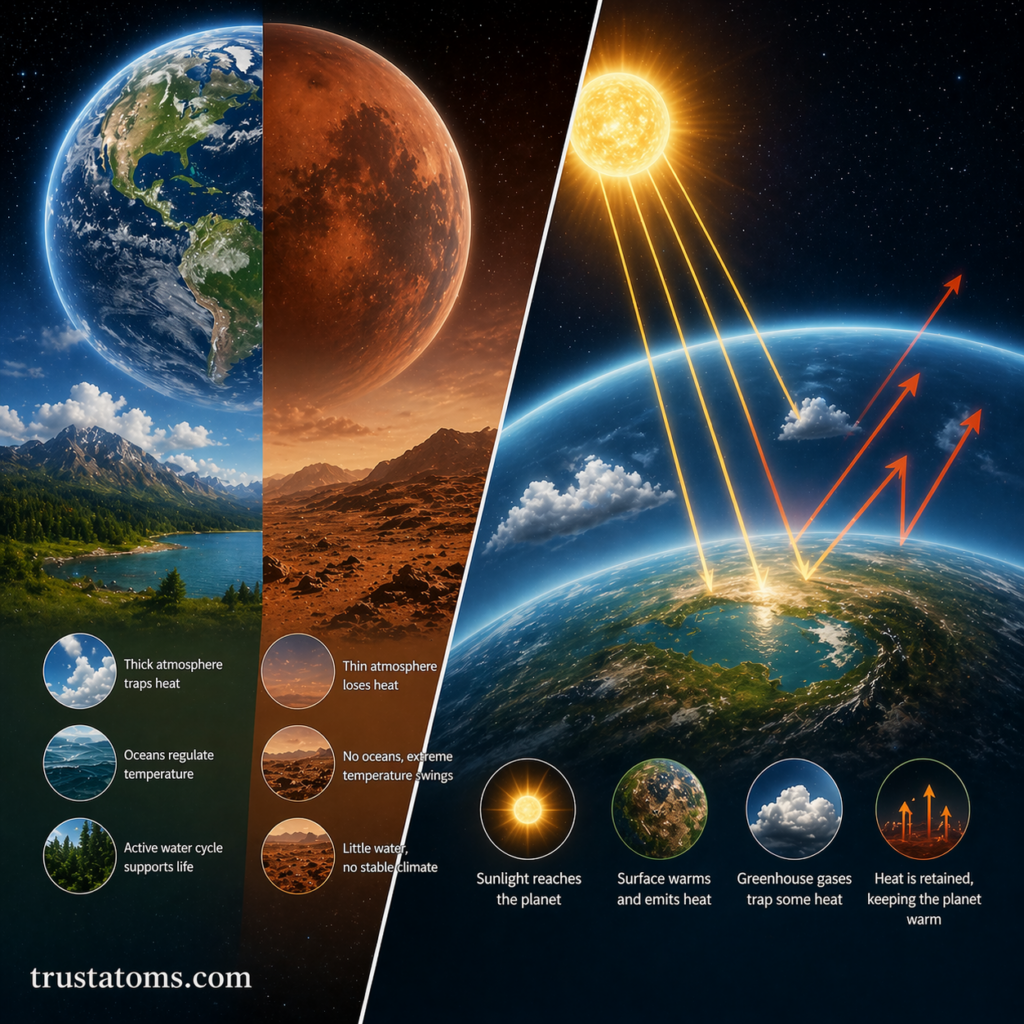
The greenhouse effect is a key process in planetary climate systems.
It occurs when gases in the atmosphere trap heat, preventing it from escaping into space.
How it works:
- Sunlight reaches the planet’s surface
- Surface absorbs energy and warms up
- Heat radiates back toward space
- Greenhouse gases trap some of this heat
This process keeps planets warm enough to sustain stable climates.
Without it:
- Earth would be frozen
- Many planets would be too cold for liquid water
However, too much greenhouse effect can lead to runaway heating.
Examples of Planetary Climates in Our Solar System
Studying nearby planets provides valuable insight into climate diversity.
Earth
- Balanced atmosphere
- Active water cycle
- Moderate greenhouse effect
- Stable temperatures suitable for life
Venus
- Extremely dense atmosphere
- Runaway greenhouse effect
- Surface temperatures hot enough to melt lead
Mars
- Thin atmosphere
- Weak greenhouse effect
- Cold, dry environment with large temperature swings
Jupiter (Gas Giant Example)
- No solid surface
- Massive storm systems
- Strong atmospheric bands and high-speed winds
Atmospheric Circulation and Weather Patterns
Atmospheric circulation refers to how air moves around a planet.
This movement redistributes heat and creates weather systems.
Key circulation features include:
- Jet streams
- Trade winds
- High and low pressure systems
On Earth, these systems help balance temperature differences between the equator and the poles.
On other planets, circulation can be more extreme due to differences in size, rotation, and atmospheric composition.
Climate Feedback Loops
Climate systems often include feedback loops that either stabilize or intensify changes.
Positive Feedback (amplifies change)
- Ice melts → less sunlight reflected → more warming
- More warming → more ice melts
Negative Feedback (stabilizes system)
- Increased temperature → more cloud formation → reflects sunlight → cooling effect
These feedback mechanisms play a crucial role in long-term climate stability.
Extreme Climate Systems Beyond Earth
Many planets exhibit climate systems far more extreme than Earth’s.
Examples include:
- Tidally locked planets (one side always facing the star)
- Planets with global storms lasting centuries
- Ice worlds with frozen atmospheres
- Super-Earths with thick, crushing atmospheres
These environments challenge our understanding of climate and habitability.
Why Planetary Climate Systems Matter
Studying planetary climates helps scientists:
- Understand Earth’s climate changes
- Predict long-term environmental trends
- Identify potentially habitable exoplanets
- Explore how life might exist in extreme environments
It also provides context for how unique—or common—Earth-like conditions may be in the universe.
Final Thoughts
Planetary climate systems are complex, dynamic, and deeply interconnected. From the balance of atmospheric gases to the influence of stellar energy, every factor plays a role in shaping a planet’s environment.
By studying these systems across different worlds, scientists gain valuable insight into how climates evolve—and what conditions might allow life to thrive beyond Earth.

Related Posts
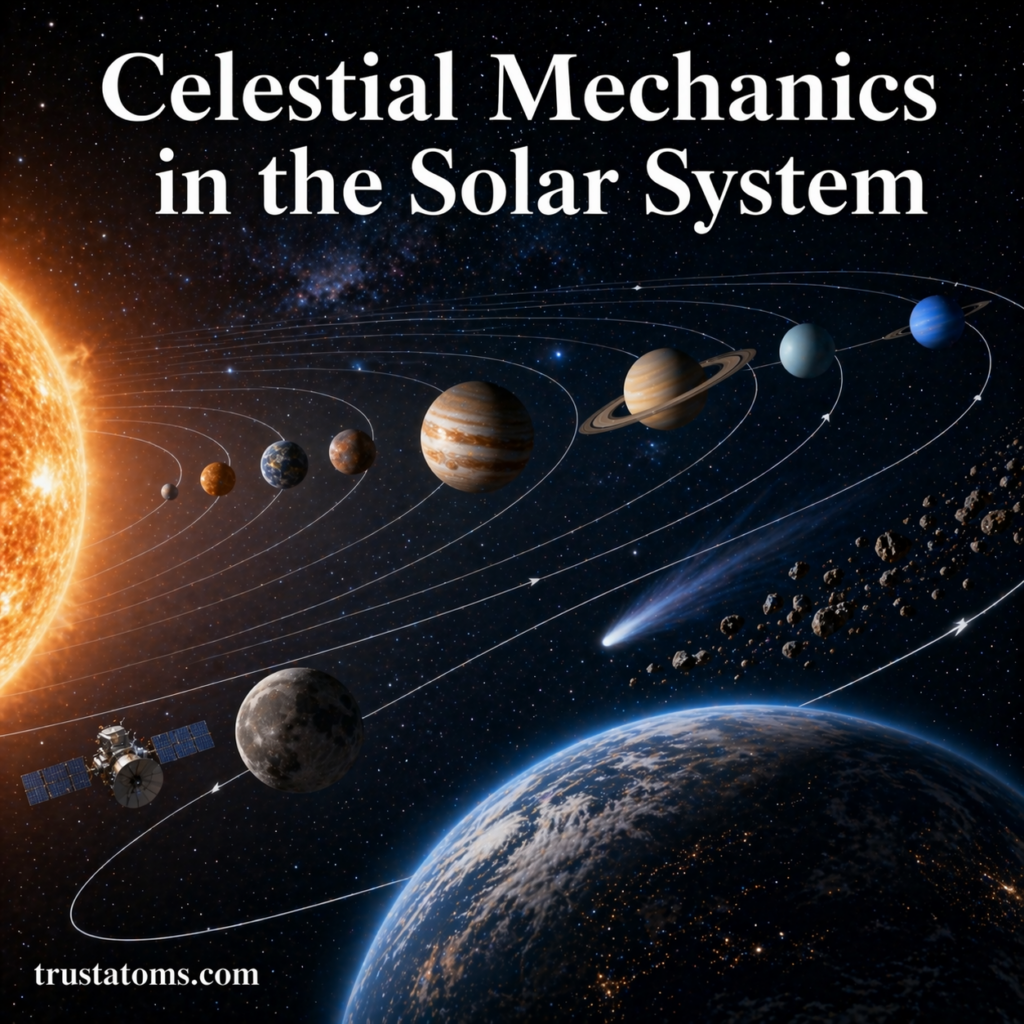 Celestial Mechanics in the Solar System: How Gravity Shapes Planetary Motion
 Comet Tails and Solar Interaction: How the Sun Shapes These Cosmic Travelers
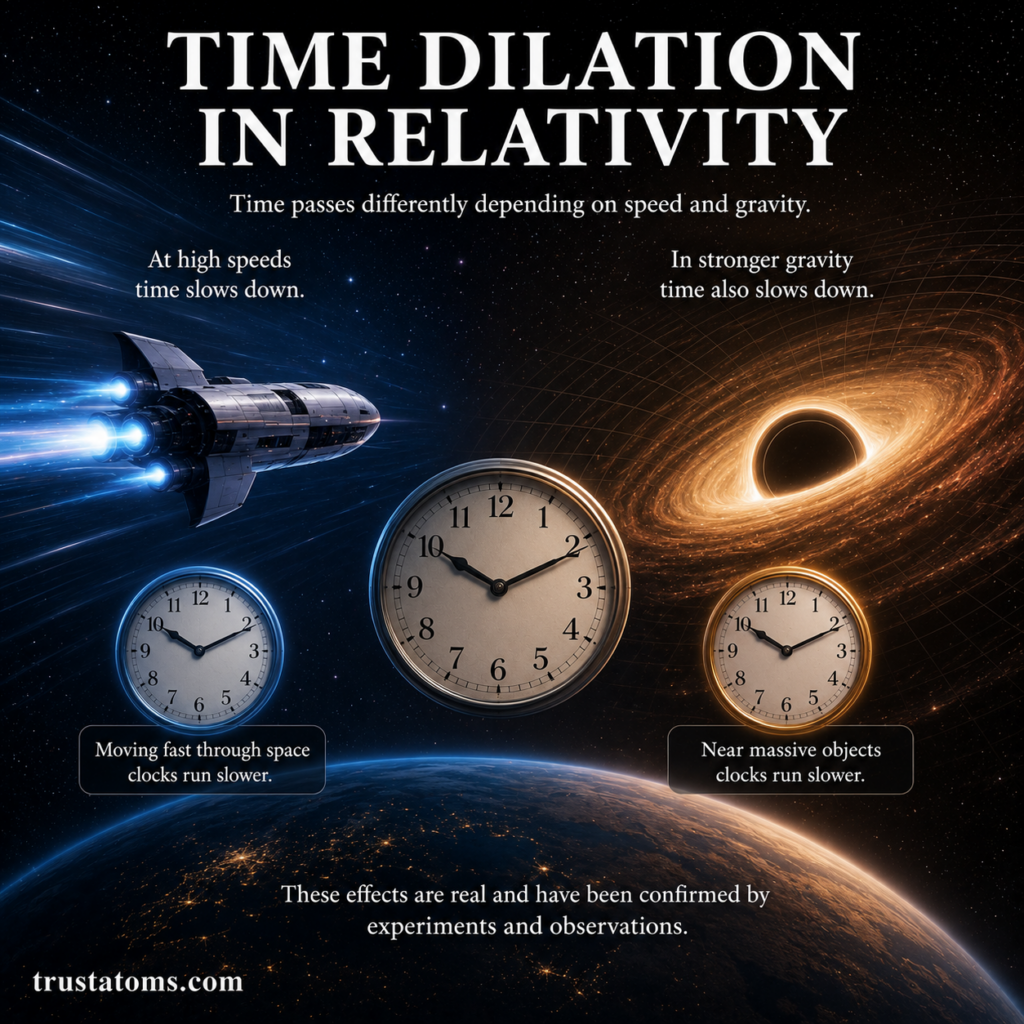 Time Dilation in Relativity: Why Time Passes Differently in Space and Gravity
 Impact Craters in the Solar System: How Collisions Shape Planetary Surfaces