Redshift is one of the most important concepts in modern space science. It helps scientists understand how objects in the universe move, how fast they are traveling, and even how the universe itself is evolving.
By analyzing how light changes as it travels through space, researchers can uncover powerful insights about galaxies, stars, and the expansion of the cosmos.
What Is Redshift?
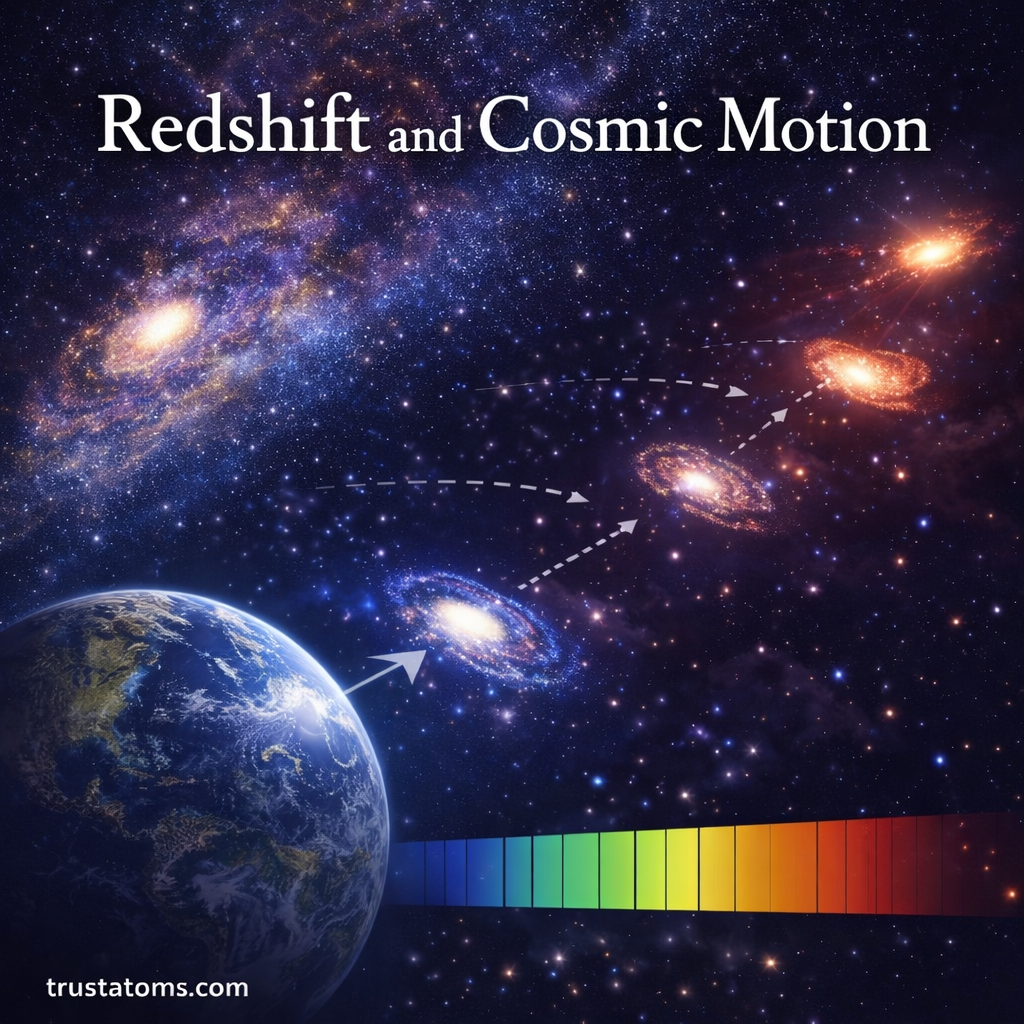
Redshift occurs when light from an object is stretched to longer wavelengths as it moves away from the observer. This shift moves the light toward the red end of the visible spectrum.
In simple terms, when something in space moves away from us, its light appears “redder” than it originally was.
Key idea
- Longer wavelengths = redder light
- Shorter wavelengths = bluer light
- Movement affects how light is observed
The Doppler Effect in Space
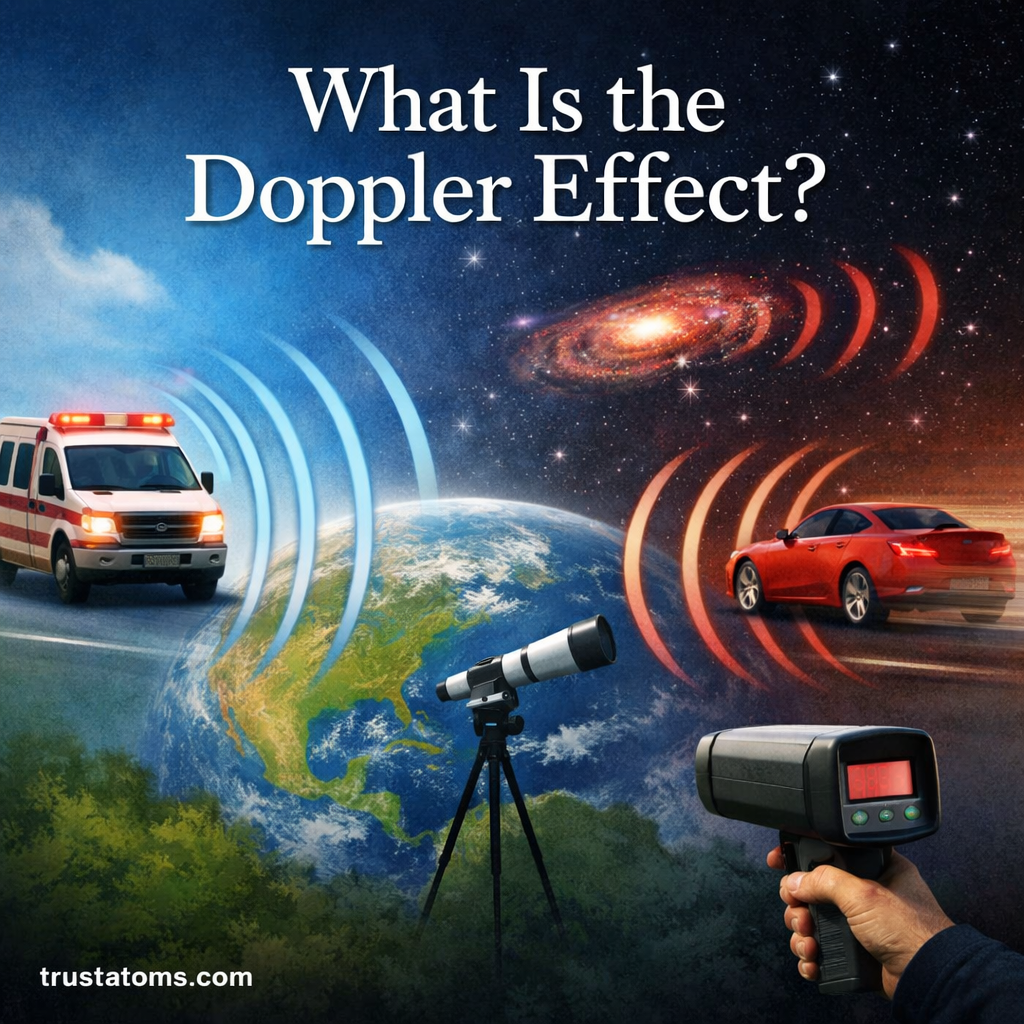
Redshift is closely related to the Doppler effect, a phenomenon that occurs when a source of waves moves relative to an observer.
You may already be familiar with this effect from sound—like how a passing siren changes pitch as it moves by. The same principle applies to light in space.
How the Doppler effect applies to light
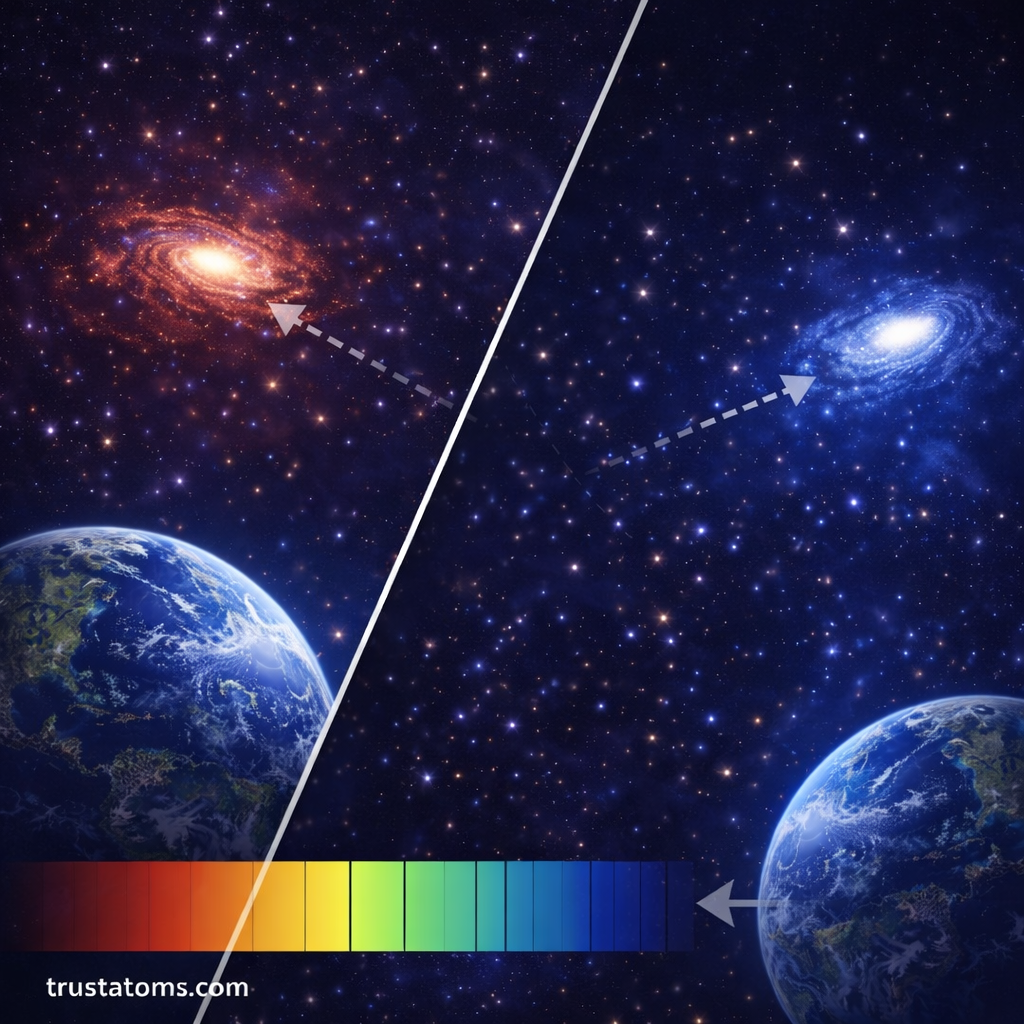
- Objects moving away → wavelengths stretch (redshift)
- Objects moving closer → wavelengths compress (blueshift)
This allows scientists to measure the motion of distant celestial objects with remarkable accuracy.
How Redshift Is Measured
Scientists measure redshift by analyzing the spectral lines of light emitted by stars and galaxies. These lines shift depending on how fast an object is moving.
Step-by-step process
- Light from a distant object is collected using a telescope
- The light is split into a spectrum using spectroscopy
- Known spectral lines are identified
- The shift in these lines is measured
- The amount of shift reveals the object’s velocity
The greater the redshift, the faster the object is moving away.
Types of Redshift
There are different types of redshift, each caused by different physical processes.
Doppler redshift
- Caused by the motion of objects through space
- Most commonly used to measure galaxy movement
Cosmological redshift
- Caused by the expansion of the universe itself
- Light stretches as space expands over time
Gravitational redshift
- Occurs when light escapes strong gravitational fields
- Seen near massive objects like black holes
Redshift and the Expanding Universe
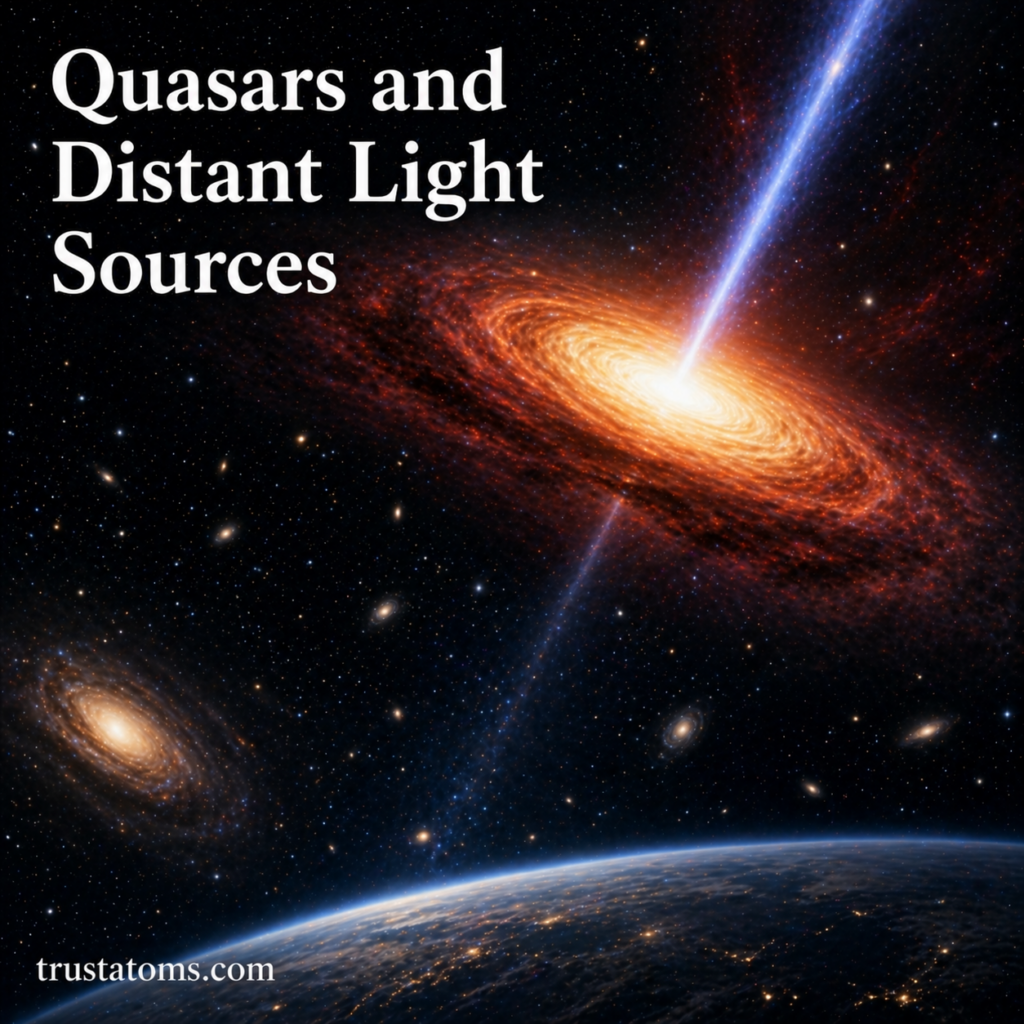
One of the most groundbreaking discoveries in science came from studying redshift. Scientists found that most galaxies are moving away from us—and the farther away they are, the faster they move.
This observation led to the idea that the universe is expanding.
Key implications
- The universe is not static
- Galaxies are moving apart over time
- Space itself is stretching
This discovery supports the Big Bang theory, which suggests the universe began from a very dense and hot state.
Hubble’s Law
Redshift plays a central role in understanding Hubble’s Law, which describes the relationship between a galaxy’s distance and its speed.
What Hubble’s Law tells us
- The farther a galaxy is, the faster it recedes
- Redshift increases with distance
- The universe expands uniformly on large scales
This relationship helps scientists estimate distances across the universe.
Why Redshift Matters
Redshift is more than just a measurement—it’s a window into the history and structure of the universe.
What scientists learn from redshift
- The rate of cosmic expansion
- The age of the universe
- The motion of galaxies and stars
- The large-scale structure of the cosmos
It also helps identify extremely distant galaxies, allowing scientists to look back in time.
Limitations and Challenges
While redshift is incredibly useful, it comes with challenges.
Common limitations
- Requires precise instruments and measurements
- Can be affected by local motion of objects
- Interpretation can be complex at extreme distances
- Gravitational effects can complicate readings
Despite these challenges, redshift remains a cornerstone of modern astronomy.
Final Thoughts
Redshift and cosmic motion are key to understanding how the universe works. By studying how light changes as objects move through space, scientists can measure distances, track motion, and uncover the expansion of the cosmos.
From nearby stars to distant galaxies billions of light-years away, redshift continues to reveal the dynamic nature of our universe—and our place within it.