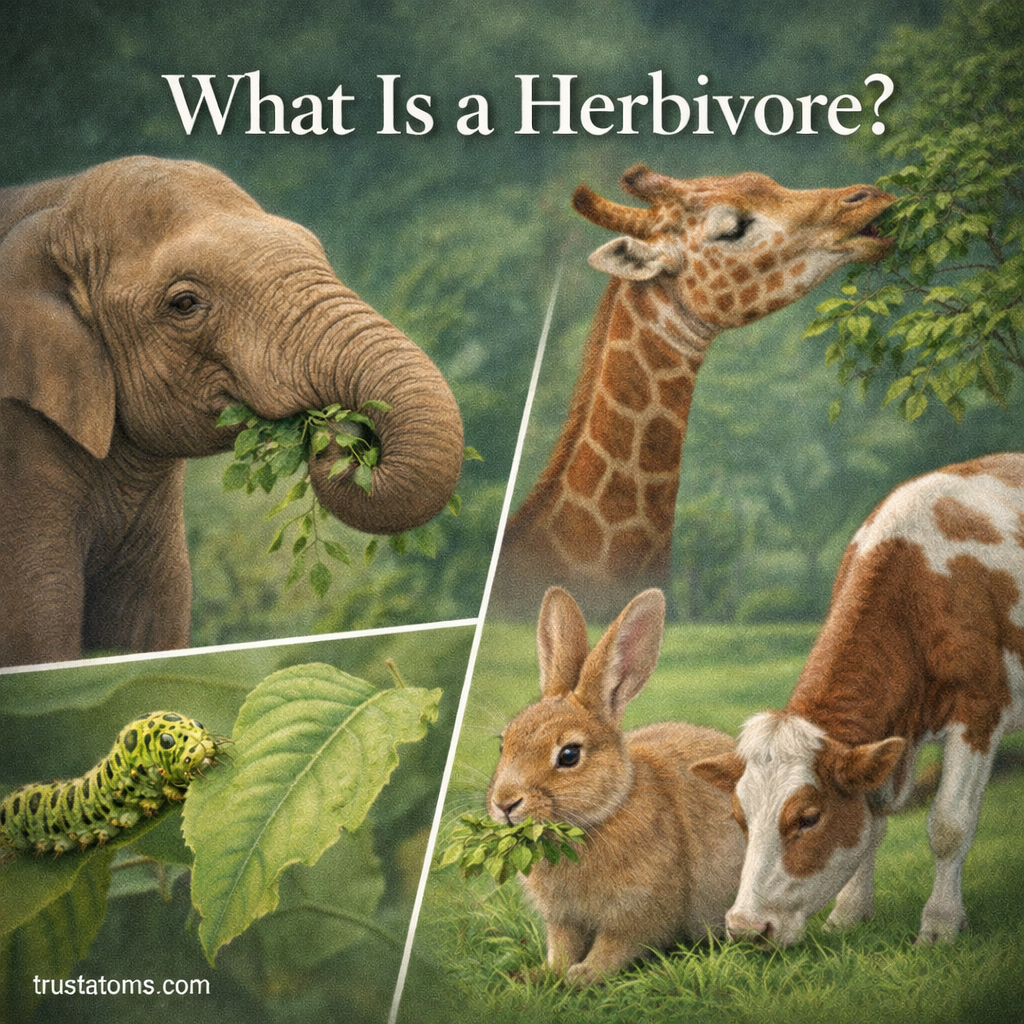
A herbivore is an organism that primarily eats plants. In biological terms, herbivores are animals that obtain energy and nutrients by consuming plant material such as leaves, stems, fruits, seeds, flowers, roots, and algae.
Herbivores play an important role in ecosystems because they transfer energy from producers—plants that create energy through photosynthesis—to higher levels of the food chain. Many herbivores are also prey for carnivores and omnivores, making them a key link in ecological food webs.
From large mammals like elephants and giraffes to small insects like caterpillars and grasshoppers, herbivores exist in nearly every ecosystem on Earth.
The Biological Definition of a Herbivore
In ecology, a herbivore is defined as an organism that:
- Consumes plant material as its primary food source
- Obtains energy directly from plant tissues
- Functions as a primary consumer in the food chain
Primary consumers occupy the second trophic level in ecosystems. Plants and algae form the first level, while herbivores consume those organisms and convert plant energy into animal biomass.
Because herbivores rely on plants, their populations are often influenced by plant availability, seasonal changes, and environmental conditions.
Examples of Herbivores in Nature
Herbivores come in many forms and sizes across different ecosystems.
Large Mammalian Herbivores
Many large animals are herbivores that feed on grasses, leaves, and other vegetation.
Examples include:
- Elephants
- Giraffes
- Deer
- Horses
- Cows
These animals often spend a large portion of their day feeding to obtain enough energy from plants.
Small Mammalian Herbivores
Smaller mammals also rely heavily on plant-based diets.
Examples include:
- Rabbits
- Squirrels
- Beavers
- Guinea pigs
These animals may specialize in eating seeds, bark, fruits, or leaves.
Insect Herbivores
Many insects feed on plants and can significantly influence plant populations.
Examples include:
- Caterpillars
- Grasshoppers
- Aphids
- Leaf beetles
Insect herbivores play major roles in plant ecology and agriculture.
Aquatic Herbivores
Herbivores are also common in aquatic ecosystems.
Examples include:
- Sea turtles
- Manatees
- Certain fish species
- Marine snails
These organisms often feed on algae, seagrasses, or aquatic plants.
What Herbivores Eat

Herbivores may specialize in eating particular parts of plants.
Common plant foods include:
- Leaves – eaten by animals like deer and caterpillars
- Grasses – eaten by animals such as cows, zebras, and horses
- Fruits and seeds – eaten by squirrels, birds, and monkeys
- Roots and tubers – eaten by animals like wild pigs
- Bark and wood – eaten by beavers and some insects
Different herbivores evolve adaptations that allow them to digest specific plant materials efficiently.
Adaptations That Help Herbivores Eat Plants
Plants can be tough to digest and often contain defensive chemicals. Herbivores have evolved specialized adaptations to overcome these challenges.
Specialized Teeth
Many herbivores have flat teeth designed for grinding plant material.
Examples include:
- Molars with large grinding surfaces
- Continuous tooth growth in animals like rabbits
- Strong jaw muscles for chewing fibrous plants
Complex Digestive Systems
Plant material contains cellulose, which is difficult to break down.
Some herbivores have specialized digestive systems that allow microbes to help digest plant fibers.
Examples include:
- Ruminants (cows, deer, sheep) with multi-chambered stomachs
- Hindgut fermenters (horses, rabbits) that digest plant matter in the large intestine
Behavioral Adaptations
Herbivores also adapt their feeding behavior.
Examples include:
- Grazing on grasses in open fields
- Browsing leaves from trees and shrubs
- Feeding at specific times to avoid predators
These behaviors help herbivores maximize food intake while minimizing risk.
Herbivores in the Food Chain
Herbivores occupy a key position in the food chain.
A simplified food chain often looks like this:
- Producers (plants and algae)
- Herbivores (primary consumers)
- Carnivores (secondary consumers)
- Apex predators
Because herbivores convert plant energy into animal energy, they support populations of predators higher in the food web.
Without herbivores, energy from plants would not move efficiently through ecosystems.
Herbivores vs. Carnivores vs. Omnivores
Animals are often classified by what they eat.
Herbivores
- Eat plants
- Examples: cows, rabbits, elephants
Carnivores
- Eat other animals
- Examples: lions, sharks, eagles
Omnivores
- Eat both plants and animals
- Examples: humans, bears, raccoons
These feeding strategies shape ecological interactions and influence species roles in ecosystems.
How Herbivores Influence Ecosystems
Herbivores strongly affect the structure and health of ecosystems.
Their activities can:
- Control plant population growth
- Shape plant community structure
- Spread plant seeds through digestion
- Influence nutrient cycling in soil
In some ecosystems, herbivores help maintain grasslands by preventing forests from overtaking open areas.
However, excessive herbivore populations can also damage ecosystems by overgrazing vegetation.
Defensive Strategies Used by Plants
Plants have evolved defenses to protect themselves from herbivores.
Common plant defenses include:
- Thorns and spines that discourage feeding
- Tough leaves or bark that are difficult to chew
- Chemical toxins that deter animals
- Bitter or unpleasant flavors
In response, herbivores often evolve ways to tolerate or avoid these defenses, creating an evolutionary balance between plants and plant-eating animals.
Final Thoughts
Herbivores are animals that obtain energy by eating plants. As primary consumers, they play a critical role in transferring energy from producers to higher levels of the food chain.
From grazing mammals and browsing deer to leaf-eating insects and algae-feeding marine animals, herbivores exist in nearly every environment. Their interactions with plants shape ecosystems, influence evolutionary adaptations, and support complex food webs across the natural world.