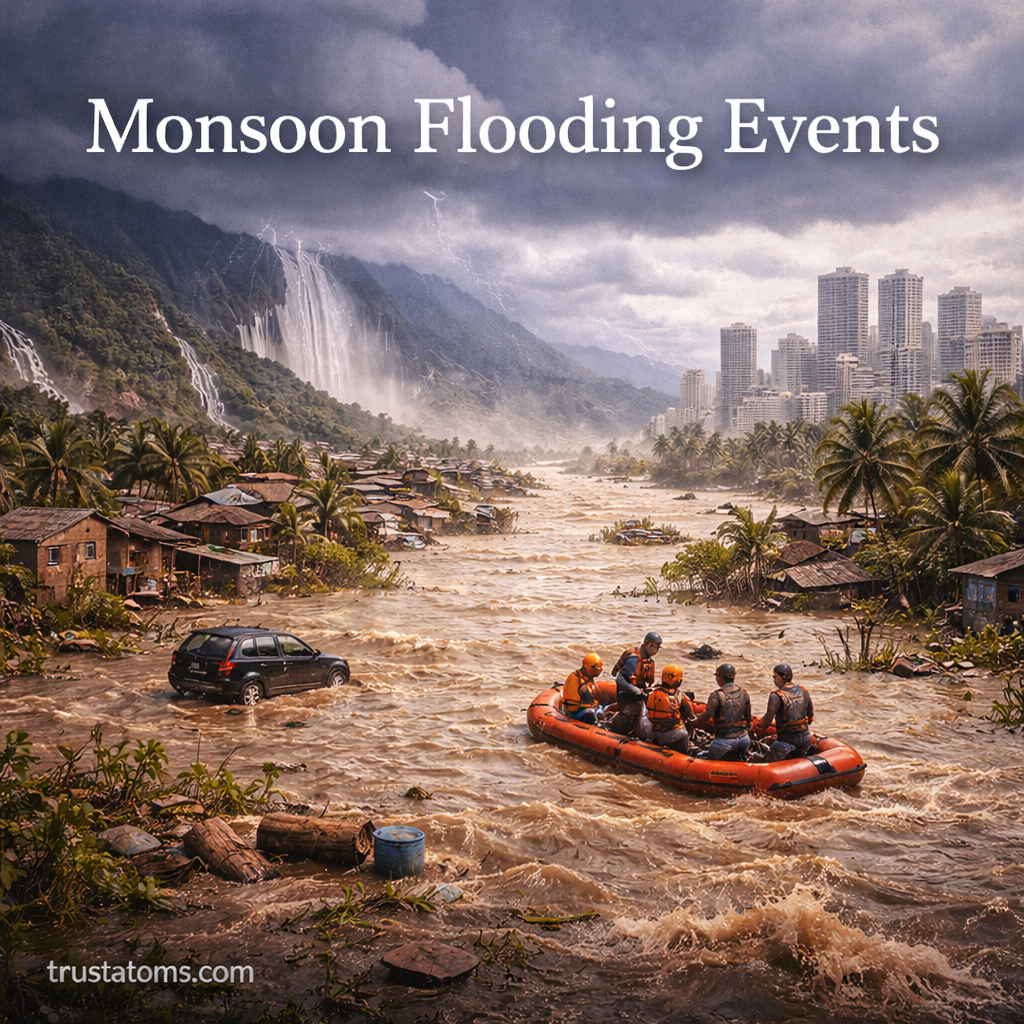
Monsoon flooding events are among the most significant seasonal weather phenomena on Earth. While monsoons are essential for agriculture and water supply in many regions, they can also bring intense rainfall that leads to widespread flooding, infrastructure damage, and loss of life.
Understanding how monsoon systems work and why flooding occurs helps improve preparedness and reduce risk.
What Is a Monsoon?
A monsoon is a seasonal shift in wind patterns that brings dramatic changes in rainfall. It is driven by temperature differences between land and ocean.
During warmer months:
- Land heats up faster than the ocean
- Warm air rises over land, creating low pressure
- Moist air from the ocean moves inland
- This air cools and condenses, producing heavy rainfall
This seasonal process can last for weeks or months, delivering large amounts of precipitation.
What Causes Monsoon Flooding?
Monsoon flooding occurs when rainfall exceeds the land’s ability to absorb or drain water.
Key Causes
- Prolonged Heavy Rainfall
Continuous rain over several days saturates the soil and fills rivers. - Rapid Downpours
Intense bursts of rain overwhelm drainage systems in a short time. - River Overflow
Rivers and reservoirs exceed capacity, spilling into surrounding areas. - Poor Drainage Infrastructure
Urban areas with inadequate drainage are especially vulnerable. - Deforestation and Land Use Changes
Reduced vegetation limits water absorption and increases runoff.
Types of Monsoon Flooding
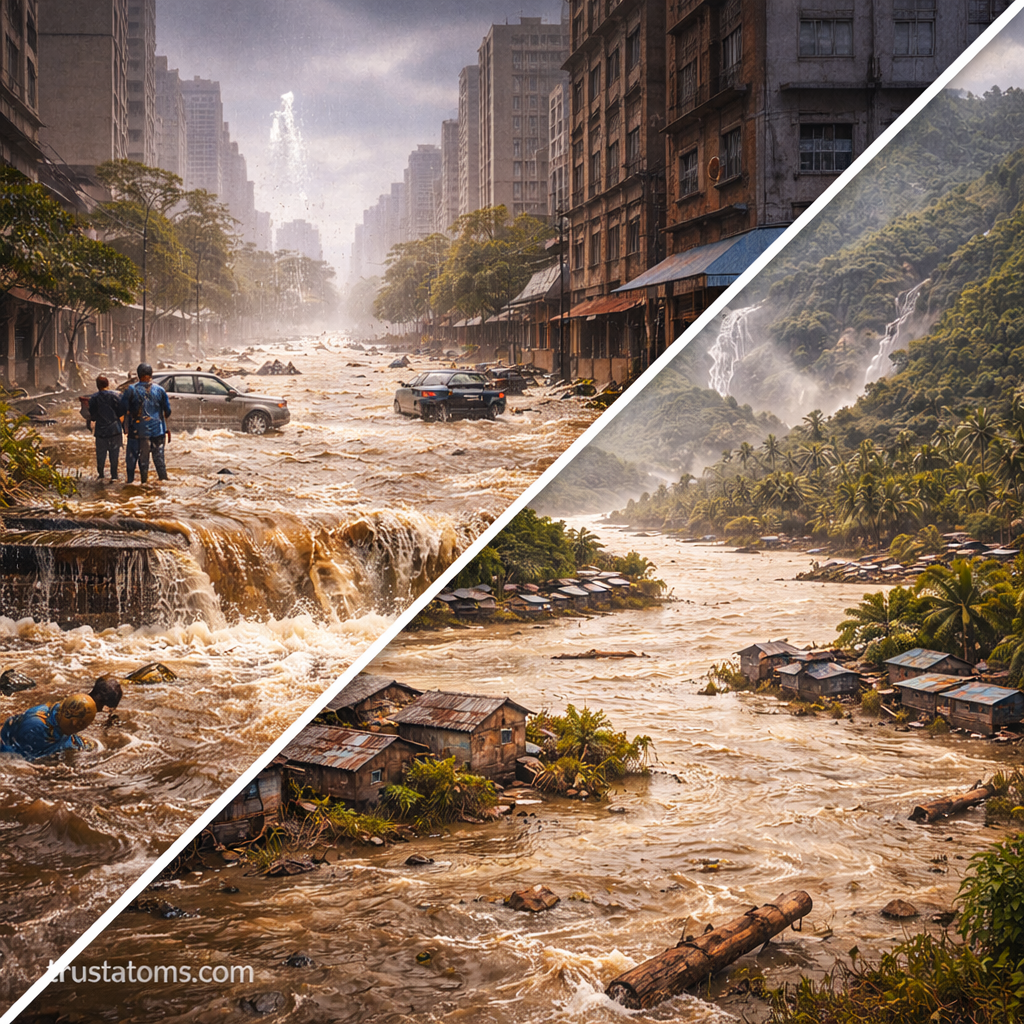
Flooding during monsoon seasons can take several forms.
River Flooding
- Occurs when rivers overflow due to sustained rainfall
- Can affect large regions for extended periods
Flash Flooding
- Caused by sudden, intense rainfall
- Develops quickly with little warning
- Common in urban areas and mountainous terrain
Urban Flooding
- Results from overwhelmed drainage systems
- Roads, homes, and businesses can become submerged
Coastal Flooding
- Occurs when heavy rain combines with storm surges or high tides
- Common in low-lying coastal regions
Regions Most Affected by Monsoon Flooding
Monsoon flooding is most common in areas with strong seasonal rainfall patterns.
South Asia
- Countries like India, Bangladesh, and Pakistan experience intense monsoon rains
- Large river systems increase flood risk
Southeast Asia
- Nations such as Thailand, Vietnam, and the Philippines are highly vulnerable
- Tropical storms can intensify monsoon rainfall
East Asia
- China, Japan, and Korea experience seasonal rains that can lead to flooding
West Africa
- Seasonal monsoons bring critical rainfall but also flood risks
Key Features of Monsoon Flood Events
Monsoon flooding events often share several defining characteristics.
Seasonal Timing
- Occur during predictable months each year
- Typically align with regional monsoon seasons
Large Geographic Impact
- Affect entire regions or countries
- Often involve major river basins
Prolonged Duration
- Flooding can last days or weeks
- Recovery may take months
Compounding Effects
- Landslides in hilly areas
- Infrastructure strain and economic disruption
Impacts of Monsoon Flooding
The effects of monsoon flooding can be widespread and severe.
Human Impact
- Displacement of communities
- Risk of injury and loss of life
- Increased spread of waterborne diseases
Economic Impact
- Damage to homes, roads, and infrastructure
- Disruption of businesses and supply chains
- Agricultural losses affecting food supply
Environmental Impact
- Soil erosion and land degradation
- Contamination of water sources
- Damage to ecosystems and wildlife habitats
Climate Change and Monsoon Flooding
Climate change is influencing monsoon patterns and flood risks.
Key Trends
- Increased rainfall intensity in some regions
- More unpredictable monsoon timing
- Rising sea levels worsening coastal flooding
Warmer air holds more moisture, which can lead to heavier rainfall during monsoon seasons, increasing the likelihood of extreme flooding events.
How Monsoon Flooding Is Managed
Governments and organizations use various strategies to reduce flood risks.
Infrastructure Solutions
- Dams and reservoirs to control water flow
- Flood barriers and levees
- Improved urban drainage systems
Early Warning Systems
- Weather forecasting and monitoring
- Flood alerts and evacuation plans
Land Management
- Reforestation and sustainable land use
- Zoning regulations to limit construction in flood-prone areas
Safety Tips During Monsoon Flooding
Preparation and awareness are essential for staying safe.
Before Flooding
- Monitor weather forecasts and alerts
- Prepare emergency supplies
- Identify evacuation routes
During Flooding
- Avoid walking or driving through floodwaters
- Move to higher ground if necessary
- Stay informed through local authorities
After Flooding
- Avoid contaminated water
- Check for structural damage before returning home
- Follow public health guidance
Why Monsoon Flooding Matters
Monsoon flooding is a critical global issue because it:
- Affects millions of people annually
- Plays a role in food security and water resources
- Highlights the balance between beneficial rainfall and destructive flooding
Managing monsoon flooding effectively is essential for sustainable development in affected regions.
Final Thoughts
Monsoon flooding events are complex natural phenomena driven by seasonal weather patterns and environmental factors. While monsoons are vital for life and agriculture, their intensity can lead to devastating floods when conditions align.
By understanding the causes, impacts, and management strategies, communities can better prepare for and adapt to these powerful seasonal events.