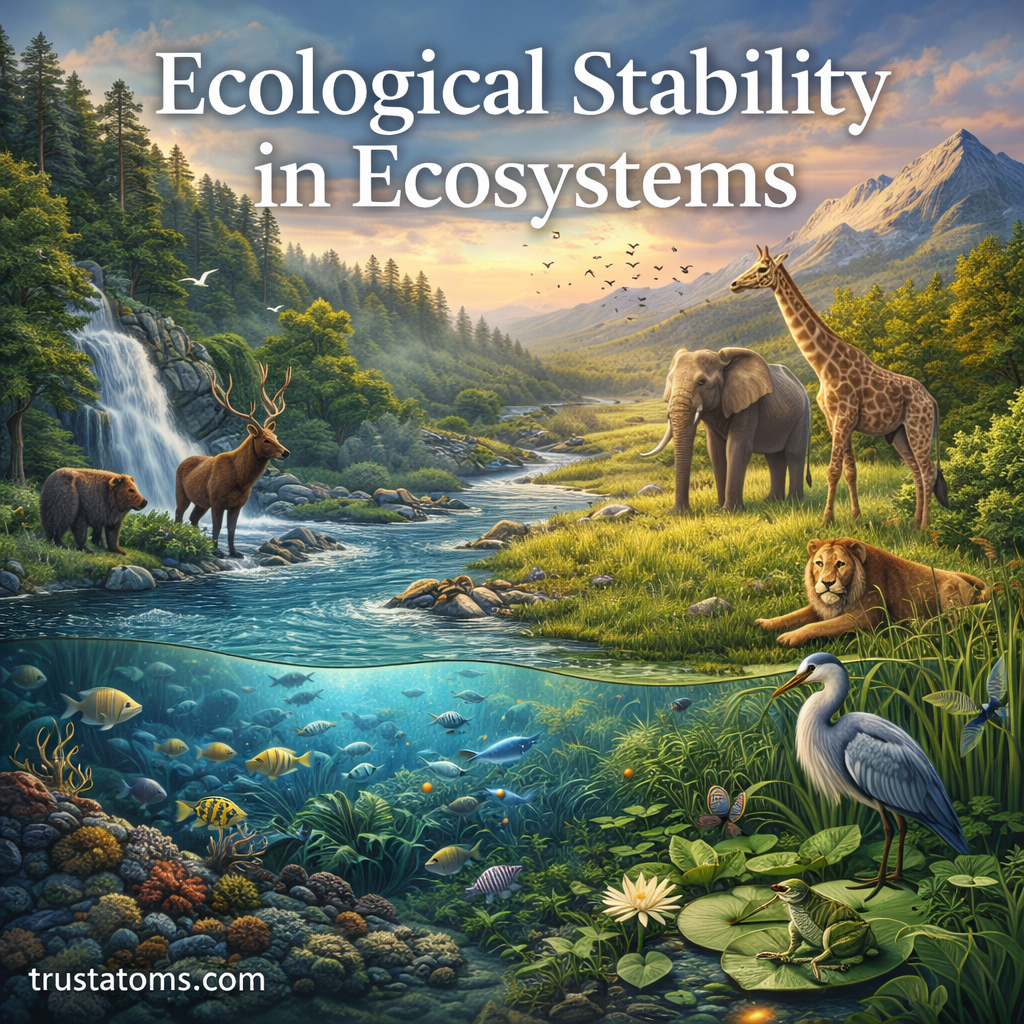
Ecological stability refers to the ability of an ecosystem to maintain its structure, functions, and biological diversity over time, even when faced with disturbances or environmental changes. Stable ecosystems are able to resist disruptions, recover from disturbances, and sustain balanced interactions among species.
In natural environments, stability arises from complex relationships among organisms, resources, and environmental conditions. These interactions form networks that regulate energy flow, nutrient cycling, and population dynamics.
Understanding ecological stability is important for conservation biology, environmental management, and predicting how ecosystems respond to challenges such as climate change, habitat loss, and invasive species.
What Is Ecological Stability?
Ecological stability describes how well an ecosystem maintains its structure and functioning despite external pressures.
An ecosystem is considered stable when it can:
- Maintain species diversity
- Preserve food web relationships
- Regulate population sizes
- Sustain nutrient and energy cycles
Stability does not mean ecosystems remain unchanged. Instead, stable ecosystems can adapt and reorganize while maintaining overall balance.
Key Components of Ecosystem Stability
Several characteristics contribute to ecological stability.
Biodiversity
Biodiversity plays a critical role in ecosystem resilience.
Ecosystems with many species often display greater stability because:
- Different species perform similar ecological roles
- Loss of one species can sometimes be compensated by others
- Complex food webs buffer environmental fluctuations
High biodiversity increases the likelihood that ecosystems can withstand environmental disturbances.
Food Web Complexity
Food webs describe feeding relationships among organisms.
Complex food webs often improve stability because they distribute energy flow across many species.
Key advantages of complex food webs include:
- Multiple predator-prey interactions
- Alternative food sources for organisms
- Reduced risk of cascading population collapses
These interconnected relationships help maintain ecological balance.
Nutrient Cycling
Nutrients such as carbon, nitrogen, and phosphorus continuously circulate through ecosystems.
Nutrient cycling involves interactions among:
- Plants
- Animals
- Microorganisms
- Soil and water systems
Efficient nutrient recycling supports ecosystem productivity and stability.
Habitat Structure
Physical structures within ecosystems provide shelter, breeding areas, and feeding grounds for organisms.
Examples include:
- Forest canopies
- Coral reef structures
- Wetland vegetation
- Soil layers
These structural features influence species distribution and ecological interactions.
Types of Ecological Stability
Scientists often describe ecosystem stability using several related concepts.
Resistance
Resistance refers to an ecosystem’s ability to remain unchanged when exposed to disturbance.
For example:
- A forest ecosystem may resist short-term temperature fluctuations.
- Grasslands may resist moderate grazing pressure.
Higher resistance means ecosystems can absorb disturbances without major changes.
Resilience
Resilience describes how quickly an ecosystem recovers after a disturbance.
Examples include:
- Forest regrowth after wildfire
- Coral reef recovery after storms
- Grassland regeneration after drought
Highly resilient ecosystems can rebuild their structure and functions over time.
Persistence
Persistence refers to the long-term survival of ecosystem components, such as species populations and ecological processes.
Stable ecosystems maintain:
- Species populations
- Nutrient cycles
- Energy flow
over long periods despite environmental variability.
Disturbances in Ecosystems
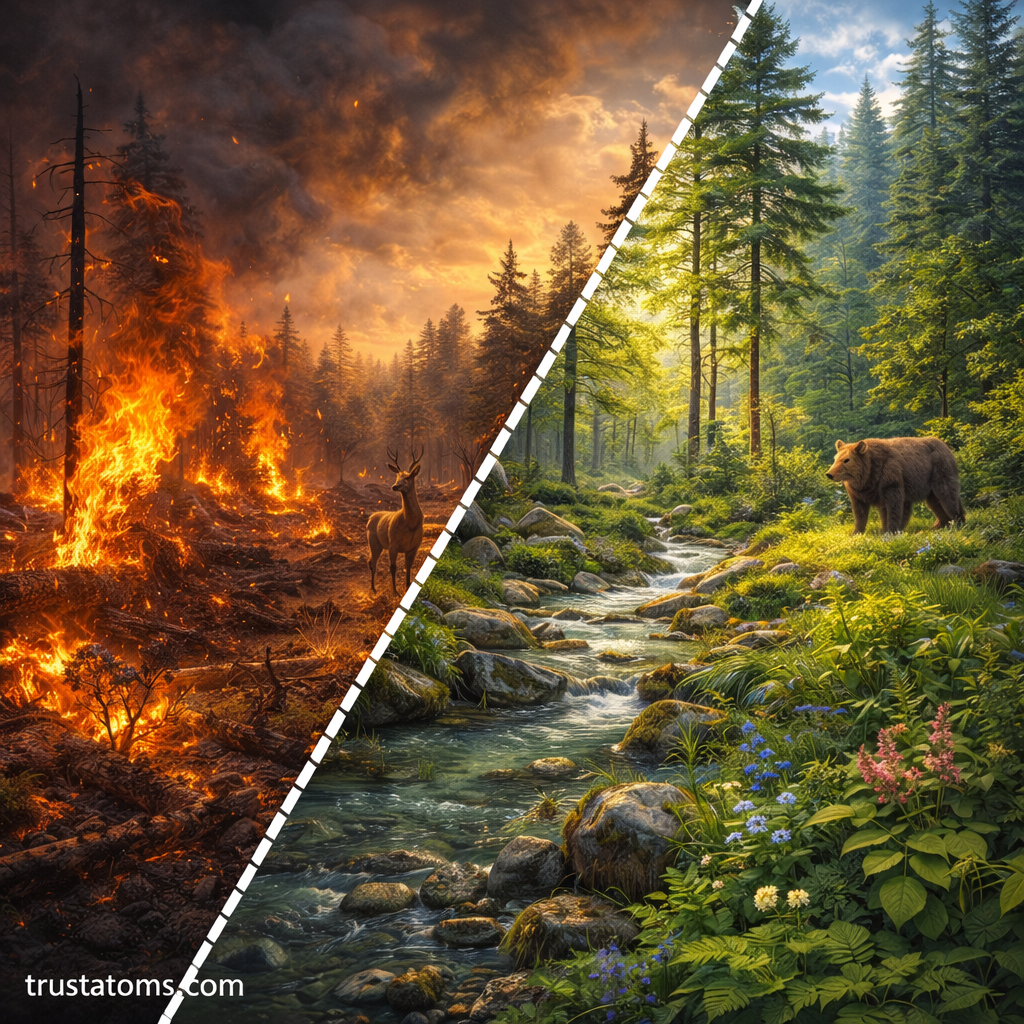
Disturbances are events that disrupt ecosystem structure or functioning.
These disturbances may be natural or human-caused.
Natural Disturbances
Natural disturbances are part of many ecosystems and may even contribute to long-term stability.
Examples include:
- Wildfires
- Hurricanes
- Floods
- Volcanic eruptions
- Disease outbreaks
Some ecosystems depend on periodic disturbances to maintain biodiversity and ecological balance.
Human-Induced Disturbances
Human activities can significantly alter ecosystems and threaten stability.
Examples include:
- Deforestation
- Urban development
- Pollution
- Overfishing
- Climate change
These disturbances may exceed the recovery capacity of ecosystems.
Feedback Mechanisms in Ecosystems
Ecosystems maintain stability through feedback mechanisms that regulate biological processes.
Negative Feedback
Negative feedback loops help stabilize ecosystems by counteracting changes.
For example:
- Predator populations increase when prey populations grow.
- As predators consume more prey, prey populations decline.
- Predator populations then decrease as food becomes scarce.
This cycle helps regulate population sizes.
Positive Feedback
Positive feedback loops amplify changes within ecosystems.
These processes may lead to rapid ecosystem transformations.
Examples include:
- Loss of vegetation leading to soil erosion
- Reduced soil nutrients preventing plant regrowth
- Continued environmental degradation
Positive feedback can push ecosystems toward new ecological states.
Ecological Stability and Keystone Species
Certain species have a disproportionately large influence on ecosystem stability.
These organisms are known as keystone species.
Keystone species help regulate ecosystems by:
- Controlling prey populations
- Maintaining habitat structures
- Supporting biodiversity
When keystone species disappear, ecosystems may experience dramatic changes.
Ecological Succession and Stability
Ecological succession describes how ecosystems develop over time after disturbances.
There are two main types:
Primary Succession
Primary succession occurs in environments where no life previously existed.
Examples include:
- Newly formed volcanic islands
- Glacial retreat areas
- Bare rock surfaces
Early colonizing organisms gradually build soil and allow more complex communities to develop.
Secondary Succession
Secondary succession occurs in ecosystems where disturbances remove vegetation but leave soil intact.
Examples include:
- Forest recovery after fire
- Vegetation regrowth after storms
- Grassland restoration after grazing
Secondary succession often occurs faster than primary succession.
Measuring Ecological Stability
Scientists study ecosystem stability using various ecological indicators.
Common measurements include:
- Species diversity indexes
- Population fluctuations
- Nutrient cycling rates
- Energy flow through food webs
- Ecosystem productivity
Long-term ecological monitoring helps researchers detect changes in ecosystem health.
Ecological Stability and Climate Change
Climate change presents a major challenge to ecosystem stability.
Rising temperatures, shifting precipitation patterns, and extreme weather events can alter ecological systems.
Potential impacts include:
- Species migration and range shifts
- Habitat loss
- Coral reef bleaching
- Altered food web interactions
Understanding ecological stability helps scientists predict how ecosystems may respond to environmental changes.
Strategies for Maintaining Ecosystem Stability
Protecting ecological stability is an important goal in conservation and environmental management.
Key strategies include:
- Preserving biodiversity
- Protecting critical habitats
- Reducing pollution
- Managing natural resources sustainably
- Restoring degraded ecosystems
These efforts support the resilience and long-term health of ecosystems.
Conclusion
Ecological stability reflects the ability of ecosystems to maintain balance while adapting to environmental changes. Through complex interactions among species, food webs, nutrient cycles, and physical habitats, ecosystems develop mechanisms that regulate biological processes and sustain biodiversity.
Although disturbances are a natural part of ecological systems, human activities and climate change are increasingly challenging ecosystem stability. Understanding how ecosystems resist and recover from disturbances is essential for protecting biodiversity and ensuring the long-term sustainability of the natural world.
By studying ecological stability, scientists gain valuable insights into how ecosystems function and how they can be preserved for future generations.