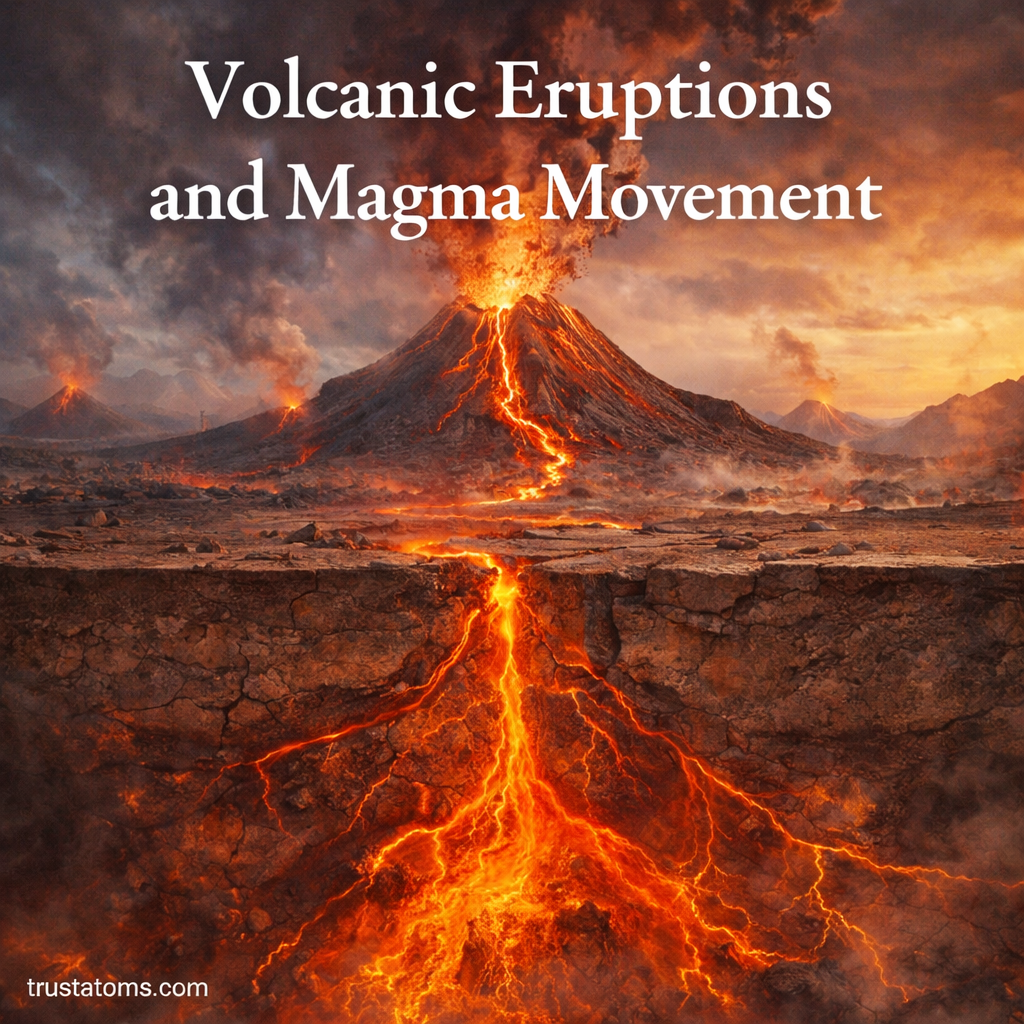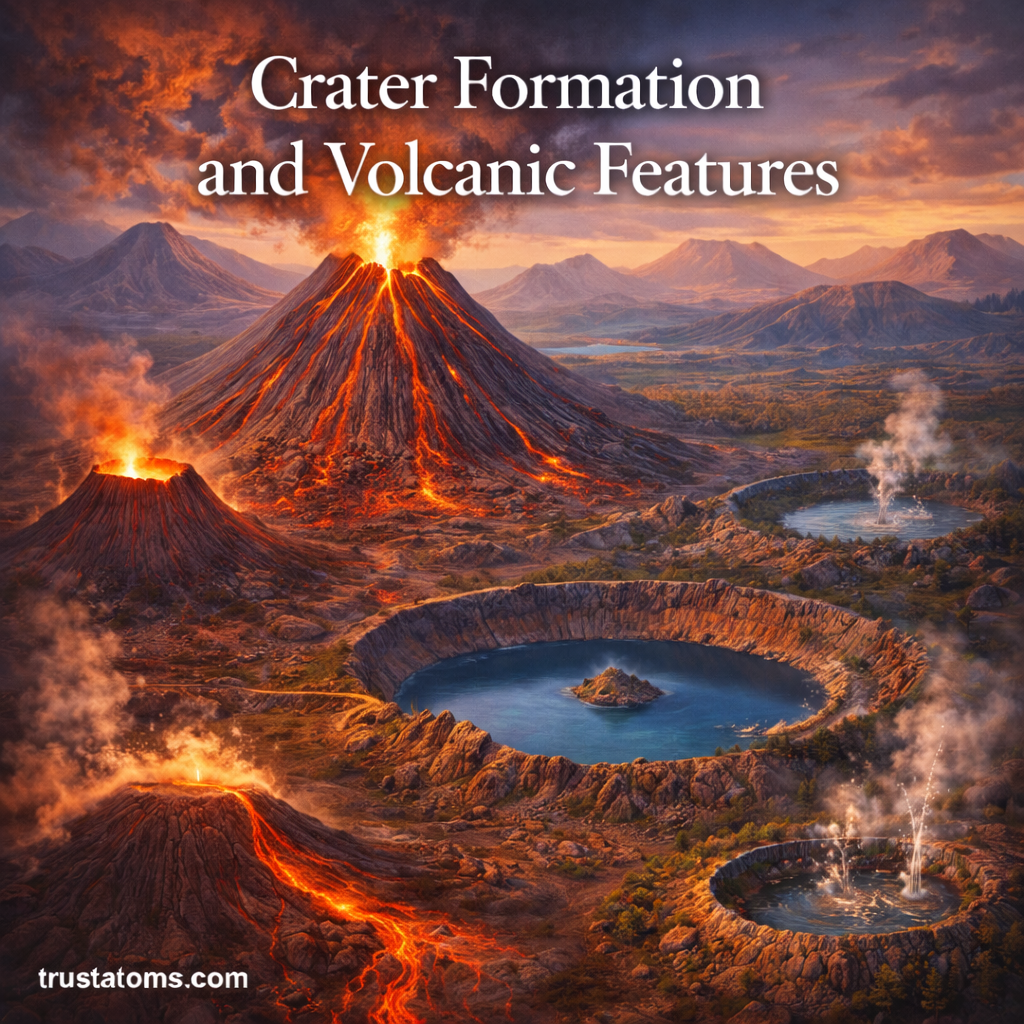
Volcanoes are among the most powerful geological forces on Earth. When they erupt, they don’t just release lava and ash—they also reshape the surface, forming craters, cones, and other distinctive features.
Understanding crater formation and volcanic features helps scientists interpret past eruptions, assess risks, and better understand how the Earth evolves over time.
What Is a Volcanic Crater?
A volcanic crater is a bowl-shaped depression found at the summit or side of a volcano. It forms when material is ejected during an eruption or when part of the volcano collapses.
Craters can vary widely in size:
- Small craters may be only a few meters across
- Large craters can span several kilometers
They often serve as the main vent through which lava, gas, and ash escape.
How Craters Form
Crater formation depends on the type of volcanic activity.
1. Explosive Eruptions
- Gas pressure builds up inside the volcano
- Sudden release blasts material outward
- A crater forms where material is ejected
2. Collapse After Eruption
- Magma chambers empty during an eruption
- The ground above collapses inward
- A depression forms at the surface
3. Steam Explosions (Phreatic Eruptions)
- Water interacts with hot magma
- Steam pressure causes an explosion
- A crater forms without lava flow
Types of Volcanic Craters
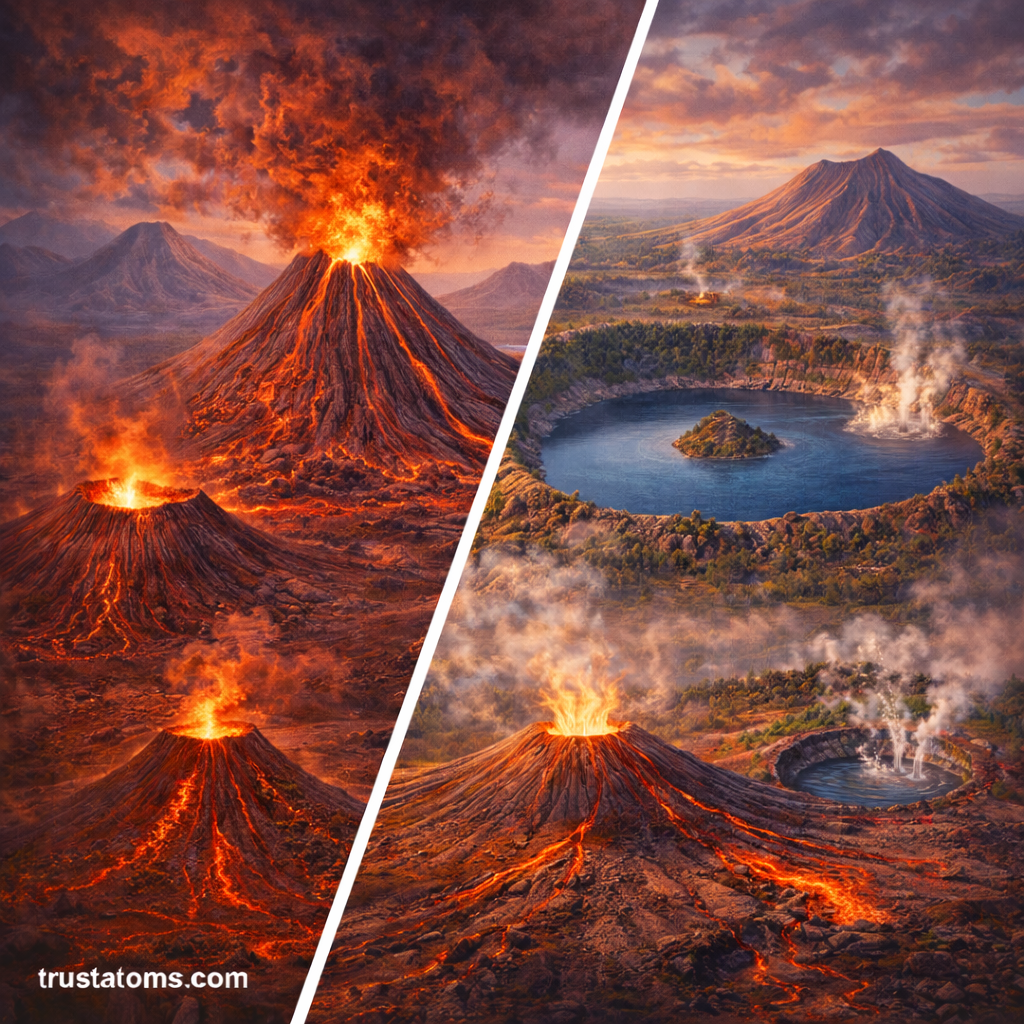
Not all craters are the same. Different processes create different forms.
Summit Craters
- Located at the top of a volcano
- Most common type
- Often circular in shape
Caldera
A caldera is a much larger depression formed when a volcano collapses after a massive eruption.
Key features:
- Much larger than typical craters
- Can form lakes over time
- Often associated with supervolcanoes
Maar Craters
- Formed by explosive interaction between magma and groundwater
- Typically shallow and wide
- Often filled with water, forming lakes
Other Major Volcanic Features
Volcanoes create a variety of landforms beyond craters.
Volcanic Cones
Cones form from the accumulation of erupted material around a vent.
Types of Cones:
- Cinder cones – built from ash and small rock fragments
- Composite cones (stratovolcanoes) – layered with lava and ash
- Shield volcanoes – broad, gently sloping with flowing lava
Lava Flows
Lava flows shape the landscape as molten rock spreads across the surface.
Characteristics:
- Can destroy vegetation and structures
- Create new land over time
- Vary in speed and thickness
Lava Domes
- Formed by thick, slow-moving lava
- Build up near the vent
- Can collapse and cause dangerous flows
Volcanic Vents and Fissures
- Openings where magma escapes
- Can appear as cracks (fissures) rather than central vents
- Often create long lava flows
Real-World Examples
Studying well-known volcanic features helps illustrate these processes.
Crater Lake (USA)
- Formed from the collapse of a volcano
- One of the clearest examples of a caldera
- Filled with deep blue water
Mount St. Helens (USA)
- Famous for its 1980 eruption
- Created a large crater due to a massive landslide and explosion
Mauna Loa (USA)
- One of the largest volcanoes on Earth
- Features broad slopes and extensive lava flows
Why Crater Formation Matters
Understanding crater formation helps scientists:
- Reconstruct past eruptions
- Assess volcanic hazards
- Predict future activity
It also helps identify high-risk zones for nearby populations.
How Scientists Study Volcanic Features
Researchers use a variety of methods to analyze volcanic landscapes.
Tools and Techniques:
- Satellite imagery
- Drone mapping
- Geological field surveys
- Rock and ash analysis
These methods provide insight into how volcanoes behave and evolve.
Common Misconceptions
“All volcanoes have large craters”
Some volcanoes have small or barely visible craters, depending on eruption style.
“Craters are always at the top”
Craters can form on the sides of volcanoes or even in flat terrain.
“Volcanic features are permanent”
Volcanoes are constantly changing—features can grow, collapse, or disappear over time.
Lessons From Volcanic Landscapes
Volcanic features reveal important truths about Earth:
- The planet is constantly evolving
- Eruptions can reshape entire regions
- Geological processes can be both destructive and creative
Final Thoughts
Crater formation and volcanic features are powerful reminders of the dynamic nature of Earth. From towering cones to massive calderas, volcanoes leave lasting marks on the landscape.
By studying these features, scientists gain valuable knowledge that helps protect communities and deepen our understanding of the planet’s inner workings.