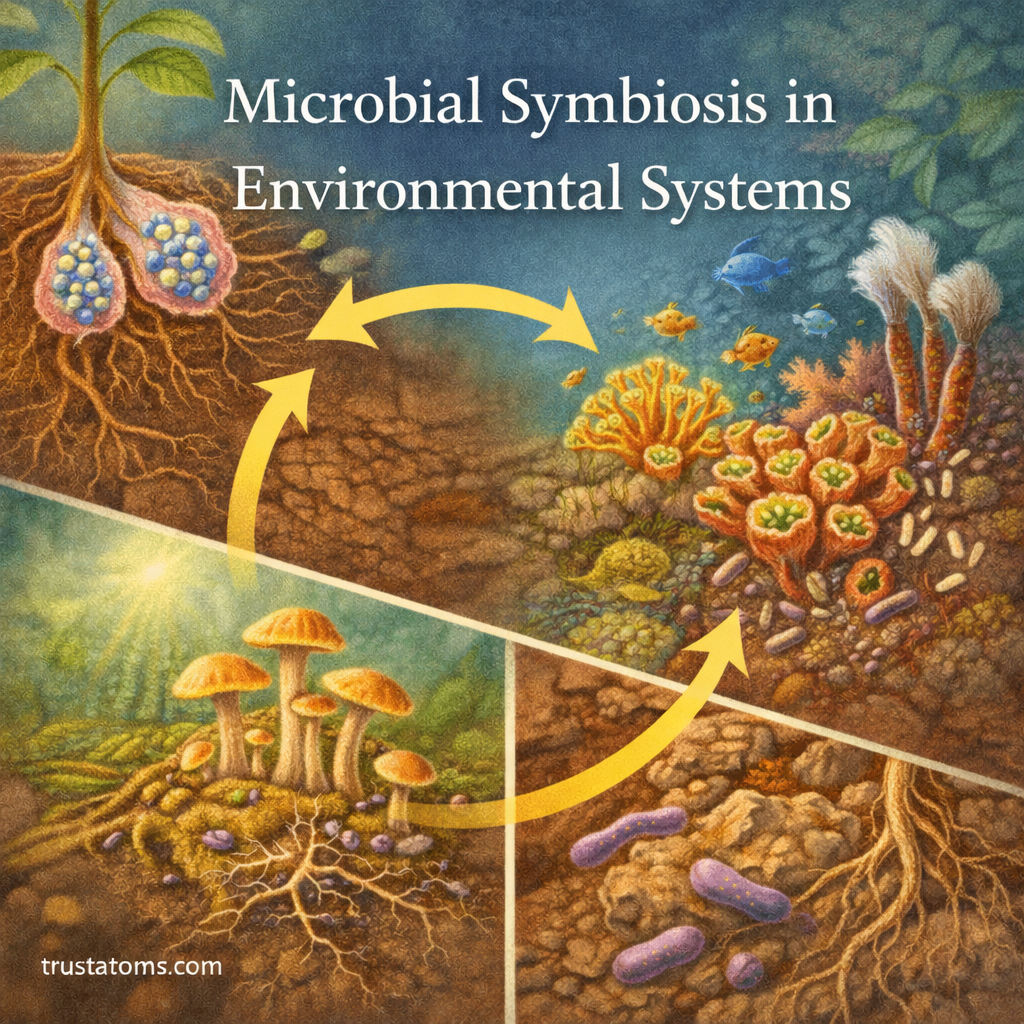
Microbial symbiosis plays a critical role in shaping ecosystems across the planet. Microorganisms such as bacteria, fungi, and archaea often form close biological partnerships with plants, animals, and other microbes. These relationships influence nutrient cycles, ecosystem productivity, and environmental stability.
Symbiotic microbial interactions allow organisms to share resources, exchange nutrients, and improve survival under challenging environmental conditions. Many ecosystems depend on these partnerships to maintain biological balance.
Understanding microbial symbiosis helps scientists explain how ecosystems function and how environmental systems remain productive and resilient.
What Is Microbial Symbiosis?
Microbial symbiosis refers to a close and long-term interaction between microorganisms and other organisms. In many cases, both partners benefit from the relationship.
These partnerships allow organisms to:
- Exchange nutrients
- Improve energy efficiency
- Enhance environmental tolerance
- Protect against harmful organisms
Symbiotic interactions can occur in many environments, including soils, oceans, freshwater systems, and inside the bodies of plants and animals.
Microbial symbiosis often supports critical ecological processes that sustain life within ecosystems.
Types of Microbial Symbiotic Relationships
Symbiotic interactions are commonly categorized into three major types depending on how the organisms involved are affected.
Mutualism
Mutualism occurs when both organisms benefit from the relationship.
Examples include:
- Nitrogen-fixing bacteria living in plant roots
- Mycorrhizal fungi assisting plant nutrient uptake
- Gut microbes aiding digestion in animals
Mutualistic relationships are among the most important interactions in environmental systems because they support nutrient cycling and ecosystem productivity.
Commensalism
In commensal relationships, one organism benefits while the other is not significantly affected.
Examples include:
- Bacteria living on plant surfaces
- Microbes inhabiting animal skin
- Soil microorganisms using organic material released by plant roots
Although one partner benefits more directly, these interactions still influence ecological processes.
Parasitism
Parasitism occurs when one organism benefits while the other is harmed.
Certain microbes may infect plants or animals and use host resources to survive.
Examples include:
- Plant pathogenic fungi
- Disease-causing bacteria
- Parasitic microbes affecting aquatic organisms
While parasitic relationships can negatively affect hosts, they also play a role in regulating population dynamics in ecosystems.
Microbial Symbiosis in Soil Ecosystems
Soil ecosystems contain some of the most important microbial symbiotic partnerships.
Plants rely heavily on soil microbes to access essential nutrients.
Two key examples include:
Mycorrhizal Fungi
Mycorrhizal fungi form symbiotic relationships with plant roots.
In this partnership:
- Fungi extend thread-like structures into the soil
- These structures absorb water and nutrients such as phosphorus
- Plants supply carbohydrates produced through photosynthesis
Mycorrhizal networks greatly increase the effective root area of plants, improving nutrient uptake and plant health.
Nitrogen-Fixing Bacteria
Certain bacteria convert atmospheric nitrogen into forms that plants can use.
These bacteria often live in root nodules of legume plants such as:
- Beans
- Peas
- Clover
- Soybeans
In exchange for nitrogen, plants provide the bacteria with energy-rich organic compounds.
This symbiosis is essential for maintaining soil fertility and supporting plant growth.
Microbial Symbiosis in Aquatic Environments
Microbial symbiosis also occurs in oceans, lakes, and freshwater systems.
Many aquatic organisms rely on microbial partners to survive.
Examples include:
Coral and Algae Symbiosis
Coral reefs depend on a mutualistic relationship between coral animals and microscopic algae known as zooxanthellae.
In this partnership:
- Algae perform photosynthesis and produce nutrients
- Coral provides protection and access to sunlight
This relationship supports the productivity and biodiversity of coral reef ecosystems.
Marine Animal Microbiomes
Many marine animals host microbial communities that assist with digestion and nutrient processing.
Examples include:
- Microbes in fish digestive systems
- Bacterial communities associated with marine invertebrates
- Symbiotic bacteria in deep-sea organisms
These microbial partners help animals survive in nutrient-poor environments.
Microbial Symbiosis in Extreme Environments
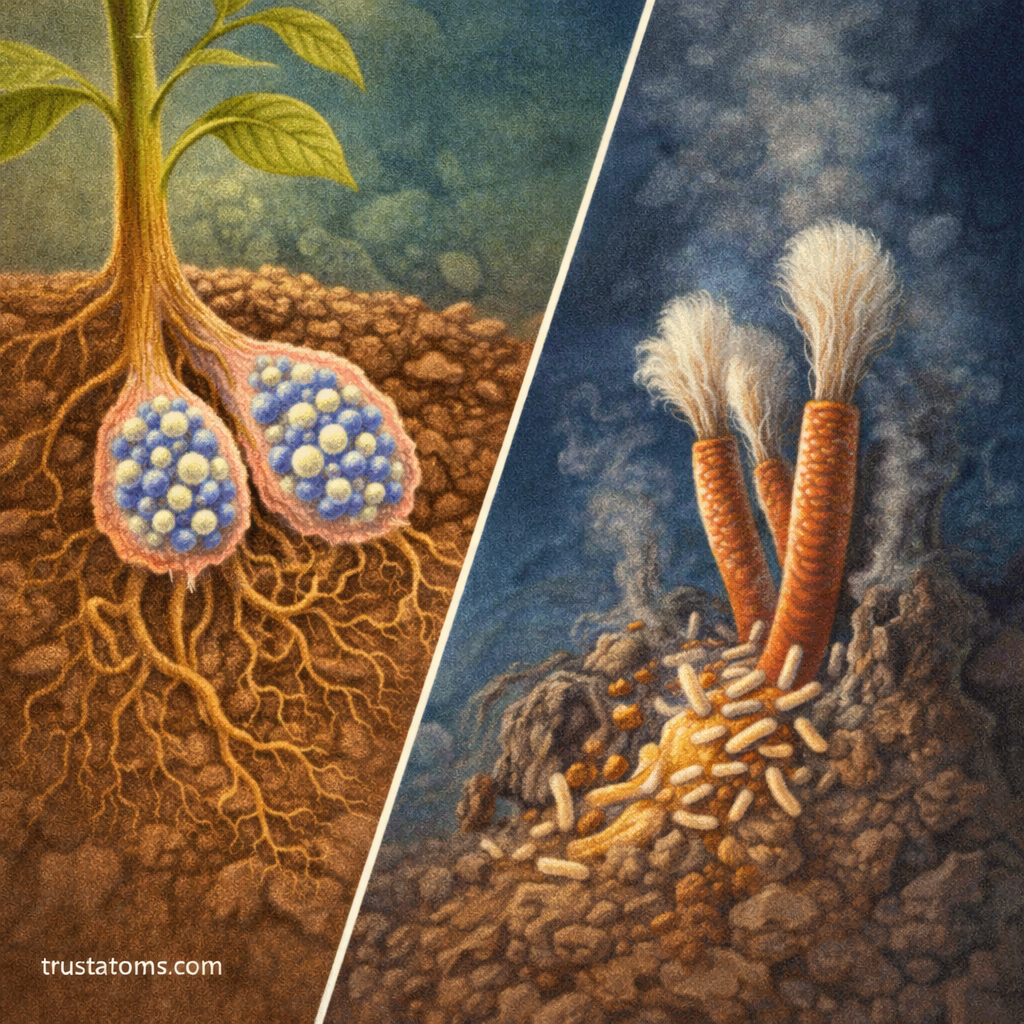
Some of the most fascinating microbial symbioses occur in extreme environments such as hydrothermal vents, deserts, and polar regions.
In deep-sea hydrothermal vent ecosystems, for example:
- Chemosynthetic bacteria convert chemicals from vent fluids into energy
- Tubeworms host these bacteria inside their bodies
- The bacteria provide nutrients that support the host organism
Without microbial symbiosis, many organisms would not be able to survive in these extreme habitats.
Benefits of Microbial Symbiosis in Ecosystems
Microbial symbiosis provides numerous ecological benefits that support environmental systems.
These partnerships contribute to:
- Nutrient cycling in soils and aquatic environments
- Increased plant growth and productivity
- Enhanced resistance to environmental stress
- Improved ecosystem stability
- Efficient use of limited resources
Symbiotic microbes help organisms adapt to environmental changes and maintain ecological balance.
Human Impacts on Microbial Symbiosis
Human activities can influence microbial symbiosis in ecosystems.
Changes to environmental conditions may disrupt these important relationships.
Examples include:
- Soil degradation affecting plant–microbe partnerships
- Pollution altering microbial communities in water
- Climate change influencing microbial metabolism
- Agricultural practices reducing soil biodiversity
Understanding microbial symbiosis helps scientists develop strategies to protect ecosystems and promote sustainable environmental management.
Why Microbial Symbiosis Matters
Microbial symbiosis is essential for the functioning of ecosystems across the planet.
These microscopic partnerships influence:
- Soil fertility
- Ocean productivity
- Plant growth
- Nutrient availability
- Ecosystem resilience
By supporting biological interactions at multiple levels, microbial symbiosis helps maintain the stability of environmental systems.
Final Thoughts
Microbial symbiosis in environmental systems highlights the importance of microscopic life in sustaining ecosystems. Through mutualistic partnerships, commensal relationships, and even parasitic interactions, microbes influence nutrient cycles, energy flow, and ecosystem productivity.
From soil-root partnerships to coral reef ecosystems and deep-sea environments, microbial symbiosis shapes the biological processes that sustain life on Earth. Continued research into these relationships will help scientists better understand ecosystem function and protect environmental health in a changing world.