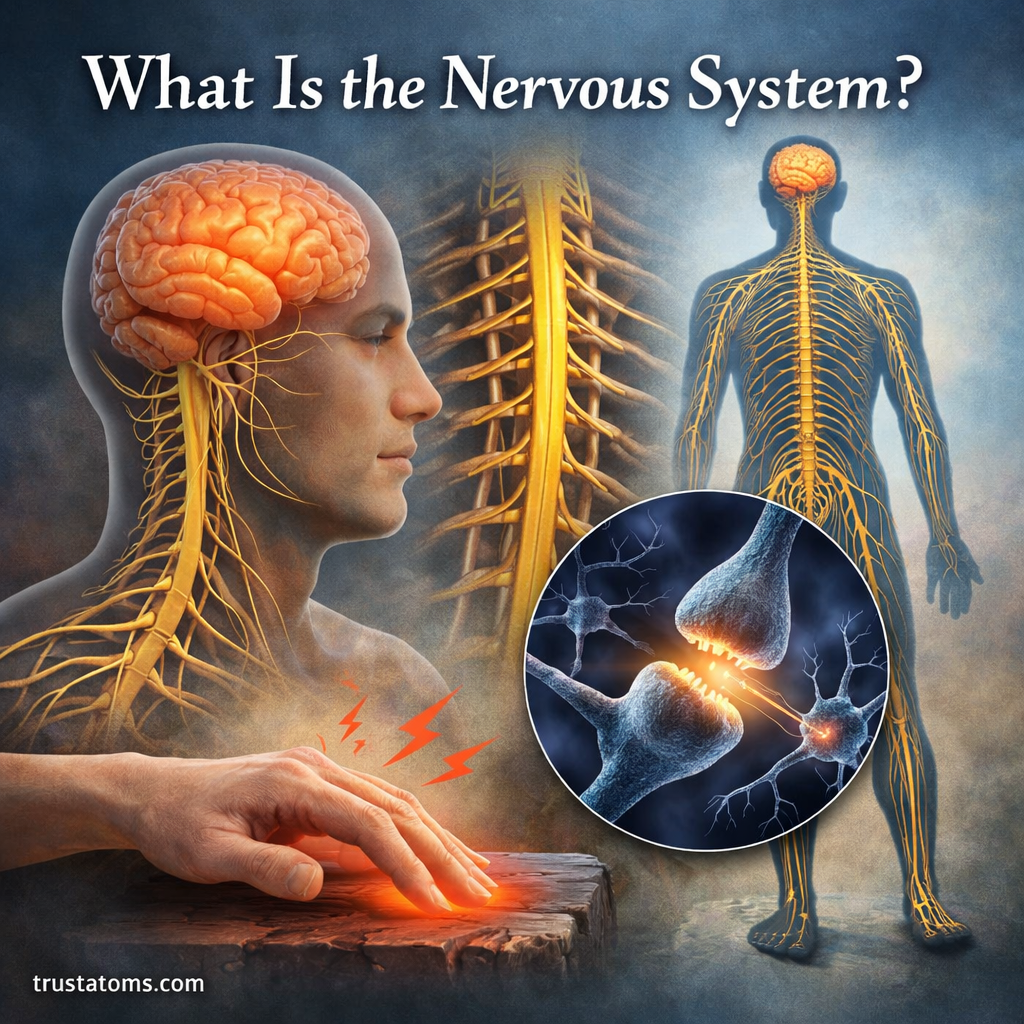
The nervous system is the body’s communication and control network, consisting of the brain, spinal cord, and nerves. It receives information, processes signals, and coordinates responses that allow us to move, think, feel, and regulate internal body functions.
In human anatomy, the nervous system connects sensory receptors, muscles, glands, and internal organs through specialized cells. These cells use electrical and chemical signals to communicate, allowing the body to respond to changes both inside and outside it.
When you touch a hot object, recognize a familiar voice, or maintain your balance while walking, nervous system activity makes these responses possible. Some actions are conscious, while others occur automatically without deliberate thought.
The Basic Function of the Nervous System
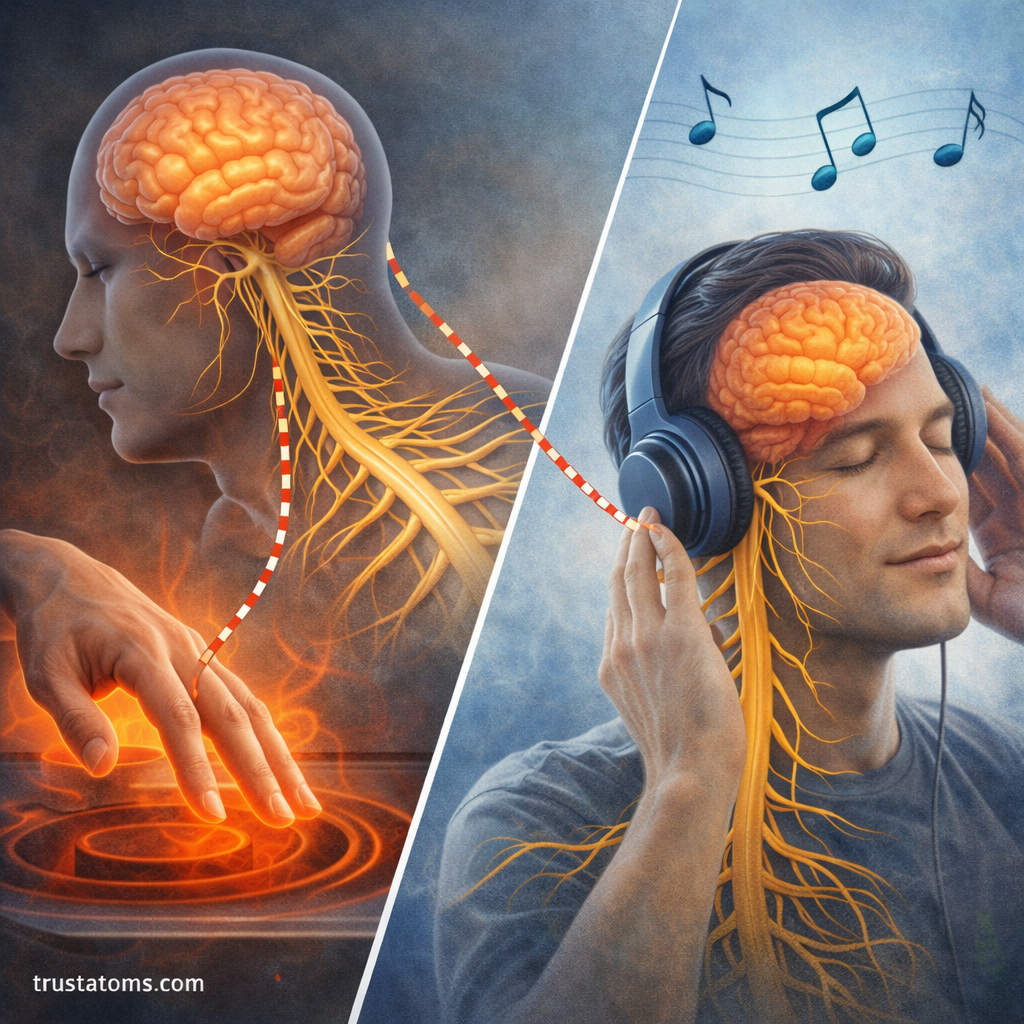
The nervous system performs three interconnected functions: sensory input, information processing, and motor output. Together, these allow the body to detect changes and respond appropriately.
1. Sensory Input: Detecting Changes
Sensory receptors detect stimuli such as light, sound, pressure, temperature, and changes within internal organs. Sensory neurons carry information toward the central nervous system, where it can be processed.
For example, receptors in the skin respond to touch and temperature, while specialized cells in the eyes detect light. Internal receptors also monitor conditions such as blood pressure and the stretching of organs.
2. Integration: Processing Information
The brain and spinal cord process incoming signals through networks of interconnected neurons. This processing can produce conscious perceptions, support decisions, or trigger automatic responses.
Not every signal needs conscious interpretation. Some protective reflexes are coordinated by spinal cord circuits, allowing a response to begin before the person becomes fully aware of the stimulus.
3. Motor Output: Producing a Response
Motor pathways carry instructions from the central nervous system to effectors, including muscles and glands. Skeletal muscles generate movement, while autonomic pathways influence functions such as heart rate, digestion, and sweating.
These automatic responses are explained further in Autonomic Nervous System Overview, including how nervous signals regulate internal organs without requiring conscious control.
Major Parts of the Nervous System
Anatomically, the nervous system is divided into the central nervous system and peripheral nervous system. The distinction depends on the location of nervous tissue and how signals travel between different body regions.
| Division | Main Structures | Primary Functions |
|---|---|---|
| Central nervous system (CNS) | Brain and spinal cord | Processes information and coordinates responses |
| Peripheral nervous system (PNS) | Nerves and ganglia outside the CNS | Connects the CNS with sensory receptors, muscles, and organs |
Central Nervous System: Brain and Spinal Cord
The central nervous system is the body’s control center. It consists of the brain and spinal cord, which process information and coordinate responses throughout the body.
The brain supports conscious thought, memory, emotion, sensory perception, and movement. Different regions have specialized functions, although most complex activities require communication among several areas.
- Cerebrum: Supports perception, reasoning, language, memory, and voluntary movement.
- Cerebellum: Helps coordinate movement, posture, balance, and motor learning.
- Brainstem: Connects the brain with the spinal cord and contains centers involved in breathing, cardiovascular regulation, and other automatic functions.
The spinal cord carries signals between the brain and much of the body. It also contains neural circuits that coordinate reflexes and certain repetitive movement patterns.
Peripheral Nervous System: Nerves Throughout the Body
The peripheral nervous system includes nervous structures outside the brain and spinal cord, including cranial nerves, spinal nerves, and peripheral ganglia.
Peripheral nerves contain bundles of nerve fibers that transmit sensory information toward the CNS and motor instructions away from it. Many nerves carry both sensory and motor fibers.
Two Divisions of the Peripheral Nervous System
The peripheral nervous system can also be classified functionally into somatic and autonomic divisions. These systems differ in the tissues they control and the types of responses they coordinate.
Somatic Nervous System
The somatic nervous system carries sensory information from the skin, skeletal muscles, and joints and controls skeletal muscle contraction. It supports voluntary actions such as writing, walking, and reaching for objects.
Somatic pathways also participate in involuntary reflexes. For example, the knee-jerk reflex activates skeletal muscle without requiring a conscious decision.
Autonomic Nervous System
The autonomic nervous system regulates involuntary activity in smooth muscle, cardiac muscle, and glands. Its functions include adjusting heart rate, controlling digestive movements, and influencing blood vessel diameter.
For a more detailed explanation of how nerve bundles carry different kinds of information, see Peripheral Nerves and Signal Routing.
Sympathetic and Parasympathetic Nervous Systems
Two major autonomic divisions are the sympathetic and parasympathetic systems. Their effects often differ, but both contribute to regulating internal conditions.
| Body Function | Sympathetic Response | Parasympathetic Response |
|---|---|---|
| Heart rate | Generally increases | Generally decreases |
| Pupils | Dilates pupils | Constricts pupils |
| Digestion | Generally reduces digestive activity | Generally promotes digestive activity |
| Energy use | Supports activity and stress responses | Supports routine maintenance and digestion |
The sympathetic division is commonly associated with the fight-or-flight response. The parasympathetic division is associated with rest-and-digest activities. These descriptions are useful summaries, but the two divisions operate continuously and their effects depend on the organ involved.
The enteric nervous system, a network of neurons within the digestive tract, also helps coordinate intestinal activity. It can perform many local functions independently while communicating with autonomic pathways.
How Neurons Transmit Information
The nervous system relies on specialized cells called neurons to transmit information. These cells generate electrical signals and communicate with other cells through specialized connections.
A typical neuron contains three major structural regions:
- Dendrites: Receive many incoming signals from other neurons.
- Cell body: Contains the nucleus and supports the cell’s metabolic activities.
- Axon: Conducts electrical signals toward other neurons, muscles, or glands.
Many axons are surrounded by myelin, an insulating material that helps electrical impulses travel efficiently. Myelin is produced by specialized supporting cells called glia.
To examine how these structures cooperate, see Neuron Structure and Function.
Electrical Impulses and Chemical Synapses
Neurons transmit electrical impulses called action potentials. These occur when ion channels in the cell membrane open and close, producing rapid changes in electrical voltage.
At many synapses, an arriving action potential triggers the release of neurotransmitters. These chemical messengers cross a tiny gap and bind to receptors on another cell, changing its activity.
Not all synapses are chemical. Some neurons communicate through electrical synapses, which allow ions to pass directly between connected cells.
Worked Example: Pulling Your Hand Away From Heat
Imagine accidentally touching a hot pan. The withdrawal reflex demonstrates how sensory input, spinal processing, and motor output can produce a rapid protective movement.
- Detection: Heat activates temperature-sensitive and pain-related nerve endings in the skin.
- Sensory transmission: Sensory neurons carry electrical impulses toward the spinal cord.
- Spinal processing: Interneurons within spinal circuits activate appropriate motor pathways.
- Muscle response: Motor neurons stimulate muscles that withdraw the hand from the hot surface.
- Conscious awareness: Signals also travel toward the brain, where the sensation can be consciously perceived.
The withdrawal movement can begin before conscious recognition of pain because spinal reflex circuits do not require the brain to initiate the response. The brain still receives information and helps coordinate subsequent actions.
How Fast Do Nerve Signals Travel?
Nerve conduction speed varies widely depending on axon diameter, myelination, and nerve fiber type. Some large, heavily myelinated human nerve fibers conduct impulses at speeds approaching 120 meters per second, while smaller unmyelinated fibers conduct much more slowly.
For a simplified calculation, suppose a signal travels along 1 meter of nerve fiber at 100 meters per second. The conduction time would be:
Time = Distance ÷ Speed = 1 meter ÷ 100 meters per second = 0.01 seconds, or 10 milliseconds.
This calculation describes conduction along the nerve fiber only. Actual reaction time also includes sensory receptor activation, synaptic transmission, processing within the nervous system, and muscle activation.
How the Nervous System Maintains Homeostasis
Homeostasis refers to the regulation of internal conditions within ranges compatible with normal body function. The nervous system contributes by detecting changes and coordinating responses involving organs, blood vessels, muscles, and glands.
For example, when body temperature rises, the hypothalamus helps coordinate sweating and changes in skin blood flow. When blood pressure changes, nervous reflexes can adjust heart rate and blood vessel diameter.
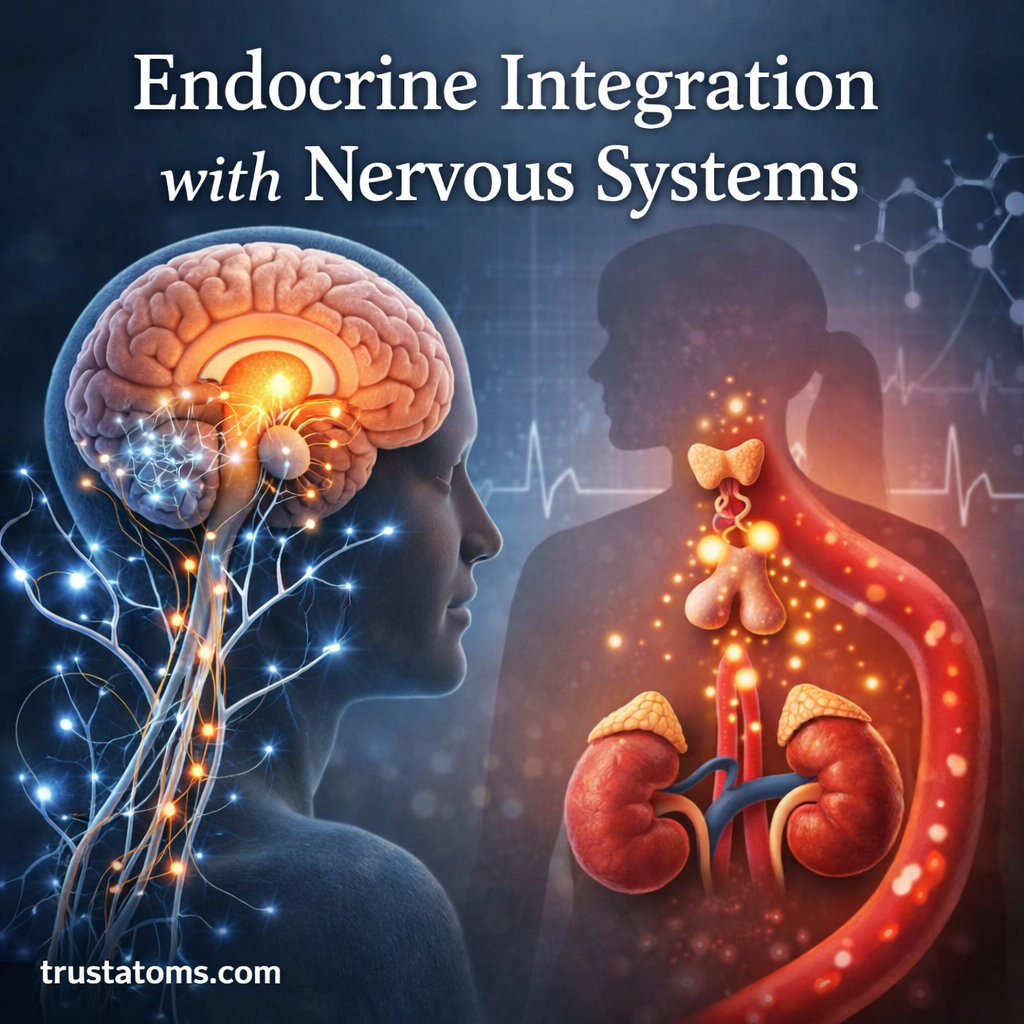
The nervous system also works closely with the endocrine system. The hypothalamus and pituitary gland connect neural regulation with hormone signaling, allowing coordinated control over many longer-lasting physiological processes.
Common Conditions Affecting the Nervous System
Neurological conditions can affect movement, sensation, cognition, coordination, or automatic body functions. Their effects depend on which nervous structures are involved.
- Alzheimer’s disease: A progressive brain disorder affecting memory and other cognitive abilities.
- Parkinson’s disease: A neurological disorder that commonly affects movement, including causing tremor, stiffness, and slowed movement.
- Multiple sclerosis: An immune-mediated condition that damages myelin in the central nervous system.
- Epilepsy: A neurological condition characterized by a tendency toward recurrent unprovoked seizures.
- Stroke: Brain injury caused by interrupted blood supply or bleeding within or around the brain.
- Peripheral neuropathy: Damage or dysfunction affecting peripheral nerves, sometimes causing numbness, tingling, weakness, or pain.
Sudden facial drooping, arm weakness, speech difficulty, or other abrupt neurological changes may indicate a stroke and require immediate emergency medical attention.
Common Misconceptions
Misconception: The Brain Controls Every Reflex Directly
Many reflexes are coordinated through circuits in the spinal cord or brainstem. They can produce responses without requiring conscious decisions, although the brain can still receive sensory information and influence reflex activity.
Misconception: Humans Use Only 10% of Their Brains
Brain imaging and neurological research show activity distributed across many brain regions. Different tasks recruit different networks, and there is no scientific basis for the claim that most of the brain remains permanently unused.
Misconception: All Nerve Signals Travel at the Same Speed
Conduction speed differs among nerve fibers. Larger, myelinated axons generally transmit signals faster than smaller, unmyelinated fibers, reflecting differences in their structure and function.
Misconception: The Autonomic Nervous System Works Only During Stress
Autonomic pathways operate continuously, regulating heart activity, digestion, gland secretion, and other internal functions during both rest and activity.
Frequently Asked Questions
What Are the Main Parts of the Nervous System?
The nervous system has two main anatomical divisions: the central nervous system, consisting of the brain and spinal cord, and the peripheral nervous system, which includes nerves and ganglia outside those structures.
What Are the Three Main Functions of the Nervous System?
The three main functions are sensory input, integration, and motor output. These allow the body to detect stimuli, process information, and coordinate responses through muscles and glands.
What Is the Difference Between the CNS and PNS?
The CNS processes and coordinates information within the brain and spinal cord. The PNS carries signals between the CNS and structures throughout the body, including sensory receptors, muscles, and internal organs.
How Do Neurons Communicate With Each Other?
Neurons conduct electrical impulses along their membranes and commonly communicate at synapses by releasing neurotransmitters. Some neurons also exchange signals through direct electrical connections.
Does the Nervous System Work While You Sleep?
Yes. The nervous system remains active during sleep, coordinating breathing, cardiovascular functions, sleep cycles, and many processes involved in memory and physiological regulation.
The nervous system links sensory information, neural processing, and coordinated responses through the brain, spinal cord, and peripheral nerves. From rapid spinal reflexes to conscious reasoning and automatic regulation of internal organs, its interconnected pathways allow the body to respond to changing conditions and maintain normal function.
This article is for general education and is not medical advice. Talk to a qualified health professional about any medical concern.
Sources: OpenStax, Anatomy and Physiology 2e; National Institute of Neurological Disorders and Stroke (NINDS); National Library of Medicine, MedlinePlus; National Institute of General Medical Sciences (NIGMS).