Blood circulation in the human body depends on more than just the heart pumping—it relies heavily on pressure gradients within blood vessels. These pressure differences allow blood to move efficiently through arteries, capillaries, and veins, ensuring that oxygen and nutrients reach tissues while waste products are removed.
Understanding pressure gradients helps explain how blood flows continuously, even when it moves against gravity.
What Is a Pressure Gradient?
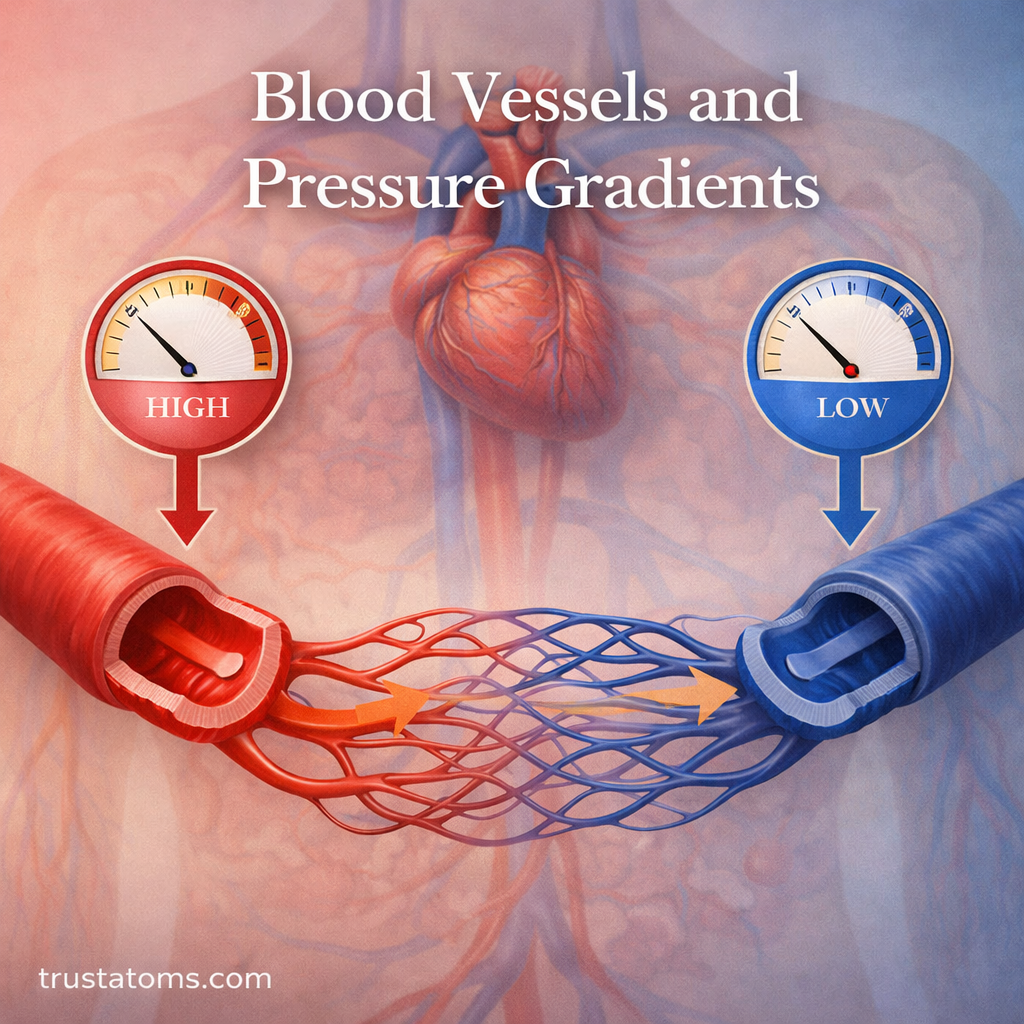
A pressure gradient refers to the difference in pressure between two points in a system. In the circulatory system, blood flows from areas of higher pressure to areas of lower pressure.
Simple Explanation
- High pressure → blood is pushed forward
- Low pressure → blood is pulled toward that area
This gradient is what drives blood circulation throughout the body.
How Pressure Is Generated in the Body
The heart is the primary source of pressure in the circulatory system. Each heartbeat creates force that pushes blood into the arteries.
Key Factors That Create Pressure
- Heart contractions (systole)
- Elastic recoil of arteries
- Blood volume
- Resistance within blood vessels
The strongest pressure is found closest to the heart and gradually decreases as blood moves through the system.
Pressure in Different Types of Blood Vessels
Blood pressure is not the same throughout the body. It changes depending on the type of vessel and its function.
Arteries: High Pressure System
Arteries experience the highest pressure because they receive blood directly from the heart.
Characteristics
- Thick, elastic walls
- Able to expand and recoil
- Maintain steady blood flow despite heartbeats
Why Pressure Is High
- Blood is pumped forcefully from the heart
- Arteries must withstand and regulate this force
This high pressure ensures that blood can reach distant parts of the body quickly.
Capillaries: Pressure Drops for Exchange
Capillaries are tiny vessels where the pressure significantly decreases.
Characteristics
- Very thin walls (one cell thick)
- Extremely narrow diameter
- Slower blood flow
Why Lower Pressure Matters
Lower pressure allows:
- Efficient exchange of oxygen and nutrients
- Transfer of carbon dioxide and waste products
- Prevention of damage to delicate tissues
Capillaries are where the most important exchanges in the body occur.
Veins: Low Pressure Return System
Veins operate under the lowest pressure in the circulatory system.
Characteristics
- Thin walls
- Large internal space (lumen)
- Contain valves
How Blood Moves in Veins
Because pressure is low, veins rely on additional mechanisms:
- Muscle contractions (especially in the legs)
- One-way valves to prevent backflow
- Breathing movements that help pull blood toward the heart
This system allows blood to return to the heart even against gravity.
How Pressure Gradients Drive Blood Flow
The entire circulatory system works because of a continuous pressure gradient.
Step-by-Step Flow
- Blood leaves the heart at high pressure
- Pressure gradually decreases through arteries
- Blood slows in capillaries for exchange
- Pressure becomes very low in veins
- Blood returns to the heart to restart the cycle
Without this gradient, blood would not circulate effectively.
Factors That Affect Blood Pressure Gradients
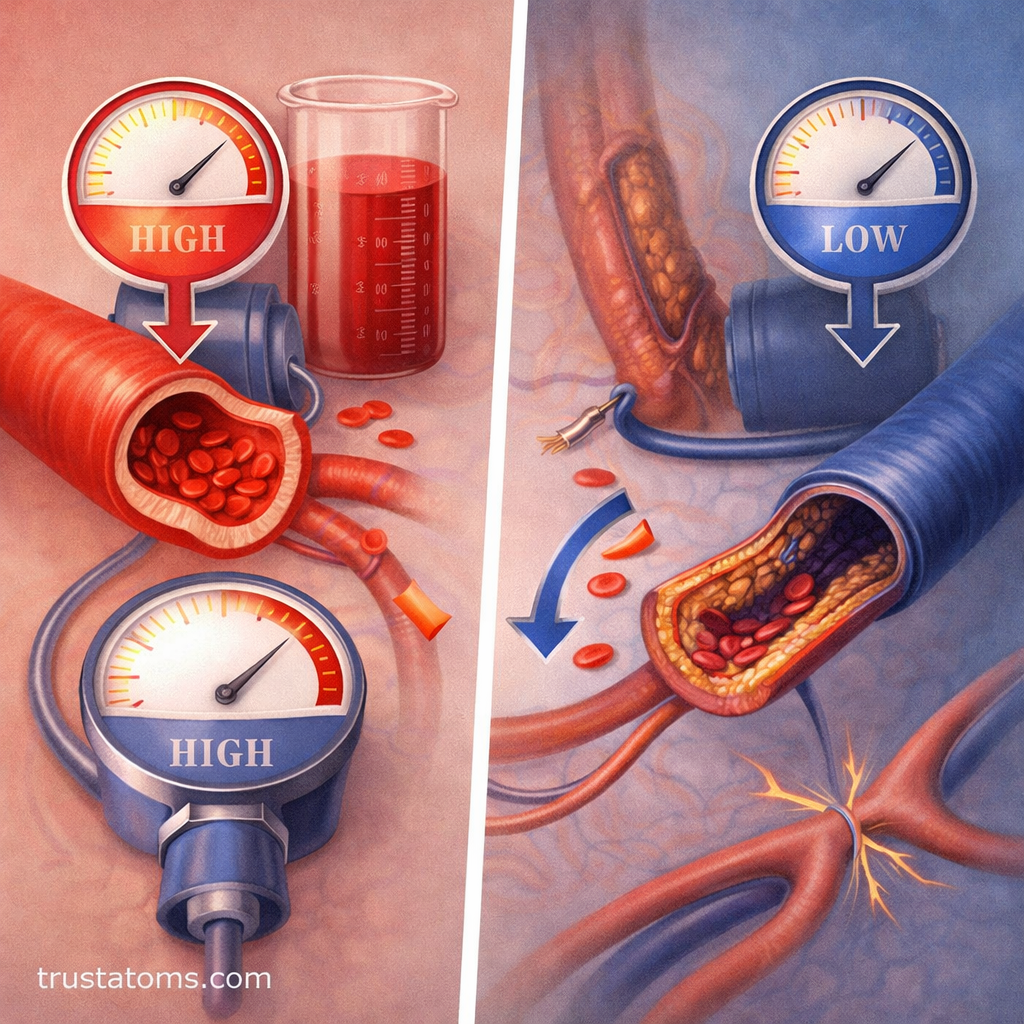
Several factors influence how pressure changes throughout the circulatory system.
Vessel Diameter
- Narrow vessels increase resistance and pressure
- Wider vessels decrease resistance
Blood Volume
- Higher volume increases pressure
- Lower volume decreases pressure
Vessel Elasticity
- Flexible arteries help maintain steady pressure
- Stiff vessels can disrupt normal flow
Resistance
Resistance is created by friction between blood and vessel walls. Higher resistance means more pressure is needed to maintain flow.
Why Pressure Gradients Matter for Health
Healthy pressure gradients are essential for proper circulation. When these gradients are disrupted, it can lead to serious conditions.
Common Issues
- Hypertension (high blood pressure)
- Hypotension (low blood pressure)
- Poor circulation
- Organ damage due to reduced blood flow
Maintaining balanced pressure helps ensure that all tissues receive adequate oxygen and nutrients.
Key Takeaways
- Blood flows from high pressure to low pressure
- The heart creates the initial pressure force
- Arteries have the highest pressure, veins the lowest
- Capillaries allow exchange due to reduced pressure
- Pressure gradients are essential for continuous circulation
Final Thoughts
Blood vessels and pressure gradients work together to keep the circulatory system running smoothly. From the powerful force generated by the heart to the gentle exchange in capillaries, every step depends on controlled pressure changes.
Understanding these concepts provides insight into how your body maintains life and how disruptions in pressure can affect overall health.