Gas exchange in the alveoli is one of the most critical processes in the human body. It is where oxygen enters the bloodstream and carbon dioxide is removed. This exchange supports cellular respiration—the process that allows your cells to produce energy.
Although it happens at a microscopic level, this process occurs continuously and efficiently with every breath you take.
What Are Alveoli?
Alveoli are tiny air sacs located at the ends of bronchioles within the lungs. They are the primary sites of gas exchange.
Key Features of Alveoli
- Extremely small and numerous (millions in each lung)
- Thin walls (only one cell thick)
- Surrounded by dense networks of capillaries
- Moist surface to allow gases to dissolve
These features make alveoli highly efficient for transferring gases between air and blood.
The Purpose of Gas Exchange
Gas exchange ensures that oxygen reaches the body’s cells while carbon dioxide is removed as waste.
Why It Matters
- Oxygen is needed for energy production in cells
- Carbon dioxide must be removed to prevent harmful buildup
- Maintains proper blood pH balance
Without efficient gas exchange, the body cannot function properly.
How Gas Exchange Works
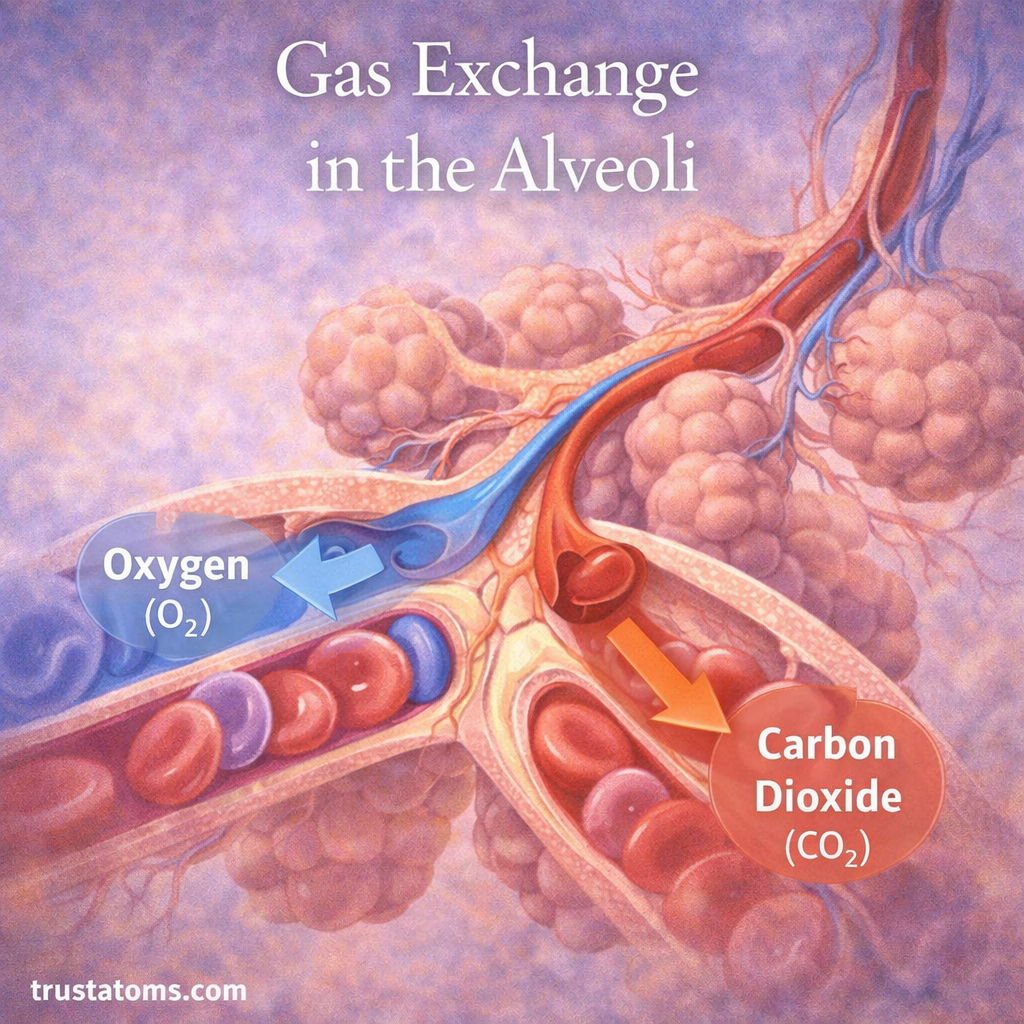
Gas exchange in the alveoli occurs through a process called diffusion.
Step-by-Step Process
- Air enters the alveoli during inhalation
- Oxygen concentration is higher in the alveoli than in the blood
- Oxygen diffuses across the alveolar wall into capillaries
- Carbon dioxide concentration is higher in the blood than in the alveoli
- Carbon dioxide diffuses into the alveoli
- Carbon dioxide is expelled during exhalation
This exchange happens rapidly and continuously.
The Role of Diffusion
Diffusion is the movement of gases from areas of higher concentration to lower concentration.
Key Points About Diffusion
- Does not require energy
- Depends on concentration gradients
- Occurs across thin membranes
In the lungs:
- Oxygen moves from alveoli → blood
- Carbon dioxide moves from blood → alveoli
The thin structure of alveoli makes diffusion highly efficient.
Structure of the Alveolar-Capillary Membrane
The alveolar-capillary membrane is where gas exchange actually occurs.
Components
- Alveolar wall (thin epithelial layer)
- Capillary wall (thin endothelial layer)
- Shared basement membrane
Why It’s Important
- Extremely thin for fast gas transfer
- Large surface area increases efficiency
- Close contact between air and blood
This design allows oxygen and carbon dioxide to move quickly between air and blood.
Factors That Affect Gas Exchange
Several factors influence how well gas exchange occurs in the alveoli.
Surface Area
- More alveoli = greater surface area
- Increased surface area improves oxygen absorption
Membrane Thickness
- Thinner membranes allow faster diffusion
- Thickened membranes slow gas exchange
Concentration Gradient
- Larger differences in gas concentration increase diffusion speed
Blood Flow (Perfusion)
- Adequate blood flow ensures gases are transported efficiently
All of these factors must work together for optimal gas exchange.
The Role of Hemoglobin
Once oxygen enters the blood, it binds to hemoglobin in red blood cells.
Functions of Hemoglobin
- Carries oxygen from the lungs to body tissues
- Helps maintain oxygen levels in the blood
- Transports a portion of carbon dioxide back to the lungs
This makes oxygen delivery efficient throughout the body.
What Can Disrupt Gas Exchange?
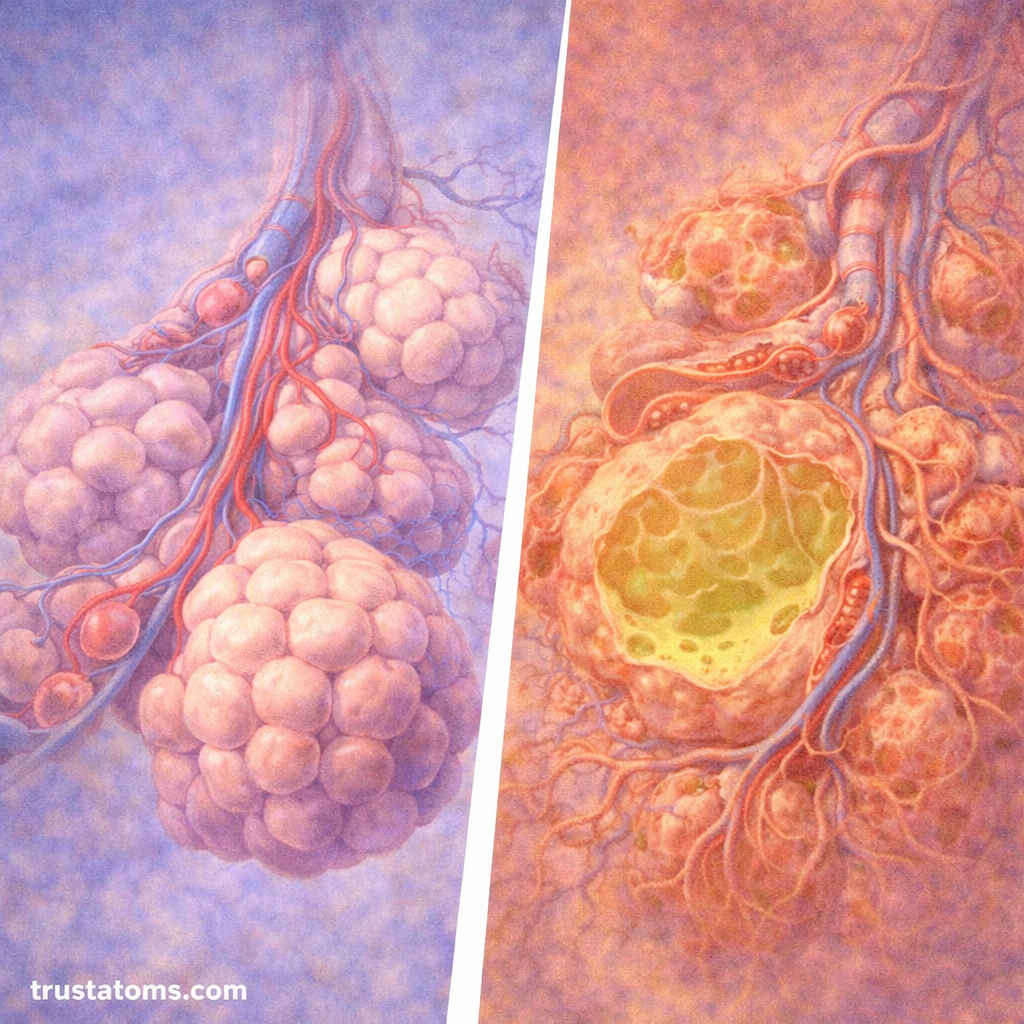
Certain conditions can interfere with normal gas exchange in the alveoli.
Common Issues
- Pneumonia – Fluid-filled alveoli reduce oxygen transfer
- Emphysema – Damage to alveoli decreases surface area
- Pulmonary edema – Fluid buildup thickens the membrane
- Smoking – Damages lung tissue and reduces efficiency
These conditions highlight how delicate and important the gas exchange process is.
How the Body Maintains Efficient Gas Exchange
The body uses several mechanisms to optimize gas exchange.
Key Strategies
- Regulating breathing rate
- Matching airflow (ventilation) with blood flow (perfusion)
- Maintaining healthy lung tissue
These systems ensure that oxygen delivery and carbon dioxide removal remain balanced.
Tips for Supporting Healthy Alveoli
You can help protect and support gas exchange with simple habits:
- Avoid smoking and air pollution
- Exercise regularly to improve lung function
- Maintain good respiratory hygiene
- Stay hydrated
- Practice deep breathing techniques
Healthy lungs improve overall oxygen delivery and energy levels.
Final Thoughts
Gas exchange in the alveoli is a vital process that keeps your body functioning at every moment. Through diffusion, oxygen enters the bloodstream and carbon dioxide is removed efficiently.
By understanding how this process works, you gain insight into the importance of lung health and the delicate balance that sustains life.